
The perfect 10 day Costa Verde itinerary
When a guest at our front desk in Ilhabela asks how much time the Costa Verde deserves, the house answer is ten days. A week crosses the region; ten days let you live a little in each stop. It is the difference between seeing Lopes Mendes and having a whole morning of sea without checking the time, between photographing Saco do Mamanguá from a distance and paddling inside it.
Blogs we respect reached the same number by different roads: Volto Logo built its 10 days concentrating everything on Ilha Grande, Paraty and Ubatuba, with four nights on the island alone. Our plan trades a bit of that depth to include São Paulo’s north coast all the way to Ilhabela, because we think the complete crossing, state to state, is what makes this one single trip. Anyone who prefers to cut Ilhabela and give the days back to Ilha Grande will hear no complaint from us.
The itinerary is organized in five blocks, running Rio to São Paulo. Before getting into the details, it is worth reading the definitive guide to the Costa Verde to understand the overall map.
Block 1: Ilha Grande, days 1 to 3 (three nights)
A house position before the step by step, because this guide has an owner and the owner sails: for the Rio half of the trip, the way we recommend does not involve a flex boat. The five night Combinada of the Albatroz, our group’s 23 meter schooner, leaves Paraty and stitches together the essentials of blocks 1 and 2 without changing beds: two days of Ilha Grande sleeping on board (Lagoa Azul, an afternoon in Vila do Abraão and the early drop at Praia do Pouso, with Lopes Mendes still empty), a free day in Paraty with the boat docked at the marina, and the final night anchored in Saco do Mamanguá, with a bonfire gathering on the beach. The contrast that convinced us: on your own, the ferry schedule runs your day and the day-trippers reach Lopes Mendes along with everyone else; on board, the beach appears before its public does and the bag never opens or closes. Anyone who prefers to build it all independently can follow the day by day below, designed exactly for that.
Day 1. Early departure from Rio, arrival at Conceição de Jacareí by late morning and flex boat to Vila do Abraão (20 to 25 minutes, R$ 45 to 150 each way). The budget alternative is the Mangaratiba ferry, R$ 20.50, but it runs very few times a day and ties down your schedule; we only recommend it for people whose planning is already locked in. Arrival afternoon: Praia do Abraãozinho, half an hour’s walk from the village, and a beer at the pier watching the boats come back.
Day 2. Lopes Mendes without hurry. Taxi boat to Praia do Pouso and 20 minutes of trail, or the long walk of about 3 hours from Abraão for anyone who likes hiking. It is 2.5 km of sand with almost no infrastructure, so bring whatever you plan to eat and drink.
Day 3. The extra night compared to the one week itinerary buys this day, and it accepts two personalities. The aquatic one: the island’s classic boat tour (the so-called Meia Volta), with stops at spots like Lagoa Azul, all transparent water and striped fish around your ankles. The land one: Pico do Papagaio, 982 meters of steep climbing inside the forest, with the whole Ilha Grande bay down below. Both programs are detailed in our guide to things to do in Ilha Grande.
Block 2: Paraty, days 4 and 5 (two nights)
Day 4. Crossing back to the mainland and road to Paraty: 1h30 by car on one of the prettiest stretches of the Rio-Santos, or Colitur L101 from Angra (R$ 27.50, about 2 hours). Save the late afternoon and evening for the historic center, when the day-trip groups disappear and the colonial townhouses are left in peace. On full and new moons, the high tide comes in through the stone streets, and it is worth planning dinner around its schedule.
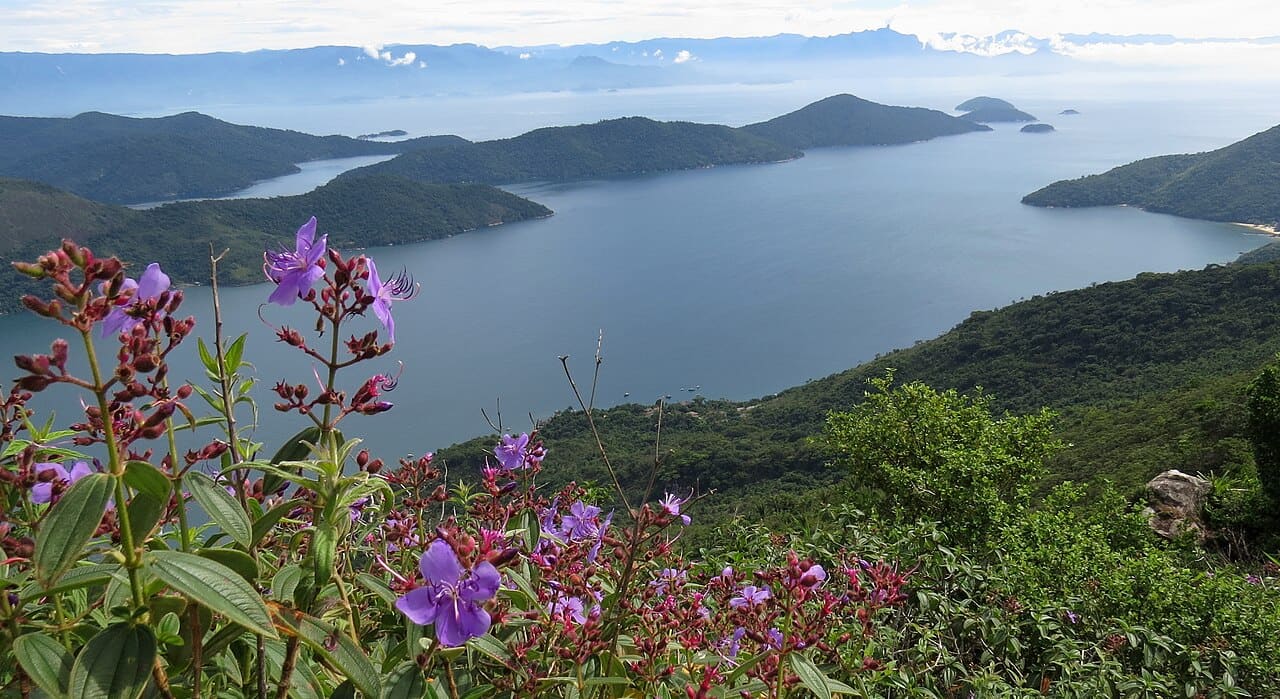
Day 5. The day of Saco do Mamanguá, the tropical fjord in the photo up top: an 8 km arm of sea surrounded by mountains, with no road and caiçara communities on the beaches. And here it is worth repeating the side we took in block 1: for us, Mamanguá is truly known by sleeping inside it, which is what the expedition does on its final night, with the boat anchored on still water, the bonfire gathering on the beach at the foot of the Sugarloaf and the transparent kayak coming down from the deck before coffee. For anyone building the itinerary independently, the standalone visit works like this: in half a day you can do the speedboat or canoe trip from Paraty or Paraty-Mirim, with a swim in water that feels like a lake, and whoever has legs to spare climbs the Mamanguá Sugarloaf trail, short and steep, to see the fjord from above. Back in Paraty, the afternoon closes with the schooner tour (around R$ 60) or with the churches and galleries still owed.
Block 3: Trindade, day 6 (one night)
Day 6. In the 7 day itinerary, Trindade is a rushed half day. Here it gets what it deserves: an overnight. Colitur bus from Paraty (about R$ 5, 40 minutes, 27 km) and a full day in the cove: the four beaches, the open sea of Praia Brava for surfers, and at the end of the afternoon the Cachadaço natural pool, when the excursions have already left and the water is yours alone.
Sleeping in the village is the part almost nobody does. Trindade at night goes back to being the caiçara settlement it always was, with bonfires on the sand in winter and a silence that does not match the midday crowds. It is the kind of experience we list among the most authentic places on the Costa Verde.
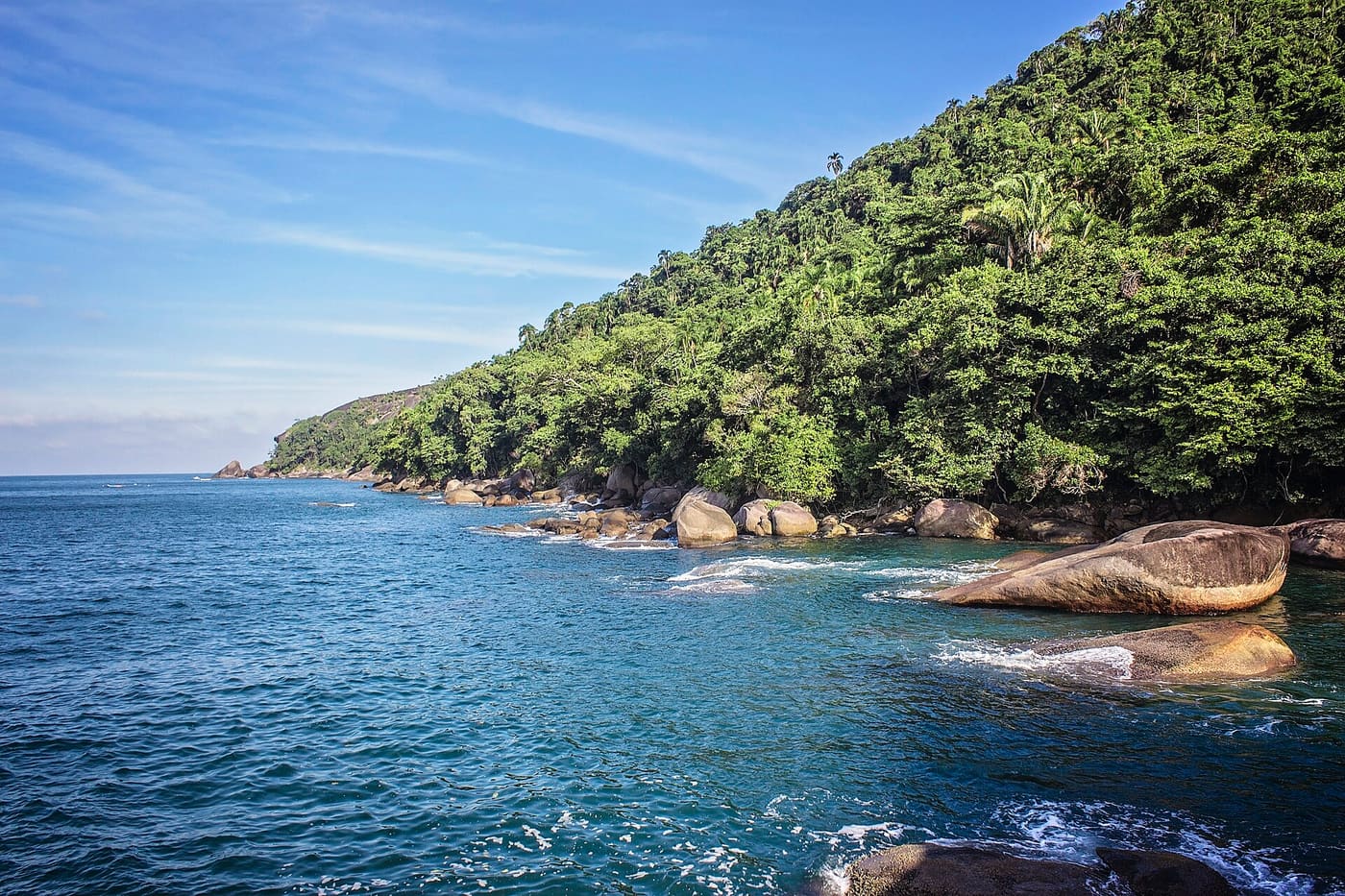 Cachadaço beach, in Trindade. Photo: Eduardo Gabão, CC BY-SA 3.0, Wikimedia Commons
Block 4: Ubatuba, day 7 (one night)
Day 7. A farewell morning at Cachadaço and the road to Ubatuba. Drivers can stop at Vila de Picinguaba, practically on the state line, where boats leave for Ilha das Couves, some of the clearest water on the São Paulo coast; Volto Logo uses that stop as the transition in their itinerary, and we sign off on it. Without a car, the Paraty-Ubatuba leg is the bottleneck of the trip: few buses per day, changing timetables, confirmation required in advance. Our guide to the Costa Verde without a car explains how to solve it.
In Ubatuba, the afternoon splits between the Projeto Tamar base, open since 1991, and a proper beach: Itamambuca for waves, the Lázaro corner for calm sea. There are more than 100 beaches in the municipality; one day is only the introduction.
Block 5: Ilhabela, days 8 to 10 (two nights)
Day 8. Road to São Sebastião and the ferry: a 20 minute crossing, free for pedestrians, R$ 19 to 28.50 for cars, departures every half hour. An easy arrival afternoon on the channel side: the waterfront, the urban beaches and the sunset facing the mainland, which in Ilhabela is a daily program. Host transparency: this island is where Hostel da Vila operates, our group’s eco lodge, in the historic center since 2016, between forest and sea; when the sun finishes going down, the Floresta Bar lights up in the middle of the 8,000 m² of Atlantic Forest.
Day 9. The extra day this itinerary gives Ilhabela goes to the wild side. The classic option is the 4x4 crossing on the state park’s dirt road to Castelhanos beach, on the open sea, combining a long beach, a caiçara village and viewpoints along the way. The quieter alternative: a waterfall morning (Toca has swimming pools and a cachaça distillery next door) and an afternoon at the southern beaches. Repellent is not a suggestion, it is equipment: the borrachudo is the island’s oldest resident. Between May and August, keep an eye on the channel: humpback whales pass through and can be spotted from shore.
Day 10. A morning of beach or shopping in the Vila, ferry and the climb up the mountains: São Paulo is about 4 hours away. If your flight or your schedule allows, stretch it to mid-afternoon. Nobody ever regretted two more hours of Ilhabela.
The mistakes we see every summer
The classic stumbles of this trip format are worth naming, because all of them have cheap prevention.
The first is arriving on Ilha Grande without a booking in high season. The supply of beds in Abraão is genuinely limited, and whoever lands with nothing reserved in January spends their first island hour knocking door to door with a backpack on.
The second is underestimating the crossings. A flex boat in rough seas gets delayed or canceled, and the ferry runs on a tight schedule: anyone who books a commitment for the same day as the crossing learns that lesson at the pier. Always leave half a day of cushion between the island and the next leg.
The third is the imaginary ATM. Trindade, Mamanguá and a good part of Ilha Grande’s beaches run on weak phone signal, and the card machines depend on it. Withdraw cash in Paraty and in Ubatuba and travel with bills in your pocket.
The fourth is trying to chain day 10 into an evening commitment in São Paulo. The ferry, the mountains and the arrival traffic do not mix with a fixed hour.
The math and the adjustments
Adding up transport, simple lodging, food and one boat tour per stop, ten days on the Costa Verde fit in the range of R$ 150 to 250 per day on the backpacker profile; the three budget profiles are calculated in the article on Costa Verde travel costs.
Two common adjustments. Anyone with nine days cuts the Trindade overnight and the visit becomes half a day, as in the 7 day itinerary. Anyone with more time discovers the bar rises fast: with five more days you add Aventureiro and Dois Rios on Ilha Grande, Bonete in Ilhabela and even a full guilt-free hammock day. That is the 15 day Costa Verde itinerary, the version for anyone who can turn the crossing into a season.