
Saco do Mamanguá: the definitive guide to Brazil's fjord
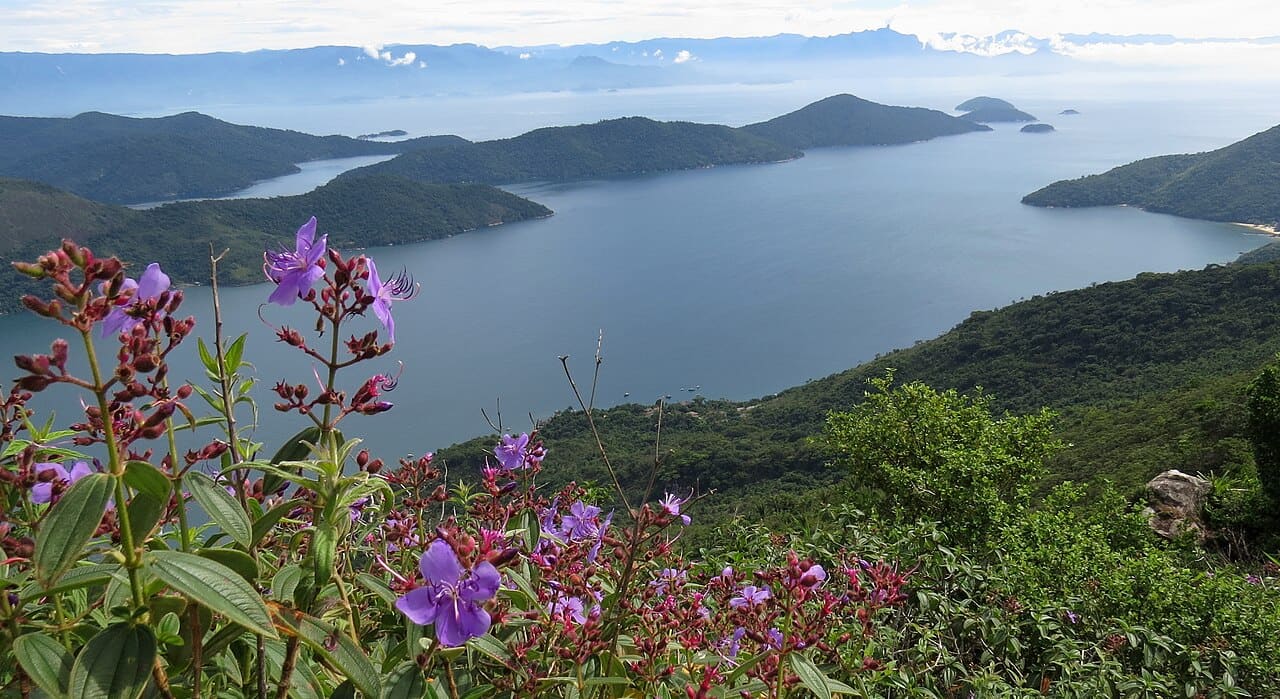
There is a place on the Paraty coast where the sea gives up being open sea and pushes 8 km inland, squeezed between mountains, until it ends in a mangrove. At night, when the houses’ few generators shut down, the water gets so smooth the stars double in number: half in the sky, half reflected. We know because we sleep there: the Albatroz, our group’s schooner, anchors inside the Saco do Mamanguá on the expeditions that leave Paraty, and writing this guide is describing the backyard where the boat spends the night.
This is the complete guide: what the Mamanguá is, who lives in it, the trail that crowns it, the mangrove at its head, and the two ways to get there, ours and the independent one.
What the Saco do Mamanguá is
The Mamanguá is an inlet of sea about 8 km long by 2 km wide, south of Paraty, protected inside the Cairuçu Environmental Protection Area, next door to the Juatinga Ecological Reserve. The press and the boatmen call it Brazil’s only tropical fjord; geologists prefer the term “ria”, because a true fjord requires a glacier on its resume. For anyone inside it, the debate is irrelevant: mountains covered in Atlantic Forest falling into the water on both sides, a sea without swell and a countryside silence.
There is no road. No street reaches the Mamanguá, no car drives in it, and its beaches (more than thirty by most counts, most of them pocket-sized) can only be reached by boat, canoe or trail. That absence is what preserves everything else, and it places the fjord comfortably among the most authentic places on the Costa Verde and the most beautiful destinations between Rio and São Paulo.
The caiçara communities (and how to visit properly)
The Mamanguá is not an empty backdrop: around eight caiçara communities live scattered along the fjord’s beaches, on fishing, small crops, manioc flour and, increasingly, hosting visitors on a small scale. The houses are simple, the canoes sit overturned on the sand and the power, where it exists, comes from a generator or a solar panel.
Visiting properly is simple and makes a difference. Buy from the residents: the fish, the manioc flour, the wooden handicrafts, the lunch arranged the day before. Ask before photographing people and their yards. Do not touch a stretched fishing net or someone else’s canoe, because out there they are working tools, not props. And take all your trash back to Paraty, because there is no collection in the fjord. The traveler who understands this is received as a guest; the one who does not is tolerated as a tourist, and you feel the difference at the first good morning.
The Pão de Açúcar do Mamanguá trail
The fjord’s classic image, the one that opens this guide, can be seen from only one place: the top of the Pão de Açúcar do Mamanguá, the 425 meter hill that guards the entrance to the inlet. The trail starts at Praia do Cruzeiro, which can only be reached by boat, and climbs 1.4 km with practically no truce: first half in forest, second half on rock slab, with fixed ropes helping on the steepest stretches. Count on 1h30 of climbing at an honest pace and nearly the same coming down, because the rock demands attention.
From the top, the whole fjord draws itself: the ribbon of water threading between the mountains, the pocket beaches dotting the shores, the mangrove closing the far end. It is one of the most impressive views on the southeastern coast and costs less than two hours of effort. Go early because of the heat on the slab, carry at least a liter and a half of water per person, wear shoes with soles that grip and give up without drama if it is raining: wet rock with ropes is not adventure, it is recklessness. The climb earns its place in our ranking of the best hikes on the Costa Verde.
The head of the fjord: mangrove, canoe and waterfall
At the head of the Mamanguá, the sea turns to mangrove. It is a preserved mangrove forest, a nursery for fish and crabs, visited by canoe or kayak, no motor, gliding down corridors of roots with herons lifting off ahead of you. Paddling in there, the sound of the blade in the water the only sound, is the fjord’s most hypnotic moment, and its most instructive: you understand on the spot why this water is so alive.
Near the head there is also a freshwater waterfall coming down the ridge, with a pool to rinse the salt off, reached by a short trail from the beach. Arrange it with a resident or with your boat’s crew to find the right spot, because nothing in the Mamanguá has a sign.
The way we recommend: sleep inside it
You can see the Mamanguá on a speedboat day trip out of Paraty. You can, and it looks good. But the fjord keeps its best hours for those who stay: the late afternoon when the speedboats leave, the night without engine noise, the dawn with the water like a mirror. That is why our recommendation is a declared one: sleep at anchor inside it.
On the Albatroz two night expedition, which leaves Paraty from around R$ 990 with the chef’s meals and activities included, the whole afternoon happens in the fjord and the night ends in a bonfire gathering on the beach, at the foot of the Pão de Açúcar, with the boat anchored just offshore. The next morning, coffee at 7:30 and a hard choice: paddle the mangrove or climb the trail, which starts practically where the boat slept, hours before any day-trip speedboat arrives. The transparent kayak on board turns even the ride between boat and sand into floating. If you want to see the scene before living it, the onboard videos are on the Albatroz Instagram.
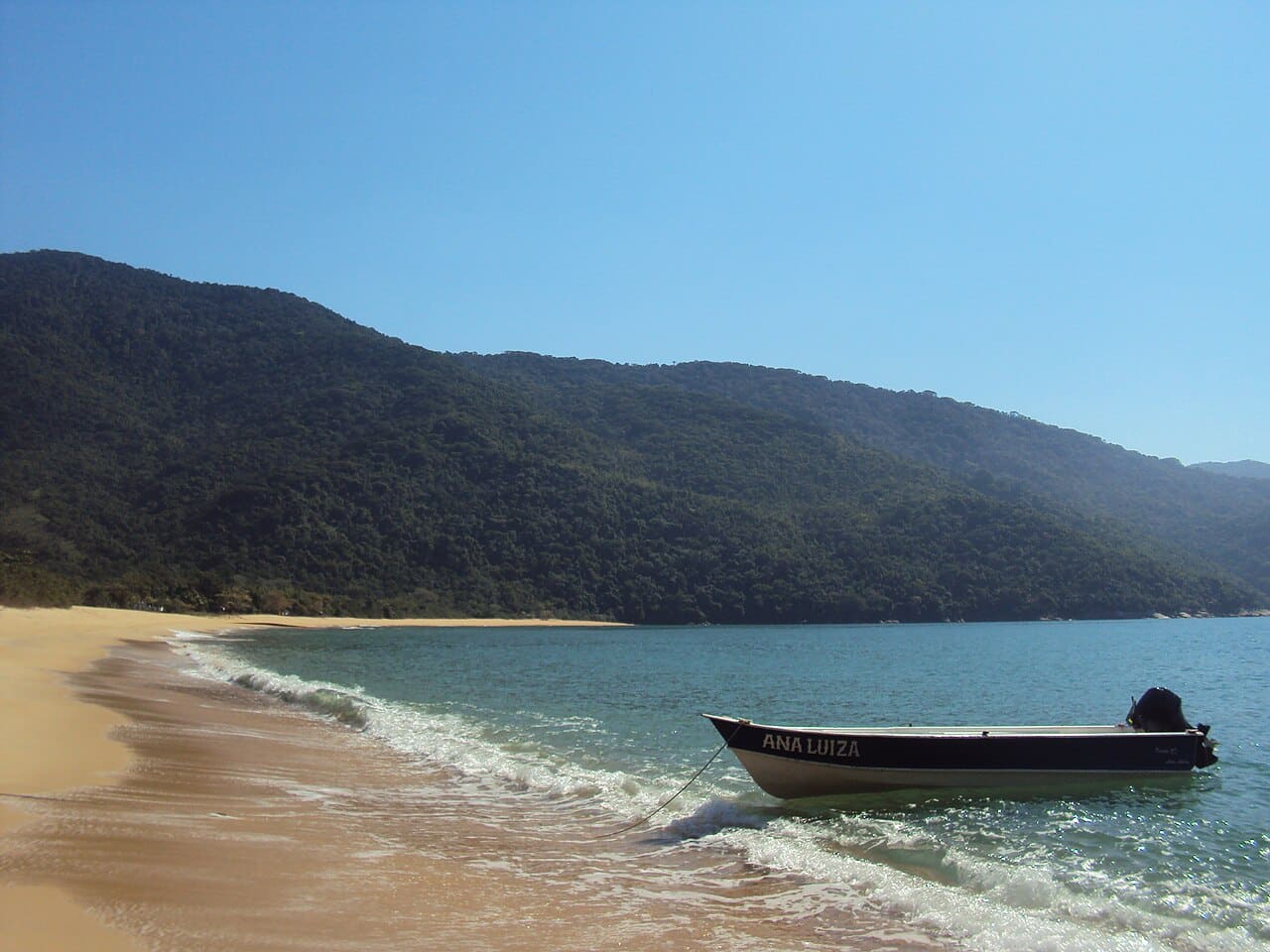 Praia Grande da Cajaíba, a stop on the same route before the fjord. Photo: Mariana Pacheco, CC BY-SA 3.0, Wikimedia Commons
The same route joins the Mamanguá with the neighboring Enseada da Cajaíba, the roadless coast right next door, with a barbecue on the sand and snorkeling at Ilha dos Meros along the way.
On your own: boat from Paraty or Paraty-Mirim
The service information for independent travelers. From Paraty, boats and speedboats leave the pier toward the fjord; by speedboat the ride is quick, by wooden boat it is an outing in itself. The shortcut is Paraty-Mirim, a village about 17 km from the center on a partly unpaved road, served by municipal bus: from there, water taxis cross to the Mamanguá in a few minutes of sheltered sea.
Three warnings from people who know the place: settle the return with the boatman before you step off the boat (there is no regular line and no app), bring cash because phone signal in the fjord is a lottery, and do not count on kiosks: water and food get sorted in advance or with the local families, arranged beforehand. And calibrate the day-trip expectation: between going, stopping at two beaches and coming back, little time on the ground remains, and the Pão de Açúcar trail rarely fits into a single day’s math.
To decide how many days to give this whole region, our guide to how many days to stay in Paraty helps close the math, and the overview of the best tours in Paraty shows where the fjord fits among the schooner outings, the cachaça distilleries and the bay’s beaches.
When to go
From May to August, winter dries the trails, clears the water and delivers the starriest sky of the year, the best possible setting for a night at anchor. In summer, the fjord stays sheltered and swimmable even when the sea outside is churned up, but the late afternoon downpours enter the schedule and the Pão de Açúcar slab demands an early start. Holidays fill the day-trip speedboats at midday; whoever sleeps inside barely notices.
The Mamanguá is proof that the coast between Rio and São Paulo still keeps places where the ruler is a different one: no road, no hurry, no noise. It tends to be the next chapter for anyone who has seen Paraty’s historic center and wants what exists beyond it. Choose your way into the fjord, preferably one that includes watching it turn to night and back to day, and leave the rest to the mountains: they have been doing this job for a few million years and have not missed a night yet.