
The most beautiful destinations between Rio de Janeiro and São Paulo
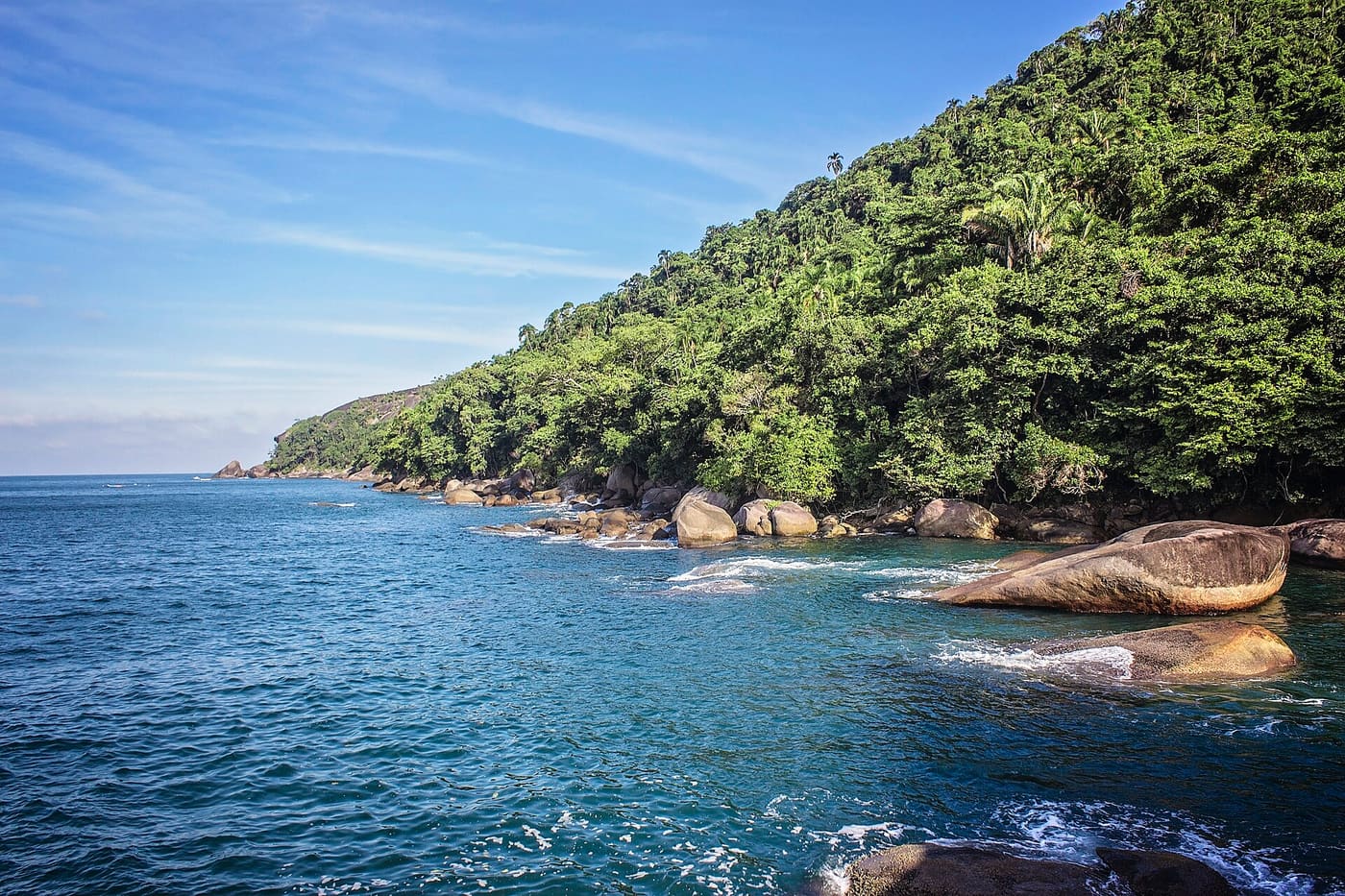
At some point on the Rio-Santos, shortly after Mangaratiba, the forest opens and the bay of Angra appears down below, sprinkled with islands. That is where almost everyone driving the road for the first time asks the same question out loud: why did nobody tell me about this before? Between Rio de Janeiro and São Paulo there is a 294 km corridor where the Serra do Mar drops straight into the water, and along that corridor sit some of the most beautiful beaches, villages and bays in Brazil. Paraty and Ilha Grande have been a UNESCO World Heritage site since 2019, and the list below includes a beach The Guardian placed among the ten best in the country.
Let us own the bias from the start: we live and work on this coast, so we are suspects when talking about it. But that is exactly why this list has no place we do not know for real, with trail mud, ferry schedules and packed holidays included in the accounting. We ordered it by the simplest possible criterion: the impact of arriving there. And we mixed towns and specific places on purpose, because in practice nobody chooses between “Paraty” and “a beach”: they choose between spending the afternoon among colonial townhouses or on a deserted strip of sand. To understand the region as a whole before diving into the list, start with our definitive guide to the Costa Verde.
1. Lopes Mendes, Ilha Grande
A 2.5 km strip of white sand so fine it squeaks underfoot, light green open sea and not one building on the shore. Not one, not even a kiosk: bring water and snacks, because nothing is sold in there. Lopes Mendes has been appearing on international lists of the world’s most beautiful beaches for decades and keeps delivering, because Ilha Grande has no cars and the beach can only be reached by sea and trail. It is first in this ranking because it combines scale, preservation and that rare feeling of a long beach with nobody in front of you.
How to get there: here we have a side, and we own it. The way we recommend is sleeping at anchor: the Albatroz expedition out of Paraty wakes up at Praia do Pouso, and those same 20 minutes of trail end at a Lopes Mendes that has not yet received anyone that day. The day-trip schooners reach the same sand later, when it already belongs to everyone. For anyone going independently: taxi boat or schooner from Vila do Abraão to Praia do Pouso, and from there the 20 minute trail through the forest; we detail times and prices in the guide to Lopes Mendes beach.
2. Saco do Mamanguá, Paraty
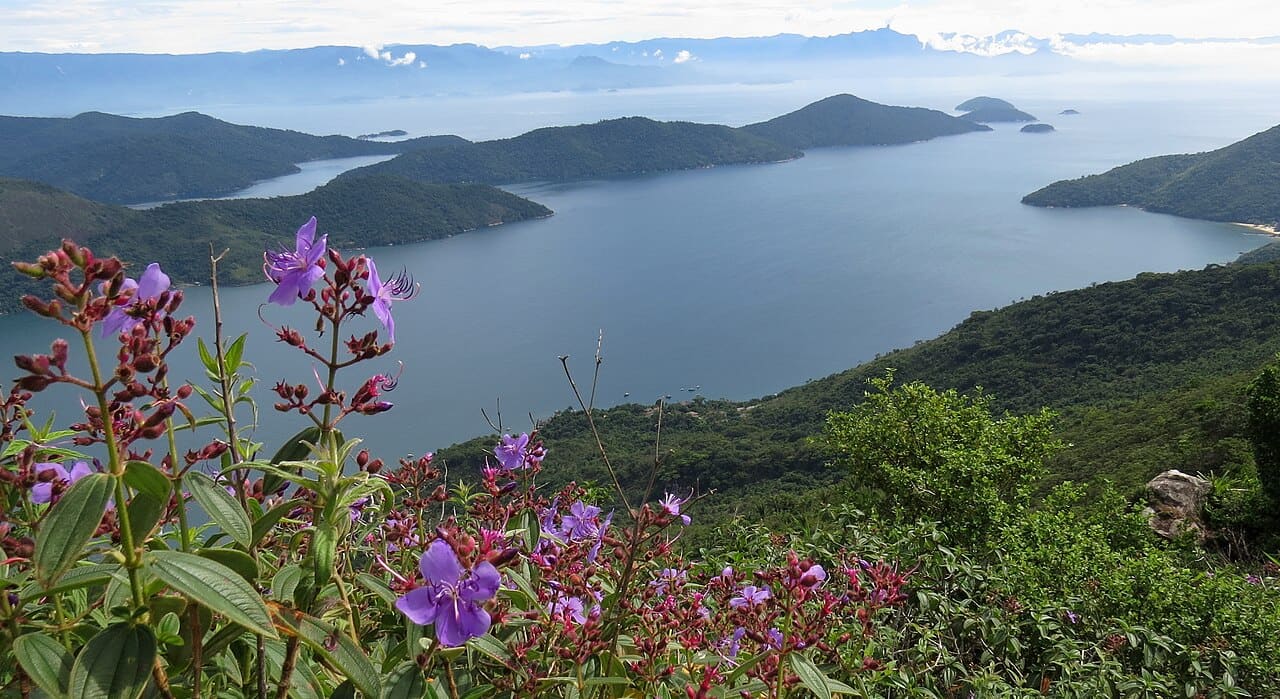 Saco do Mamanguá seen from the Pão de Açúcar trail. Photo: Pedro Gabriel Maciel, CC BY-SA 3.0, Wikimedia Commons
An 8 km arm of sea cutting into the mountains, so narrow and sheltered it earned the nickname of tropical fjord. There is no road, no built-up waterfront: there are caiçara communities, canoes and a silence that impresses more than any lookout. Speaking of lookouts, the view from the top of the Pão de Açúcar trail, with the whole fjord at your feet, is probably the most photogenic image on the Costa Verde. And our position on Mamanguá is firm: a place like this is not visited in two hours, it is slept in. The Albatroz, our group’s 23 meter boat hostel, spends the night anchored inside the fjord on the expeditions leaving Paraty, with a bonfire gathering on the beach at the foot of that same Sugarloaf; whoever wakes up on board starts the day in the silence that made the place famous, with no speedboat schedule ordering anything around.
How to get there independently: boat from Paraty or Paraty-Mirim; the Saco do Mamanguá guide explains the options.
3. Paraty’s historic center
The only place on this list where the beauty is human work, and what work. An entire preserved colonial town, “pé de moleque” stone streets designed for the tide to come in and out, 18th century churches and the sunset gilding the white facades. On full and new moons, the sea invades the low streets and the center becomes a mirror of water. There is no other ensemble like it on the Brazilian coast.
How to get there: Paraty sits on the Rio-Santos, 4 hours from Rio and 5 from São Paulo, with direct buses from both capitals. Our guide to Paraty’s historic center suggests the walking route.
4. Bonete beach, Ilhabela
A caiçara community of about 300 residents, isolated on the southern side of Ilhabela, with no road access. The beach has coarse sand, a strong shore-break sea and wooden canoes on the strip of sand; the village has a school, a small church and the rhythm of a place where the boat matters more than the clock. The Guardian placed Bonete among the ten most beautiful beaches in Brazil, and arriving on foot, after hours of forest, earns it. Those who prefer going by boat usually sleep on the island’s urban side, across the way, and hire the speedboat on the day.
How to get there: boat or a 16 km trail that crosses waterfalls along the way. Everything about the village is in the guide to Bonete beach.
5. Aventureiro beach, Ilha Grande
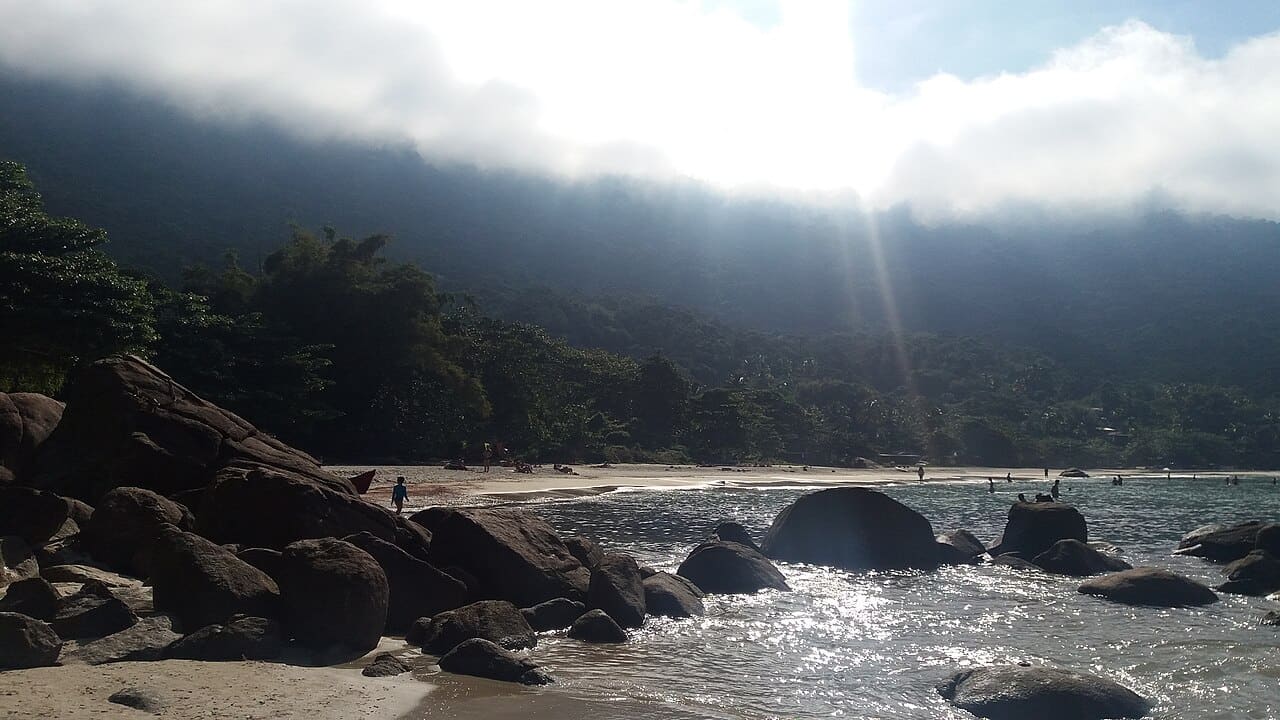 Aventureiro beach, on the ocean side of Ilha Grande. Photo: Renata Paganotto, CC BY-SA 4.0, Wikimedia Commons
On the wild, ocean-facing side of Ilha Grande, Aventureiro is the beach of the reclining palm, the one that grows almost parallel to the ground and became a symbol of the island. It is also one of the few beaches in the country inside a reserve where a caiçara community controls the visits: few people per day, simple camping, an absurd sky full of stars. Whoever sleeps there understands why limiting tourism works.
How to get there: boat from Abraão or from Angra, with a capped number of visitors; book ahead. The island’s full context is in our guide to things to do in Ilha Grande.
6. Trindade, Paraty
The easiest caiçara village to love on the Costa Verde: four beaches in sequence, a natural pool between giant boulders (the Cachadaço, where the water rarely passes your waist) and Serra da Bocaina National Park closing everything off behind. The photo that opens this article is from there. Trindade has simple infrastructure, sea for every taste and waterfalls minutes from the sand.
How to get there: 27 km south of Paraty’s center, with the municipal Colitur bus for about R$ 5. On summer holidays, go early: the access road jams.
7. Castelhanos bay, Ilhabela
From the lookout on the road, the bay draws an almost perfect heart: 1.5 km of sand between two green headlands, on the ocean side of Ilhabela, inside the state park. The charm is the whole package: the crossing of the island through dense forest, the caiçara village on the beach, the open sea waves and the Gato waterfall a walk away. It is the island’s most classic full day trip.
How to get there: a dirt road across the park, jeep or 4x4 only, or a boat around the island. The details are in the guide to Castelhanos beach.
8. Praia do Sono and Antigos, Paraty
Past Trindade, Paraty’s coastline gets even rawer. Praia do Sono is a caiçara village with no road, with campsites and simple restaurants between the sand and the forest; you arrive by a trail of about 3 km from Laranjeiras (1h to 1h30 of walking) or by a 10 minute boat. From there, another 30 minutes of trail lead to Antigos beach, deserted, golden-sanded, where camping is not allowed. Chaining the two in one day is one of the best programs in Rio state.
How to get there: Colitur bus from Paraty to Laranjeiras (line 1040) and trail or boat from the condominium gate.
9. Ilha Anchieta, Ubatuba
An entire state park on one island: clear water beaches, two marked trails and the ruins of a decommissioned prison that give the visit a layer of history no other beach in the region has. Praia do Sul, at the end of the trail from Palmas, has green water and free snorkeling of the good kind.
How to get there: schooners leave from Saco da Ribeira, in Ubatuba, usually with snorkel stops on the way. The park closes on Wednesdays for maintenance.
10. Dois Rios, Ilha Grande
The beach where two rivers meet the sea, one at each end, forming freshwater pools before the waves. In the middle, the ruins of the Cândido Mendes prison, which operated until 1993 and today houses the Museu do Cárcere, a prison memory museum. The combination of wild beach, a river to rinse off the salt and a heavy chapter of Brazil’s memory makes Dois Rios unlike anything else on this list.
How to get there: a trail of about 8 km from Abraão along a dirt road (2h30 to 3h), with no regular tour boat access.
How to visit several in a single trip
The good news: these ten places stand in line along the same road. Anyone with a week can see four or five without rushing, following the shape of our 7 day Costa Verde itinerary. The practical rule: pick a base in each state (Paraty or Ilha Grande in RJ, Ilhabela or Ubatuba in SP) and do the specific places as day trips or backpack overnights. An honest calendar warning: on long holiday weekends, Trindade and Lopes Mendes fill up and the Rio-Santos moves at a crawl; if you can, save the top two of the ranking for weekdays.
And if your question is beaches only, no towns in the ranking, we separated the sands one by one in the guide to the best beaches of the Costa Verde, and the walks that lead to them in the best hikes of the Costa Verde. Ten places, one single road. Choose where to start; the road stitches together the rest.