
The best beaches on the Costa Verde
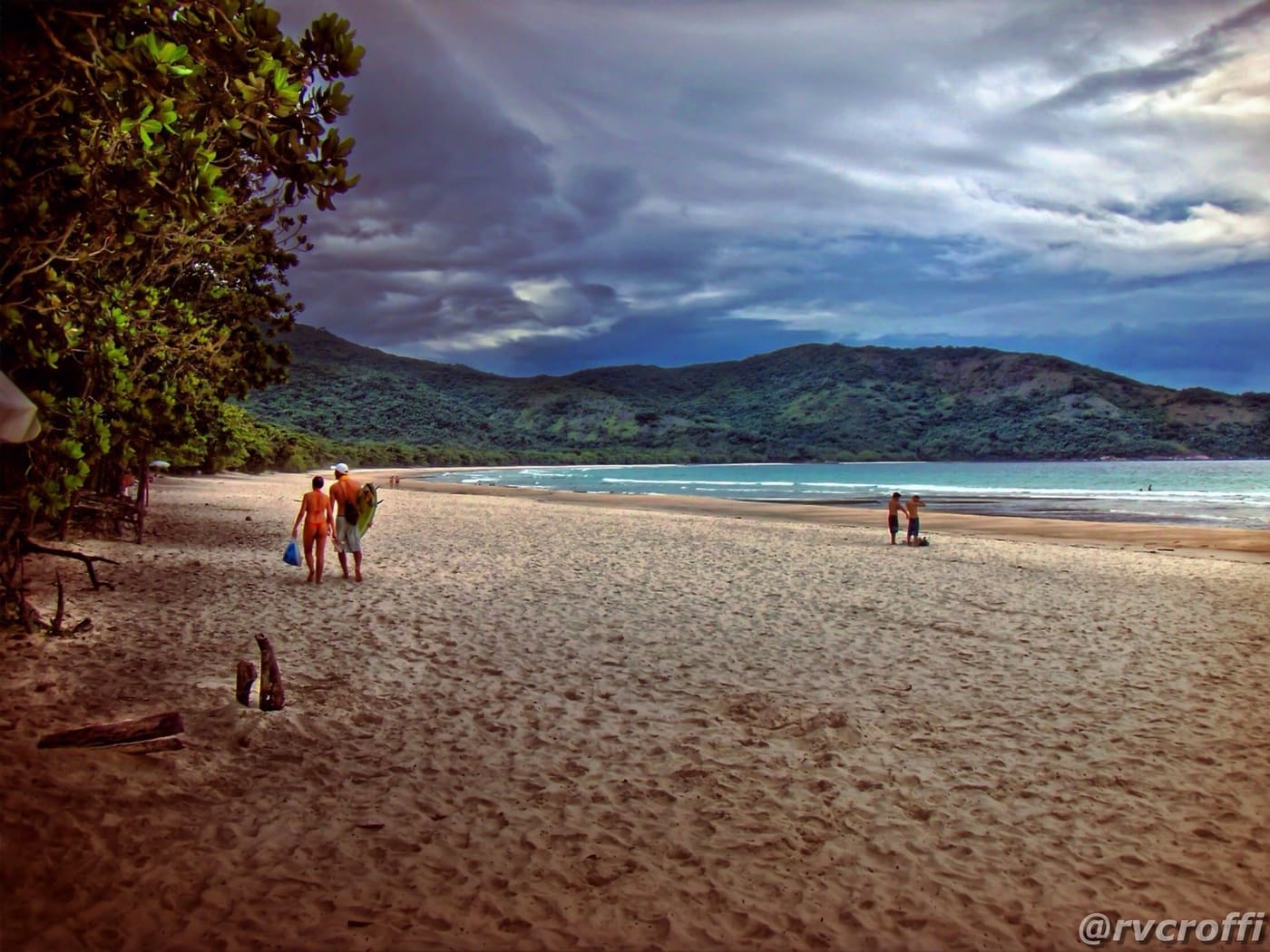
The Rota Verde Azul, which officially united Angra, Paraty, Ubatuba and Ilhabela into a single destination in 2025, adds up to around 2,200 beaches. Nobody knows them all, not even the people who live here. And we do live here: the people writing this live off this coast and on this coast, which makes this list biased and, at the same time, is the reason it works. No sand made the cut that we do not genuinely know, tides, borrachudos and packed holidays included.
The list covers the whole corridor, from Rio de Janeiro to São Paulo, and carries a second declared bias: beaches with personality. Almost all of them require a trail or a boat, because on the Costa Verde difficult access is what keeps the sand the way it is. We ordered them east to west, in the sequence of someone traveling from Rio toward São Paulo, the same direction as our definitive Costa Verde guide. And a reminder is in order: beaches are one slice of the region, not the whole; the hikes and the waterfalls earned guides of their own.
Lopes Mendes, Ilha Grande
The region’s calling card and a constant presence in world rankings: 2.5 km of white sand so fine it squeaks underfoot, open sea in pale tones and zero construction. The water has waves, which also makes it a surf spot with boards for rent right on the sand. Bring water and snacks, because there is no structure inside. And if the choice were ours, nobody would see it on a day trip: the way we recommend is sleeping at sea. The Albatroz anchors near Praia do Pouso the night before, and whoever steps off the deck at daybreak crosses the trail and finds one of the most famous stretches of sand in the country nearly deserted. Whoever crosses from Abraão mid-morning finds the same beach shared with the rest of the island.
Access on your own: taxi boat or schooner from Vila do Abraão to Praia do Pouso, plus a 20 minute trail. Full guide on the Lopes Mendes beach page.
Aventureiro, Ilha Grande
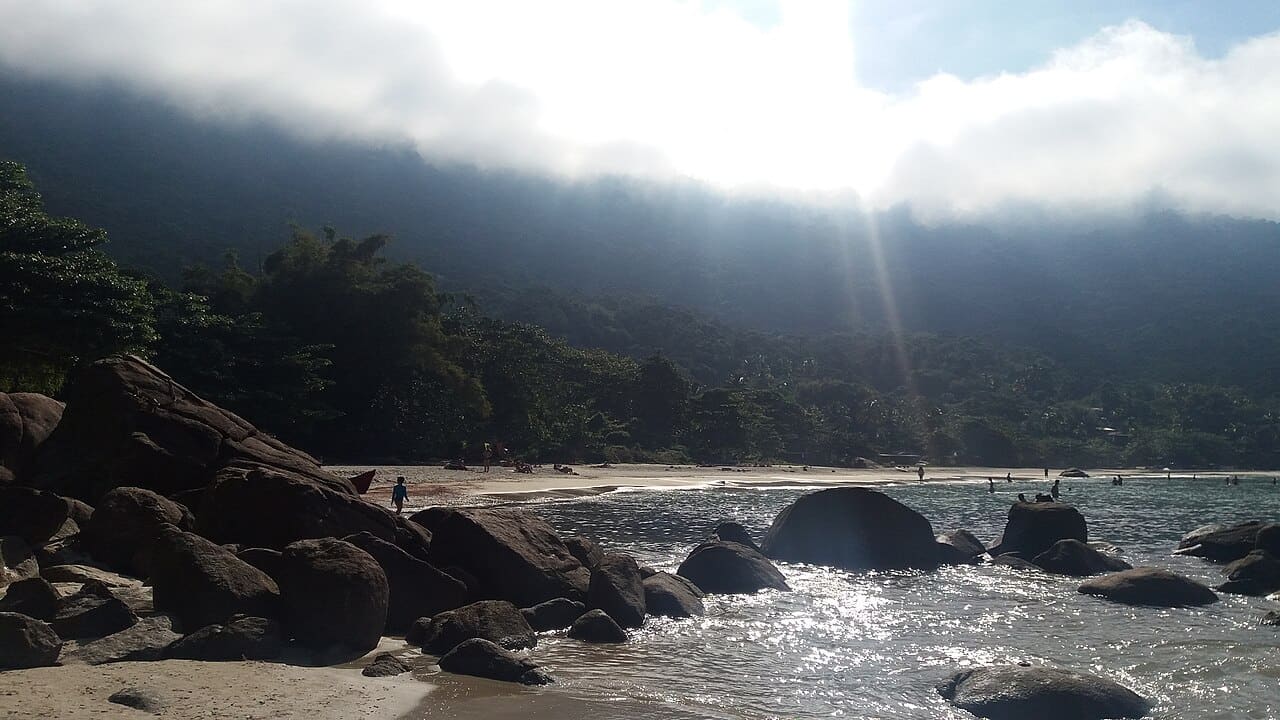 Aventureiro’s leaning coconut palm, symbol of Ilha Grande’s wild side. Photo: Renata Paganotto, CC BY-SA 4.0, Wikimedia Commons
On the ocean side of the island, inside a reserve with limited visitation, Aventureiro is the beach of the famous leaning coconut palm and of a caiçara community that hosts visitors in simple campsites. Sleeping there, under a starry sky with the sea breaking a few meters away, is a desert island experience with a safety net.
Access: only by boat, from Abraão or Angra, with limited daily slots; book ahead. Context in the guide to things to do in Ilha Grande.
Dois Rios, Ilha Grande
Two rivers empty out, one at each end of the beach, forming freshwater pools to rinse off the salt. In the middle, the ruins of the Cândido Mendes prison, closed in 1993, today the Museu do Cárcere. A wild beach with a layer of history: there is nothing else like it on the Brazilian coast.
Access: a trail of about 8 km from Abraão, along a dirt road, 2h30 to 3h each way.
Cachadaço, Trindade (Paraty)
Trindade’s cove has four good beaches, but Cachadaço is the reason for the fame: a beach of strong sea ringed by giant boulders and, on the inner side of the headland, a natural pool of calm water where fish swim around your shins. You can do both in the same day and leave with opposite versions of the same landscape.
Access: Colitur bus from Paraty to Trindade (27 km, about R$ 5) and, from there, a trail of about 30 minutes or a boat to the natural pool. On summer holidays Trindade’s little road jams; arrive early or pick another day.
Praia do Sono, Paraty
An entire caiçara village with no road: campsites, fish restaurants and simple houses squeezed between the sand and the forest. Sono is the gateway to Paraty’s wild coastline and one of the places backpackers from the Southeast love most, with reason. The energy of late afternoon, when the tour boats leave, cannot be explained, only felt.
Access: bus from Paraty to Laranjeiras and, from the condominium, a trail of about 3 km (1h to 1h30, with climbs) or a 10 minute boat ride.
Antigos, Paraty
Sono’s neighbor and rawer still: deserted, golden-sanded, without any structure, with open sea and big boulders framing the ends. It sits inside a preservation area where camping is not allowed, which guarantees it stays exactly as it is. And here we own the house preference: this coastline shows itself best from the water. The Albatroz, our group’s 23 meter schooner, runs along this peninsula on the expeditions leaving Paraty toward Cajaíba and the Mamanguá, and seeing Sono and Antigos from the deck, without one building breaking the line of the forest, explains the preservation better than any sign. If you go by land, combine it with Sono on a day trip.
Access: a trail of about 30 minutes from the end of Praia do Sono, crossing a shallow river and a climb with stretches of steps.
Jabaquara, Paraty
The urban exception on the list, and with purpose: it is the big, shallow beach about 2 km from Paraty’s historic center, reachable on foot in 20 minutes. Calm, warm water, a bottom that stays shallow for dozens of meters, kayaks and SUP boards for rent. It is where Paraty locals take their kids and where the Bloco da Lama is born every carnival. Ideal for closing a day at the historic center with an unhurried swim.
Access: a 20 to 30 minute walk from central Paraty, past the Forte hill.
Praia do Félix, Ubatuba
Two beaches for the price of one: the right end has calm sea, transparent water and a natural pool in the rocks of the headland, great with kids; the left end has real waves and emptier sand, surfer territory. From the left headland a short trail leads to the small Conchas beach.
Access: entrance at km 33 of the Rio-Santos, through a condominium, with a downhill walk to the sand and paid parking.
Itamambuca, Ubatuba
The most famous surf break on the São Paulo north shore, stage for rounds of national championships. The beach is long, with a river emptying at one end and a leafy vacation village behind it. Even non-surfers get their money’s worth: the strip of sand is wide, the view of the mountains is open and the river forms a good pool for kids at the right tide.
Access: by car along the Rio-Santos, 13 km north of central Ubatuba, with paid lots at the entrance to the village.
Maresias, São Sebastião
The young beach of the Costa Verde: 5 km of open sea, strong waves at Canto do Moreira (the break that shaped two-time world champion Gabriel Medina) and the only real nightlife on the corridor. If your trip calls for one day of crowded beach, music and beautiful people before returning to the quiet, this is it.
Access: by car or bus along the Rio-Santos, between São Sebastião and Boiçucanga; Pássaro Marron serves the region from São Paulo.
Castelhanos, Ilhabela
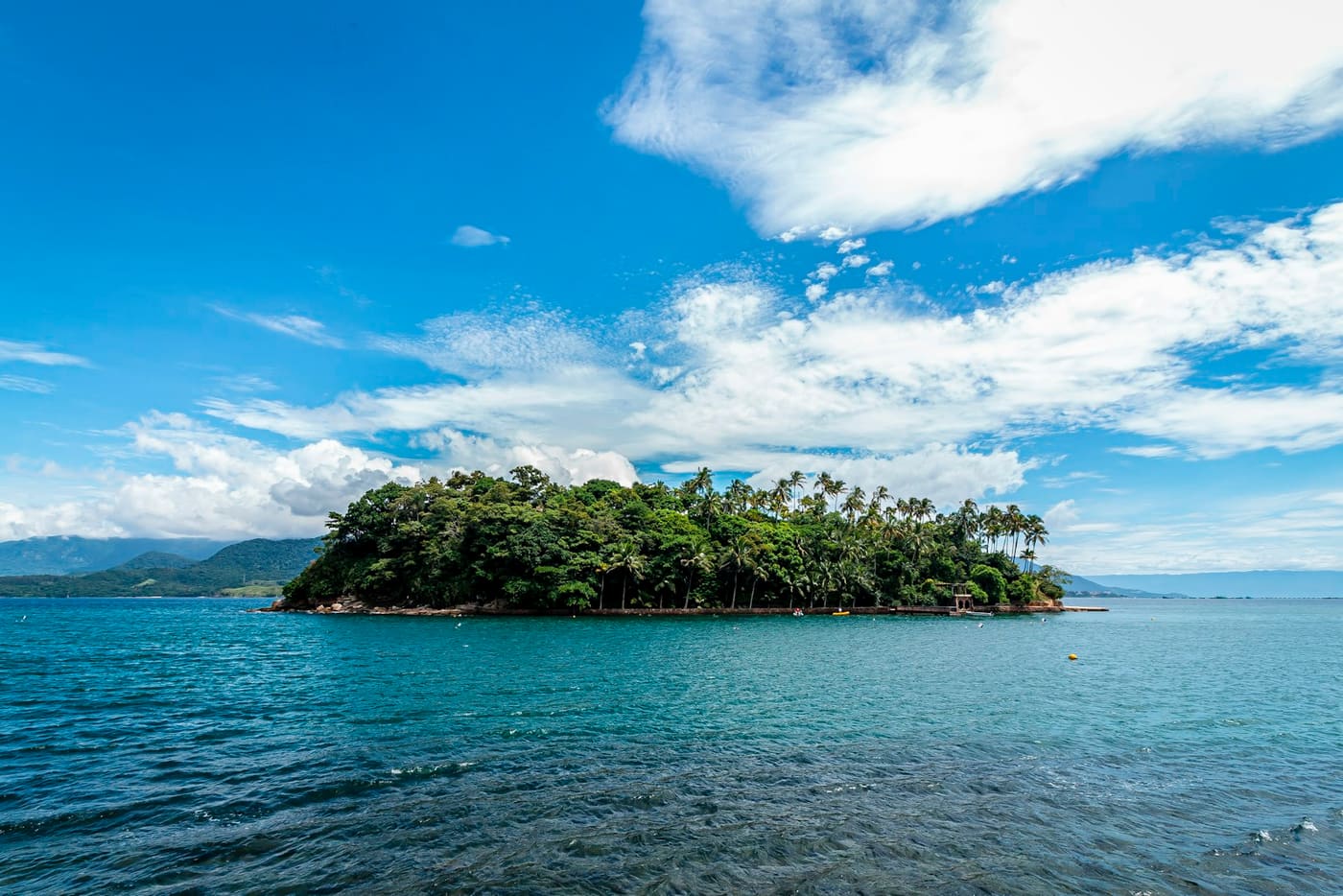 In Ilhabela, most of the territory is closed state park forest. Photo: Marcos Assis, Unsplash
The heart-shaped bay on the ocean side of Ilhabela, inside the state park. The journey is half the fun: crossing the island on a dirt road through dense forest is worth the day on its own. Once there, open sea with waves, a caiçara village, fish restaurants and the Gato waterfall a 2 km walk from the left end.
Access: jeep or 4x4 along the park road, or a boat around the island. Details in the guide to Castelhanos beach.
Bonete, Ilhabela
The reward at the end of the list and at the end of the trail: a caiçara community of around 300 residents, no road, canoes on the coarse sand and a shorebreak that demands respect. The Guardian placed Bonete among the ten most beautiful beaches in Brazil. Arriving on foot, after 16 km of forest and waterfalls, turns the beach into an achievement. Going by boat, launches are hired on the urban side of the island, across the way.
Access: boat from Ponta da Sela or the 16 km trail with the Laje and Areado waterfalls along the way. All of it in the guide to Bonete beach.
Three warnings from people who live here
First, the open-ocean water in this region (Bonete, Castelhanos, Antigos, Aventureiro) tends to have a shorebreak and currents; with kids, prefer Jabaquara, the right end of Félix or the Cachadaço pool. Second, in Ilhabela always carry repellent: the borrachudo is small but persistent. Third, April, May, September and October deliver empty beaches and clean sea; check the full calendar in the best time to visit the Costa Verde.
Going after the most isolated ones without a car is doable: almost all of them depend on boats and trails anyway, and the guide to the Costa Verde without a car shows the bus connections between the bases. In the end, the most beautiful sand of your trip will probably be the one that took the most work to reach. That is how it goes around here.