
Bonete beach: the caiçara village at the end of the trail
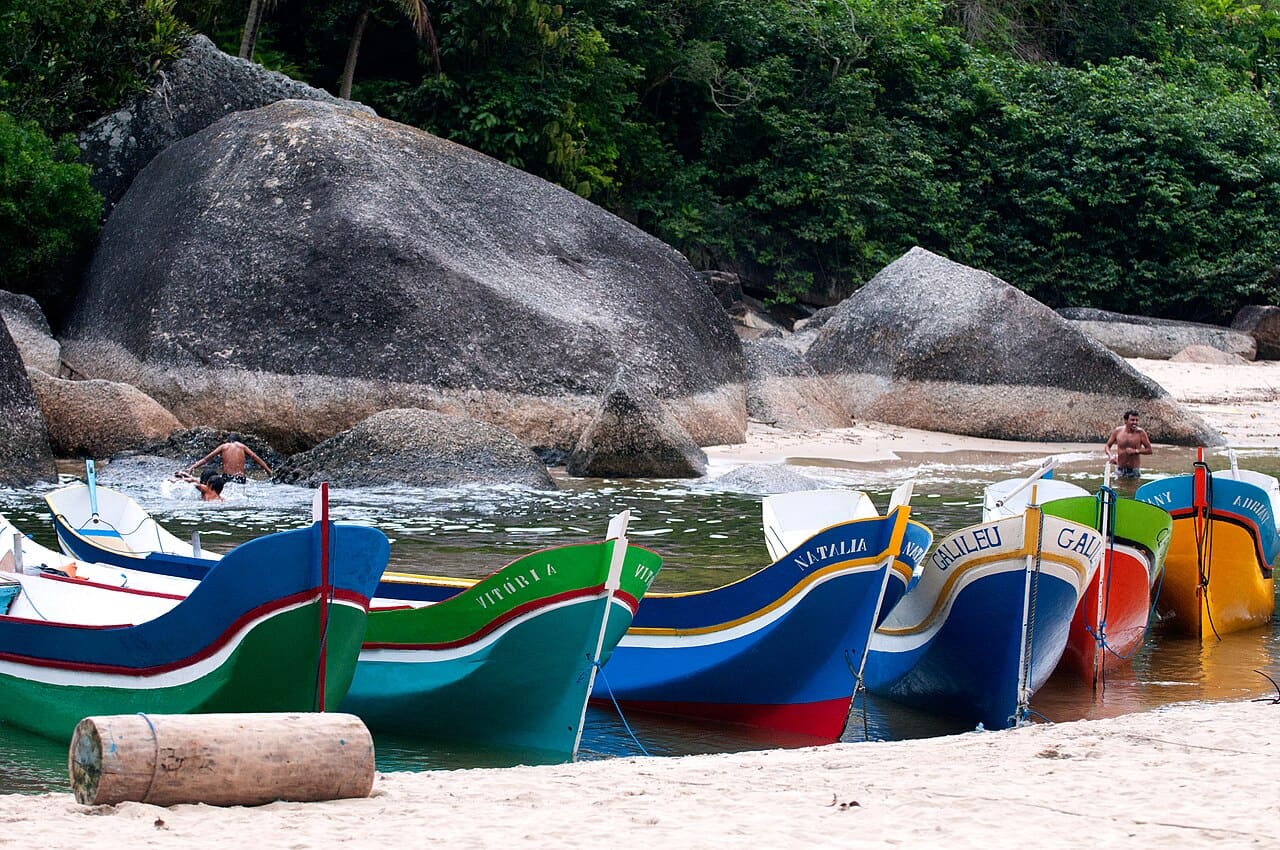
At 11 pm, the community generator switches off and Bonete goes dark. That is the moment when many people understand why they came: the sky collapses onto the beach, the surf becomes the only sound and the remaining lights are the solar panels on some veranda and the embers of a fisherman’s fire. We live in Ilhabela, have been hosting travelers for ten years and have lost count of how many came back from this beach saying the same sentence: “it is not a place, it is another time”.
Bonete sits at the far south of the island, facing the ocean, with no road. You arrive on foot, by a trail of about 16 km, or by speedboat, rounding the coast. And you find the largest caiçara community in the archipelago (caiçara is the name of the traditional fishing people of this coast): around 300 residents living off fishing and community-based tourism, with a school, canoes carved from tree trunks resting on the sand, and an English newspaper, The Guardian, having placed the beach among the ten most beautiful in Brazil. This guide is for you to get there the right way and, more importantly, behave the right way.
What Bonete is (and what it is not)
First, expectation alignment. Bonete is not a swimming-pool beach: it has a shore break, open to the ocean, with waves that pound the sand and currents that demand respect. Surfers love it; anyone hoping to float in jelly-flat water will be frustrated. Nor is it a stage-set village: it is a place where real people live, fish, study and go to bed early. There is no pharmacy, no ATM, the phone signal fails and the power comes from a community generator and solar panels. Cars, none; at most a few support quad bikes belonging to the community itself.
What it is: one of the last beaches on the São Paulo coast where caiçara culture remains whole. The wooden canoes on the sand are not decoration, they are working tools. The lunch fish slept in the sea. The kids cross the village barefoot on their way to school. And the visitor who understands this is received with a hospitality no resort can rehearse.
Getting there: trail or speedboat
On foot, by the southern crossing
The classic route leaves from Ponta da Sela, where the island’s southern road ends, and crosses about 16 km of Atlantic Forest in 4 to 6 hours of walking, in a constant up and down that passes the Laje and Areado waterfalls. It is one of the most beautiful crossings on the Brazilian coast and deserves its own guide: we wrote the complete step by step in the Bonete trail. Leave early, carry water and do not underestimate it: 16 km in the hills are not 16 km on a bike path.
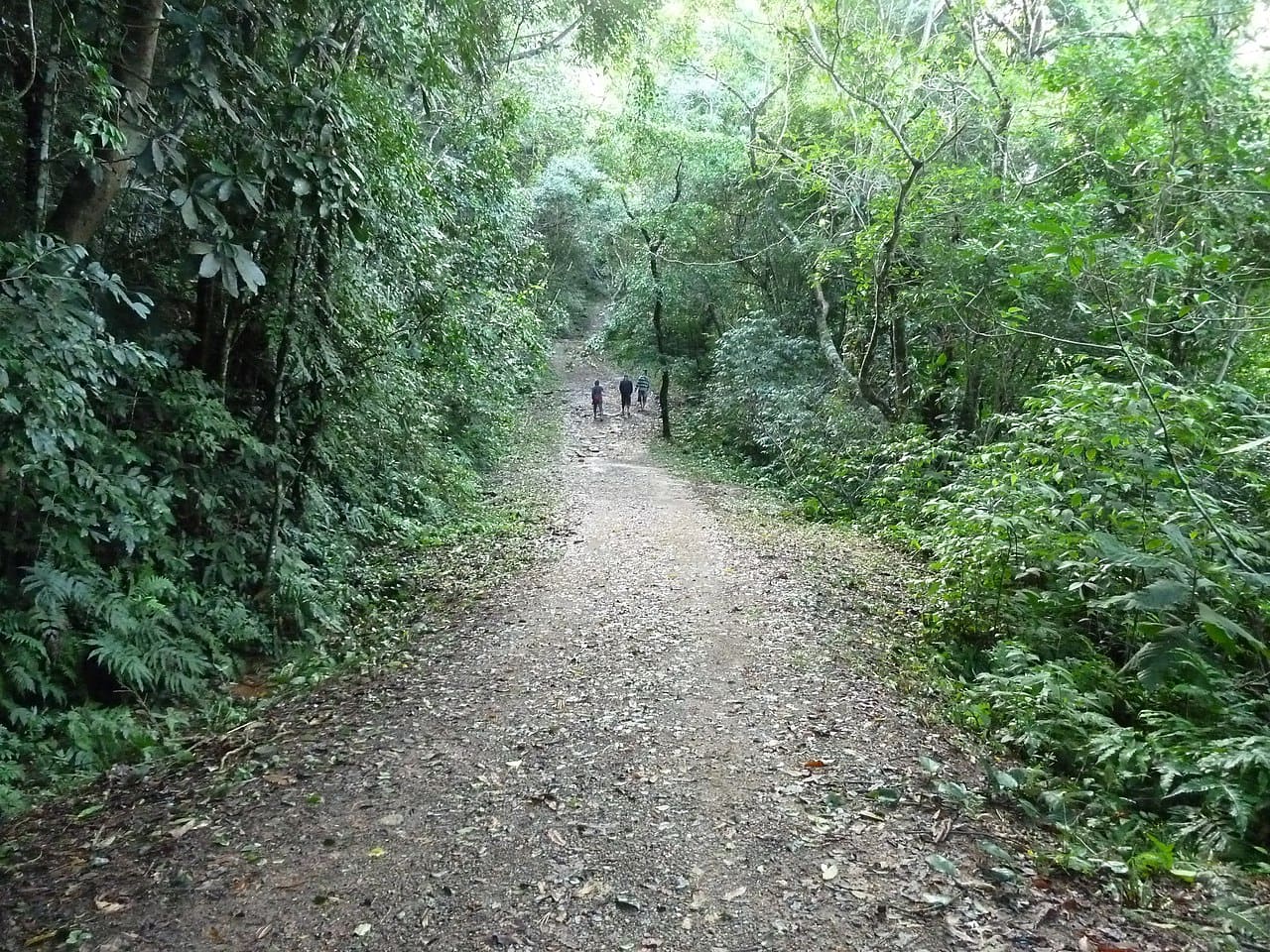 The way by land: closed forest almost the entire route. Photo: Boris Karpuk, CC BY-SA 3.0, Wikimedia Commons
By speedboat, rounding the coast
Anyone who prefers the sea charters a speedboat through the island’s agencies: about an hour of navigation from the Perequê pier, in the range of R$ 180 to R$ 200 per person round trip in 2026. There are also boats leaving from São Sebastião, on the mainland, for less per leg. Two warnings from people who know: it is an open-sea route, so it rolls and it cancels when a big swell comes in; and the landing is through the surf or at a simple pier, depending on the day, so protect your backpack and camera in a dry bag.
The combination we recommend most for anyone in decent shape: walk in, feel the crossing, and come back by boat the next day, with your legs saying thank you and the ocean coast parading alongside.
Sleeping in the village: camping and caiçara guesthouses
Bonete asks for an overnight stay. The speedboat day trip exists, but it delivers the beach without the best part: the late afternoon when the boats leave, the fish dinner at the house of the person who caught it, the 11 pm sky. The lodging is all community-based: organized campsites in family backyards and simple guesthouses run by the caiçaras themselves, with fan-cooled rooms, showers not always hot and a real breakfast. Do not expect air conditioning or decent wifi; expect a hammock on the veranda and good conversation.
Two rules with no negotiation. Camping on the beach is forbidden, as everywhere in Ilhabela: camping happens inside the village, on residents’ land. And book ahead on holidays and in high season: the village’s capacity is small on purpose, and showing up without a reservation on a January Saturday is asking to sleep badly or go back on the boat.
Bring cash for everything: lodging, food, the boat back. The weak signal knocks out any card machine at the wrong moment.
The day at Bonete
The beach has about 500 meters of coarse, pale sand, closed off by rocky points. The swimming is good on gentle days, always with attention to the shore break; on big days, the show is watching the surfers and the canoes threading the surf. Ten minutes of easy walking from the village is the Poço Fundo waterfall, dark and cold, perfect for rinsing off the salt. More willing hikers push on to neighboring beaches emptier still, some of which appear in our guide to the secret beaches of Ilhabela.
And there is the activity that appears on no list: sitting down. Eating a whole fish without hurry, watching a canoe come back with the day’s catch, striking up a conversation with someone born there. Bonete runs on island time, and fighting that is wasting the trip.
Visiting with respect: the basics many people forget
We insist on this point because we see the opposite happen. Bonete is not an attraction, it is home. In practice:
- Buy from the community: the lunch, the campsite, the boat back, the crafts. That is what keeps the village alive without hollowing it out.
- Ask permission before photographing people, houses and the inside of the village. A canoe on the sand is scenery; a fisherman mending his net is a person working.
- All the trash you generate goes back with you, organic included. There is no collection truck passing through.
- Loud music, drones over the village and a “beach party” are the fastest way to be unwelcome in a place that welcomes well.
- Respect the generator: when the lights go out, the village sleeps. The silence is part of the agreement.
When to go
The dry window, May to August, is the best for the trail: firm mud, low rivers, friendly temperatures. April, May, September and October are the island’s best overall balance, with less rain and fewer people, as we detail in the guide to the best time to visit Ilhabela. In summer, the village fills up, the trail turns to mud on rainy days and the sea gets less predictable for the boat.
Winter holds a bonus: between May 16 and August 16, humpbacks migrate along the São Paulo north coast, and the whole island enters whale season. The whale watching departures leave from the historic center pier, on the other side of the island, and the dates are at baleias.hosteldavila.com.br. If your trip lands in that window, you can join the island’s two extremes in the same week. And if you doubt that cold weather belongs on the coast, read Ilhabela in winter: the short answer is yes.
How many days to set aside
One night is the minimum for the experience to make sense; two are the sweet spot, with a full day of beach and waterfall between arrival and departure. Inside a longer trip, Bonete fits well from five island days up, as we show in the 5 day itinerary and in the general math of how many days in Ilhabela. Pairing it with the bay of Castelhanos on the same trip is the way to meet both faces of the wild side.
The base before and after
Every crossing needs a starting point, and ours is in Ilhabela’s historic center, on the channel side, on the opposite side of the island from the open sea: Hostel da Vila, our team’s eco lodge since 2016, a few minutes from the ferry. The routine of anyone heading to the far south usually goes like this: sleep well, have an early breakfast, leave the excess luggage in storage and set off light; on the return, the 32°C heated pool repairs the legs and Floresta Bar takes care of the rest of the night, with music and a table full of crossing stories.
In the end, what Bonete delivers does not fit in a photo: it is the feeling of having reached a place that does not give itself up easily, and of having been welcomed anyway. If that moves you, the next step is choosing your way in: read the Bonete trail step by step and decide whether your arrival will be by land or by sea.