
Secret beaches of Ilhabela: the ones you only reach by sea or trail
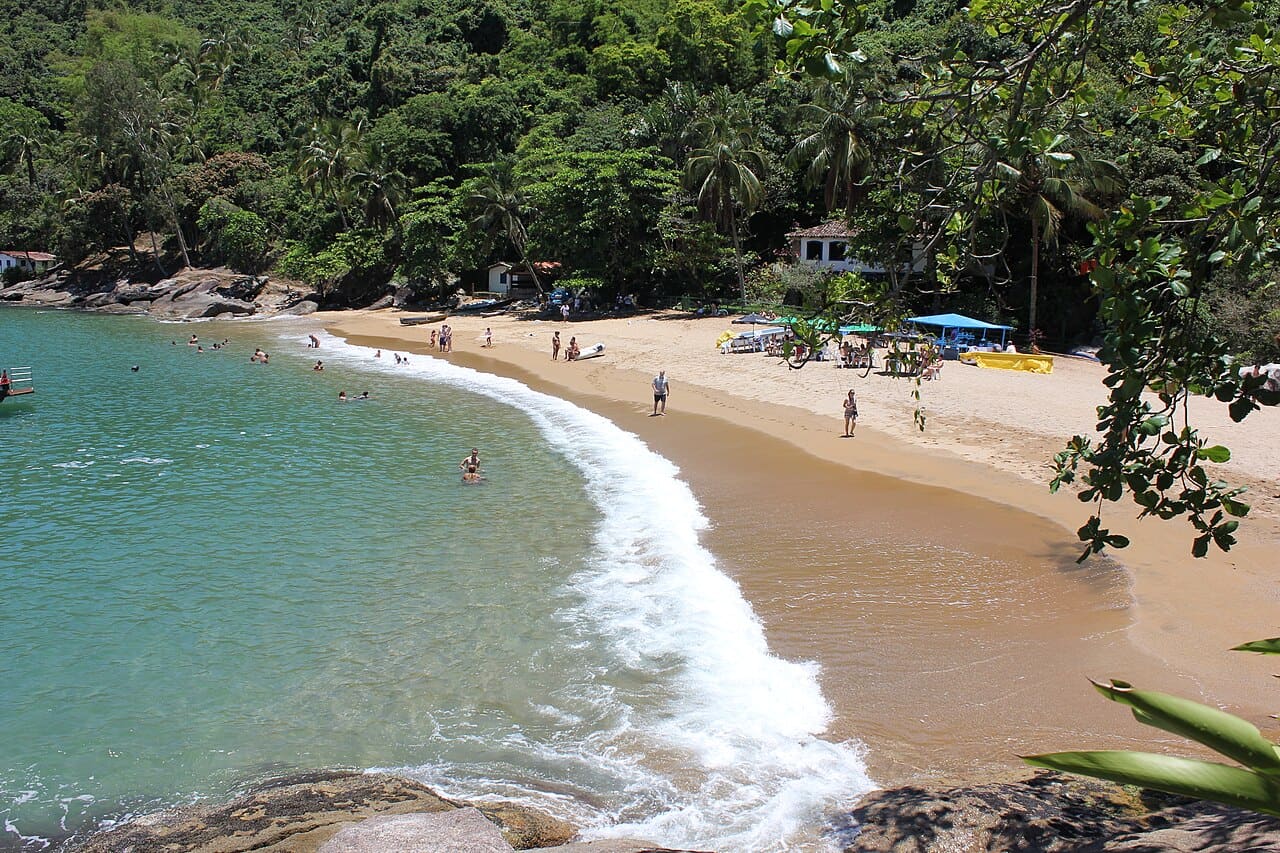
Every Ilhabela resident keeps a beach up their sleeve. It is the one we do not post, the one we recommend in a low voice after gauging whether the person will take care of the place. This article opens some of those cards, and it opens with a condition agreed in the very first line: a beach with no infrastructure gives back exactly what it receives. Whatever goes in the backpack comes back in the backpack, including every can and every cigarette butt.
The reason for so many tucked-away beaches is simple: most of the island is a state park of Atlantic Forest, with no roads. Of the archipelago’s more than 40 beaches, only a minority have asphalt at the door. The rest are reached by sea, by trail or by a combination of the two, and it is exactly that difficulty that preserves the transparent water and the silence you will find.
Before you go: the rules of the game
No commerce at most of them, so water and food travel with you. Repellent is survival gear, because clean rivers breed the borrachudo (the tiny biting fly of the island) and the isolated beaches are its territory. Cash for whatever comes up, because phone signal is a lottery. And the sea is in charge: speedboats and schooners cancel when the south wind blows, so never leave a boat beach for the last day of the trip. To pick the right window, read our best time to visit Ilhabela: from May to August the sea gets clearer and the trails dry out.
Praia da Fome
The most accessible of the inaccessible. It sits on the north coast, past the end of the road: either you go by speedboat from Perequê, or you walk 4 km of forest trail from Jabaquara, about 1h30 to 1h40. The reward is a small cove of pale sand with some of the most transparent water on the island, calm enough to float with a mask watching the bottom. Few boats stop there. The old manor house on the beach carries the hard history that gave the place its name, and it deserves to be read before the visit: we tell the whole story in our Praia da Fome guide. Micro-action: book the speedboat the day before and agree on the pickup time with the pilot before stepping off.
Saco do Eustáquio
East side, sea access only. The 150 meter cove is sheltered by Ponta da Cabeçuda and by Búzios Island, and the shelter manufactures lagoon-still water, transparent to the bottom. A small caiçara community lives there (caiçara means the traditional fishing people of this coast) and welcomes the boats with fried fish and seafood at a fair price, one of the most honest lunches on the island. Micro-action: climb the rocky rise at the left corner of the beach; the panoramic view takes in Castelhanos bay and Serraria island, and most visitors never even find out it exists.
Praia da Serraria
Eustáquio’s neighbor and even emptier, because the tour boats rarely stop. It is about 400 meters of wide, pale sand, a calm sea, fishermen’s colorful houses among the trees and a community that still lives off artisanal fishing. Between it and Eustáquio there is a 3.6 km trail, easy level, passing the Guanxumas and Caveira beaches, the Poço da Nega swimming hole and the ruins of the sawmill (serraria) that named the place. Micro-action: ask the boat to drop you at one beach and pick you up at the other; the walk across takes 1h30 and transforms the day. Our guide to the best hikes in Ilhabela has this one and others of the same caliber.
Praia da Pacuíba
The democratic secret: you can get there without a boat. It sits in the north, about 16 km from the ferry, screened from the road by a short trail that works as a doorman. It is only 127 meters of sand, with a soft lawn and chapéu-de-praia trees (a broad native shade tree) shading the edge. No kiosk, no sound systems, and clear water full of rocky nooks for beginner snorkeling. Micro-action: go by municipal bus plus a walk, or by car early, and bring everything you plan to consume. Our guide to Ilhabela without a car shows how the north works without a steering wheel.
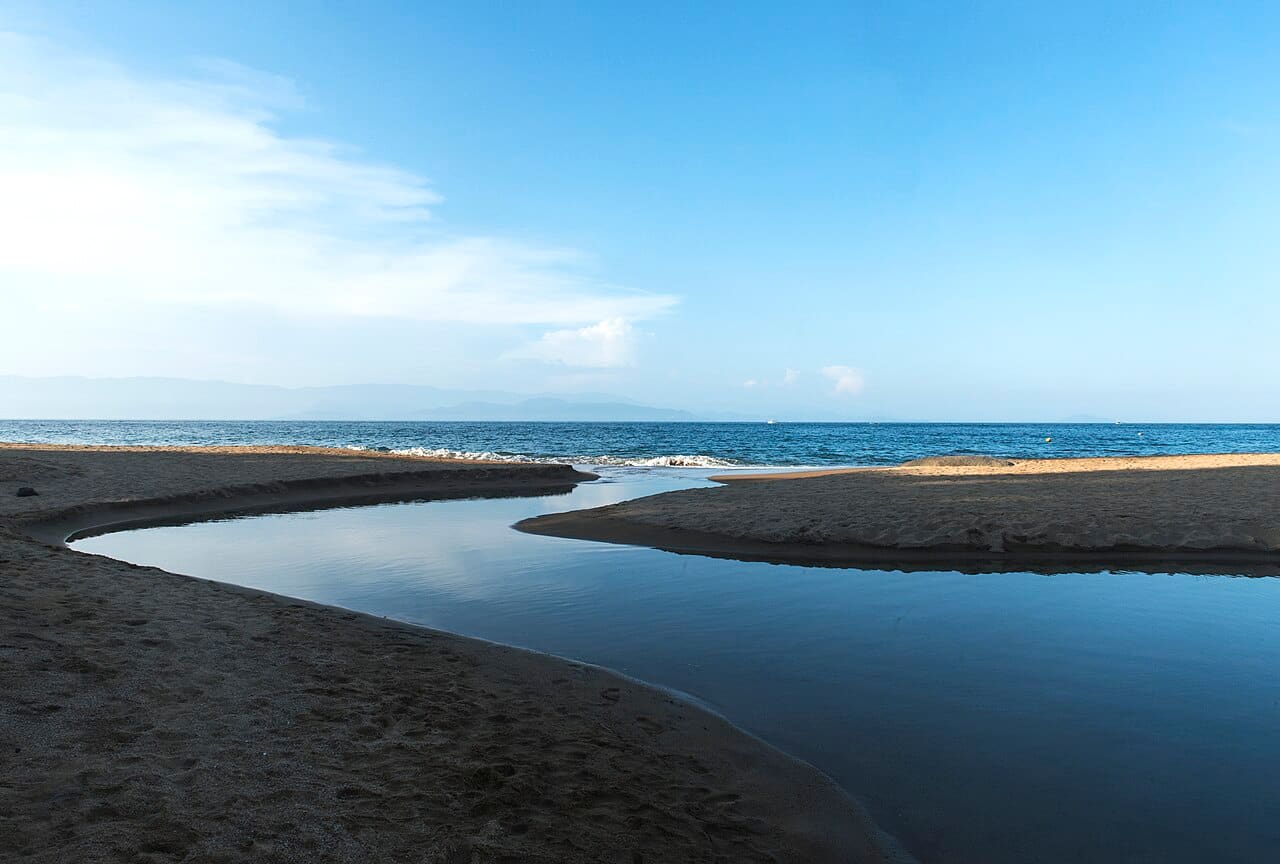 Jabaquara: the end of the road and the beginning of the secret. Photo: Maristela Colucci/MTur, public domain, Wikimedia Commons
Praia do Jabaquara
Strictly speaking, it is no longer secret: it has a road. But the last 8 km of dirt with steep climbs hold back the crowds, and whoever arrives finds a pale-sand beach cut by two streams, with a freshwater lagoon behind the sand and a transparent shore-break sea. It is the gateway to the northern secrets, since the trail to Fome starts there. Micro-action: read our complete Jabaquara guide first, especially the part about the road on a rainy day.
Praia do Bonete
The secret the world discovered and that stays secret anyway, because the access forgives nobody: 16 km of forest trail or a speedboat around the island’s south. The caiçara village of around 300 residents lives at its own pace, the shore break pounds for the surfers, and The Guardian once placed the beach among the ten most beautiful in Brazil. Anyone who sleeps one night in the village understands why the list in this article exists. Micro-action: read the Bonete guide and the account of the trail before deciding between the boat and your legs.
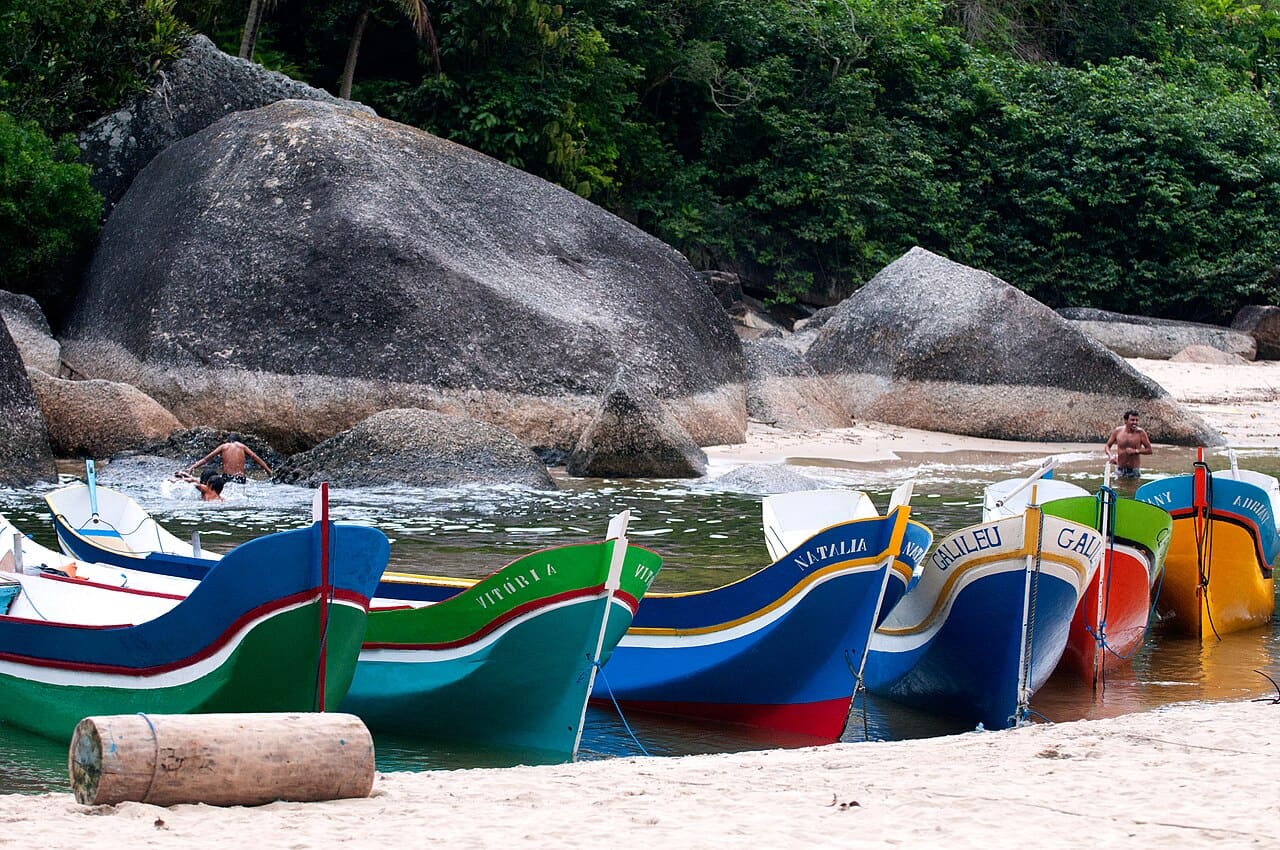 Bonete: the village its hard access protects. Photo: João Lara Mesquita, CC BY-SA 4.0, Wikimedia Commons
The questions we hear most about the secluded ones
“Can I do more than one in a day?” Yes, and it is the format we recommend: Jabaquara with Fome via the trail, Eustáquio with Serraria via the walk across or the boat that waits. The classic mistake is trying north and east on the same day; the sea might allow it, the clock does not.
“Do I need a guide?” On the short trails described here, with good weather and an early start, an attentive hiker manages with an offline map and common sense. When in doubt, on the long trails or on any rainy day, hire a local guide: beyond the safety, the walk yields twice the stories, and hiring island people is the most direct way for tourism to give something back to the communities that keep these beaches alive.
“Is there anywhere to eat?” At Eustáquio and Serraria, the caiçara families’ fish when there is movement; at Jabaquara, simple kiosks; at Fome and Pacuíba, nothing. The practical rule: pack food as if there were nothing and treat any kiosk as a gift.
“What if the weather turns?” It does turn, and fast. A cancelled boat is not a lost trip: the island keeps waterfalls, the historic center and viewpoints for those days, and our things to do in Ilhabela lists plan Bs worthy of the name. Anyone traveling on few days should put the boat beaches at the start of the itinerary, with room to rebook; the day-count math is in how many days in Ilhabela.
How to book a boat without a headache
The speedboats and tour schooners leave mostly from Perequê and the piers on the channel side. A schooner is cheaper and slower, good for whoever wants the whole day at sea with stops; a speedboat chartered as a group buys freedom of route and schedule. In either format, confirm two points before paying: the pickup time and the bad-weather cancellation policy.
Between May 16 and August 16, the boat route gains a bonus: it is whale season along the island’s coast, with the humpbacks peaking in June and July. We run whale watching departures leaving from the Pier da Vila, in the historic center: R$ 320, 3h30 at sea, with the usual honest note, a sighting is nature, not a contract.
And here is the house transparency: the people writing this blog run Hostel da Vila, an eco lodge in the historic center, on the channel side, open since 2016. It is from there, between the forest on our property and the movement of the Vila, that our exploring mornings and the front-desk conversations that become these guides both come.
A secret beach works like any secret: it survives as long as it is treated with care. Take your trash back, respect the people who live in the communities and pick one from the list to start. Our ranking of the most beautiful beaches in Ilhabela is waiting at the exit, for the next round.