
Praia da Fome, Ilhabela: how to get there, what to expect and the story behind the name
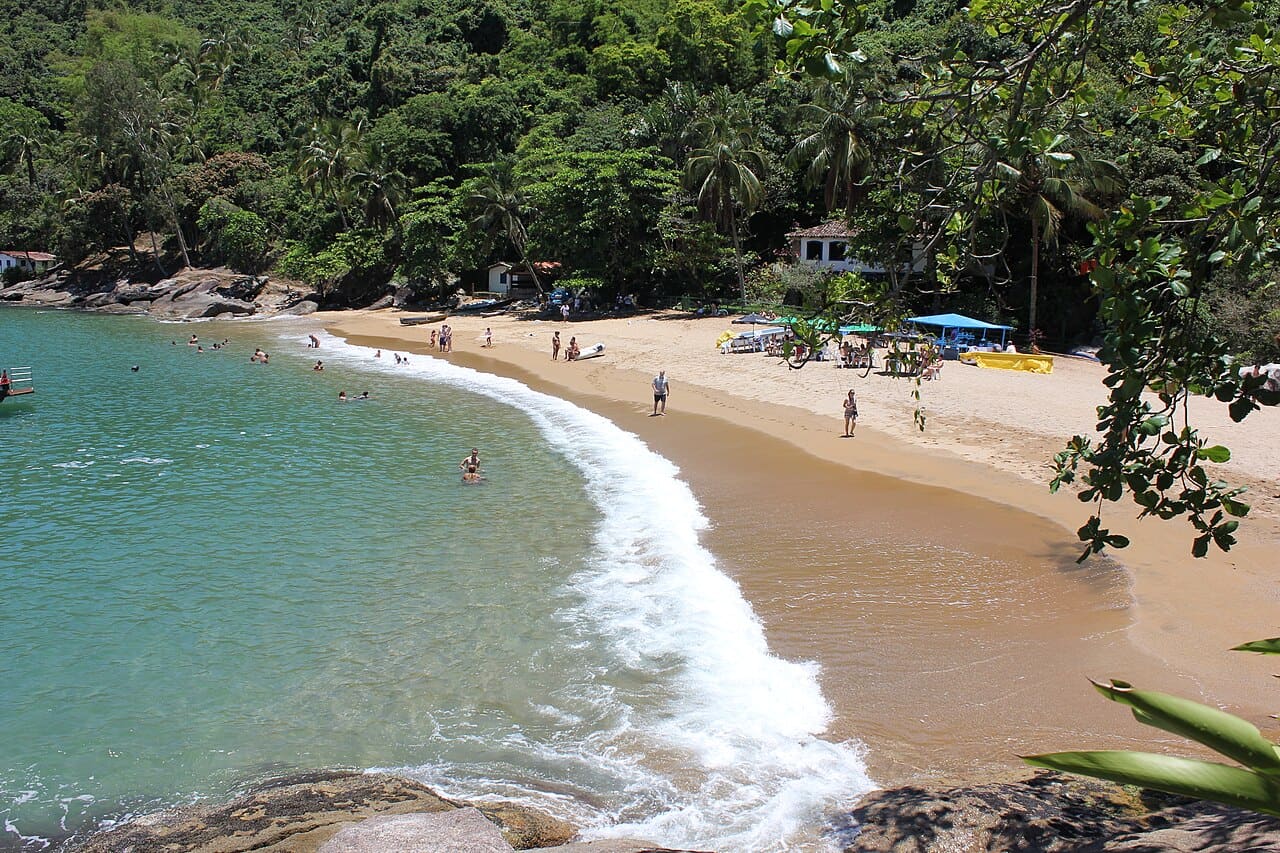
There is a classic moment on arrival at Praia da Fome: the boat cuts its engine, silence takes over and someone looks down and asks if that water is shallow. It is not. It is deep and transparent enough to deceive, some of the clearest water in Ilhabela, and we, who live on the island and have sent plenty of travelers there, know that question is the start of a good day.
Fome is small, isolated and has no infrastructure at all. It sits on the island’s north coast, on a stretch the road simply does not reach: access is by sea or by trail, and that natural barrier explains why it stays the way it is. This guide gathers the real logistics, what to expect from the beach and the difficult history that gave the place its name.
Where it is
In the north of Ilhabela, beyond Jabaquara beach, which is the last beach with road access. From there on, the coast becomes closed state park forest, and Fome appears as a short cove of pale sand squeezed between rocky points. Few boats stop in this stretch, which keeps the beach empty even in January.
Getting there
There are two ways, and both are part of the experience.
By boat: speedboats leave from Perequê, on the channel side, and make the trip in a short stretch of sea, usually 20 to 40 minutes depending on the boat and the day’s conditions. Tour schooners also include Fome in their northern routes, at a slower pace and with other stops. In either format, book the day before, confirm the pickup time and the cancellation policy: a south wind cancels departures without consulting your plans.
By trail: the walk starts at the corner of Jabaquara beach and covers about 4 km of forest, 1h30 to 1h40 of walking, with climbing stretches and glimpses of the sea appearing between the trees. To reach the trailhead, you have already faced Jabaquara’s 8 km of dirt road, so the day combines car, legs and reward. Sneakers with good soles, water and repellent make all the difference. If trails are your language, our guide to the best hikes in Ilhabela has the rest of the menu.
Without a car it also works: a group-chartered speedboat from Perequê solves the whole day, and our guide to Ilhabela without a car shows how the rest of the island runs on foot and by bus.
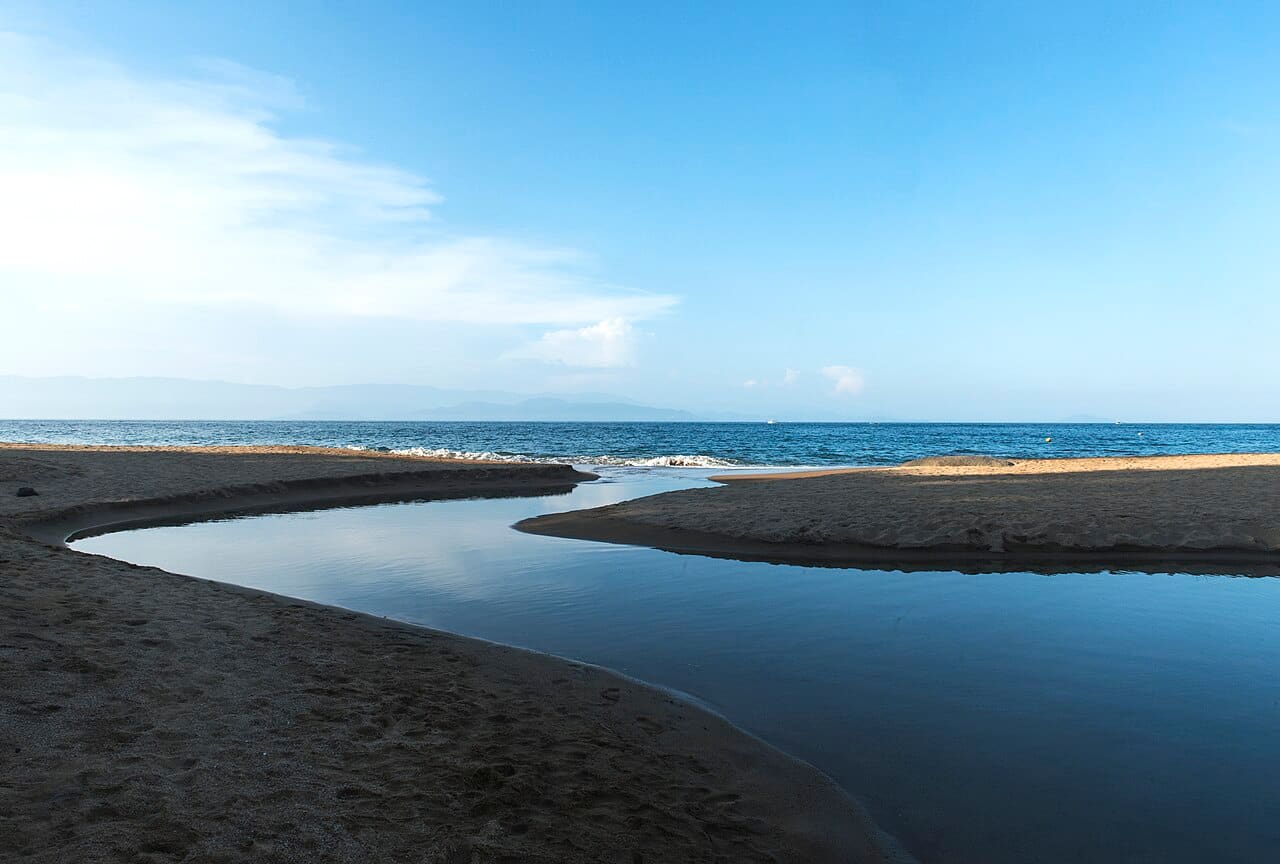 Jabaquara, where the road ends and the trail to Fome begins. Photo: Maristela Colucci/MTur, public domain, Wikimedia Commons
The beach
Pale sand, a sea that is almost always calm and a transparency that became the place’s signature. It is a mask-and-snorkel beach: floating along the rocky points turns up ornamental fish, and the bottom shows in full on windless days. Do not expect a kiosk, a bathroom or chair rental; expect tree shade, rocks to sit on and the kind of silence that makes the group lower their voices without agreeing to.
In the landscape, an old manor house stands out against the green. It was built over 19th century ruins and is now a vacation home, but it is the thread that pulls the story of the name.
Why “Fome”
The versions cross paths, and none is light. Fome means hunger. The one most repeated by the caiçaras (the traditional fishing people of this coast) tells that in the 19th century the cove housed a “fattening farm” for enslaved Africans: people who disembarked weakened from the Atlantic crossing were fed there before being sold, at a time when the trade already operated illegally. Scholars point out the site was unlikely to have been a major trafficking hub, but the slave-quarters ruins under the manor do exist, and the island’s oral memory sustains the account. Another, older version speaks of starving shipwreck survivors who reached the beach.
We choose to tell this story whole because the place asks for it. Swimming in water like this knowing what the cove has seen changes the quality of the visit: less scenery, more territory with a past. Ilhabela has layers like this at almost every beach, and that is why our guides insist so much on history and caiçara culture alongside the sunscreen.
What to bring
The list is short and non-negotiable: plenty of water, ready-to-eat food, strong repellent (an isolated beach with forest and clean water is the borrachudo fly’s favorite habitat), a snorkel mask, sunscreen, cash for any boat surprise and a bag for your trash, which goes back with you in full. If you take the trail, add sneakers, a light rain jacket and the habit of telling someone your expected return time.
When to go
Winter is the secret: from May to August the sea gets clearer, the trail dries out and boat departures cancel less. The full month by month ruler is in our best time to visit Ilhabela, and the whole argument for the cold season is in Ilhabela in winter. Between May 16 and August 16 there is also the year’s biggest bonus: it is whale season along the island’s coast, and we run whale watching departures from the Pier da Vila, in the historic center, for R$ 320, with the honest caveat that a sighting is nature, not a guarantee.
A day at Fome, hour by hour
The boat version: 8:30 am, boarding at Perequê with the sea still flat, which is when the channel behaves best. 9 am, landing in the cove, the whole beach yours. A morning of snorkeling along the rocky points, with the sun entering the water and lighting the bottom. Noon, a backpack lunch in the shade, unhurried, because there is no line and no bill to ask for. Early afternoon, the reading or the nap the city never allows. 3:30 pm, the boat returns, and the golden rule is to be on the sand at the agreed time: pilots do not like searching for passengers and the afternoon sea usually moves more.
The trail version flips the logic: leave Jabaquara at 8 am to walk in the cool, arrive at Fome around 9:40 am, the whole day ahead and the return started by 3 pm, with daylight to spare. In both formats, the day works best as a pair or a small group: the beach is short and the silence is part of what you came for.
Quick questions
“Is the sea safe?” On a calm day, yes, and the transparency helps you see the bottom. With swell, enter with caution and no heroics: an isolated beach means help is far away.
“Is there shade?” Yes, from trees, at the edges of the sand. A beach umbrella is welcome for anyone spending the day.
“Is it good for kids?” Kids who already swim and enjoy a mask, yes, by boat. The trail and the lack of infrastructure weigh on the little ones; for that stage, our guide to beaches for families has more generous options.
“Is there signal?” Count on no. Share your schedule before boarding and settle everything with the boatman on land.
“Is it worth it on a cloudy day?” It is, with a caveat: Fome’s magic is the transparency, and it performs best with sun entering the water. If the forecast is closed skies all week, still prioritize the beach for the rocky points and the silence, but adjust the snorkeling expectations.
How to fit Fome into the trip
The perfect pair is Jabaquara: same region, one full day, with the freshwater lagoon on one side and the trail on the other. Anyone with more days strings together the other secluded beaches of the north and east, all mapped in our guide to the secret beaches of Ilhabela, and anyone who wants the big picture starts with the ranking of the most beautiful beaches and with things to do in Ilhabela.
About the base: this is written by the team of Hostel da Vila, an eco lodge in the historic center, on the channel side, a few minutes from the Perequê pier the speedboats leave from. The logistics of living here are the same ones we lend our guests: early breakfast, light backpack and the boat waiting.
Fome is the kind of beach you earn, not just visit. The effort of getting there filters who goes, the silence rewards whoever went, and the history asks respect of everyone. Book the speedboat, pack the mask and go meet the most transparent water this archipelago shows to those who insist.