
Jabaquara beach: the complete guide to the end of the road in Ilhabela
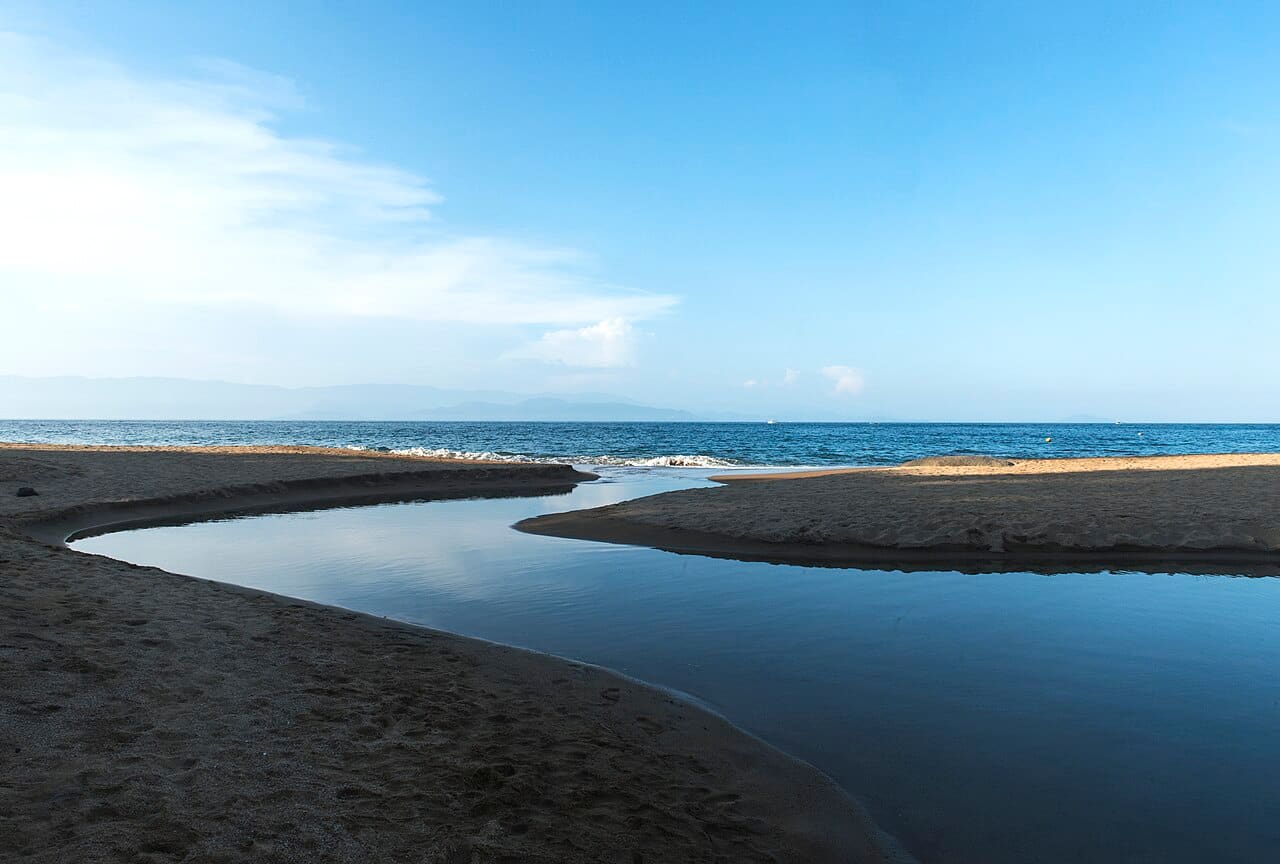
Every island has a place where the road gives up. In Ilhabela, that place is called Jabaquara: the last beach in the north with land access, at the end of 8 km of dirt road that climbs and drops through the forest until it delivers one of the most beautiful scenes in the archipelago. A river comes down from the forest, opens a lagoon behind the sand and escapes to the sea between big rocks, as in the photo that opens this guide. We live on the island, have driven that road on good days and on regret days, and this article tells the complete version: the one that includes the potholes, the borrachudo fly and the reward.
Where it is and how to get there
Jabaquara sits at the far north, about 22 km from the ferry. There is only one way: the road that hugs the north coast, paved until the Praia da Armação area, turns to dirt for the last 8 km. It is compacted dirt, with steep climbs and tight bends in the middle of the forest.
The question everyone asks: do you need a 4x4? In dry weather, no. A regular car climbs slowly, in first and second gear, with attention on the loose-surface stretches. After rain, the conversation changes: the mud makes the climbs treacherous and traction becomes genuinely useful. Our resident rule is simple: if it rained hard yesterday or is raining today, Jabaquara waits for another day. At the top of the route there is an improvised viewpoint where everyone stops, with good reason: the whole bay appears down below, framed in forest and green sea.
Anyone who does not want to drive arrives by sea: speedboats and schooners leave from the channel side and include Jabaquara in their northern routes. And there is a rare detail for a beach with this end-of-the-world face: down there, there is parking.
The ferry crossing from São Sebastião, free for pedestrians, and the rest of the arrival logistics are in our guide to where Ilhabela is and how to get there. Without a car, the deep north is the hardest stretch of the island, as we explain in Ilhabela without a car: out here, the solution is usually a boat or a private transfer.
The beach
About 500 meters of pale sand with big trees closing the back, a transparent sea in shades of green and blue and an immediate sense of distance: the only noise is water. Even in January, when the rest of the island boils, Jabaquara receives a fraction of the traffic of the asphalt beaches, and it is common to spend a whole low-season morning sharing the beach with half a dozen people. The sea has a shore break, that bottom that drops away fast near the edge, but it usually arrives calm; on swell days, respect the force of the surf and watch before entering. With small children, Jabaquara’s sea is not our advice, and the reason lives just behind the sand.
The river and the lagoon
Two streams cut the beach, one at each end. The one on the right, before slipping into the sea between the rocks, forms a gentle, shallow freshwater lagoon, separated from the ocean by the strip of sand itself. It is the heart of the place: kids spend the whole afternoon there, adults alternate fresh water and salt water, and the photo of the river meeting the sea is probably the most repeated image of the island’s north. The lagoon changes size with the rain and the tide, so every visit finds a different design, and some residents go up there just to check the week’s version.
The usage contract is the usual one in Ilhabela’s clean rivers: where the fresh water is crystal clear, the borrachudo lives (the tiny biting fly of clean water). Repellent before stepping out of the car, a top-up after swimming, and the experience changes completely. If you enjoy this mix of fresh water and forest, the full menu is in our guide to Ilhabela waterfalls.
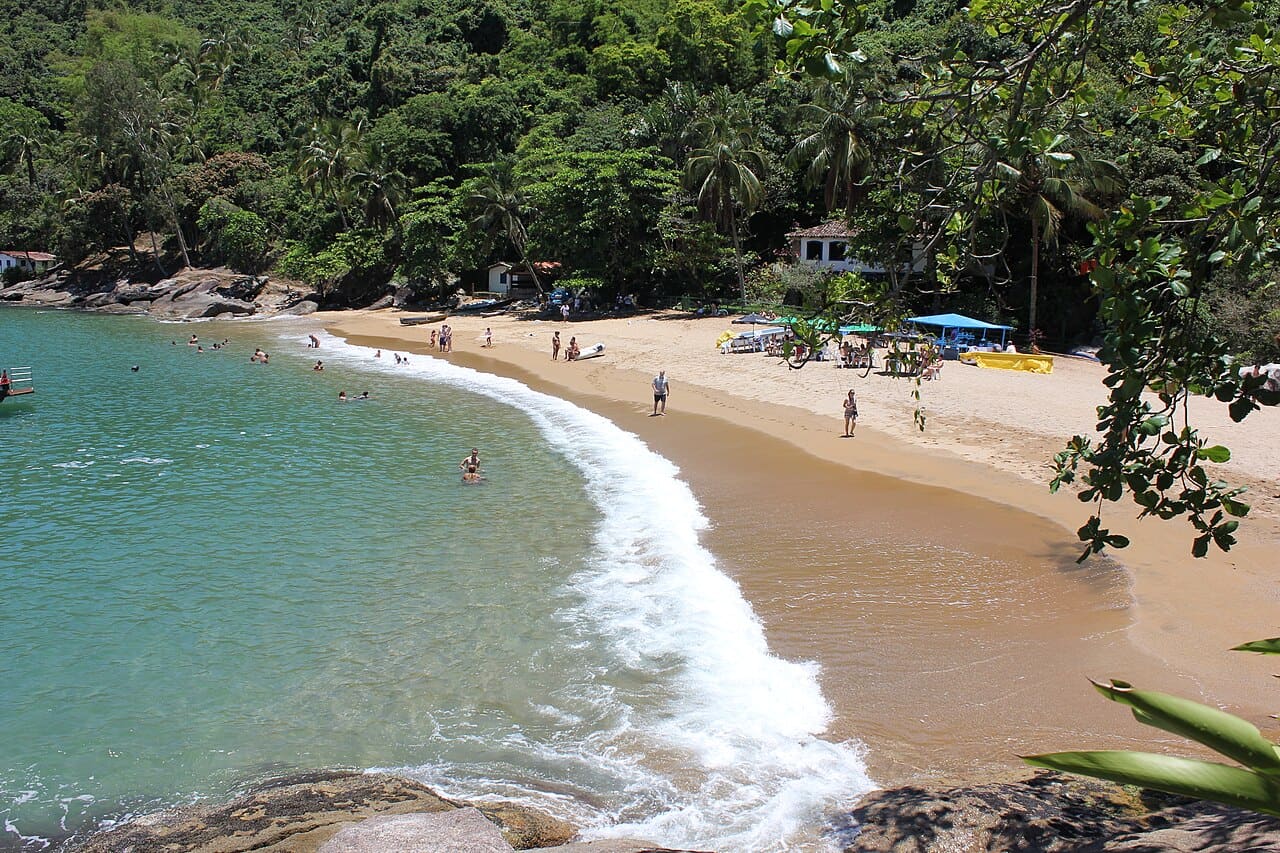 Praia da Fome, 4 km of trail away. Photo: Priscila Mayumi de Souza, CC BY-SA 3.0, Wikimedia Commons
Infrastructure: more than the road suggests
A good surprise for anyone arriving expecting bush and nothing else: Jabaquara has kiosks and simple restaurants serving sharing plates and seafood, bathrooms and a freshwater shower. None of it turns the beach into a resort, thankfully. Bring cash anyway, because phone signal and card machines live in a bad mood out there, and bring your own water supply for the trail and the sun.
The trail tucked into the corner of the beach
From Jabaquara a trail of about 4 km runs through the forest, 1h30 to 1h40 of walking, to Praia da Fome, which has no road access at all and keeps some of the most transparent water on the island. Doing both in one day is one of the best plans in the north: sea and lagoon in the morning, trail and snorkeling in the afternoon. The other beaches of this caliber are on our map of the secret beaches of Ilhabela.
When to go and what to bring
From May to August the road dries, the sea clears and the beach empties, the best possible scenario; the month by month ruler is in the best time to visit Ilhabela. In summer, go early and with the rain report in hand. The ideal backpack: repellent, sunscreen, water, cash, a snorkel mask for the rocky points and sneakers if the trail is in the plans. And the rule we repeat in every isolated-beach guide: the trash goes back with you, down to the fruit peel.
The most common mistakes (so you do not repeat them)
The first is underestimating the wet road. Every summer we hear the same story: the car climbed fine, the rain fell in the afternoon and the descent became an unwanted adventure. If the sky threatens, head back earlier; the beach is not worth a tow truck in the middle of the forest. The second is arriving at noon on a holiday assuming the parking lot is infinite: it is not, and the alternative of parking along the narrow road creates a problem for everyone. Leave early, always.
The third mistake is the tight stopwatch. Jabaquara is more than an hour from the center, adding slow asphalt and careful dirt, and anyone who budgets only two hours of beach spends more time at the wheel than in the water. Treat the north as a full-day plan. The fourth is ignoring the lagoon when the sea is rough: plenty of people leave frustrated with the waves without realizing the best pool in the area was ten meters behind their sarong.
And the fifth, the silliest and the most frequent: leaving the repellent in the car up top. The walk back to fetch it cures the forgetfulness for life.
A well-rounded day in the north
8 am, a solid breakfast and a full tank. 9:15 am, a stop at the improvised viewpoint for the photo and for a breath. 9:40 am, sarong in the shade, arrival swim and the lagoon with the big kids of the group. 12:30 pm, a seafood plate at the kiosk, at the pace of someone with no meetings. 2 pm, either the trail to Fome for those with legs and sneakers, or the whole afternoon between the lagoon and the sea. 5 pm, a last look at the bay from the viewpoint and the descent with daylight. The night ends in the Vila, with a story to tell and sand in your flip-flops.
Where we write this from
House transparency: this blog is signed by the team of Hostel da Vila, an eco lodge in Ilhabela’s historic center, on the channel side, hosting travelers since 2016. Our guests’ Jabaquara day usually starts at breakfast with the question “did it rain this week?” answered at the counter, and the backstage of this island routine shows up on our Instagram.
To fit Jabaquara into a bigger plan, the ranking of the most beautiful beaches shows where it stands in the contest, the 5 day itinerary reserves a full day for the north and things to do in Ilhabela opens up the rest of the game.
Jabaquara is proof that a bad road is a filter, not a flaw. Whoever accepts the 8 km of dust earns a private river emptying into the sea and a beach that still looks like the island of the old days. Check the forecast, fill the tank and go see the design the lagoon drew this week.