
Where is Ilhabela and how to get there: ferry, roads and buses
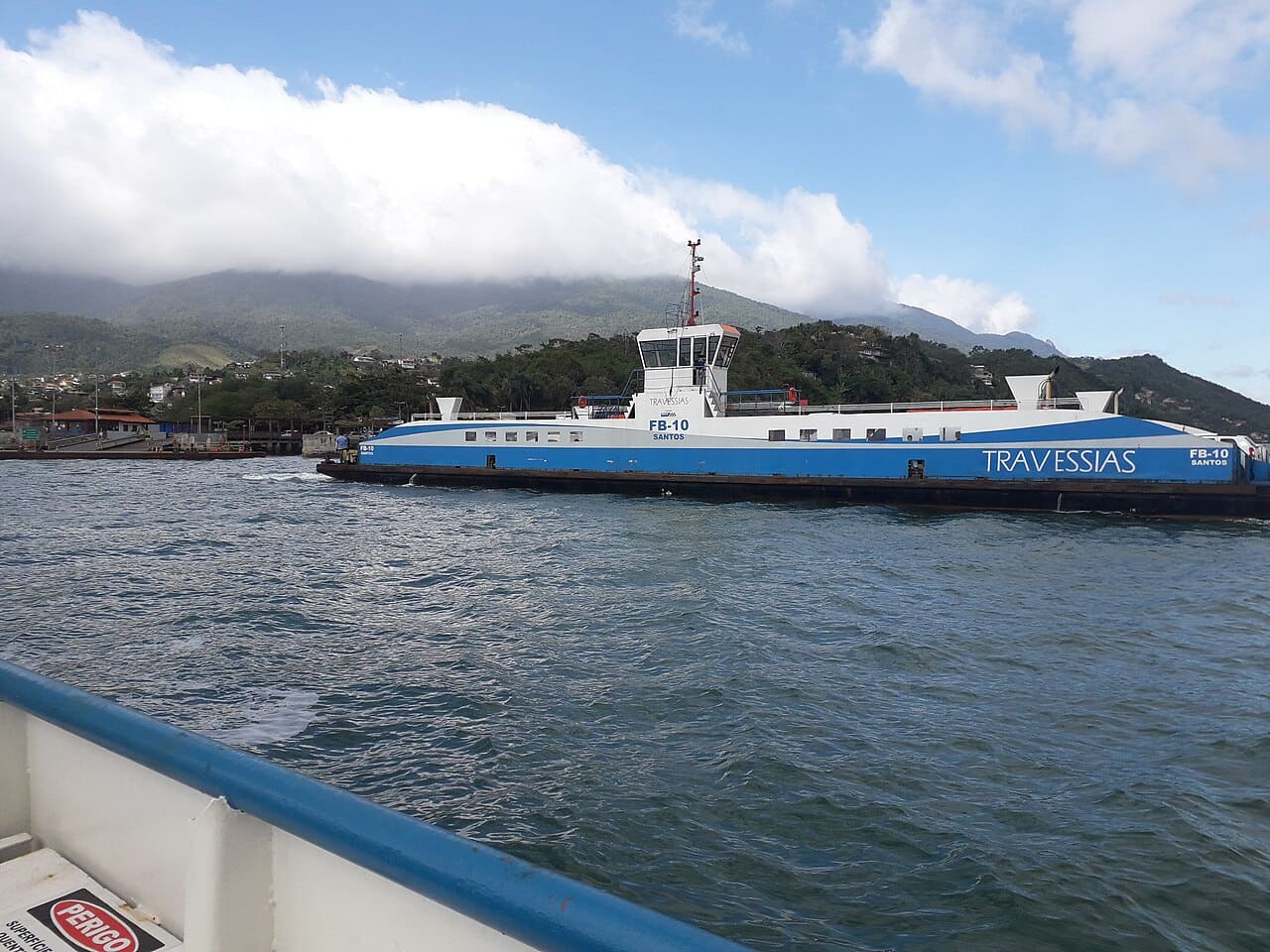
Every week someone writes asking whether you need a boat to visit Ilhabela, whether you can drive there, whether there is a bridge. We answer those messages from inside the island, where we have lived and worked since 2016, and the crossing is part of our routine like breakfast: ferry to run errands on the mainland, ferry to pick up a friend, ferry home with the sun setting on the channel. This guide gathers everything we learned crossing this arm of sea hundreds of times.
Starting with the basics, because the doubt is legitimate: Ilhabela is a true island, with no bridge, and the only way in is the ferry from São Sebastião, on the northern coast of São Paulo state. The good news: the crossing takes about 20 minutes, runs all day and is free for anyone crossing on foot.
Where exactly Ilhabela is
Ilhabela sits on the northern coast of São Paulo state, separated from the mainland by the São Sebastião channel, which at its narrowest point is just over 2 km wide. It is the state’s only archipelago municipality: besides the main island (the largest sea island in Brazil), the territory includes smaller islands like Búzios and Vitória, farther out, and the rocky islets scattered around them. The mirror city across the channel is São Sebastião, and the two work as a pair: the regional airport, the bus station and the reference hospital sit on the mainland; the island keeps the rest.
Geography explains the character of the place. Most of the territory is a state park covered in Atlantic Forest, with a mountain ridge passing 1,000 meters in the middle of the sea. All urban life concentrates on the face turned toward the channel, sheltered from the open ocean; the outer, ocean-facing side is the wild territory of beaches like Castelhanos, with no asphalt at all. Understanding that split is understanding the island, and our complete guide of things to do is organized entirely around it.
From São Paulo: the main route
By car, the standard math: about 200 km between the capital and São Sebastião, some 4 hours in normal conditions, on the Tamoios highway (SP-099). You come down the mountains to Caraguatatuba and follow the SP-055 to the São Francisco neighborhood, where the ferry boarding is. On holidays, the same route can double in time: the Tamoios runs a special descent scheme and the ferry line becomes the day’s final test.
Without a car, the solution is direct: Pássaro Marron connects São Paulo (Barra Funda and Tietê terminals) to São Sebastião for R$ 101 to R$ 123, in about 4h30. From the last stop, the ferry’s pedestrian boarding is steps away, and the crossing on foot costs nothing. On the island side, the municipal bus (R$ 10 fare in 2026) runs up and down the channel axis. Anyone wanting to do the whole trip without a steering wheel finds the step by step in the Ilhabela without a car guide.
From the airports, the logic mirrors the capital’s: Guarulhos and Congonhas are the doors for anyone coming from far away, and from there you continue by rental car or bus. There is no commercial flight into the island, and it is better that way: the slow arrival, with the mountains growing in the windshield and the channel appearing on the last curve, is part of the rite.
From Rio de Janeiro: the scenic way
Coming from Rio, you take the Rio-Santos (BR-101) and turn the transfer into part of the trip: the road threads Paraty, Ubatuba and Caraguatatuba together before reaching São Sebastião. It is a full day of driving with the sea appearing between curves, and many people use it to sleep a night in Paraty on the way. If that idea lights you up, we wrote a whole guide on combining Ilhabela, Paraty and Ilha Grande on one trip, and the overview of the region is in the definitive Costa Verde guide.
The ferry in detail: what nobody tells you
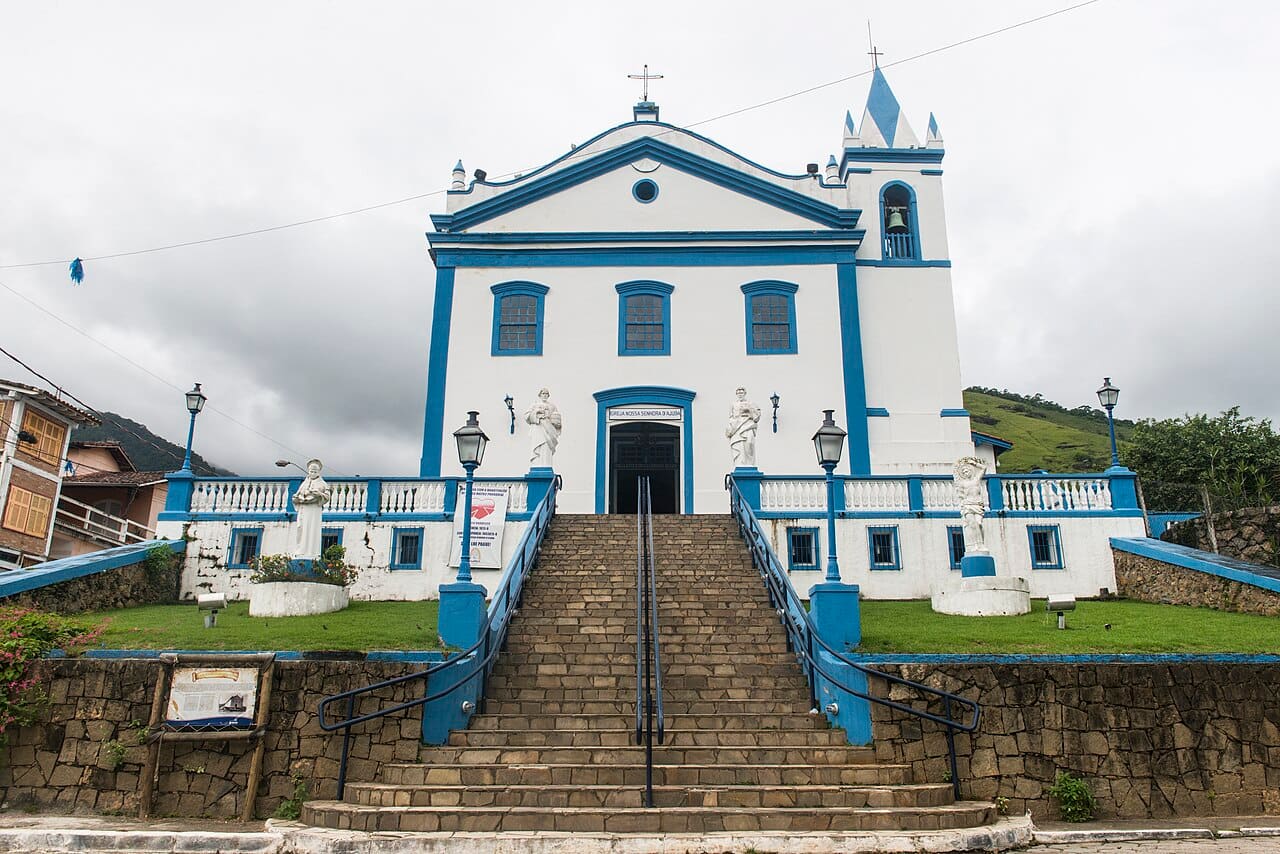 The Vila, the island’s historic center: the reward on the other side of the channel. Photo: Maristela Colucci/MTur, public domain, Wikimedia Commons
The São Sebastião-Ilhabela crossing is run by the state system and operates 24 hours. The 2026 numbers:
- Duration: 20 to 30 minutes of channel.
- Frequency: departures every 30 minutes from 5:30 am to 11:30 pm; overnight, the interval grows with demand.
- Pedestrians and cyclists: free, always, in both directions.
- Passenger car: R$ 19 on weekdays and R$ 28.50 on weekends and holidays. You pay once, on the way in (São Sebastião to Ilhabela); the return is included.
- Payment: at the booth, in cash or debit depending on the day’s operation; card payment fully guaranteed only through advance booking.
The advance booking deserves its own paragraph, because it is the trick that separates those who wait from those who board: the Hora Marcada service, on the website of Semil (the state agency that manages the crossing), lets you reserve a boarding slot for your car and pay online. On an ordinary day, it is a convenience. On a long holiday weekend, when the open line easily passes two hours, it is the difference between starting your trip on the beach or on the roadside. Holiday Hora Marcada slots sell out ahead of time; book it together with your lodging.
Two warnings from people who cross all the time. First: the return line also exists, at the end of Sundays and holidays; if you can, head back in the morning or wait for the night to thin the traffic. Second: strong wind and rough seas delay or interrupt the crossing a few times a year. If your flight leaves Guarulhos at the end of the day, do not leave the crossing for the last minute.
And the traffic pattern, for those who can choose: the pressure flows toward the island on Friday night and Saturday morning, and back to the mainland on Sunday afternoon. Cross outside those windows and the ferry becomes what it is on ordinary days: a free ride across the channel, with mountains on both sides and, in winter, a real chance of spotting a whale spout on the way.
You are on the island: now what?
You land at Barra Velha, and from there the island’s life spreads along the channel axis. The historic center (the Vila) is minutes away, and it is where arrivals converge: the promenade, the mother church at the top of its staircase and the pier where the boats leave from and, in winter, the whale departures too. We know that patch well because it is ours: Hostel da Vila sits in the historic center, on the channel side, with the grounds climbing into the forest. Some guests walk in from the ferry with a backpack on and only realize the next day that they made the whole trip from São Paulo without spending a single real on transport inside the island.
For getting around: the municipal bus covers the channel side, taxis and ride apps exist with limited supply, and bicycle rental solves short distances. A car is only essential for full autonomy in the north; the ocean side demands a 4x4 or a boat either way. The historic center is walkable and makes the best first outing of any arrival.
The questions that always come
Do you need a car in Ilhabela? No. The channel axis works by bus and on foot, and the wild destinations are booked as expeditions. A car helps in the north and late at night.
Can you bring a bicycle? Yes, and it is one of the best deals of the trip: cyclists cross the ferry for free, and the channel axis is flat enough to pedal between beaches without suffering. Just avoid the park’s dirt roads, which demand another category of bike and legs.
Does the ferry run overnight? It does, the operation is 24 hours. What changes is the interval between departures, which grows after 11:30 pm. Arriving late by bus, you cross on foot with no drama.
Can you go and come back the same day? You can, and it beats nothing, but the island charges for it: logistics alone eats 2 or 3 hours of the day. The honest math on how much time to give it is in the guide to how many days to stay in Ilhabela.
What does the whole trip cost? From the free pedestrian ferry to the park 4x4, we opened all the numbers in the article on what a trip to Ilhabela costs.
When is it best to come? April, May, September and October in general, winter for whales and trails, summer for the island at full volume. The complete month by month calendar is in the guide to the best time to visit.
Arriving at an island by ferry has an effect no bridge produces: the 20 minutes of channel work as a decompression chamber, and the traveler steps off different from the one who stepped on. Pick your date, book the bed before the line forms and let the channel do its part.