
Ilhabela's historic center: the guide to the Vila by people who live in it
Every destination has a place where the trip organizes itself. In Ilhabela, that place is the Vila: the small historic center, white church on the hill and pier on the water, where the boats leave in the morning, the craft fair sets up its stalls in the afternoon and the night happens on the street. This guide is written from the inside, in the most literal sense possible: our address is the historic center, we have hosted travelers here for ten years, and the Vila we describe below is the one we cross on foot every day, in the morning to buy bread and at night to see who has arrived.
The first thing to understand is the scale. You can walk the whole Vila in half an hour, and that is exactly why it works: nothing here demands a car, a schedule or a hurry. The second is the position: the historic center sits on the face of the island that looks at the mainland, facing the São Sebastião channel, which means calm sea at the pier and the sun setting over the water every single day. Keep those two facts; the rest of the guide follows from them.
From Vila Bela da Princesa to Ilhabela
Before walking through it, it is worth knowing what you are stepping on. The settlement around the church was elevated to a town in 1805, under the name Vila Bela da Princesa, and that origin is where the nickname that stuck comes from: the Vila. For more than a century, the life of the entire island passed through here, from the port that shipped out the farms’ production to the fishermen’s canoes, and the layout of the streets keeps that old scale, made for people on foot and cargo on muleback. The name Ilhabela came later, and it fits; but anyone who wants to understand the place should start with the old name, which says who it belonged to.
The church on the hill: three hundred years watching the channel
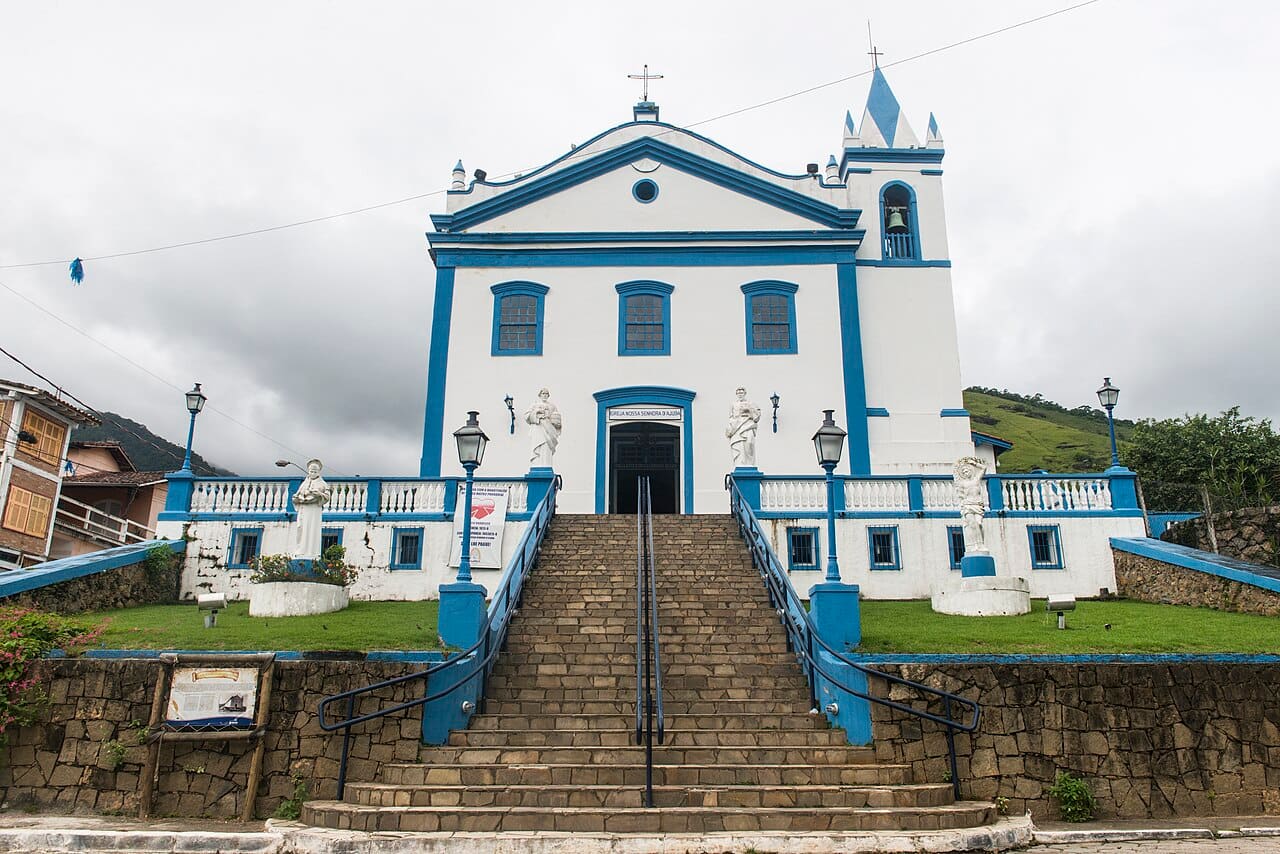
The Church of Nossa Senhora d’Ajuda e Bom Sucesso is the building that organizes the Vila’s landscape, at the top of a staircase that has become the photo backdrop of every wedding on the island. Its history is older than almost anything on the São Paulo north coast: it began as a chapel at the end of the 17th century, at the initiative of father Manoel Pereira Marzagão, and was raised between 1697 and 1718 with the technology available at the time, stone, shells and whale oil in the mortar. In 1806 it was elevated to mother church, and the main altar you see today dates from 1848.
Go inside, do not just photograph the facade. The body of the church is 40 meters long by 10 wide, the ceiling keeps a painting of Nossa Senhora d’Ajuda, and the silence in there, with the noise of the Vila muffled by the thick walls, is a contrast no beach delivers. The patron saint’s festival fills the Vila every year, and the church remains what it has always been: the highest and oldest point of the historic center’s life.
The pier: where the island sets sail
Walking down from the church toward the water, the Vila ends at its second postcard: the pier. It is from there, the Pier da Vila, that a good part of the historic center’s maritime life departs, from fishing boats to day trips, and it is also where the whale watching boats leave between May and August, when humpbacks cross the channel; we explain that season in the guide to the best time to visit Ilhabela.
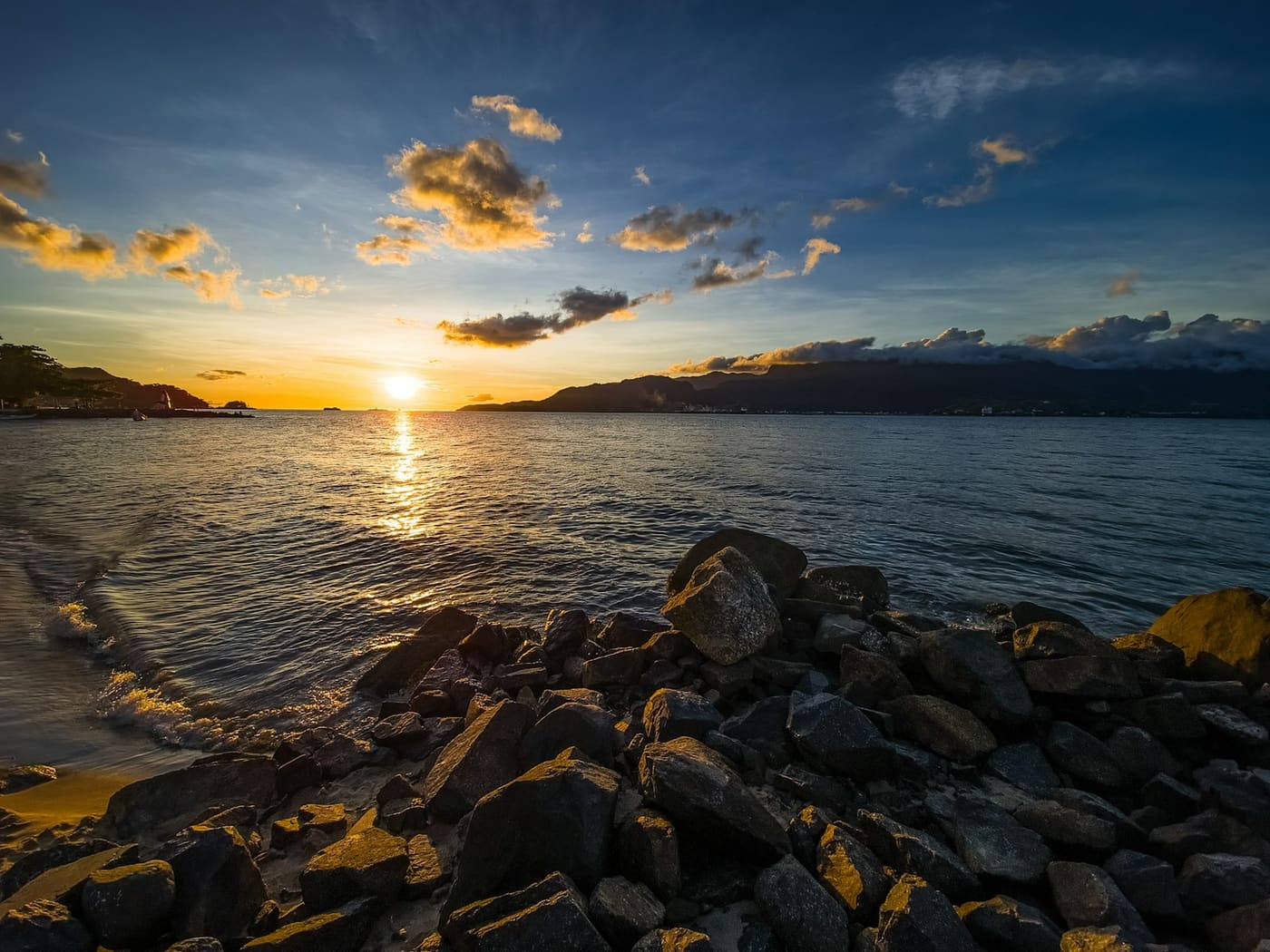 The end of the day on the channel, seen from the Vila waterfront. Photo: Vitor Camilo, Unsplash
But the pier’s most democratic function costs nothing: it is the best sunset box seat on the island. Since the Vila faces west, the sun drops behind the mountains of the mainland and paints the channel orange, and you can watch it sitting on the concrete of the pier, boats rocking in the foreground. Our team still stops whatever it is doing to watch, ten years in. The other end-of-day spots are in the guide to where to watch the sunset in Ilhabela.
Once a year, in July, the pier changes personality: the International Sailing Week, which in 2026 runs from July 24 to August 1, fills the channel with sails and the Vila with crews from all over the world. It is the busiest week of winter, for anyone who likes seeing the island in regatta mode.
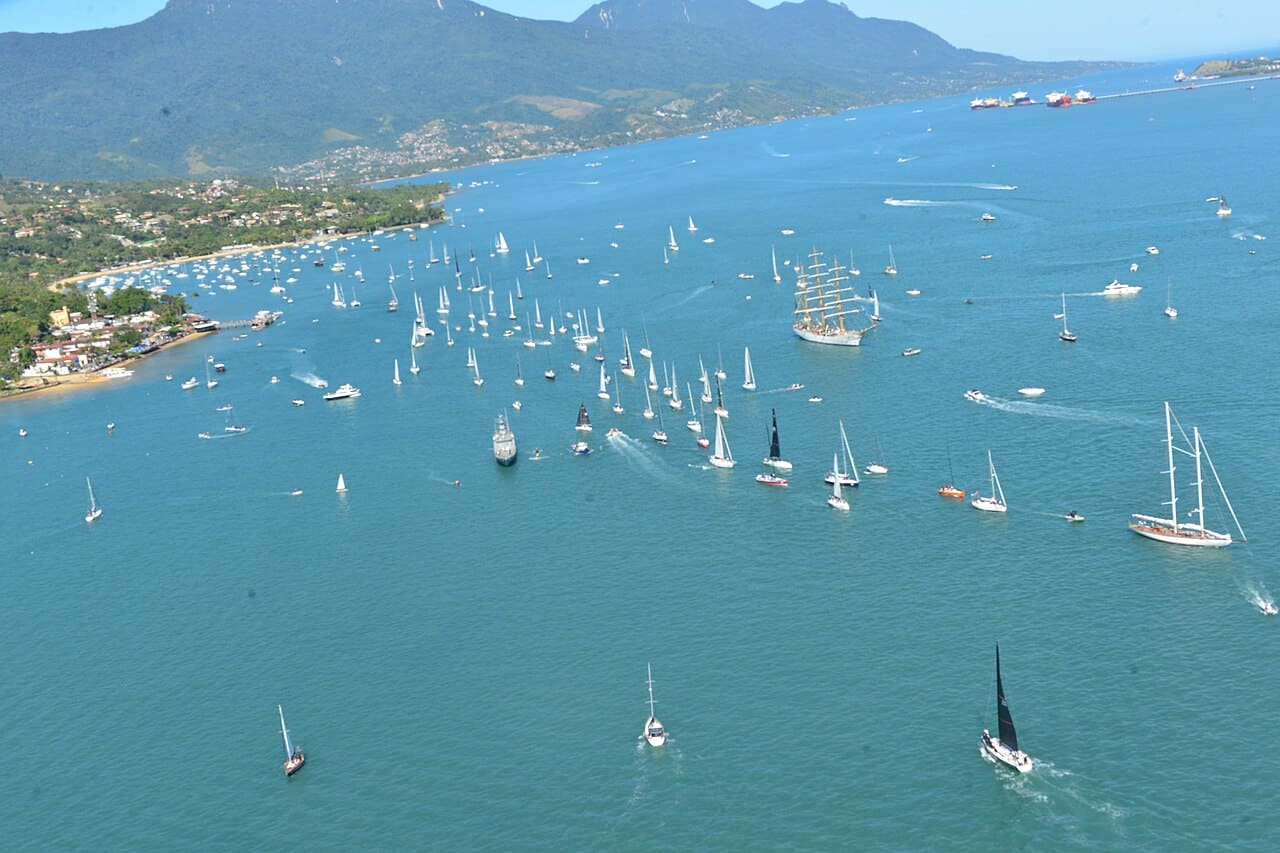 Sailing Week: the channel becomes an international race course. Photo: Marinha do Brasil, CC BY-SA 2.0, Wikimedia Commons
The craft fair: every day, truly
Between Rua São Benedito and Rua da Padroeira, around the Vila’s Cultural Center, runs the Feira do Artesão, the artisans’ fair, with up to 59 stalls of local makers. The good news for planners: it is authorized to operate every day of the year, from 8 am to midnight, so there is no “fair day” to catch; there is the habit of passing through it in the late afternoon, when the Vila warms up. The classic finds are earrings and necklaces made with shells from the island’s beaches, hand-painted sarongs and worked wood. In the same area, the craft shop of the traditional communities, at the culture foundation’s headquarters, sells the work of people who live on the island’s roadless beaches.
Where to eat in the Vila, no car required
The house rule on this blog is not to name third-party brands, so this map is by type, and it is sincere: the Vila eats well on any budget. On the waterfront and in the side streets, the fish and seafood restaurants work with the day’s catch, and the caiçara dish of fish with banana is the order that sums up the island. There is a wood-fired pizzeria for the lazy night, cafes with sidewalk tables for the slow morning, an ice cream shop for the hot afternoon and a new generation of chef-driven kitchens treating the local catch with respect. At both ends of the price range, the criterion is the same: the closer to the counter of whoever is cooking, the better. The complete guide, with price ranges by type, is in where to eat in Ilhabela.
The night: the Floresta lights up
At night the Vila does not become something else; it just turns up the volume. People walking between the craft fair and the bars, music spilling from open doors, the dark channel with the lights of São Sebastião on the far shore. And our contribution to that night has a name: the Floresta Bar, on our grounds in the Vila, with signature drinks and live music under the forest canopy, and Na Moita, the smaller, more hidden sibling, for those who prefer conversation to a dance floor. When someone asks at reception “where does the night happen?”, the honest answer is that it usually starts in our garden and ends on the street, or the other way around. The week’s schedule, from shows to parties, goes out on our Instagram, and the full picture is in what to do at night in Ilhabela and the guide to the best bars in Ilhabela.
The Vila as a base: the argument that organizes the trip
Now the reason this article exists. Ilhabela is long, the attractions are spread out and the question “where to stay?” defines the whole trip. Our answer comes with declared interest and ten years of proof: stay in the Vila. It is where the boats leave from, where the night happens, and the only region of the island where you park your hurry on the first day and do not need it again until you leave. Whoever stays in the Vila has dinner on foot, watches the sunset on foot, buys crafts on foot and still catches the ferry without depending on anyone, as we show in the guide to Ilhabela without a car.
And this is where we introduce ourselves in full: Hostel da Vila is our home in the historic center, on the channel side, open since 2016. It is 8,000 square meters with the Atlantic Forest climbing behind the property, places to sleep that exist nowhere else on the island, a geodesic dome with a sea view, a treehouse, a VW camper van, a sailboat, a yurt, and the pool heated to 32°C all year round, with a 20 meter waterslide for those who refuse to grow up. In ten years, 65,000 guests have passed through, and most of them discovered what this article tries to explain: whoever sleeps in the Vila does not visit Ilhabela, they live in it for a few days.
How to fit the Vila into your plans
Do not treat the historic center as “an afternoon between beaches”. The fit that works: the whole first afternoon on arrival, with the craft fair and the sunset at the pier, and the nights of the entire trip, because this is where they pay off. The 3 day Ilhabela itinerary shows that layout in practice, and the general guide to things to do in Ilhabela opens the full map from here.
A three-hundred-year-old church, a pier that boards whale watchers with binoculars and a bar glowing under the forest: the Vila is small and it is not slight. The next step is simple: arrive by ferry, climb the church staircase and start the trip at the place where the island began.