
What to do at night in Ilhabela
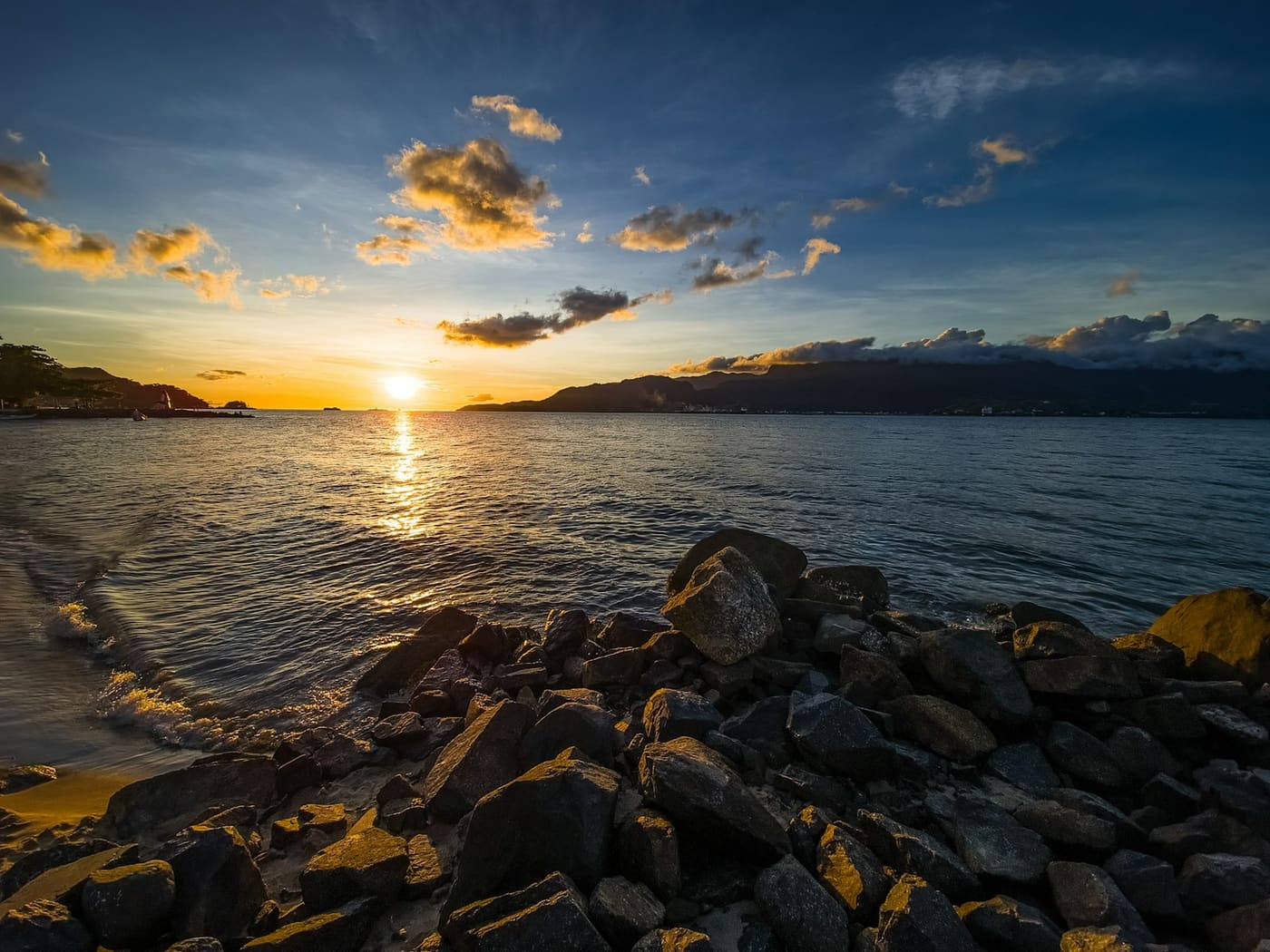
The night in Ilhabela officially begins when the sun touches the mountains of the mainland, across the channel. It is a moving hour, close to 7 pm in summer, 5:30 pm in winter, and it is the only appointment the whole island keeps together: everyone stops, looks west, waits for the light to go out. After that, the night splits into paths, and this guide exists because we live all of them. The people writing this run a hostel in the island’s historic center, with two bars inside the forest, and the night here is literally our backyard.
Before the map, the expectation adjustment that saves frustration: Ilhabela is not a clubbing destination. The night here is sidewalk tables, live music, a drink with conversation and a starry sky, with party peaks in summer and on holidays. Whoever arrives expecting a dance floor until 6 am will find it lacking; whoever arrives open to an island night quickly understands why nobody misses it.
Start with the sunset, always
No night plan in Ilhabela should begin after dark. Dusk is the opening act: the Vila pier, the Perequê waterfront or a table facing the channel, any of them works, as long as you are in position about 40 minutes early. We mapped the right spots per season in the guide to where to watch the sunset in Ilhabela. From the pier, when the last band of orange leaves the sky, the Vila lights up behind you, and the night has begun.
The Vila at night: the stroll that needs no script
The historic center is the heart of Ilhabela’s night, and it works at a scale you can cross on foot in fifteen minutes. The stone streets are lit, the colonial houses glow warm, and Rua do Meio, pedestrians only, becomes a corridor of people walking unhurried between open shops, galleries and ice cream. On season nights, the craft fair sets up its stalls and the smell of crepes and corn mixes with sea air. It is where you buy the souvenirs that carry no shame: a piece of worked wood, local art, spices from the island, with the artisan’s conversation included in the price. Kids run loose, couples share churros, and the night moves at the pace of people with no appointments.
The program is exactly that: walk slowly, step in wherever calls you, take a sidewalk table and watch the island go by. It looks like little on paper and fills hours in practice. The street by street detail is in our guide to Ilhabela’s historic center.
Dinner is the plan, not the intermission
In Ilhabela, dinner is not the pause between day and night: it often is the night. The houses of the historic center and the waterfront serve everything from caiçara moqueca, the local fish stew, to contemporary cooking, and the table tends to stretch on its own, because nobody is in a hurry and the street outside stays beautiful. The strategy of people who live here: book or arrive at 7 pm on season weekends, order the fish of the day without fear and let dessert decide whether the night continues toward music or a walk along the waterfront. The full map by type of cooking and region is in the guide to where to eat in Ilhabela.
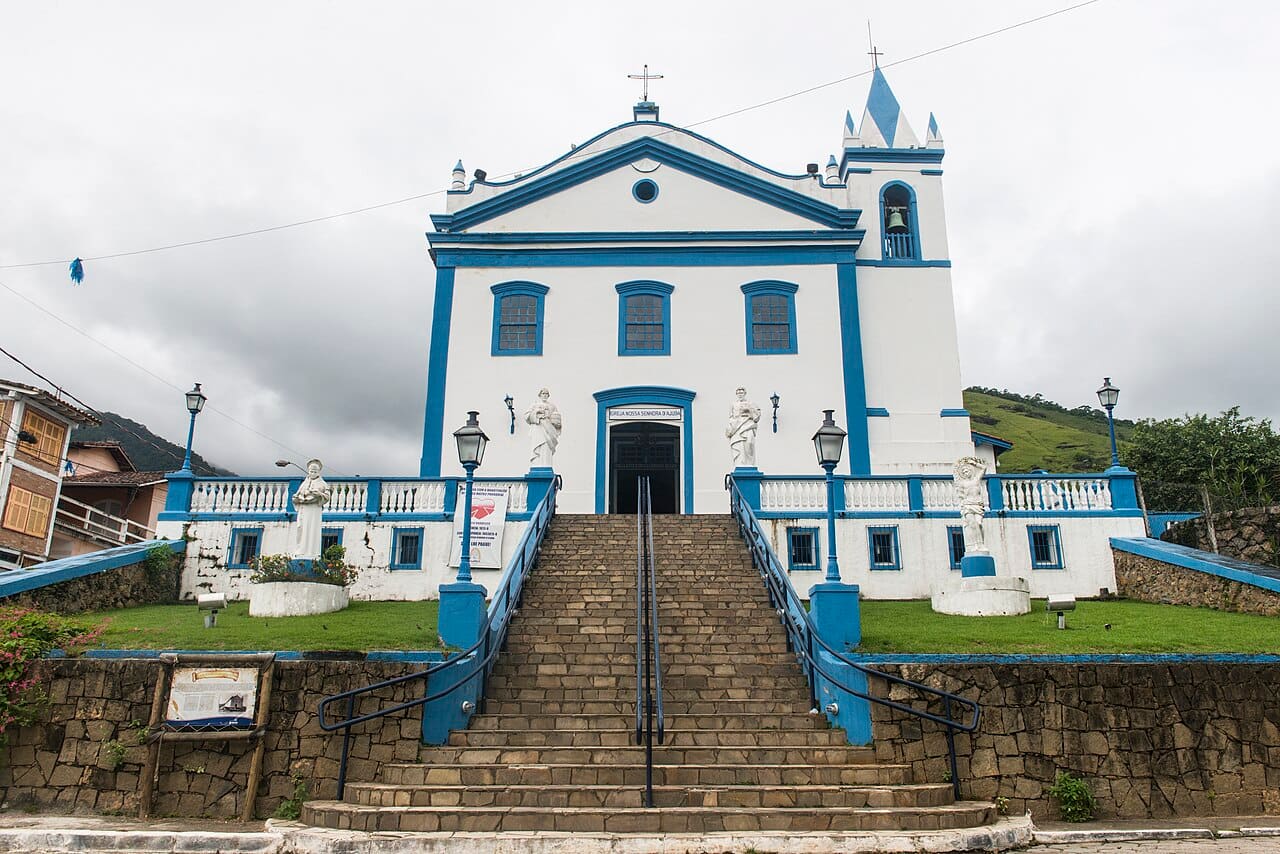 The Vila’s mother church: at night, the staircase becomes a meeting point. Photo: Maristela Colucci/MTur, public domain, Wikimedia Commons
Live music: the soundtrack is varied and good
Ilhabela has a live music scene bigger than the size of the town suggests. In the bars of the Vila and the central region, the week rotates through forró, samba, MPB, rock and surf music (forró and MPB being Brazilian genres worth discovering in their natural habitat), with venues that turn into parties after midnight in high season. The local tip is not to fixate on a single address: the good night changes venue with the day of the week, so ask at the counter where the music is tonight and follow the answer. Our guide to the best bars in Ilhabela draws that map by region and by style.
When night falls, the forest lights up
Now the part where we talk about our side of the night, with the pride of having built it inside the forest. On the grounds of Hostel da Vila, in the historic center, the Floresta Bar switches on when the day switches off: signature drinks at the counter, a real kitchen sending out food, live music most nights and a mix of people that is hard to find anywhere else on the island. At the same table, someone who came down from Baepi in the morning, a couple who arrived by ferry in the afternoon and a resident who came for the show. The light comes from below, the forest closes overhead, and the party, when there is one, is a party in the forest in the literal sense.
A few steps away, Na Moita is the hidden sibling, faithful to its name (which means “in the bushes”): smaller, lower, the kind you discover by the sound before you see the sign. Between one and the other, our weekly schedule of shows, parties and whatever else is happening always goes out on our Instagram.
The nights of holidays and Sailing Week
Two periods change the scale of the island’s night. On long holiday weekends, Ilhabela fills up and the night stretches: more tables on the street, more music, parties that run late. At our place this becomes a season of its own, with holiday packages that include a party every night, from DJs to live bands. And at the end of July comes the International Sailing Week, July 24 to August 1 in 2026, when hundreds of sailors come ashore and the Vila becomes their happy hour: it is the week when the island’s winter night behaves like summer.
The low season night, without makeup
Now the truth few guides admit: on a Tuesday in June, Ilhabela at night is quiet. Fewer bars open, streets emptying early, the craft fair packed away. And we write that without regret, because that night has its own value: it is the night of a long, well-cooked dinner, of caldeirada (seafood stew) and wine with no line and no rush, of a clear winter sky loaded with stars, and of going to bed early because tomorrow there is a trail with the whole day ahead. Half of our winter guests come exactly for this. If that is your rhythm, read why Ilhabela is worth it in winter and build your days with the guide to the best hikes.
The honest counterpoint: if your trip is short and the night is a priority, aim for summer, a holiday or Sailing Week. The best time to visit Ilhabela compares month by month.
The free program nobody tells you about
The waterfront at night. That is it. After dinner, walk down to the sand of any channel beach, take off your sandals and look up. Away from the street lights, Ilhabela’s sky on a clear night is generous, and in winter, with the dry air, it gets even deeper. The channel stays dotted with the lights of anchored boats and the mainland in the background, and the only sound is small water tapping against hulls. It is the kind of half hour that costs nothing and holds the whole trip in your memory. Couples, take note: it works particularly well on the quieter beaches we list in the guide to beaches for couples.
Night logistics, quick and practical
Three warnings from people who move around here at night. Transport: ride apps and taxis exist, but they thin out late at night and in low season, so anyone drinking far from their lodging sorts the ride home before going out. Distances: the nightlife concentrates between the Vila and Perequê; staying on that axis turns the night into a walk, and it is one of the reasons we built everything in the historic center. Mosquitoes: at night the common mosquito takes over the borrachudo’s shift, and repellent on the shins remains the most elegant accessory on the island.
Ilhabela’s night is like the island: it does not shout, it invites. There is music for those who want to dance, a table for those who want to talk and starlit silence for those who just want to be. Pick tonight’s sunset, let the night unfold from there and, if your path crosses the forest of the historic center, we will see you at the counter. To fit all of this into your days, the 3 day Ilhabela itinerary comes with the nights already drawn in.