
Where to watch the sunset in Ilhabela: the spots locals use
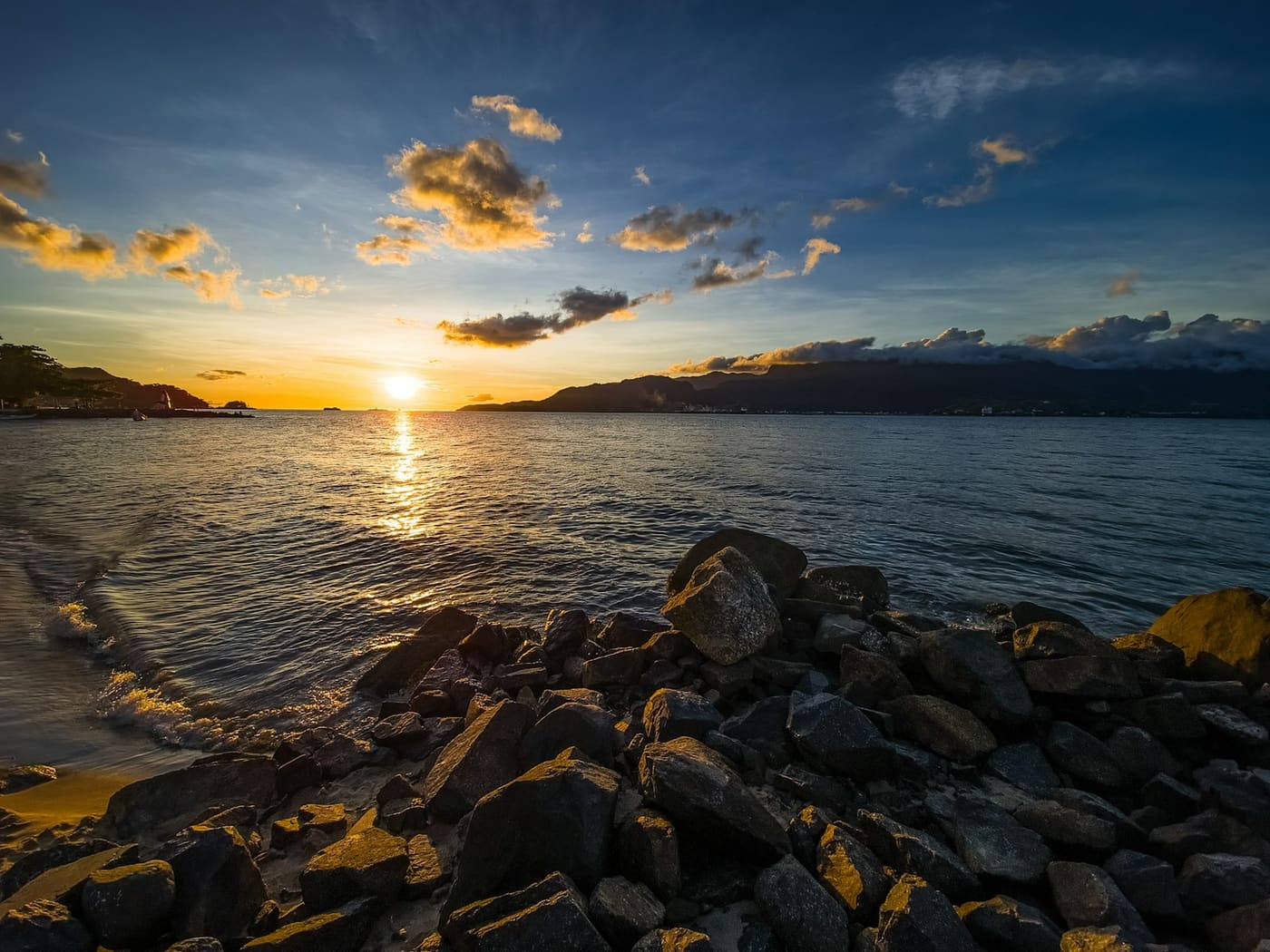
There is a detail of Ilhabela’s geography that many people only notice at the end of their first afternoon: the island faces west. Almost the entire Brazilian coast watches the sun rise over the sea and disappear behind the mountains. Here it is the opposite. The beaches on the channel side face the mainland, and the sun goes down behind the Serra do Mar mountains of São Sebastião, across the water. The result is a sunset over the sea on a coast that, in theory, should not have one.
We write from here, from the historic center, and live this late afternoon every day of the year. In winter, there is an hour when the team invents a reason to be near the water: the sky turns copper, the boats in the channel become silhouettes and the whole island lowers its volume for about twenty minutes. This guide is the list of spots we point to when a guest asks “where do I see this best?”, with the right hour per season and the local way of living this ritual. If you are still shaping the overall plan, our guide to things to do in Ilhabela is the starting point.
The right time in each season
The sun does not wait, so start here. At the height of summer, sunset in Ilhabela happens close to 7 pm. In winter it drops around 5:30 pm, and in June and July the sky is already dark before 6:15 pm. Spring and fall sit in between, around 6 pm.
Two rules we learned watching this thousands of times. First: arrive 40 minutes early. The most beautiful light is not the sun touching the ridge, it is the half hour before, when everything turns golden and the channel becomes a mirror. Second: do not leave when the sun disappears. The sky usually burns pink and purple for 15 to 20 minutes afterward, and that is when the best photos happen. Whoever rushes off misses the second act.
And the usual honesty: on an overcast day there is no show at all, just a gray that darkens. If the afternoon has closed in, trade the plan for a coffee in the Vila and try again tomorrow. The best time to visit Ilhabela explains when the sky tends to cooperate most.
The Vila waterfront and the pier
The classic, and for good reasons. The historic center waterfront gathers everything that makes a late afternoon worth it: the colonial houses catching low light, the mother church at the top of its staircase, the fishing boats anchored out front and the mainland closing the horizon. The Vila pier reaches out over the water and becomes the natural box seat: line fishermen on one side, couples on the other, everyone looking the same way.
It is also the easiest spot to fit into your plans, because you will already be around. The Vila concentrates the cafes, the little shops and the craft fair, and the sunset is the perfect transition between afternoon and dinner. Our guide to Ilhabela’s historic center breaks down what to see before the light drops.
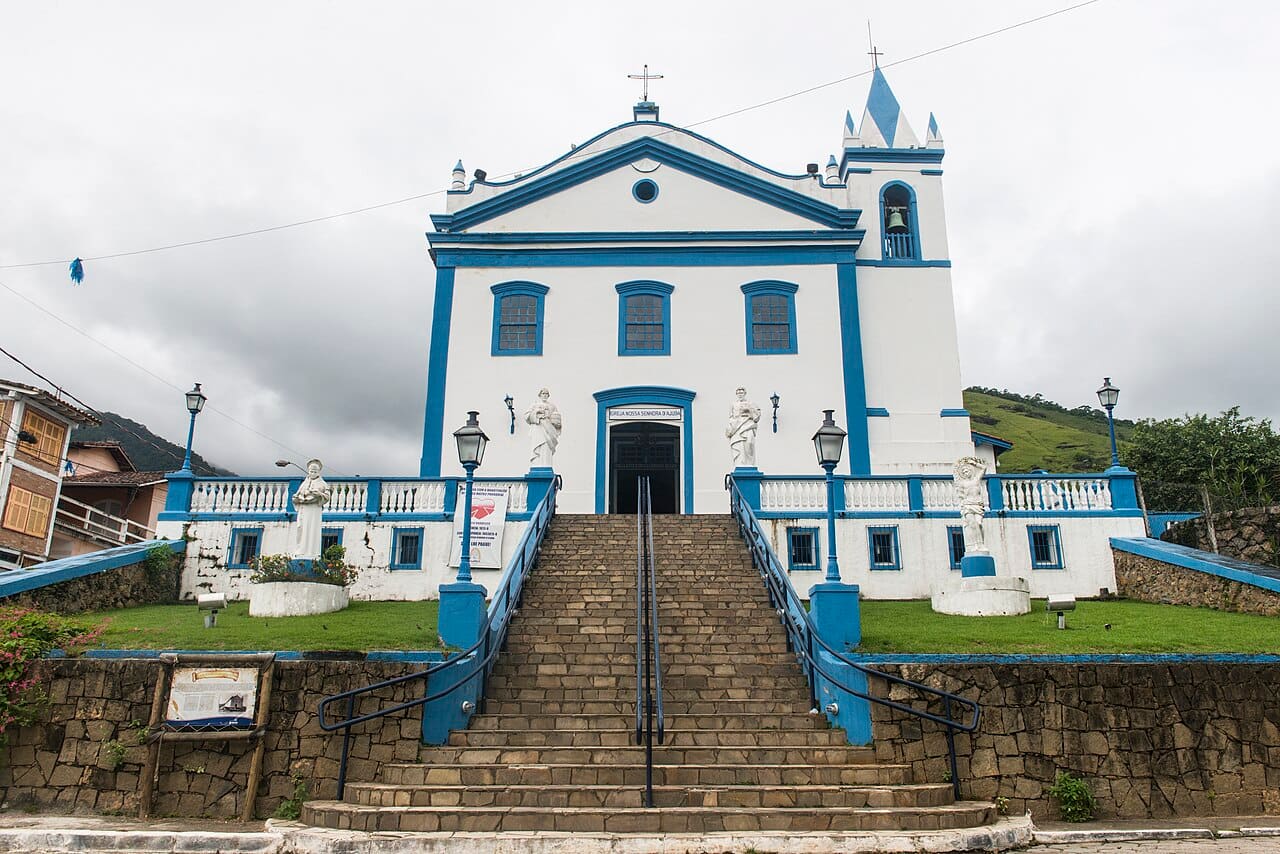 The Vila’s mother church, in the historic center. Photo: Maristela Colucci/MTur, public domain, Wikimedia Commons
Santa Tereza beach
A short hop south of the Vila, Santa Tereza is the quiet version of the same sunset. It is a small fishing village beach, with colorful canoes resting on the sand. When the sun drops, the canoes become the foreground and the channel the backdrop, and it is hard to miss a photo there. There is no big infrastructure, and that is exactly what holds the mood: few people, calm water, and the only sound is boat rope tapping against masts.
Perequê and the Perequê pier
Perequê is the widest beach on the channel side, and the open stretch of sand gives the sunset a scale the Vila does not have. The sun goes down exactly behind the mountains of São Sebastião, and for part of the year it touches the water before the ridge. At the end of the beach, on the border with Itaguaçu, a public pier juts out over the sea and concentrates the ritual: people with bikes leaning on the railing, families, stand up paddlers coming back from the last stroke. The bike path runs along the whole waterfront, so you can extend the late afternoon into an unhurried ride. Anyone traveling without a car reaches all of this easily; our guide to Ilhabela without a car shows how.
Piúva lookout
For anyone who wants height, the Piúva lookout sits on Avenida Brasil, at the southern entrance to the island, with parking and a bus stop at the door. It is the easiest viewpoint to reach in Ilhabela and looks straight at the channel, so the late afternoon there delivers the sun’s reflection on the water with the mainland coast behind it. There is the “eu amo Ilhabela” (I love Ilhabela) sign that fills with people on holidays, but the trick is simple: walk a few meters down along the low wall and the angle becomes yours alone. The island has several high points like this, and we listed them all in the guide to Ilhabela viewpoints.
Curral beach
Curral is the social sunset. The beach has kiosks, music and movement, and at the end of the day the mood turns into a kind of collective gathering: the sun drops behind the headland, the light cuts through the masts of the anchored sailboats and nobody is in a hurry for anything. It is the right choice if you want to run the dusk straight into snacks and cold beer with your feet in the sand. On holidays it gets packed, and then it is worth swapping for Perequê or Santa Tereza. To decide where to spend the whole day before that, our ranking of the most beautiful beaches in Ilhabela helps.
The sunset in motion: the ferry
Here is the secret that costs nothing: the ferry crossing between São Sebastião and Ilhabela takes about 20 minutes and is free for pedestrians. At the end of the day it becomes the best sunset boat on the island. You cross the channel with the sun dropping at the bow, the hills darkening on both sides and the island’s lighthouse switching on as you arrive. If your arrival or departure day lines up with a clear sky, schedule the crossing for that hour on purpose. The logistics are in the guide to how to get to Ilhabela.
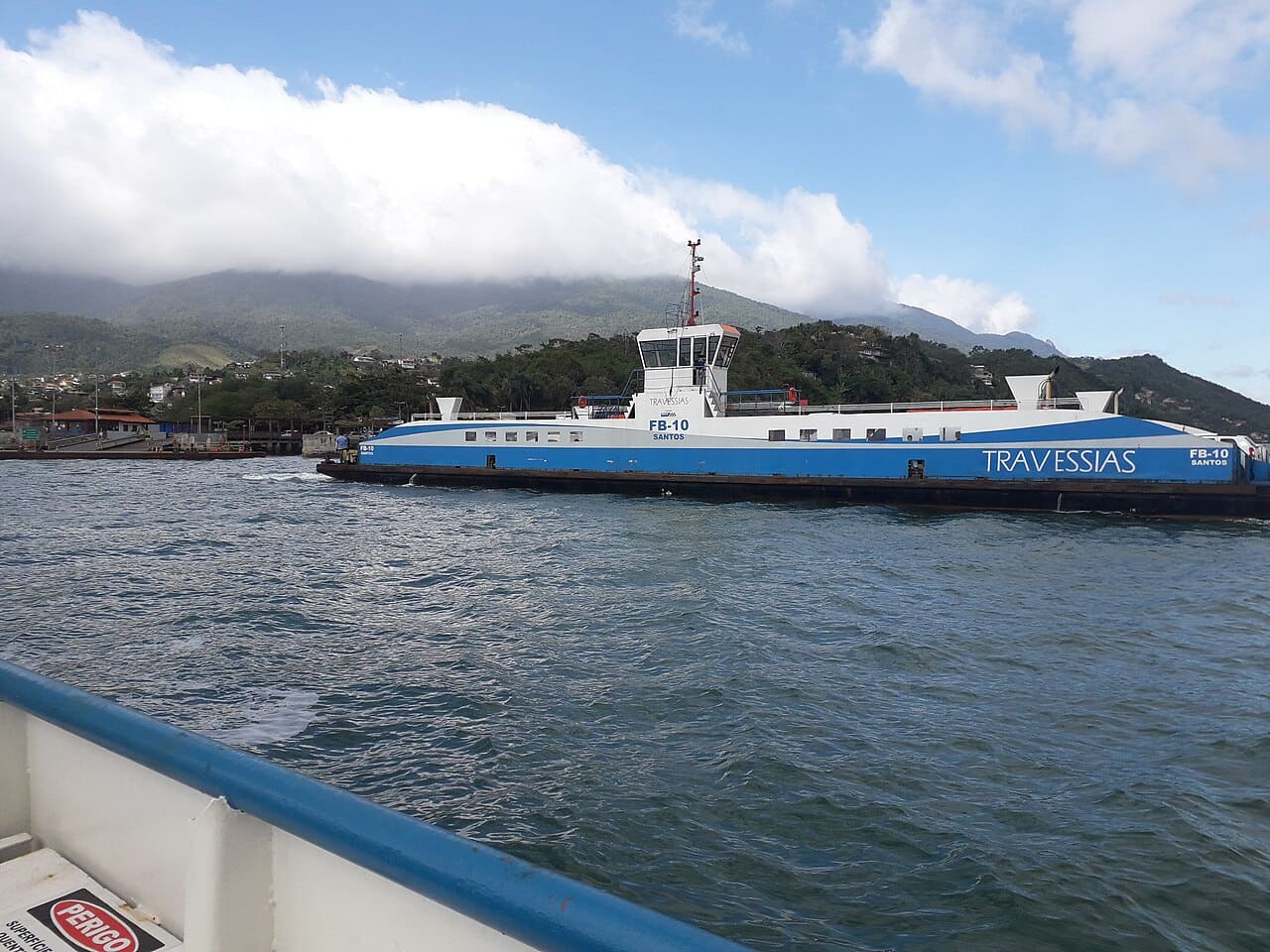 The ferry crossing the channel: 20 minutes that count as a boat trip at the end of the day. Photo: Clonefox19, CC BY-SA 4.0, Wikimedia Commons
The ritual of people who live here
There is a local way of closing the day that we think every traveler should copy at least once. It is not racing to the most photogenic spot: it is stopping whatever you are doing when the light gives the signal. In the Vila, that means ordering your drink before the sun touches the ridge and keeping your table turned toward the channel.
In our case, this ritual has an address. At the end of the afternoon, the deck of the Floresta Bar, the bar that lives in the middle of the forest at Hostel da Vila, starts to fill slowly: a signature drink in hand, golden light cutting through the leaves, someone tuning a guitar for the music later. The sunset there is not scenery, it is the start of the night. When the last light leaves the sky, the forest bar lights up. The week’s schedule goes out on our Instagram.
Winter sunset is a different sport
If you can choose the season, choose winter. From May to August the air dries out, the sky clears and the light takes on a gold the summer does not deliver. The sun drops early, at 5:30 pm, which leaves a longer evening ahead, and the channel is usually as calm as a lake. It is also whale season, May 16 to August 16, when humpbacks cross the São Sebastião channel and whale watching trips leave from the same Vila pier where you will watch the sun go down. We wrote a whole article on why Ilhabela is worth it in winter.
In summer the game changes: the late-afternoon storm clouds sometimes swallow the sun, but when they do not, they produce the most dramatic skies of the year, with shafts of light leaking between towers of cloud. It is a lottery, and we are telling you upfront.
A warning from people who have left covered in bites
Dusk is also rush hour for the borrachudo, the tiny fly that has become the island’s mascot and lives where the water is almost too clean. At beaches and lookouts near the forest, apply repellent before you sit down to watch, not after the third bite. It sounds like a detail, but it is the difference between a full golden hour and a strategic retreat after 15 minutes.
The sunset is the only event in Ilhabela that happens every day and never repeats itself. Pick one spot for each day of your trip, miss one, nail another, and when the sky goes out, the island will still be getting started: our guide to what to do at night in Ilhabela picks up exactly where this one stops. If you are laying out your days, the 3 day Ilhabela itinerary already fits a different dusk into each one.