
The 10 most beautiful beaches in Ilhabela: a ranking by people who live here
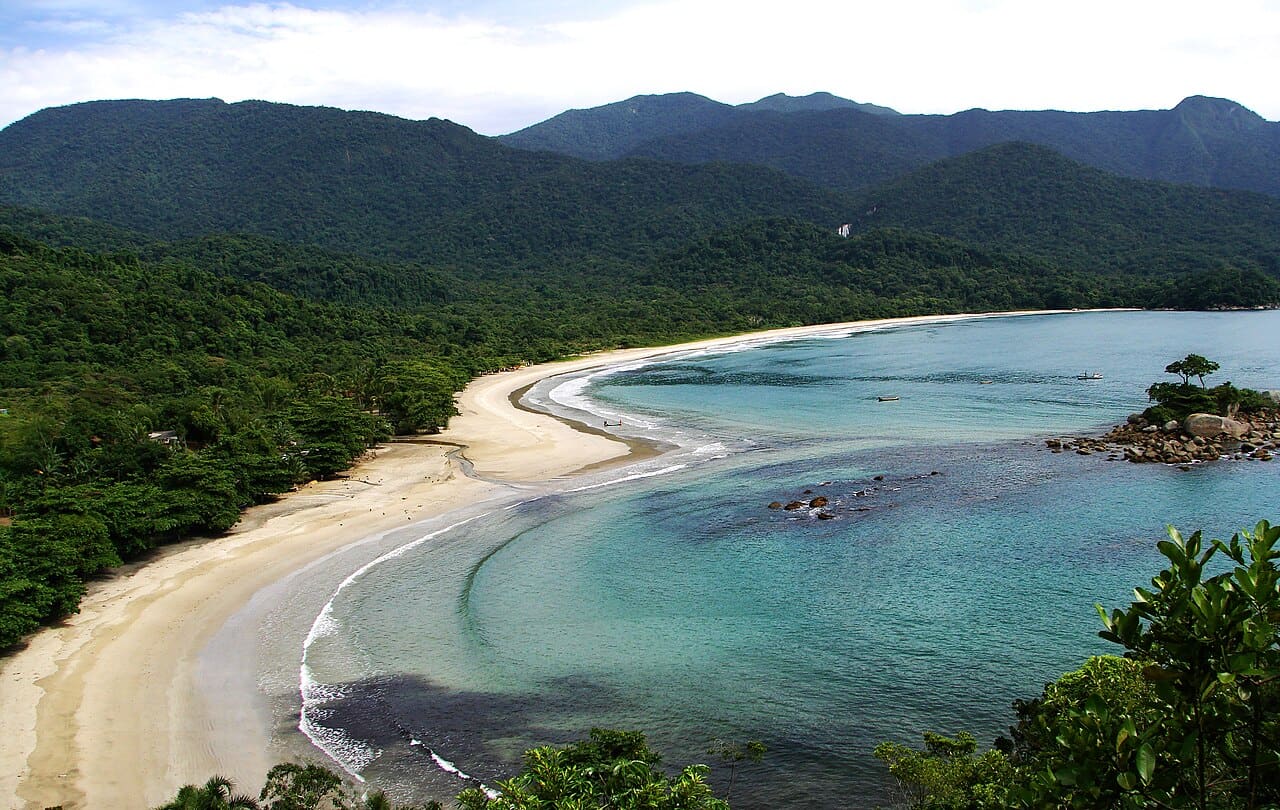
Ilhabela has more than 40 beaches and we live here, which means we have argued about this ranking many times: in the ferry line, at the coffee counter, with a rain-soaked guest telling us the Castelhanos road just closed. This article is the organized version of those conversations. It has opinions, it has an order, and it has what we would tell a friend with four days on the island and a real desire to get it right.
Before the ranking, the context that changes everything: most of Ilhabela is a state park of Atlantic Forest. That is why most of the beautiful beaches have no asphalt at the door, and it is also why the borrachudo exists, the tiny biting fly that only lives where the water is clean. Repellent here is not a suggestion, it is equipment. The ferry from São Sebastião takes about 20 minutes and is free for pedestrians, so you can do a good part of this list without a car, combining the municipal bus, speedboats and shoe leather.
Our criteria: raw beauty first; then, how beautiful the beach stays when a holiday crowd arrives. Crowds cost points. Effort to get there does not.
The ranking, first to tenth
1. Castelhanos beach
The ocean side of the island holds Ilhabela’s most famous scene: a bay that, seen from the viewpoint on the road, draws an almost perfect heart. Getting there means 17 km of dirt road crossing the state park, by 4x4 or on foot only, or else by sea. Down below: open ocean with real waves, caiçara canoes on the sand (caiçara is the name of the traditional fishing communities of this coast) and a village that lives without hurry. From the right-hand corner of the beach, a walk leads to Cachoeira do Gato, a tall waterfall that closes the day with fresh water. When it rains hard, the road closes, and your plan closes with it. Micro-action: book your 4x4 transport the day before and leave early; the complete Castelhanos guide explains the options and prices.
2. Bonete beach
A caiçara village of around 300 residents at the far south of the island, reached by a 16 km trail or by speedboat. The Guardian once placed Bonete among the ten most beautiful beaches in Brazil, and we get it: coarse sand, a heavy shore-break sea that surfers love, hammocks strung between almond trees, caiçara kids playing football at the end of the afternoon. It is not a beach for a gentle swim, it is a beach for being. Micro-action: if you go by the Bonete trail, sleep one night in the village and arrange a boat for the return; doing the 32 km in a single day is punishment.
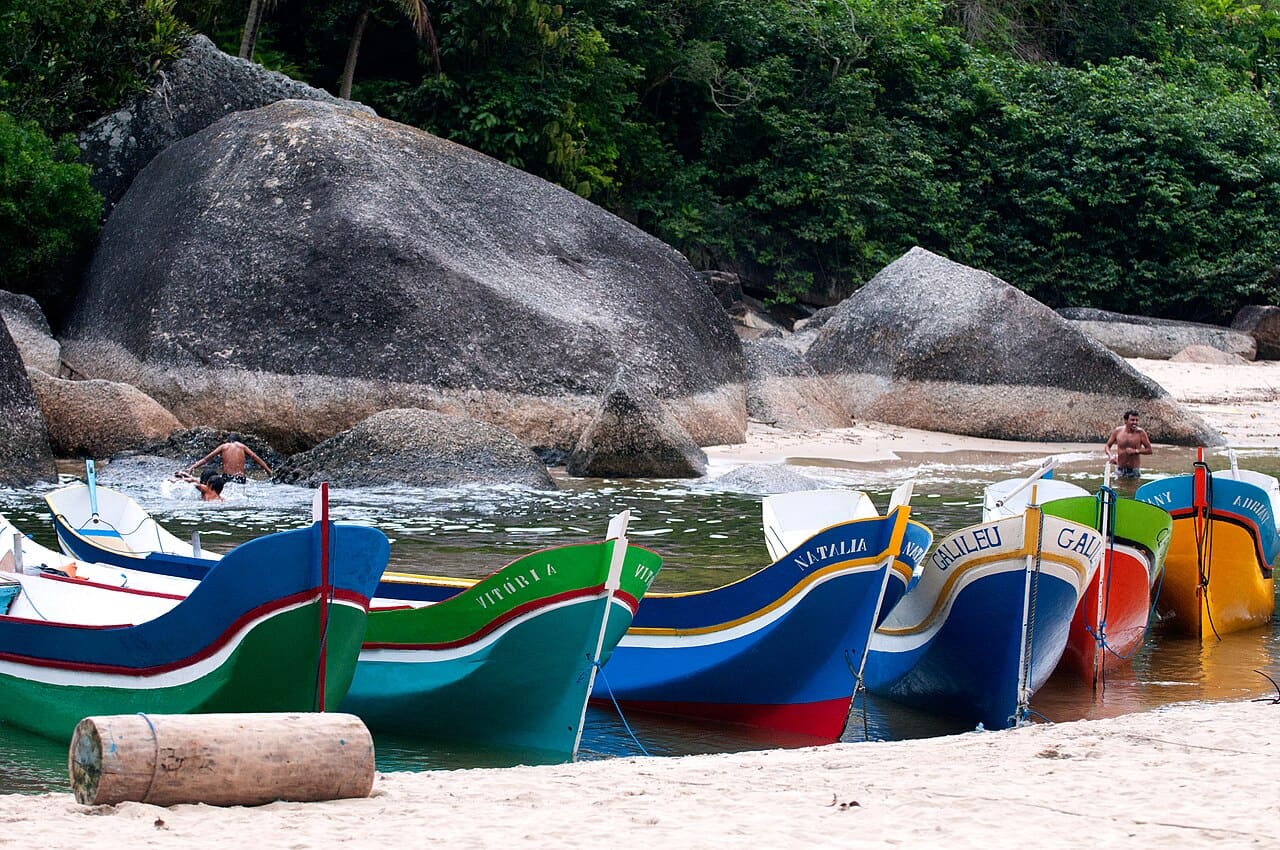 Caiçara canoes at Bonete. Photo: João Lara Mesquita, CC BY-SA 4.0, Wikimedia Commons
3. Jabaquara beach
The end of the road at the north of the island. After the asphalt gives up, there are about 8 km of dirt with steep climbs down to a pale-sand beach cut by two streams, one of them forming a freshwater lagoon behind the sand. The sea has a shore break, but it usually arrives calm and transparent, in shades of green. A regular car makes it in dry weather with patience. Micro-action: stop at the improvised viewpoint before the final descent; the view alone pays for the trip. We wrote a complete Jabaquara guide with the whole logistics.
4. Praia da Fome
Jabaquara’s neighbor, except with no road at all: either a speedboat or 4 km of forest trail. The reward is some of the most transparent water on the island, calm enough for floating with a mask, plus an old manor house guarding a heavy history that explains the name. Few boats stop there, and that is exactly what keeps it in the top 5. Micro-action: combine Jabaquara and Fome on the same day; we explain how in the Praia da Fome guide.
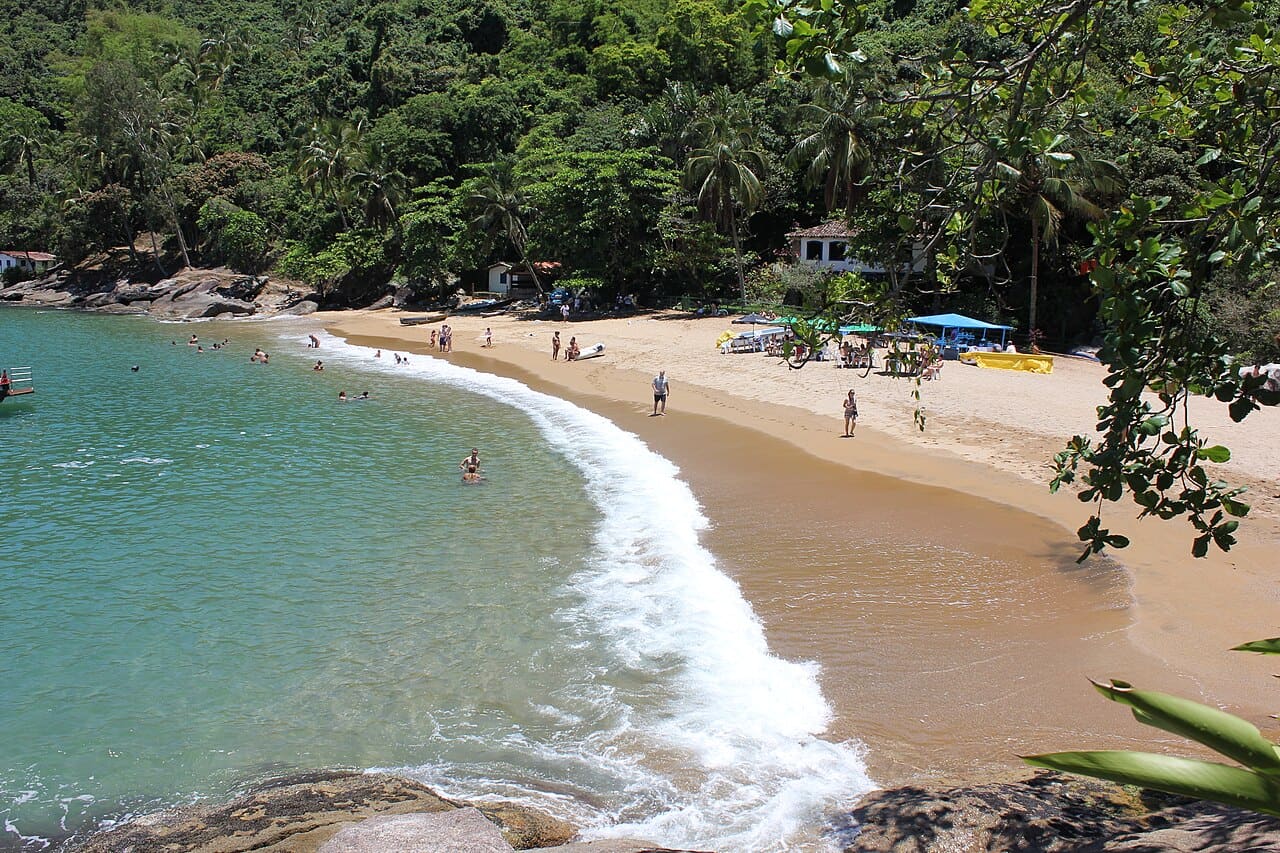 Praia da Fome. Photo: Priscila Mayumi de Souza, CC BY-SA 3.0, Wikimedia Commons
5. Saco do Eustáquio
On the east side, reachable only by sea, a 150 meter cove protected by Ponta da Cabeçuda and by Búzios Island. The result is water so still it looks like a lagoon. A small caiçara community welcomes the boats with fresh fish at an honest price. Micro-action: climb the rocky point at the left corner; the view opens onto Castelhanos bay and Serraria island, and almost nobody does it.
6. Praia da Pacuíba
The smallest beach in this ranking: 127 meters at the north of the island, with a soft lawn and the shade of chapéu-de-praia trees (a broad native shade tree) touching the sand. A very short trail separates the road from the beach, just enough to filter out the crowds. The clear water, full of nooks in the rocks, is great for anyone starting out with snorkeling. Micro-action: bring a mask and go when the sea is calm; the fish stay in the corner by the rocks.
7. Praia da Feiticeira
In the south, on the channel side, 250 meters without a single beach kiosk, with a historic manor in the landscape and clear water that draws ornamental fish and, with luck, a sea turtle. Silence is the luxury here. The beach has a shore-break profile, so double your attention with small children. Micro-action: go on a weekday before 10 am and bring your own snacks, because there is no commerce there at all.
8. Praia do Julião
Also in the south, 250 meters of gentle sea looking out at the Ilhote da Prainha islet. It is a beach for floating on your back, for paddling a stand-up board without drama, for watching small fish near the rocks. If your trip is a family trip, this is probably where you will keep coming back. Micro-action: arrive early to claim tree shade; the strip of sand is short and it runs out.
9. Praia do Curral
The most built-up beach on the island: about 500 meters of white sand with kiosks, toes-in-the-sand restaurants, showers, bathrooms and lifeguards along stretches. It is genuinely beautiful, and that is exactly why it fills up. On a summer holiday, Curral turns into an event, and anyone after quiet suffers. Off season, on a Tuesday late afternoon, it easily climbs three spots on this list. Micro-action: on holidays, arrive before 10 am or swap it for Feiticeira, three beaches down.
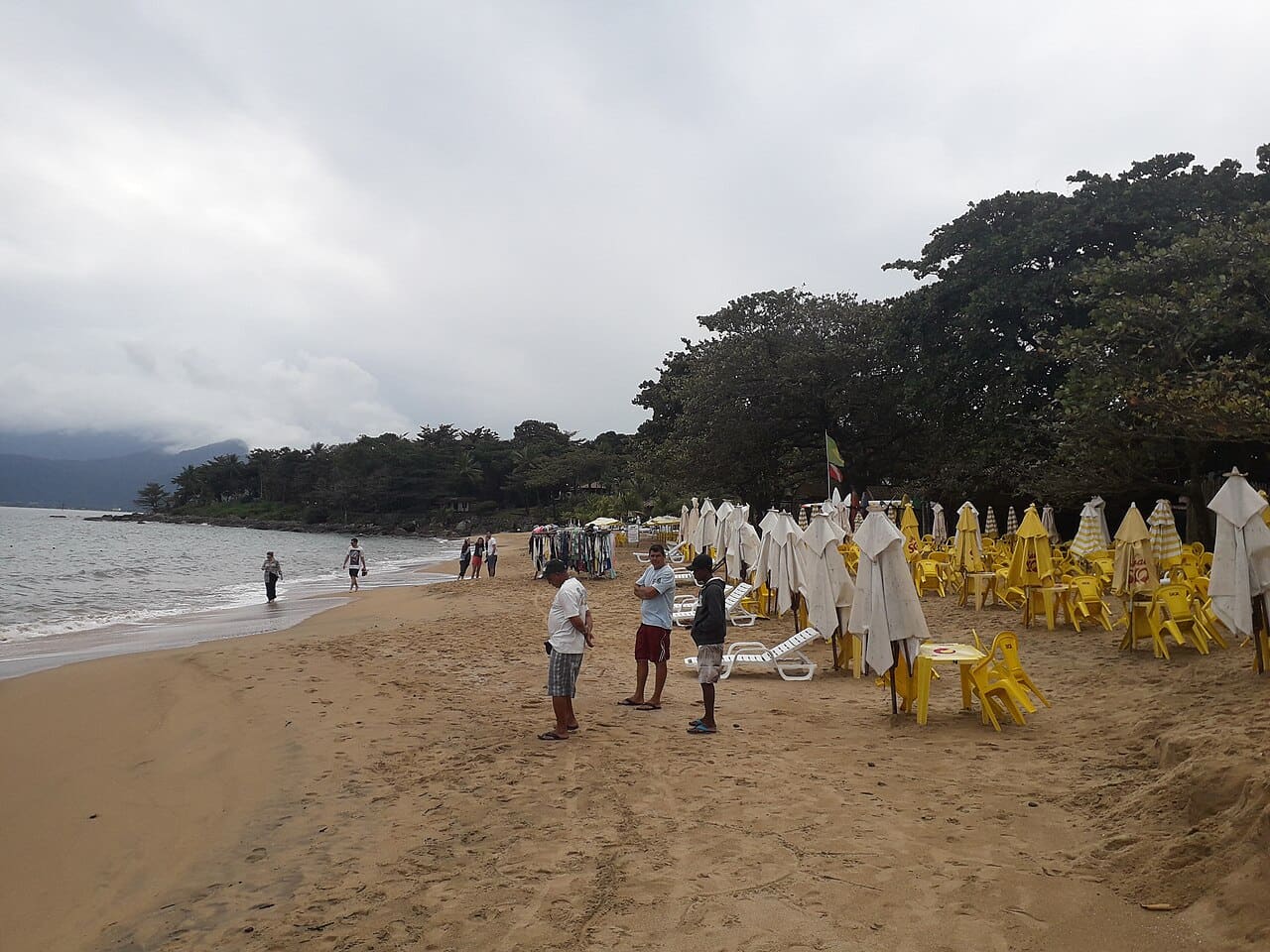 Praia do Curral. Photo: Clonefox19, CC BY-SA 4.0, Wikimedia Commons
10. Praia Grande
About 600 meters in the south, with kiosks, the open sea of the channel and one of the most local atmospheres on the island: it is a residents’ beach, of football tournaments on the sand, of grilled tainha (mullet) in July, when the Festival da Tainha takes place. It does not have the dramatic scenery of the ocean beaches; it has life. Micro-action: if you are on the island in July, ask for the festival dates and go hungry.
The ones that just missed the cut
Veloso, with its 1920 shipwreck a few meters off the sand, Portinho with the Santo Antônio chapel, Armação with its sailors, and Praia do Sino with rocks that ring like metal. All of them appear in our guides to beaches for couples and secret beaches, each in the context where it shines.
How to spread the ranking across your days
The temptation to tick off all ten in a single trip is real, and we advise against it: the hard-to-reach beaches demand a full day each plus a margin for the sea to misbehave. With three days, the honest layout is one day on the channel side (Curral or Feiticeira with Julião), one day in the north (Jabaquara with the Fome trail) and one boat day to the east. With five, the 4x4 ocean expedition comes in and there is still an afternoon left for the hammock. The full day-count math is in our how many days in Ilhabela, and the 5 day itinerary already comes with this logic built in.
Another shortcut that saves group arguments: choose by company, not by fame. A trip for two calls for the calm channel beaches and a guaranteed sunset. Small children call for shallow water, shade and a bathroom nearby, which is a much stricter filter than it sounds. Adventure calls for a trail, a speedboat and a light backpack. We split these angles into their own guides precisely because the right beach changes depending on who is sitting on the sand with you.
The logistics that make or break the day
Half of this list depends on a good sea or a dry road, so the season matters: from May to August the water gets clearer and the trails dry out, as we explain in our guide to the best time to visit Ilhabela. In summer the game changes: near-daily afternoon rain, the Castelhanos road closing without notice and holidays packing the drive-up beaches. It still works, as long as expectations arrive calibrated and the boat beaches get scheduled for the first days of the trip, with room to rebook. In that same period, between May 16 and August 16, humpback whales pass along the island’s coast. We run whale watching departures leaving from the Pier da Vila, in the historic center: R$ 320 per person, 3h30 at sea, and the usual honesty: a sighting is not guaranteed, it is nature.
And it is fair to say where this ranking comes from: it is written by the team of Hostel da Vila, an eco lodge in Ilhabela’s historic center, on the channel side, hosting travelers since 2016. After a full day of dirt road and salt, the 32°C heated pool on our forest property has fixed a lot of tired legs around here.
The order of this list is ours and you will disagree with some position, which is exactly the point: beautiful beaches are meant to be argued about with sand on your feet. Pick three from the ranking, build your days with our guide to things to do in Ilhabela and come check whether we got it right.