
Castelhanos beach: the complete guide to the heart-shaped bay
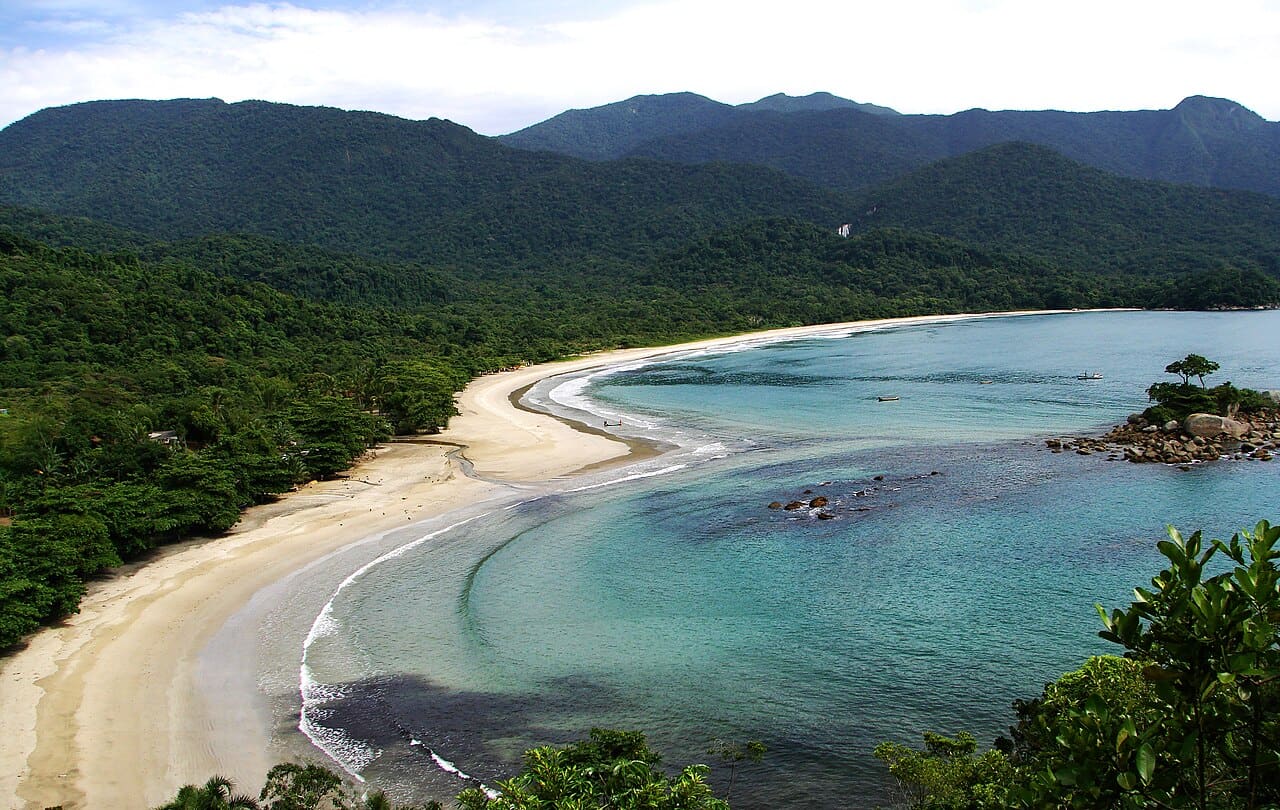
There is a question that separates people who have seen Castelhanos from people who have seen photos of Castelhanos: “and the road?”. Whoever has been answers with a laugh. It is 17 km of dirt inside Ilhabela State Park, with drainage ditches, loose rocks and mud that changes its mood with the rain, all under a tunnel of Atlantic Forest that swallows your phone signal in the first stretch. We live on the island, have crossed that road for years and defend a simple thesis: the heart-shaped bay is Ilhabela’s most famous image, but it is the journey that makes the arrival worth so much.
This guide gathers what you need to decide before going: chartered jeep or boat, what time to leave, what to expect from the sea, how much time to set aside for Cachoeira do Gato and how not to get caught out in a place with no pharmacy, no ATM and no signal.
Where it is and why it is different
Ilhabela has two sides. The channel side, facing the mainland, concentrates the town, the historic center, the guesthouses and the calm-water beaches. The ocean side, facing the open sea, is almost entirely state park: continuous forest, beaches with no streets and caiçara communities (the traditional fishing people of this coast) living by the rhythm of the boat, as at Bonete beach, further south. Castelhanos is the bridge between those two worlds: the only beach on the outer side you can reach by land.
And what a beach. It is about 1.7 km of sand in a bay so enclosed that, seen from above, it draws an almost perfect heart. Behind the sand, the caiçara community lives among canoes, fishing nets and backyards with banana trees; some backyards become restaurants at lunchtime, serving the fish of the day and whatever the garden gave. Do not expect a chain hotel, loud music or standardized kiosks. That is exactly the charm. It regularly competes with three or four others for the title of most beautiful in the archipelago, and we explain the criteria in our guide to the most beautiful beaches in Ilhabela.
The park road: 17 km that punish and repay
Let’s be honest: the Castelhanos road punishes. It is dirt from start to finish, with stretches of rock, drainage ditches and slopes that, after a good rain, turn to soap. It is also one of the most beautiful crossings you can drive on the Brazilian coast, cutting the island from west to east through the forest, with viewpoint stops at the top of the ridge.
Access is controlled by the park. Only vehicles with 4x4 traction and authorization get in, with a limit of 42 vehicles per day, going up between 7 am and 2 pm and returning between 3 pm and 6 pm. Translation: your street SUV with two-wheel drive does not get in, and even a real 4x4 has to pass the gatehouse and respect the time window. When it rains hard, the park can close the road with little notice.
That is why the vast majority of travelers go by chartered jeep. In 2026, the shared departure costs around R$ 150 per person with the local operators, usually leaving around 10 am and returning at 4 pm, with a photo stop on the way. The driver knows every ditch, which turns the crossing from tension into fun. If you are on the island without a car, this is the natural solution: the agencies pick you up at lodgings on the channel side.
The second door is the sea. Speedboats round the island and enter the bay, a route that shows the entire ocean coast with its roadless beaches. The downside is weather dependence: with a big swell, the open sea genuinely rolls and departures cancel. If you get seasick easily, the road is your friend.
The Coração viewpoint
The full heart shape does not show from the sand: you have to climb. The Coração viewpoint sits at the right corner of the bay and it is where the classic photo comes from, with the beach’s two curves meeting in the middle. Agree with your driver on what the trip includes, because each operator builds the itinerary differently: some stop at the viewpoints on the road, others reserve time for the climb to the bay viewpoint. If views from above are what moves you, the island has a whole circuit of them, which we gathered in the guide to Ilhabela viewpoints.
The sea: respect the shore break
Castelhanos is an open-ocean beach, and that means a shore break: the wave rises and breaks hard at the edge, pulling the sand back with it. It is a delicious swim for anyone on close terms with a big sea and a real risk for anyone who is not. Children and unconfident swimmers are better off playing in the shallow parts at the corners, which tend to be more protected. It is not a beach for unicorn floaties or natural pools. In the middle of the bay, the waves draw local surfers all year round.
One detail that fools people: because the bay is deep and faces east, the wind and the sea can shift through the day. If the sea woke up rough, do not insist; the beach has 1.7 km of sand, a waterfall and caiçara restaurants to fill the whole day without wetting a shoulder.
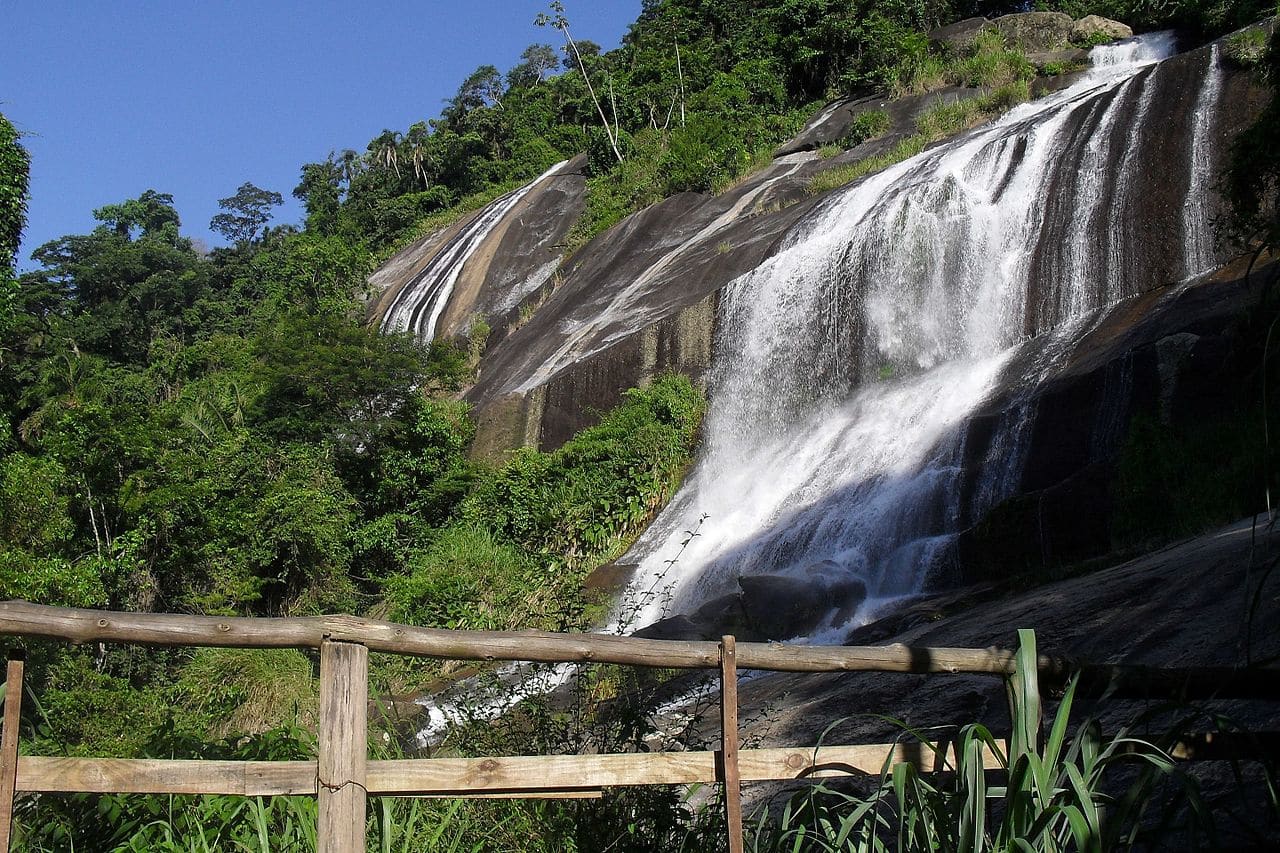 A waterfall deep in Ilhabela’s forest. Photo: Iuri Bertolini, CC BY-SA 4.0, Wikimedia Commons
Cachoeira do Gato: the best-spent two hours of the day
At the left corner of the beach (facing the sea), known as Canto do Ribeirão, begins the trail to Cachoeira do Gato: about 2 km through the forest, 30 to 45 minutes each way, with bridges and handrails at the trickier points. It is an easy walk for anyone used to walking, and the reward is out of proportion to the effort: a rock wall with a drop of around 40 meters plunging into a pool of cold water, surrounded by stone and forest.
Set aside at least two hours of your day for the walk, the swim and the return, and negotiate that with the jeep schedule before coming down the ridge. Plenty of people discover the waterfall too late and head back to town feeling the job was half done. If waterfalls are your travel criterion, Ilhabela is generous on that front, and the full map is in our guide to Ilhabela waterfalls.
When to go
The island’s general rule applies double here: the best months are April, May, September and October, when it rains less, prices drop and everything empties out. For the road specifically, the dry season, May to August, is the best window: firm mud, shallow ditches, a smooth crossing. We break down the whole year in the guide to the best time to visit Ilhabela.
Summer is the patience test: it rains a lot, the mud thickens, departures cancel and the day’s 42 vehicles sell out early on holidays. If you land on a day of closed-in rain, do not force the crossing; the island has a whole plan B for wet days, and Castelhanos deserves to be seen with the heart open, literally.
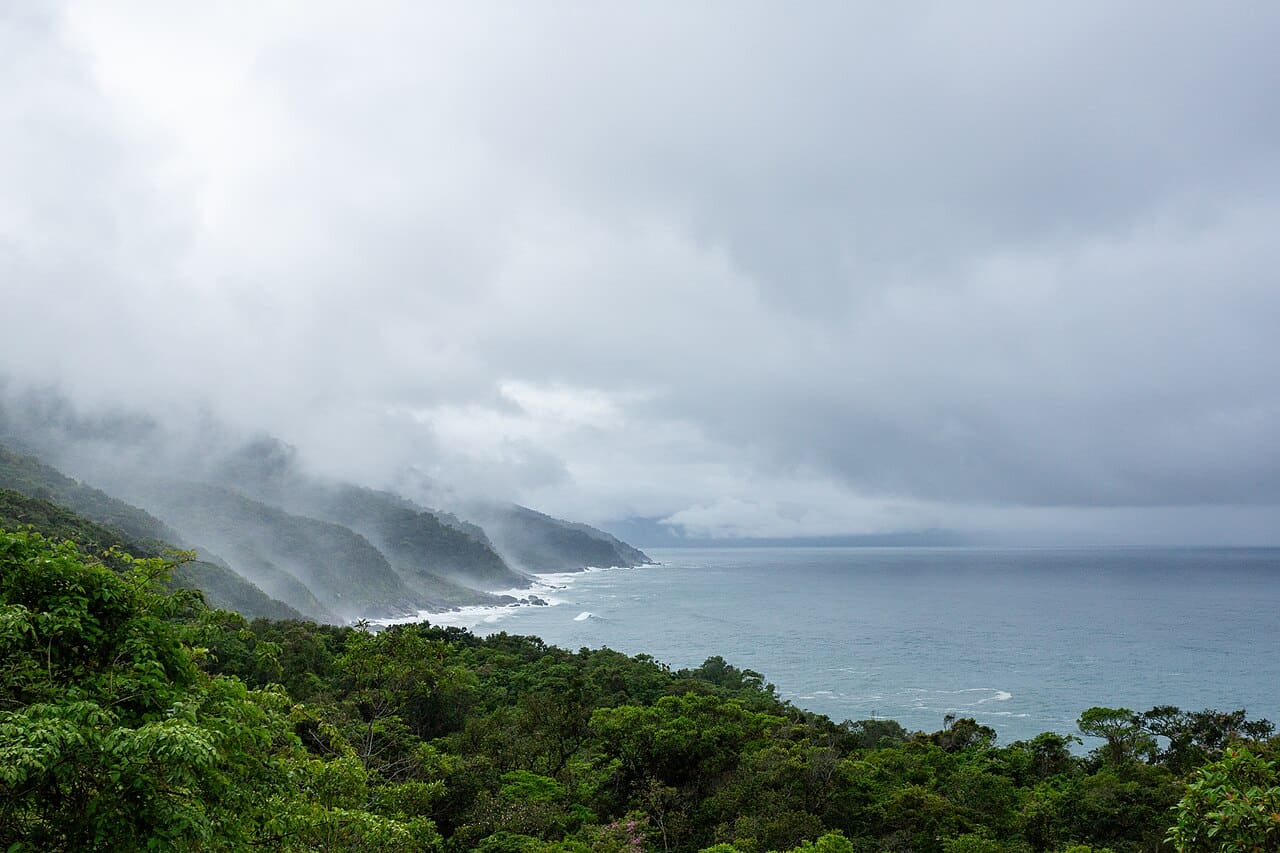 When the ridge closes in like this, the park road becomes a different sport. Photo: João Paulo D’Andretta, CC BY-SA 4.0, Wikimedia Commons
What to bring
- Cash. With no phone signal, card machines are a lottery. The caiçara restaurants and the waterfall trail appreciate small bills.
- Repellent. The borrachudo (the tiny biting fly of clean water) is the ocean side’s most loyal resident and has no respect for hurried tourists. Reapply after swimming.
- Sneakers or sturdy-soled sandals for the waterfall trail. Smooth flip-flops on wet rock are a guaranteed fall.
- Water and a snack, even if you plan to have lunch on the beach: the caiçara kitchen works on island time, not yours.
- A light rain jacket and a dry bag (or a garbage bag) for your phone and documents: the road shakes and the weather turns fast.
- Your trash goes back with you. The bay has no collection service like the town, and the community is not a visitor’s dumpster.
Mistakes we see every week
The first is trying to go independently in a regular rental car: you will lose time, the trip and possibly your insurance deductible. The second is leaving late: whoever comes down the ridge at noon arrives with the beach at peak movement and no time for the waterfall. The third is ignoring the forecast and insisting on a day of heavy rain, when the road closes and the sea does not cooperate. And the fourth is treating Castelhanos as a generic beach day trip, without stepping on the trail or talking to the people who live there: the bay is a community, not a backdrop.
If you are building the trip from scratch, see how to get to Ilhabela and slot the crossing into a 3 day itinerary: it takes a full day and tends to be the most talked-about chapter of the trip.
The base for this adventure
A day like this starts before 8 am and ends with sand in your sneakers, salt in your hair and an appetite for hot food. It makes a difference to sleep somewhere that understands that rhythm. Our base is in Ilhabela’s historic center, on the channel side, on the opposite side of the island from the open sea: Hostel da Vila, the eco lodge our team has run since 2016, with 8,000 m² of Atlantic Forest climbing behind the property. You can have a calm breakfast before meeting the driver and, on the way back, sink into the 32°C heated pool while dinner at Floresta Bar arrives with live music. The week’s program goes out on our Instagram.
The first time the heart appears whole down below, after an hour of rattling road, nobody stays indifferent: the jeep stops and the silence lasts a good few seconds. Go after that silence. The next step is simple: open our guide to things to do in Ilhabela and reserve one full day of your trip for that side of the island.