
Is Ilhabela worth it in winter? Yes, and we can prove it
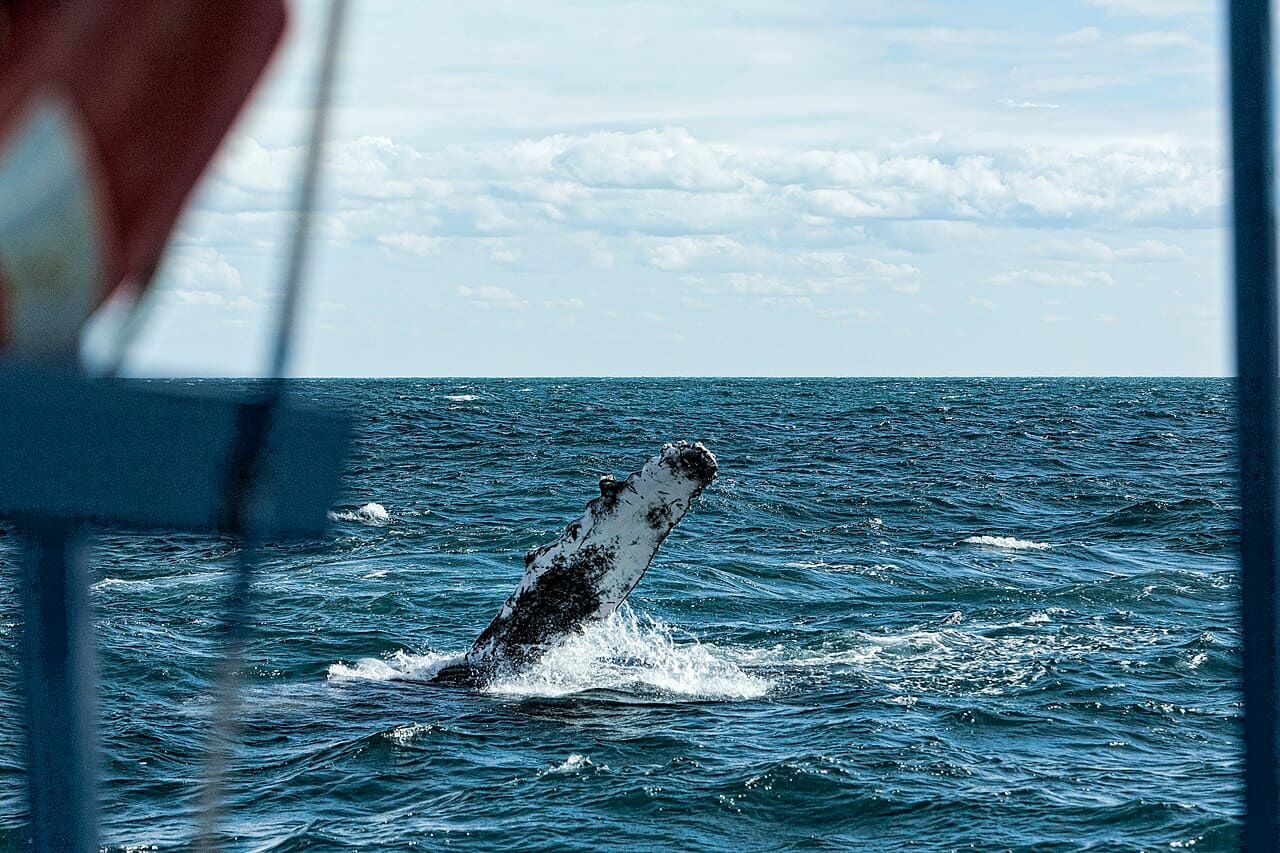
There is a month when our team gets the most messages from friends asking whether coming to Ilhabela is “worth it”, and it is always June or July. The doubt comes from beach logic: if you cannot spend the day on the sand in a swimsuit, why go? We, who have lived on the island year round since 2016, answer with the experience of watching the two seasons trade places: winter is not the time to tolerate Ilhabela. For a whole type of traveler, it is the best time to come.
So, the short answer: yes, it is worth it, very much. Below are the six arguments, in order of weight, and also the real downsides, because a recommendation without a counterpoint is not a recommendation, it is advertising.
Argument 1: the whales
Between May 16 and August 16, humpback whales move up the Atlantic toward the nurseries of Brazil’s Northeast and pass along the Ilhabela coast, with sightings peaking in June and July. It is not a rare stroke of luck: it is a migration, it happens every year, and it turns the sea here into a highway of giants. From shore, on a clear day, you can see spouts and tails. From a boat, the thing changes scale.
During the season, we run our own whale watching departures: R$ 320 per person, 3h30 at sea on a flexboat (a rigid inflatable), leaving from the Pier da Vila, in the historic center. The operation follows the Whale Friendly Seal (regulated distance and conduct, because the show belongs to them) and takes children from age 6. And the warning we insist on giving before any booking: sightings are not guaranteed. Whales do not follow scripts. What we do guarantee is the rest: the open sea of the ocean side, the archipelago’s islands seen from the water and a crew that knows where to look. When the blow appears on the horizon, the whole boat forgets the cold.
The season also brings southern right whales, minkes and Bryde’s whales, plus the resident dolphins and, once in a while, a passing whale shark. Winter is when the channel remembers it is ocean.
On choosing a date: if the trip revolves around whales, aim for the heart of the season (June and July) and book the outing for the first possible morning of your stay, not the last. That way, if the wind cancels the day, there is room to rebook. It is the same reasoning as photographing the northern lights: the phenomenon is probable, not punctual, and those who give time to time get rewarded.
Argument 2: the trails at their perfect point
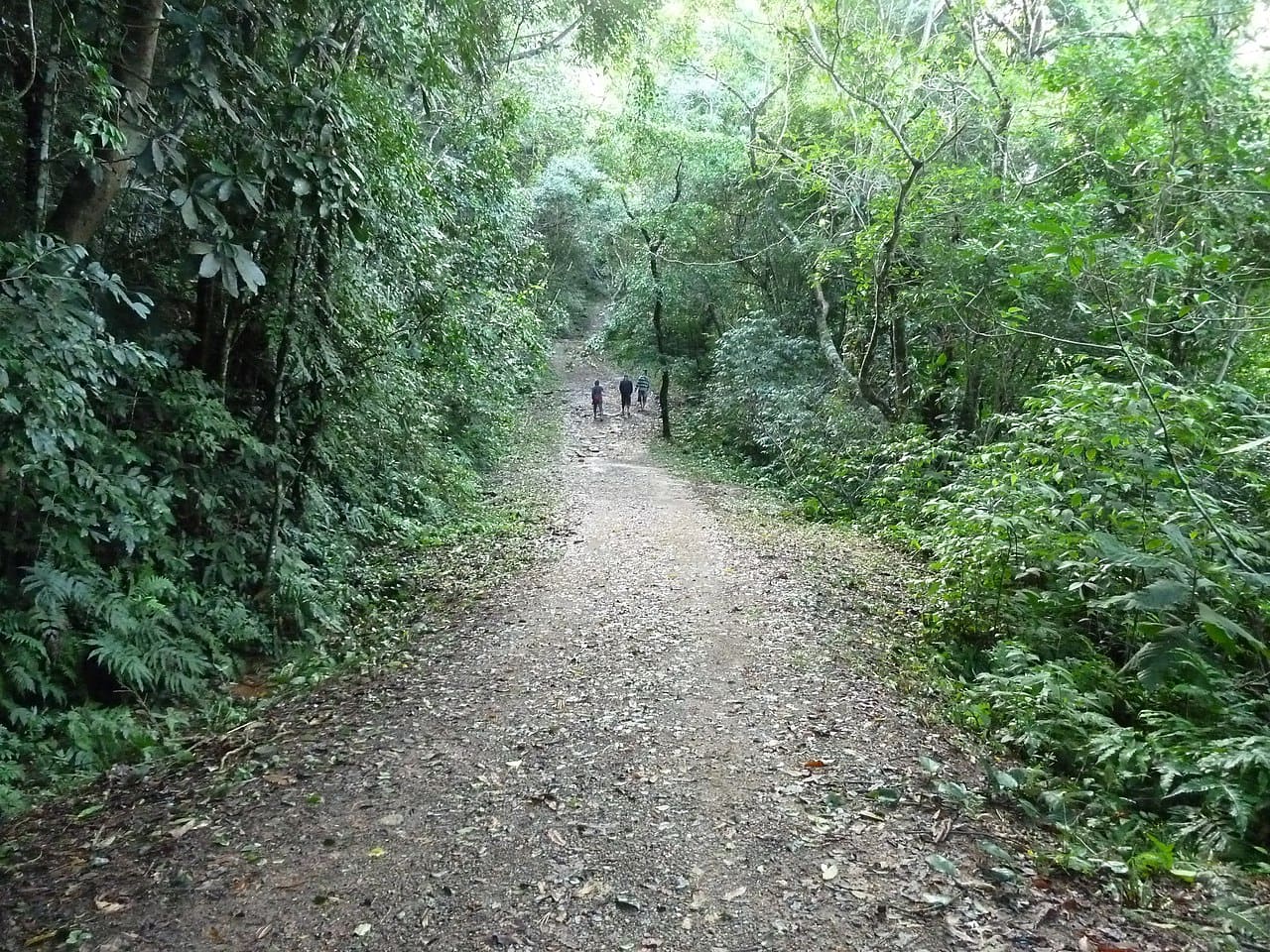 Atlantic Forest in Ilhabela: in winter, the mud turns to firm ground. Photo: Boris Karpuk, CC BY-SA 3.0, Wikimedia Commons
Ilhabela is a state park with beaches around it, and the park has its own season: the dry one. In winter the summer mud turns to firm ground, the rivers cross gently and the dry air opens up visibility that does not exist in January. Climb Pico do Baepi (5h30 to 6h of effort, accredited guide required) in July and you usually collect the full prize: the entire channel at your feet, the Serra do Mar in front and Alcatrazes drawn on the horizon. In summer, the same climb ends in cloud with irritating frequency.
It holds for the rest of the catalog: the Bonete crossing, the short self-guided trails, the viewpoints. If walking is part of your trip, winter is not the alternative: it is the true high season, and our guide to the best hikes in Ilhabela was written with this season in mind.
Argument 3: the clearest sea of the year
Winter calms and clears the water. It is the divers’ favorite season: visibility improves, the wind stabilizes and the inner channel turns to glass on many mornings, in that way that makes a boat look suspended over its own shadow. For snorkeling, canoeing or SUP, July tends to deliver the best conditions of the calendar. Swimming stays possible for the brave (the water cools without freezing), but the pleasure changes nature: the winter sea is for contemplating, paddling and sailing.
Argument 4: the island without the contest
In winter, outside Sailing Week, the ferry crosses with no line, the park road has space, the kiosk has a free table and the most beautiful beaches receive you almost privately. It is the season when locals rediscover their own island. Being in a wide cove with half a dozen people changes the value of everything you do here, and there is no list price for that.
Actually, there is: low season pricing. Rates fall by up to half compared to summer, jeeps and boats have seats available the day before, and the full numbers are in the guide to what a trip to Ilhabela costs. In plain terms: winter is when the same trip fits more wallets.
Argument 5: the 32 degree pool
Here comes our ace, played with the declared interest of always: the pool at Hostel da Vila is heated to 32°C all year, with a 20 meter waterslide, in the middle of the property’s 8,000 m² of forest, in the historic center. In summer it is fun; in winter it becomes an argument. Coming back from a trail with your body wrecked, dropping the backpack and stepping into bath-warm water while the night cools outside is the kind of luxury that suits the season. The program does not hibernate (yoga, music, the Floresta Bar lit on cold nights), and the week’s schedule goes out on our Instagram.
Bonus argument: the light
Photographers who visit the island in July do not forget it: winter’s dry air produces the sharpest light of the year. The Serra do Mar stands cut out across the channel, the sky gains depth and the sunset, which here happens behind the mainland, turns more golden and lasts longer. The best spots for this daily show are mapped in our guide to where to watch the sunset in Ilhabela, and clear winter nights add the bonus of a starry sky, which the humid summer rarely shows.
Argument 6: July has a regatta
If your winter asks for movement, late July delivers: the International Sailing Week, the biggest in Latin America, puts more than 100 boats on the channel between July 24 and August 1, 2026. Racing by day, a village full of crews by night, all watchable for free from the promenade. It is the only winter week when the island fills, and the full calendar context is in the guide to the best time to visit Ilhabela.
The downsides, without makeup
Winter charges for a few things, and you deserve to know beforehand:
- Nights get genuinely cold. A sunny day delivers 25°C on the sand, but the night asks for a coat and the small hours for a duvet. Pack only summer clothes and you will suffer.
- The day is short. It gets dark before 6 pm; trails and tours get planned for the morning.
- The sea is not for long swims. A dip works, an afternoon in the water does not.
- Cold fronts exist. Twice a month, on average, one arrives that shuts the sky for two or three days and cancels boat departures. The island stays beautiful in the mist, and plan B is in the article on what to do when it rains, but anyone with only a weekend runs that risk.
- Less buzz. Some kiosks at the distant beaches slow down outside weekends. In the center and channel area, everything stays open.
Notice that none of the downsides is about the island getting worse: it is about it getting different. Come expecting summer and you will be frustrated; come expecting winter and you win.
Who winter is the right answer for
Couples after quiet, hikers, divers, photographers, families with kids on July school break (a whale is the most guaranteed childhood memory we know, even when only the spout shows) and anyone who prefers a place to a crowd. For that team, three or four days are enough for a complete winter edition: whales one morning, a trail the next, village and viewpoint in between.
And who is winter not for? Anyone who measures a beach trip in hours spent in the water, anyone who wants a big night out every day, and anyone with only one weekend who will not accept the risk of a cold front. That traveler should come between November and March and be happy. The island has a season for everyone; the only mistake is coming in one expecting the other. The ready-made plan is in the 3 day Ilhabela itinerary, and the full catalog of options in the complete guide of things to do.
We write this looking at the July channel: flat, clear, the mountains sharp on the other side. Somewhere between here and the horizon there is a humpback rising to breathe. Pick a date inside the season, pack a coat and come check it with your own eyes.