
What a trip to Ilhabela costs in 2026: real numbers
Ilhabela carries a reputation as an expensive destination, and we, who live here and have hosted travelers of every profile for ten years, can say it with confidence: the reputation is half true. The island has marinas, speedboats and chef-run restaurants, yes. But it also has hostel beds for under R$ 100, set lunch plates around R$ 30, a free ferry crossing for anyone on foot and an entire state park of trails and waterfalls that charges no entry. The final cost depends less on the island and more on your choices.
This article opens the books with 2026 prices, researched now and checked against what guests tell us in practice. If you are still deciding how many days to stay, read the two articles together: length and budget get decided as a pair.
Getting there: the cheapest part of the trip
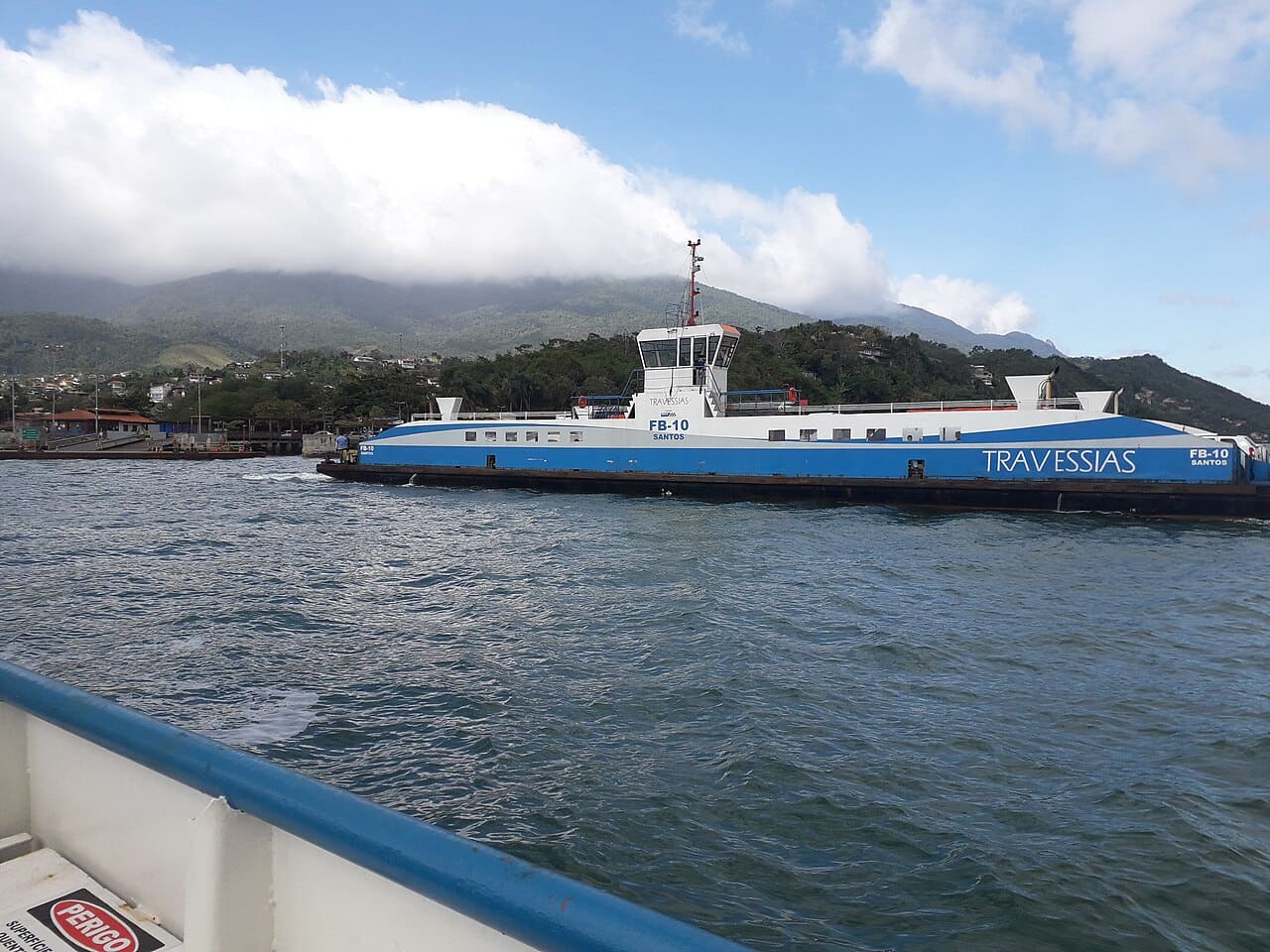
From São Paulo to São Sebastião it is about 200 km, some 4 hours on the Tamoios highway. By car, the cost is fuel plus the ferry: the 20 minute crossing costs R$ 19 per car on weekdays and R$ 28.50 on weekends and holidays (you pay only on the way in, in the São Sebastião direction). Pedestrians and cyclists pay nothing, which makes Ilhabela one of the cheapest island destinations in the country for anyone traveling without a car: the Pássaro Marron bus leaves São Paulo for R$ 101 to R$ 123 and stops a few meters from the ferry boarding point.
Inside the island, the municipal bus costs R$ 10 full fare (adjusted in January 2026) and runs the channel axis, where nearly all the lodging is. Route details, schedules and the holiday ferry line strategy are in our guide to how to get to Ilhabela.
Sleeping: the biggest variable in the bill
Lodging is where the profiles part ways. The real 2026 ranges, outside holidays:
- Hostel bed: from around R$ 57 a night in low season, reaching R$ 120-150 in summer.
- Budget guesthouse: double rooms between R$ 210 and R$ 380, with the best deals in Perequê and on weekdays.
- Mid-range guesthouses and hotels: the average among the best sellers hovers around R$ 355 a night, and climbs without a ceiling as the luxury does.
On long holiday weekends all of this doubles, and the island genuinely sells out: every holiday we talk to travelers who left booking for the last minute and found nothing. Book ahead.
The usual transparency: the house of the people writing this is Hostel da Vila, in the historic center, on the channel side. The dorm bed is the cheapest way in, but the same 8,000 m² of forested grounds hold a dome with a sea view, a treehouse and a kombi van for anyone willing to spend a bit more to sleep somewhere that becomes a story. The pool heated to 32°C, the waterslide and the weekly program come with any bed, and that invisible package is what usually tips the math in your favor.
Eating: from set lunch to chef’s plate
Food in Ilhabela fits any pocket, as long as you know where to look. A generous prato feito (the Brazilian set lunch plate) costs between R$ 30 and R$ 35 in 2026, with lunch specials from about R$ 23 in neighborhood restaurants. Snacks and sandwiches run R$ 19 to R$ 35. At the destination restaurants, mains range from R$ 50 to R$ 200, and the cover charge with a channel view pays for itself at sunset.
The local trick: have the daily plate for lunch wherever you happen to be, and save the special dinner for one or two nights of the trip. Cooking your own food saves even more: markets and bakeries concentrate along the channel axis. And at the beach kiosks, sharing plates from R$ 30 to R$ 80 feed two people with fish and fried cassava. Where each style works best, we tell in our guide to Ilhabela nightlife.
What is free (and is the best of the island)
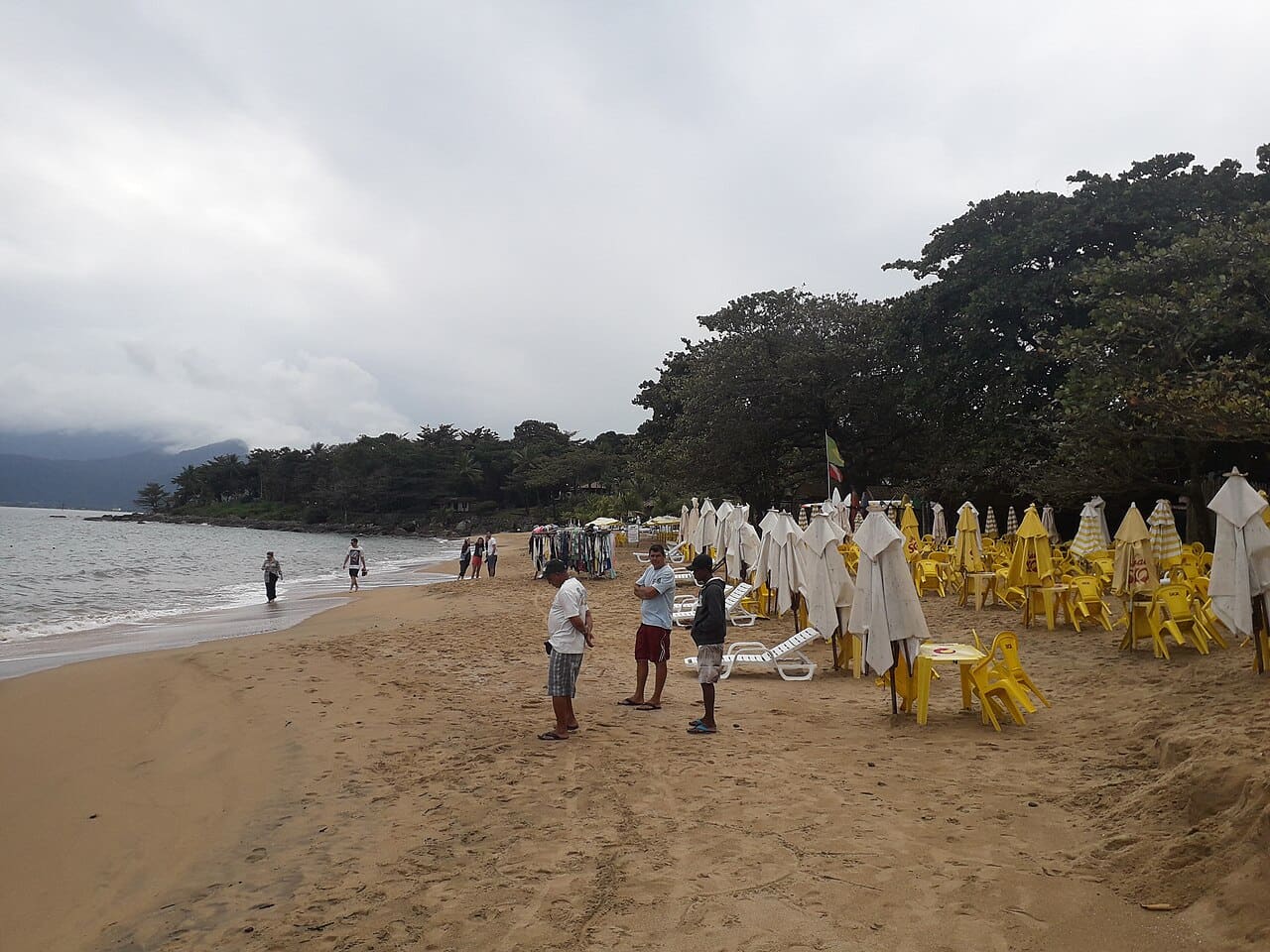 Curral beach, on the channel side. Photo: Clonefox19, CC BY-SA 4.0, Wikimedia Commons
Here lives the budget’s secret: the channel-side beaches are all reachable on foot or by bus, from Perequê to Curral, and cost nothing. The historic center can be walked end to end in an afternoon. The sunset behind the Serra do Mar is the island’s free daily show.
And the state park keeps self-guided trails at no charge: Água Branca runs 4 km round trip past five natural river pools, and the Três Tombos waterfall is a 720 meter walk from the parking area. In other words: you can build three full days of travel spending only on a bed, food and the bus. The complete routes are in our guides to the trails and waterfalls of Ilhabela.
 A waterfall in the state park: most of them charge no entry. Photo: Igorh84, CC BY-SA 4.0, Wikimedia Commons
What weighs on the budget (and when it is worth it)
Ilhabela’s big expenses are the trips to the wild side, and fairly so: they are 4x4 and boat operations inside a park.
- Jeep to Castelhanos: R$ 110 to R$ 150 per person in 2026, full day, along the 17 km of dirt road in the park. It is the best value paid tour on the island.
- Shared speedboat to Bonete or Castelhanos: around R$ 290 per person. The free alternative to Bonete is the 16 km trail, for anyone with the legs and a full day.
- Private speedboat and exclusive tours: from R$ 1,500 a day. Split it among friends or skip it without guilt.
In winter comes the expense we defend wholeheartedly: between May 16 and August 16 run the whale watching departures we operate from the Pier da Vila, R$ 320 per person, 3h30 on a flexboat (a rigid inflatable), with the Whale Friendly Seal. Sightings are never guaranteed, and even so nobody comes back indifferent from a morning on the island’s open sea.
The three profiles, day by day
Putting it all together, per person per day, at 2026 prices outside holidays:
| Profile | Bed | Food | Transport and tours | Total/day |
|---|---|---|---|---|
| Backpacker | R$ 60-120 (hostel) | R$ 60-90 (set lunch, market) | R$ 10-30 (bus, beaches on foot) | R$ 130-240 |
| Mid-range | R$ 110-190 (guesthouse for two) | R$ 90-150 | R$ 50-150 (one paid tour every other day) | R$ 250-490 |
| Comfortable | R$ 250+ (suite, upscale lodging) | R$ 150-250 | R$ 150-400 (speedboat, jeep, whales) | R$ 550+ |
On a 4 day trip, the backpacker lands around R$ 600 to R$ 950 plus transport to the island; the mid-range traveler, between R$ 1,000 and R$ 2,000 per person. Those numbers beat the reputation, and the explanation is structural: the best of Ilhabela (sea, forest, trail, village) has no turnstile.
It is also worth saying what these profiles do not capture: the same trip changes price with the calendar. The totals above hold for ordinary days; on a long holiday weekend, add 50% to 100% to the bed line and brace for lines. In May or October, with luck and some lead time, the mid-range traveler goes for the January backpacker’s budget.
The mistakes that make the trip expensive
After ten years behind the front desk, we know by heart where the money leaks. The first mistake is arriving by car on a holiday without booking the ferry: the hours in line cost no money, but they cost half a day of paid lodging. The second is leaving the big tours to be decided on the spot, based on the weather forecast; jeep and boat seats vanish precisely on the beautiful days, and last-minute rebooking comes out more expensive. The third is switching lodging mid-stay to save money: the difference rarely pays for the time and transport lost on an island where distances deceive.
Five ways to spend less without losing the island
- Avoid holidays. It is the variable that most changes the price of everything. April, May, September and October combine low rates with steady weather; the full reasoning is in our guide to the best time to visit.
- Come by bus. Free ferry on foot, no car line, no fuel, and the channel axis works with the R$ 10 municipal bus.
- Pick one big tour, not three. Jeep or speedboat or whales: each one already fills a whole day of memory.
- Set lunch at noon, one good dinner. The island rewards those who alternate.
- Cash for the distant beaches. In the corners without signal the card machine fails, and whoever has no bills pays the price of the trip back.
If your trip is bigger than the island, the numbers for the whole coast are in what a Costa Verde trip costs, and the overview of everything there is to do here is in our complete Ilhabela guide.
In the end, Ilhabela’s bill is generous with those who understand the island: the expensive part here is optional, the essential is nearly free. Set your days, pick your profile and start with the crossing. The channel charges 20 minutes and pays back an island.