
Where to eat in Ilhabela: the map by type and by region
We cook and serve people on this island every day, so this guide starts with a confession: eating well in Ilhabela is easy, and so is eating badly. The difference is rarely the price. It is knowing what to order in each region, understanding what real island cooking is and not expecting from a beach kiosk what only a slow-fire kitchen delivers. Instead of a list of names, which ages fast and clashes with our policy of not pointing at friends’ competitors, this is a map by type of food and by region, the way we explain it at the front desk when a guest asks “where do I have dinner tonight?”.
Caiçara cooking, the reason to eat differently here
Start by understanding the food that belongs here. Caiçara cooking, the food of this coast’s traditional fishing communities, was born from a fisherman’s routine: the day’s fish, banana, cassava and whatever the garden gave, prepared without hurry. The signature dish is the azul-marinho, which many people know as fish with banana: chunks of fresh fish cooked with green banana in an iron pot, which reacts with the banana’s tannin and dyes the broth the blue-gray that gives the dish its name (azul-marinho means navy blue), thickened with cassava flour into a creamy pirão, a savory porridge. It sounds simple and it is, but done well it is the best edible translation of the island.
In the same family live the caiçara moqueca, a fish stew lighter than the famous northeastern versions, the caldeirada that brings octopus, squid, shellfish and fish together in a single broth, and the afternoon caiçara coffee, with cakes and fried banana and cassava treats. These are recipes of low fire and long conversation, made for a full table, and they ask the same of whoever eats them: time. Do not squeeze an azul-marinho between two beaches with a fixed schedule. Service honesty: the azul-marinho has become rare on everyday menus, because it takes work. Look for it in the traditional kitchens of the north and south of the island, at weekend lunches, and watch for the food festivals that dot the calendar, starting with the squid festival in March, when the whole town cooks the same ingredient in different versions. If your trip crosses one of them, reorganize your days: it is worth it. The full calendar of the year is in the guide to the best time to visit Ilhabela.
Fish and seafood: the channel waterfront
For fresh fish served with a view, the axis is the channel waterfront, from the Vila area to Saco da Capela and on toward the south. That is where the seafood houses concentrate, many with decks over the water or tables facing the channel, serving the classics that do not miss: whole fish on the grill, shrimp, octopus rice, a moqueca to share. The golden rule we apply on any coast counts double here: ask what the fish of the day is and go with it, instead of insisting on whatever the kitchen pulled from the freezer to fill the order.
The detail that changes the experience: lunch at these houses with the channel in front and sailboats passing is a full program, not a pause. Set aside time. And on holidays and summer weekends, arrive before noon or after 2:30 pm, because the whole island has lunch at the same time.
Another local habit worth copying: the late-afternoon caldinho. After the beach, before the shower, a stop at a waterfront counter for a small cup of shrimp or fish broth with lime and chili. It costs little, warms a salty body and holds your hunger until the real dinner. It is the kind of ritual that never appears as a menu highlight and ends up defining the trip of whoever discovers it.
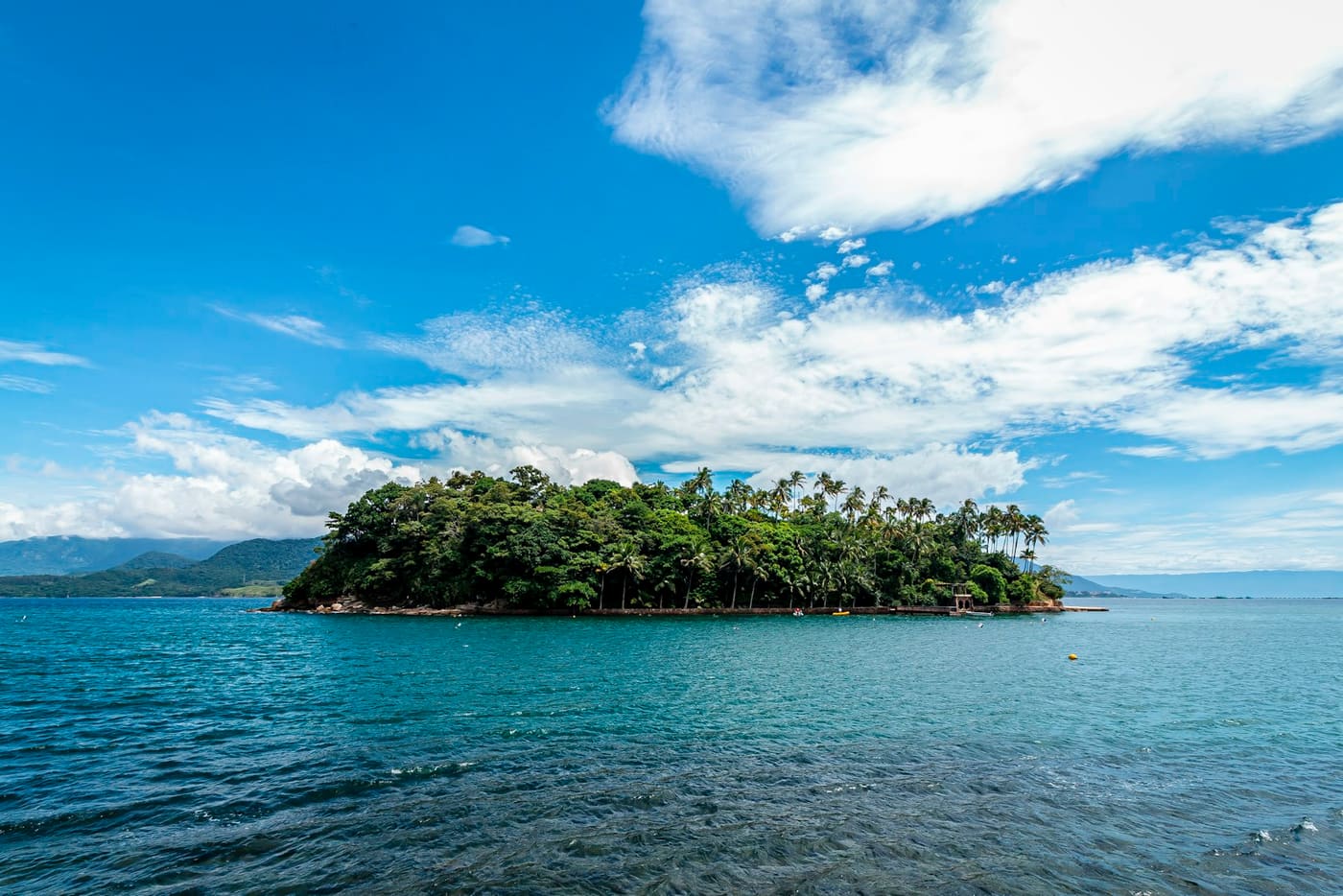 The São Sebastião channel: today’s lunch came out of this water. Photo: Marcos Assis, Unsplash
The Vila: breakfast, bakeries and the gastronomic night
The historic center concentrates the cafe life and the most charming dinner table on the island. In the morning, the bakeries and cafes of the Vila and around it cover everything from pão na chapa, the buttered bread grilled on the flat top, to specialty coffee with banana cake, and they are the natural starting point for anyone heading to a trail. At night, the stone streets light up and the restaurants in the colonial houses serve everything from pizza to contemporary cooking, with sidewalk tables and people strolling past. It is the region where eating and wandering become the same program, and our guide to Ilhabela’s historic center helps you build that combo.
A warning from people who watch this every summer: in high season, the most sought-after restaurants in the Vila fill up early. Either you have dinner at 7 pm, or you accept the wait with a drink in hand, or you walk two hundred meters and discover that the street behind also cooks well. In low season the game flips: some houses close on weekdays, and checking whether a place is open before walking there saves disappointment. In exchange, you dine with the Vila almost to yourself.
Beach kiosks: lunch with your feet in the sand
At the beaches with infrastructure, like Curral and Perequê, the kiosk is an institution: fried fish with rice and beans, a plate of shrimp, coconut water, music at beach volume. Do not expect fine dining, expect what it is, and it is great at that: lunch without leaving your beach towel, stretched until the end of the afternoon. At Curral, dusk turns the kiosks into a collective happy hour, a subject we cross in the guide to where to watch the sunset. To choose which sand to spend the day on, the ranking of the most beautiful beaches in Ilhabela and the guide to beaches for families split them by style.
At the remote beaches on the ocean side, the logic changes: the food is the local caiçara community’s, the day’s fish from a family kitchen, and it is part of the experience, not an extra. Bring cash, because card machines depend on signal and signal is a luxury item out there.
Our side of the table: the Floresta Bar
Here comes the part where we own our interest, gladly. On the grounds of Hostel da Vila, our home in the historic center, the Floresta Bar serves the kitchen we always wanted the island to have: real food and signature drinks, in the middle of the forest, with live music most nights. The scene that sums it up: late afternoon, light dropping through the leaves, a table ordering its second round of drinks while the kitchen sends out the plates, and the band running its soundcheck. When it gets dark, the forest bar lights up, and dinner becomes night without anyone formally deciding it. People who are not staying with us come too; the schedule goes out on our Instagram.
Eating well on a budget
Ilhabela has a reputation for being expensive, and the reputation has grounds, but locals eat in peace. The weapons: the prato feito (the set plate of the day) and the pay-by-weight buffets of the Perequê area and the neighborhoods off the tourist axis, the bakeries that serve simple lunches, fish bought straight from the fish shops for anyone with a kitchen in their lodging, and the supermarket for building trail snacks. One special dinner for two in the Vila and the other meals solved that way: that is the math that fits the trip into a budget without giving up a good table. If you are drawing up the whole budget, the numbers are in the guide to how many days in Ilhabela.
The summary map, to decide in ten seconds
Fish with a view: the channel waterfront, from the Vila to Saco da Capela. Root caiçara cooking: the north region, the south of the island and the festivals, with the azul-marinho as a mission. Coffee and a charming dinner: the Vila and the historic center. Feet in the sand: the kiosks of Curral and Perequê. A drink with forest and music: our place, and we do not pretend neutrality in this category. Budget: Perequê’s pay-by-weight buffets and neighborhood bakeries.
Eating in Ilhabela is a way of knowing the island as much as trails and beaches: the menu tells the caiçara story, the lunch hour tells the rhythm of the place, and the dinner table tells you who is on the island with you. Reserve at least one unhurried dinner and one azul-marinho, mission accomplished. Then move on to the rest of the map: the guide to things to do in Ilhabela ties all the threads together, and the one on the best bars solves the after-dinner.