
Best time to visit the Costa Verde
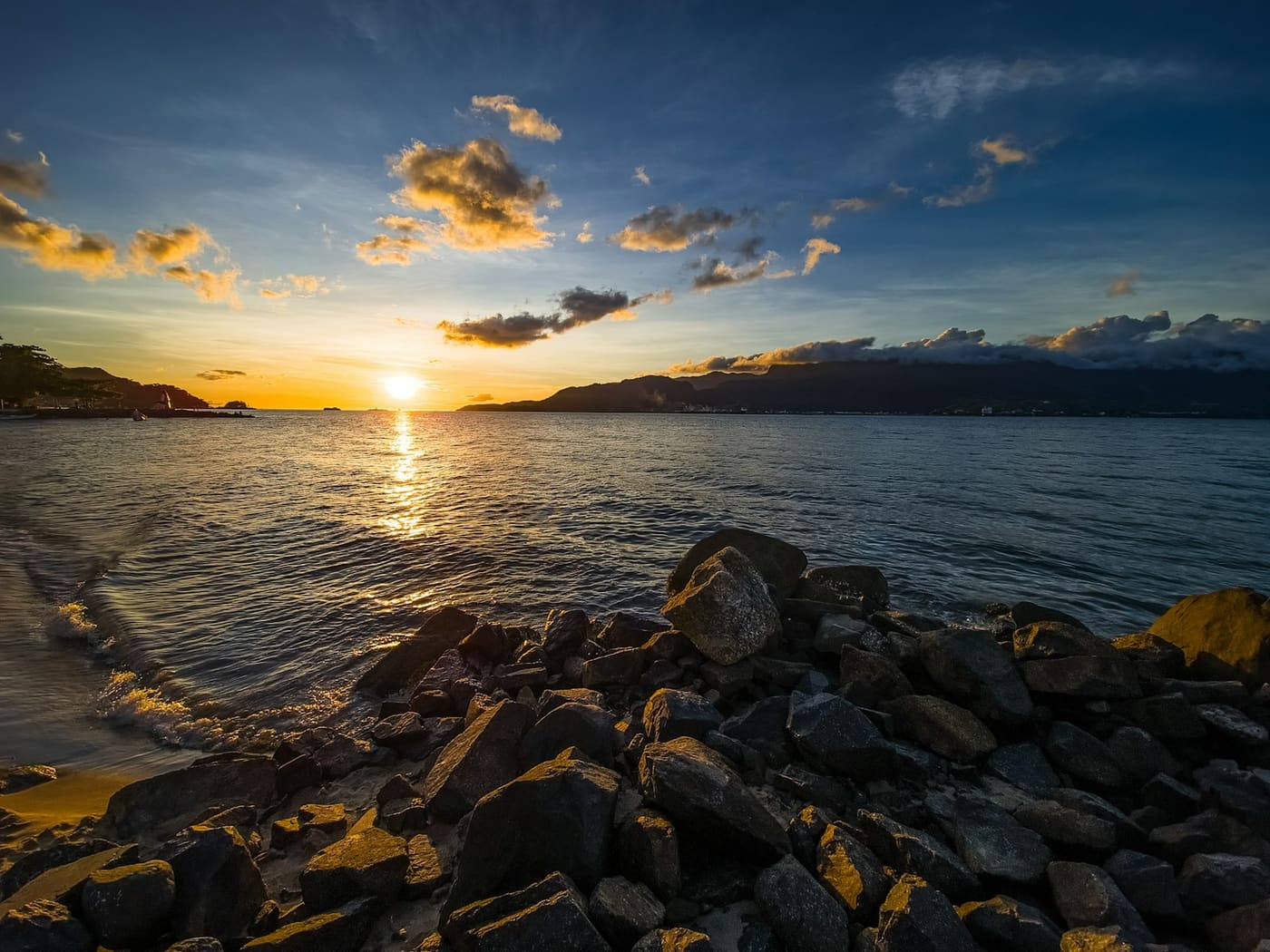
The quick answer comes in the first paragraph: the best months to visit the Costa Verde are April, May, September and October. It rains less, prices drop, the beaches empty out and the sea stays warm enough to swim. If that is all you wanted, you can close this tab and go book.
But the full answer is more interesting, because “best time” depends on what you want from the trip. We live here and watch the year turn from the inside: the winter when the humpbacks’ spray appears in the channel, the week when Paraty becomes an open-air bookshop, the summer morning when the sun deceives and the late afternoon downpour collects. There is a whale season, a literary festival season, a dry trail season and one season we advise against with affection. This guide describes how each piece of the year behaves; for the general context of the region, the starting point is the definitive guide to the Costa Verde.
First, understand why it rains so much here
The Costa Verde is green for a mechanical reason: the Serra do Mar runs pressed against the coast and works like a wall. The moisture the ocean evaporates hits that wall, rises, cools and falls back as rain. It is what meteorologists call orographic rain and what the traveler calls “but the forecast said sun”.
That means two practical things. First: rain here is rarely a three day cold front; in summer, the pattern is sun in the morning and a hard downpour in the middle or end of the afternoon. Second: phone forecasts miss a lot on this coast, because the microclimate changes from one cove to the next. Learn to read the day like the caiçaras do: if the morning is too muggy, the downpour is coming.
Summer (December to March): the peak and the warning
Summer is the classic season, and it has its arguments: long days, warm sea, villages full and running at full steam, that vacation energy. If you like a crowd, New Year’s and Carnival in the region are the peak of the year: everything open, everything full, everyone in the street.
Now, the data the December photos do not show: it is by far the rainiest time of year, and January in Paraty can top 500 mm of rain in the month. For comparison, that is more than many Brazilian state capitals receive in a semester. Add prices at the top of the ranges, minimum-stay lodging, the Rio-Santos stopped on weekends and the main beaches packed, and the cost-benefit gets hard to defend. We did that math in detail in the article on Costa Verde travel costs.
If summer is your only window, you can play by its rules: wake up early (mornings are the reliable sun hours), leave the late afternoon for a waterfall or a historic center and avoid the long weekends at any cost.
Fall (April to June): the smart travelers’ window
April and May may be the region’s worst kept secret. The rain genuinely eases, the sea still holds the summer’s warmth, prices drop to the bottom of the ranges and you can walk Paraty’s historic center without dodging anyone. On Ilha Grande, the historical data shows less rain from April to September, which transforms the trails: mud turns to firm ground, and crossings like the one to Lopes Mendes get easier.
June already brings cold nights (pack a real jacket, the mountains take the humidity out on the thermometer) and marks the start of the most special season of the year on São Paulo’s north coast, which deserves its own section.
Winter (June to August): whales, dry trails and the week when everything fills up
Winter is the season when we most enjoy living here. The air dries out, visibility in the sea improves, the waterfalls still carry summer’s water and the trails are in their prime; it is the best time of year to take on the hikes of the Costa Verde, including the steep climbs like Pico do Papagaio, on Ilha Grande. On the Rio side, the winter program we put our name to is the expedition of the Albatroz, our group’s schooner out of Paraty: dry trails, calm sea, the starriest sky of the year over the deck and movie nights on board.
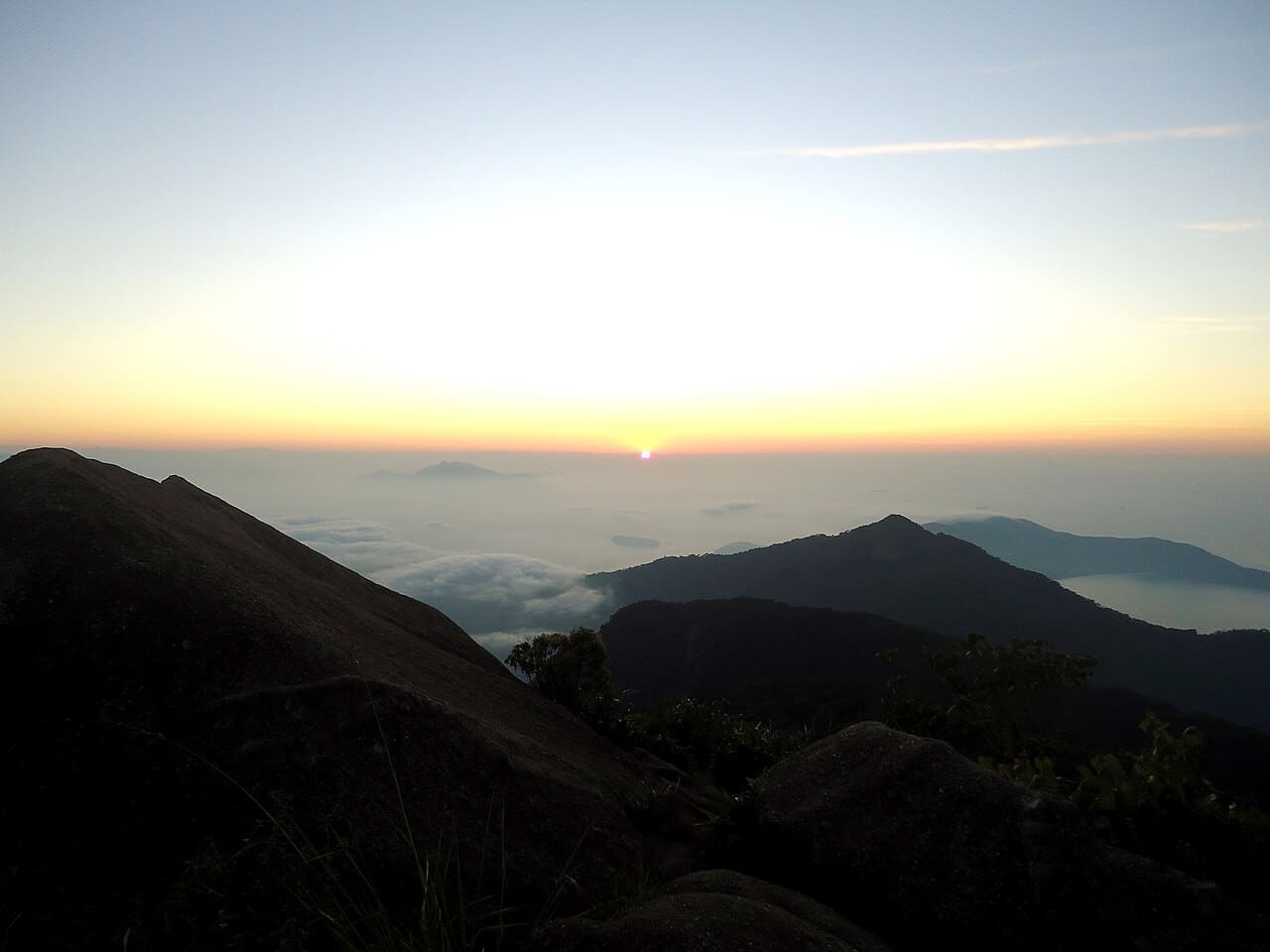 Pico do Papagaio, Ilha Grande: in the dry winter, the trail pays back double. Photo: MBelu, CC BY-SA 4.0, Wikimedia Commons
And there are the whales. From May to August, humpbacks migrate up the coast and pass São Paulo’s north shore, with sightings peaking in June and July. You can see them on boat outings and, with luck, from the coast itself, including the São Sebastião channel, in Ilhabela. The best hours to try are early morning, 7 to 10 am, and late afternoon, 4 to 6 pm, when the sea tends to be at its smoothest and the spray shows from far away. In Ilhabela, we do not even pretend neutrality: the season’s recommendation is the whale watching departures our group operates during the season, leaving from the Pier da Vila, in the historic center. The scene repeats on every outing: engine cut low, smooth winter sea and everyone in silence waiting for the next blow to rise. The calendar of dates is published at baleias.hosteldavila.com.br.
Winter’s caveat is one specific week. In 2026, FLIP, Paraty’s literary festival, runs July 22 to 26, and the 53rd Ilhabela International Sailing Week comes right behind it, July 24 to August 1, with more than 100 boats on the water. Both events are worth the trip on their own: FLIP takes over the entire town with talks, shows and improvised bookshops, and Sailing Week turns the channel into a regatta course. But know what you are getting into: Paraty’s lodging sells out and prices soar during festival week. Either you aim for these events and book months ahead, or you steer around them and get the region quiet for the rest of July, shared only with school vacations.
The sea, it must be said, cools down in winter, and swimming is left to the brave on the coldest days. It is the honest trade: less swimming, more trail, more whale and more town to yourself.
Spring (September to November): the second quality peak
September and October repeat the April and May formula: little rain, low prices, empty beaches, with the bonus of the sea starting to warm up again and the days stretching. For anyone who wants beach above all but refuses to overpay, it is probably the best window of the year.
November is the transition month: still civilized prices most days, but with summer’s heat and downpours arriving and the holidays (All Souls, Republic Day and now Black Consciousness Day) previewing the summer crowds. It works well for anyone traveling midweek.
The year at a glance
| Season | Rain | Prices | Crowds | Best for |
|---|---|---|---|---|
| Dec to Mar (summer) | high, daily downpours | top | packed | anyone who wants buzz and warm sea |
| Apr and May | low | bottom | empty | beach + price, the full package |
| Jun to Aug (winter) | the year’s lowest | low (except FLIP/school vacations) | quiet | trails, whales, FLIP, Sailing Week |
| Sep and Oct | low | bottom | empty | beach + price, second call |
| Nov | rising | mid | medium | midweek trips |
| Long weekends (any month) | either way | soaring | gridlocked | staying home planning the next one |
Three questions that always come in
Does it rain all day in summer? Usually not. The summer pattern is sun in the morning and a hard downpour in the middle or end of the afternoon, which washes everything and leaves. Full days of closed rain happen, but they are the exception; what ruins a summer itinerary is not the rain itself, it is failing to save the mornings for the beaches and the late afternoons for everything else.
Can you see whales without paying for a tour? Yes, with patience. Between May and August, sitting on a headland or a high beach of the São Sebastião channel in the early morning, with the sea smooth, produces a sighting a few times per season. A boat raises the odds a lot, but the spray seen from the sand, for free, has a flavor of its own.
What is the worst moment of the year, no hedging? A summer long weekend. It combines January’s rain, holiday prices and a stopped Rio-Santos. If that is the only window your life allows, the trip is still worth it; just do not say nobody warned you.
What if I can only travel on peak dates?
It happens, and the trip is still worth taking. Three defenses from people who know the terrain. Book everything genuinely early, lodging and buses together, because the region sells out (the step by step of the bookings is in how to plan your first trip). If the holiday lands in Ilhabela, we build packages at Hostel da Vila with lodging, parties and a program already sorted, which in practice means arriving, dropping the backpack and leaving the rest to the house; the dates are at feriados.hosteldavila.com.br. Travel without a car, because holiday gridlock on the Rio-Santos punishes whoever is driving and spares whoever sleeps on the bus (the full scheme is in the guide to the Costa Verde without a car). And run from the obvious within each destination: when the main beach fills up, the places we describe in how to discover the real Costa Verde keep breathing.
The verdict of people who live here
For beach and budget: April, May, September or October. For whales and trails: June and July, outside FLIP week. For parties and literature: exactly FLIP week, booked months ahead. For sailing: late July in Ilhabela. And if someone insists on December or January, go, but go knowing the umbrella is part of the luggage and the itinerary needs slack for rain. The Costa Verde has no truly bad season; it has seasons when it charges more to deliver less, and now you know which ones they are.