
How to get to know the real Costa Verde
There is a way of traveling the Costa Verde that fits in a spreadsheet. Schooner at ten in Paraty, photo on the flooded street, flex boat to Ilha Grande, Lopes Mendes ticked off the list, ferry to Ilhabela, waterfall, road home. It works, in the sense that everything happens on schedule. And yet plenty of people come home with a full memory card and a strange feeling of having seen the whole region without having been anywhere.
This article is about the other way. It is not an itinerary; itineraries and prices live in our definitive Costa Verde guide. It is a set of practical choices that change the quality of the trip without raising the budget, and several of them actually lower it. The observation comes from behind a front desk: the people writing this have been hosting travelers since 2016 at Hostel da Vila, an eco lodge in Ilhabela’s historic center, and from here we watch both kinds of traveler pass through every year. One arrives asking for the wifi password and the time of the return ferry; the other asks where the fishermen drink their coffee. The difference between them is almost never money. It is decisions. And we do not write about the thesis from the outside: the house was built for it. Sleeping in a dome or a treehouse, with 8,000 m² of Atlantic Forest closing in behind the property, is our way of putting new arrivals on island time from check-in.
Stay longer in fewer places
The most common mistake in the region has a virtuous-sounding name: making the most of it. Seven days, five bases, a bag that never quite gets unpacked. Do that and you spend the trip inside transport, because the Rio-Santos is beautiful and slow, and every change of base eats half a day between packing, waiting, boarding and checking in all over again.
The math we suggest is different: divide your days by two and choose that many places. Seven days, two or three bases, done. What you gain is not abstract. It is waking up in the same place for the third time and knowing where the bread comes out early. It is the campsite owner warning you that the sea turns tomorrow and you had better do the trail today. It is going back to a beach you liked, now without hurry. None of that happens to someone who sleeps in a different town every night.
If you have two weeks, then yes, the whole corridor fits comfortably, and our 15 day Costa Verde itinerary shows how to spread the nights without rushing. And here this manifesto declares its interest along with its conviction: on the Rio de Janeiro stretch, the slow trip we argue for already exists ready-made, and it is ours. The Albatroz, our group’s 23 meter schooner, leaves Paraty for two to five nights, with a chef on board and the anchor dropping in corners like the Mamanguá. Living on the boat is the thesis of this text put on the water: the base moves slowly along with you, and by the second day the tide runs the schedule, not the clock. The day-tripper sees the same beaches at the hour everyone sees them; whoever sleeps on them arrives while the sand is still empty.
Go when almost nobody goes
The Costa Verde of January and the Costa Verde of May are two different places with the same name. In the first, the road jams, the guesthouse costs double and it rains hard almost every afternoon. In the second, the beaches get their silence back, the sea clears and prices drop enough that the difference pays for a room upgrade.
The months we recommend to anyone who can choose: April, May, September and October. Less rain, everything empties out, the weather is still swimming weather. And winter holds the best show on the calendar: between May and August, humpback whales move up the coast on their way to the Northeast, and you can spot blows and tails even from shore, for free, sitting on a rock. The month by month detail, with the holidays and events that fill the region, is in the guide to the best time to visit the Costa Verde.
Low season is also the only time when the small villages can host visitors while being themselves. Trindade in February is a queue; Trindade in June is a fishing village with a natural pool attached.
Trade some of the schooners for a trail
The schooner tour is the official Costa Verde experience, and we are not telling you to cut it. A day on a boat in Paraty or Angra is worth the money. The problem is the traveler who does three schooners in three towns and comes home believing they know the region from watching the mountains at a distance, with loud music and a forty minute stop at each crowded beach.
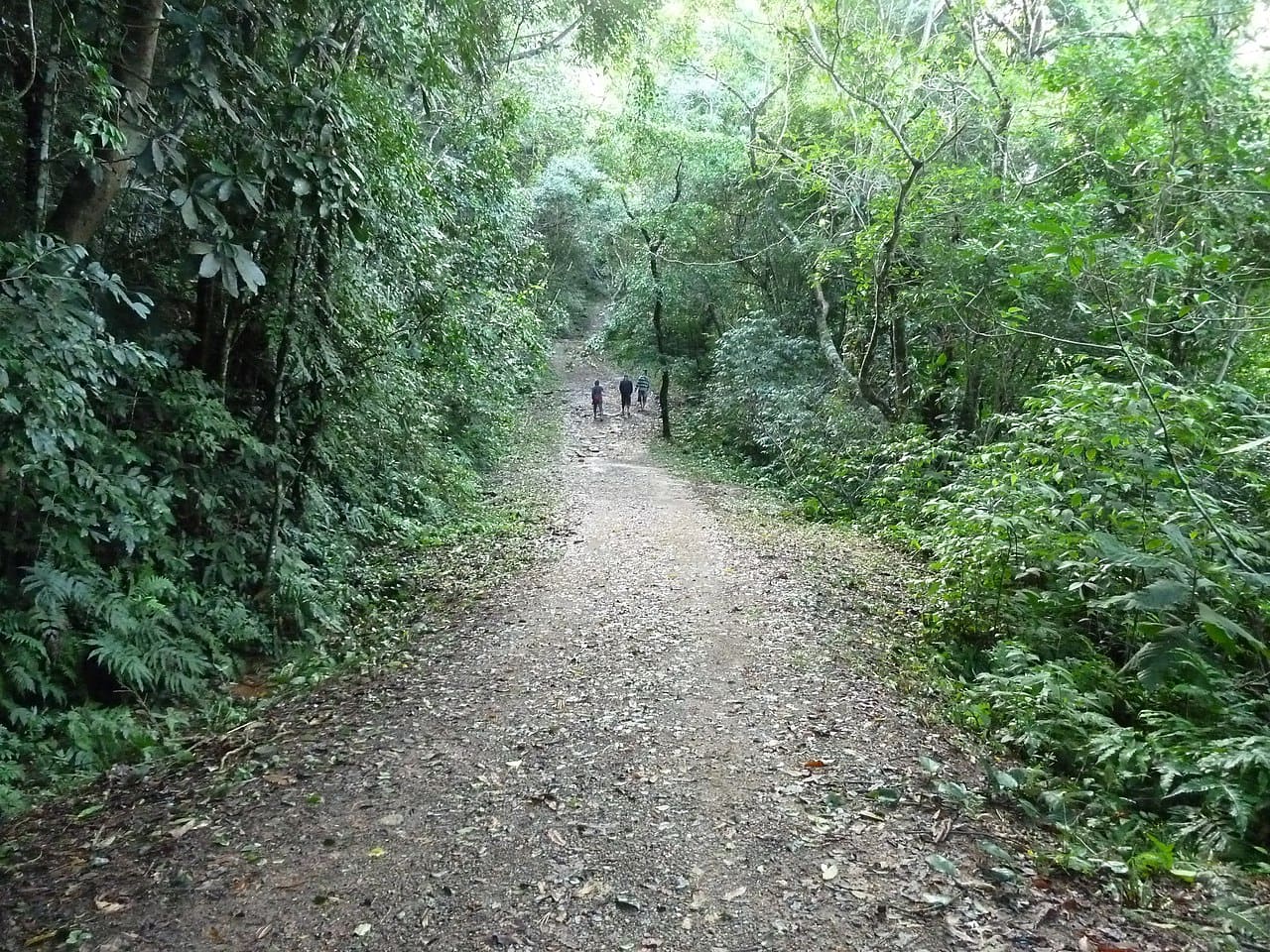
The forest is the other half of the name Costa Verde, and it can only be known from inside. The walk to the Cachadaço pool takes twenty minutes and changes the scale of the place. The 16 km traverse to Bonete, in Ilhabela, crosses rivers and waterfalls where the only sound is water. Pico do Papagaio, on Ilha Grande, charges four hours of climbing and pays with the whole bay at your feet. None of it requires equipment beyond shoes with good soles, water and an early start. We gathered the routes, times and difficulty levels in the guide to the best hikes on the Costa Verde.
An honest measure for a week of travel: one day of boat, two of trail. Invert the usual proportion and notice what changes.
Eat where the locals eat
A simple rule that solves half your meals: follow the worker, not the tourist. The seafront restaurant with a menu in three languages and a waiter on the sidewalk lives off the traffic of people who will never come back. The village kitchen, the counter near the pier, the set plate served on a plastic table live off people who eat there every week, and that forces the food to be good and the price to be fair.
The signs are easy to read. Fish of the day handwritten on paper, because the menu depends on what the boat brought in. People in work uniforms having lunch at noon. Cassava flour on the table without anyone asking. If the squid has vanished from the board, it is not a stocking failure, it is the sea sending word. Order what the house suggests, try the fish whose name you do not know, accept that sometimes it runs out. That meal usually costs a third of the seafront version and tells you twice as much about the place.
Talk to the people from here, and remember you are a guest
The Costa Verde has residents far too longstanding to be treated as scenery. The caiçara communities, formed over centuries by Indigenous peoples, Portuguese and Africans, still live from fishing and small farming in villages that now also host travelers: Bonete, with its roughly 300 residents on the ocean side of Ilhabela, Aventureiro, a community of some 100 caiçaras on the open face of Ilha Grande, and the families scattered along the beaches of the Saco do Mamanguá, the fjord south of Paraty where the houses can only be reached by water.
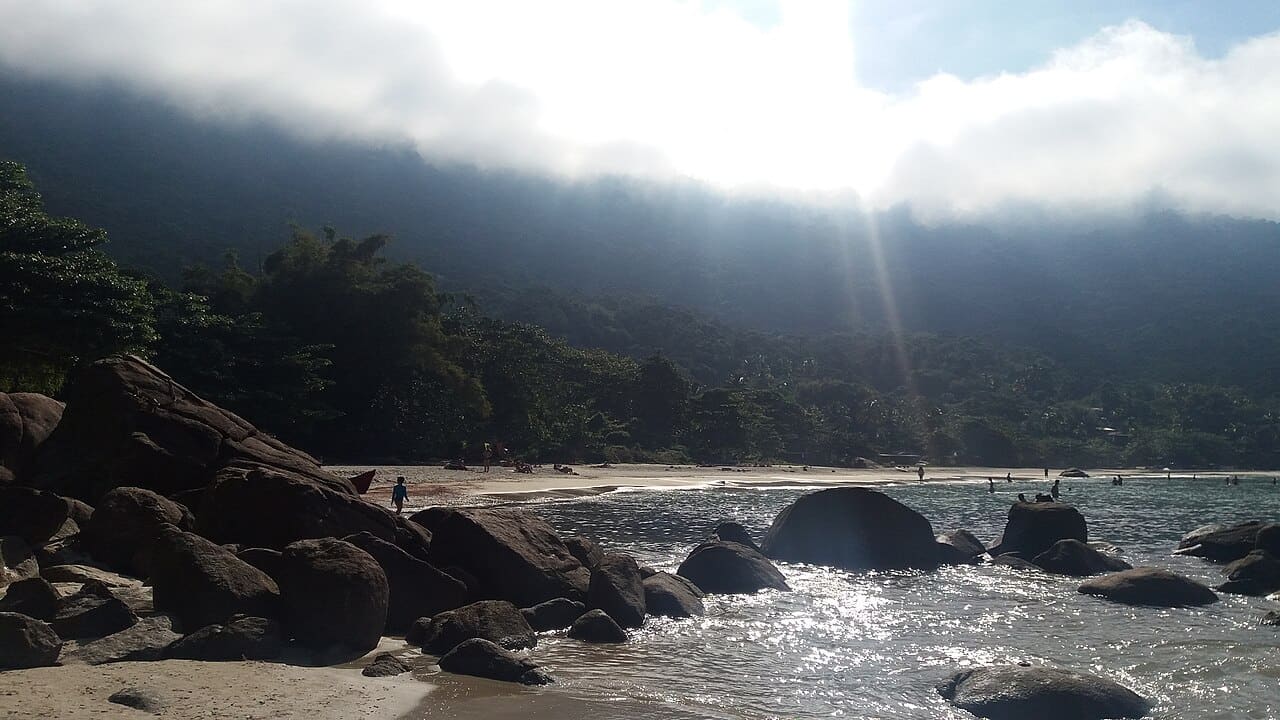 Aventureiro beach, on the ocean face of Ilha Grande. Photo: Renata Paganotto, CC BY-SA 4.0, Wikimedia Commons
In these places tourism works when the money stays with the people who live there: camping on a family’s land, fried fish from the village kitchen, the crossing in a fisherman’s boat. And it works even better when the visitor talks. Ask about the name of the beach, about tomorrow’s weather, about what it was like before electricity arrived. The caiçara who was mending a net without looking up becomes, ten minutes later, the best source of information on your trip. Just ask permission before photographing people, houses or nets; it sounds like a detail, and for someone exposed to thousands of visitors a year it is not.
The opposite deserves noting too: arriving and demanding wifi, hot showers and a card machine in a village with no road is asking the place to stop existing for your convenience. We wrote a whole guide to these communities and the right way to visit them in the most authentic places on the Costa Verde.
Treat the forest like someone who plans to come back
Three practical agreements, worth more than any speech.
Take your trash back, all of it. On trail beaches and in villages with no road, no garbage truck passes; the candy wrapper left on the sand will end up in the sea or on a resident’s back. A folded bag at the bottom of your pack solves it.
Put on repellent instead of complaining about the borrachudo. Ilhabela’s little fly only breeds in very clean running water, so its presence is a certificate of quality for the island’s rivers. Extra repellent on ankles and shins before the trail, reapplied after every waterfall, and the problem nearly disappears. The person scratching on day three is the one who ignored the warning on day one.
And do not stack stones. The little towers that became fashionable on riverbanks look harmless, but they evict the creatures that live under the rocks and, worse, confuse people navigating or hiking, because a small pile of stones is route marking on trails and coastline. The nice photo of the two of you exists without rearranging the riverbed.
Use the transport the locals use
The municipal bus and the slow ferry are the two most underrated experiences in the region, and the cheapest. Colitur connects Angra to Paraty for R$ 27.50 and central Paraty to Trindade for around R$ 5, on a mountain route plenty of agencies would sell as a scenic tour. The ferry from Mangaratiba or Angra to Ilha Grande costs R$ 20.50, against up to R$ 150 for the flex boat, and the slowness is the bonus: an hour and a half of bay with residents coming back from shopping, crates of goods and deck conversation.
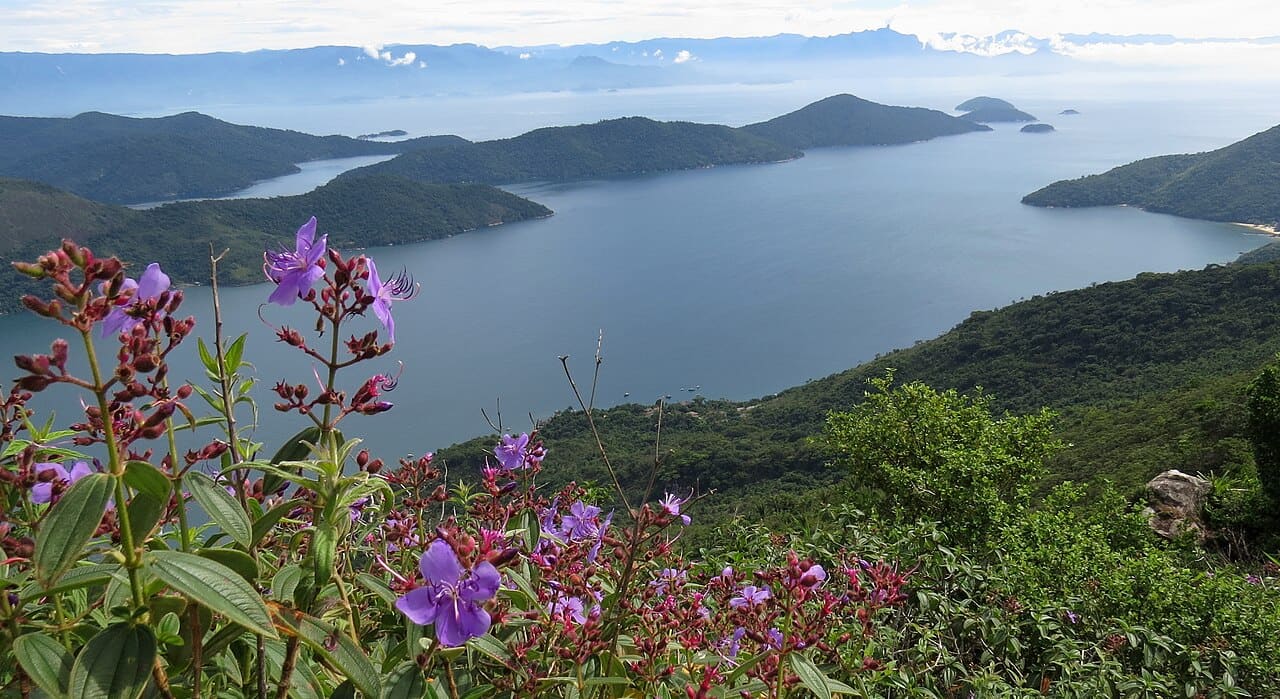 The Saco do Mamanguá, where transport means a resident’s boat. Photo: Pedro Gabriel Maciel, CC BY-SA 3.0, Wikimedia Commons
Local transport is also the natural filter of the preserved places. Where only a fisherman’s boat or a two hour walk arrives, fewer people arrive, and the ones who do arrive more willing. Not by chance, that is how you reach the Mamanguá, Sono and a good share of the corners we list among the places foreigners have not discovered yet. Anyone wanting to do the whole trip without a car will find lines, timetables and connections in our guide to the Costa Verde without a car.
The end-of-trip test
A criterion for knowing whether it worked, more useful than counting beaches: on the last day, does anyone from the region know your name? The boat owner, the cook behind the set plate, the campsite neighbor who taught you the hour of the tide. If yes, you got to know the Costa Verde. If the answer is no and the memory card is full, you ran an image harvest in a place where people live.
The good news is that the second trip corrects the first. Choose fewer places, go in May, climb a trail, eat in the village, take the slow ferry. The region does the rest on its own, as it has for centuries.