
The perfect 15 day Costa Verde itinerary
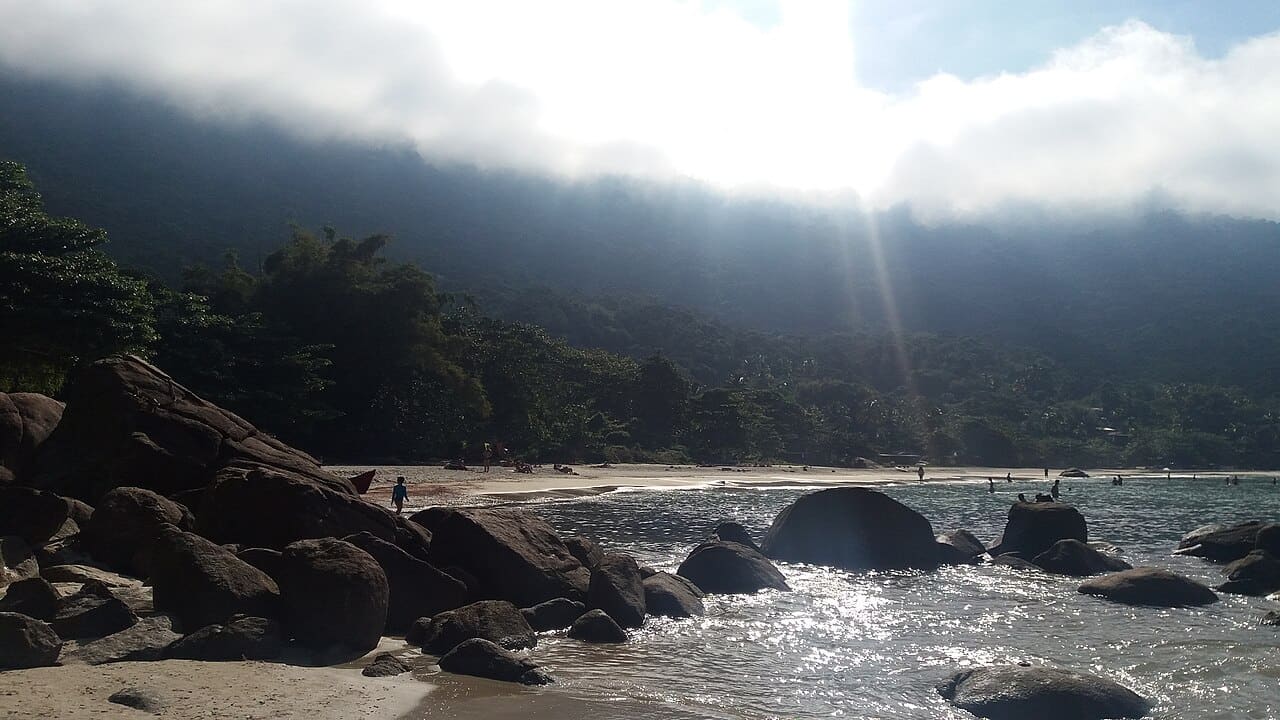
There is a Costa Verde that does not fit in one week. It is the one at Aventureiro, the beach with the reclining palm tree that can only be reached by boat over open sea. The one at the prison ruins in Dois Rios. The one at Bonete, the Ilhabela village that sits 16 km of trail from the nearest asphalt. None of these places fits a tight itinerary, because they all charge the same currency: time.
Fifteen days settle that bill. We write from the São Paulo end of this corridor, in Ilhabela, where the long crossings tend to finish, and this is the plan we suggest for anyone who can stay. The site Quanto Custa Viajar recommends 17 days to cover the whole corridor calmly, and 10 day itineraries like Volto Logo’s already show that the Ilha Grande, Paraty and Ubatuba triangle alone eats a week and a half without effort. The plan below lands in between: the complete crossing from Rio to São Paulo, with the hard-to-reach jewels included and, luxury of luxuries, one full day of rest.
The overall logic is in the definitive guide to the Costa Verde. Here is the day by day.
Ilha Grande without hurry: days 1 to 5
Before the day by day, the house’s side, said without hedging: for us, the right way to do the Rio heart of this itinerary is by sea. The five night Combinada of the Albatroz, our group’s 23 meter schooner, joins Ilha Grande, Praia Grande da Cajaíba and Saco do Mamanguá in a single expedition out of Paraty: Lagoa Azul and Vila do Abraão sleeping on board, Lopes Mendes reached early through Praia do Pouso before the day-trip schooners, a free day in Paraty with the boat at the marina and the bonfire gathering on the fjord’s final night. In an itinerary that asks for seven changes of lodging, that is five nights in the same bed with a chef running the kitchen. The remaining Rio days go to the jewels only time can buy: Dois Rios, Aventureiro, the overnight in Trindade. The step by step below is the independent version, with prices and schedules that hold for either path.
Day 1. Rio, Conceição de Jacareí, flex boat (20 to 25 minutes, R$ 45 to 150), Vila do Abraão. An arrival afternoon at Praia do Abraãozinho and a first dinner in the dirt streets of the village, which has about 5,000 residents and not one car.
Day 2. Lopes Mendes all day, by taxi boat to Pouso and 20 minutes of trail. With four nights on the island, you can wait for the clearest sky for this program, a privilege no short itinerary gives.
Day 3. Dois Rios, on foot or by bicycle along the roughly 8 km of dirt road that climbs and drops over the ridge from Abraão. Waiting at the bottom are a beach between two rivers (hence the name) and the ruins of the prison that operated on the island until 1994, with a small museum telling that story. It is the strangest and most memorable day on the island: forest, sea and prison memory in the same frame.
Day 4. Aventureiro, on the ocean side. Visits are controlled and access is by boat, on tours that round the island’s southern coast. The reward is the beach in this article’s cover photo: the reclining palm, the pale sand, a caiçara village where lodging means camping or a simple room in a resident’s house. Anyone who wants to sleep there can reshuffle the week and trade one Abraão night for a night at Aventureiro; it is the rawest and most beautiful version of Ilha Grande. The practical details are in the guide to things to do in Ilha Grande.
Day 5. Free morning (Pico do Papagaio, 982 meters, is there for anyone willing to trade the free morning for sweat), crossing back and road to Paraty. Late afternoon in the historic center, with the lamps lit.
Paraty from the inside: days 6 to 9
Day 6. A full day in the historic center and surroundings: the churches that divided the colonial town by social class, the Forte Defensor Perpetuo, the artists’ studios. Paraty has been a UNESCO World Heritage site together with Ilha Grande since 2019, Brazil’s first site recognized for culture and nature at once, and this day explains the culture half.
Day 7. Saco do Mamanguá with the time it asks for: the whole day. Anyone who boarded the Combinada arrives here by sea and sleeps inside the fjord, with the bonfire lit on the beach at the foot of the Sugarloaf, the same mountain you climbed in the afternoon; waking up on that still water is a good part of why we took a side at the start of this itinerary. Independently, the 8 km tropical fjord gives you a morning of canoe or speedboat between the caiçara beaches, lunch at a local family’s house and, in the afternoon, the climb up the Mamanguá Sugarloaf to see the slot of green water from above. Anyone who wants to turn it into an overnight will find campsites and rooms in residents’ houses on the fjord’s beaches, and wakes up somewhere with no road, no pharmacy and no hurry.
Day 8. The sea of Paraty on the classic pier schooner (around R$ 60) or, for anyone who prefers history, the Gold Trail: the trail paved in the 18th century, down which the gold of Minas came off the mountains to the port.
Day 9. A short move: 27 km to Trindade, by Colitur (about R$ 5) or car. Beaches, open sea and a late afternoon at the Cachadaço natural pool, after the excursions are gone. Night in the village, which after 6 pm returns to the settlement mood the daytime crowds hide.
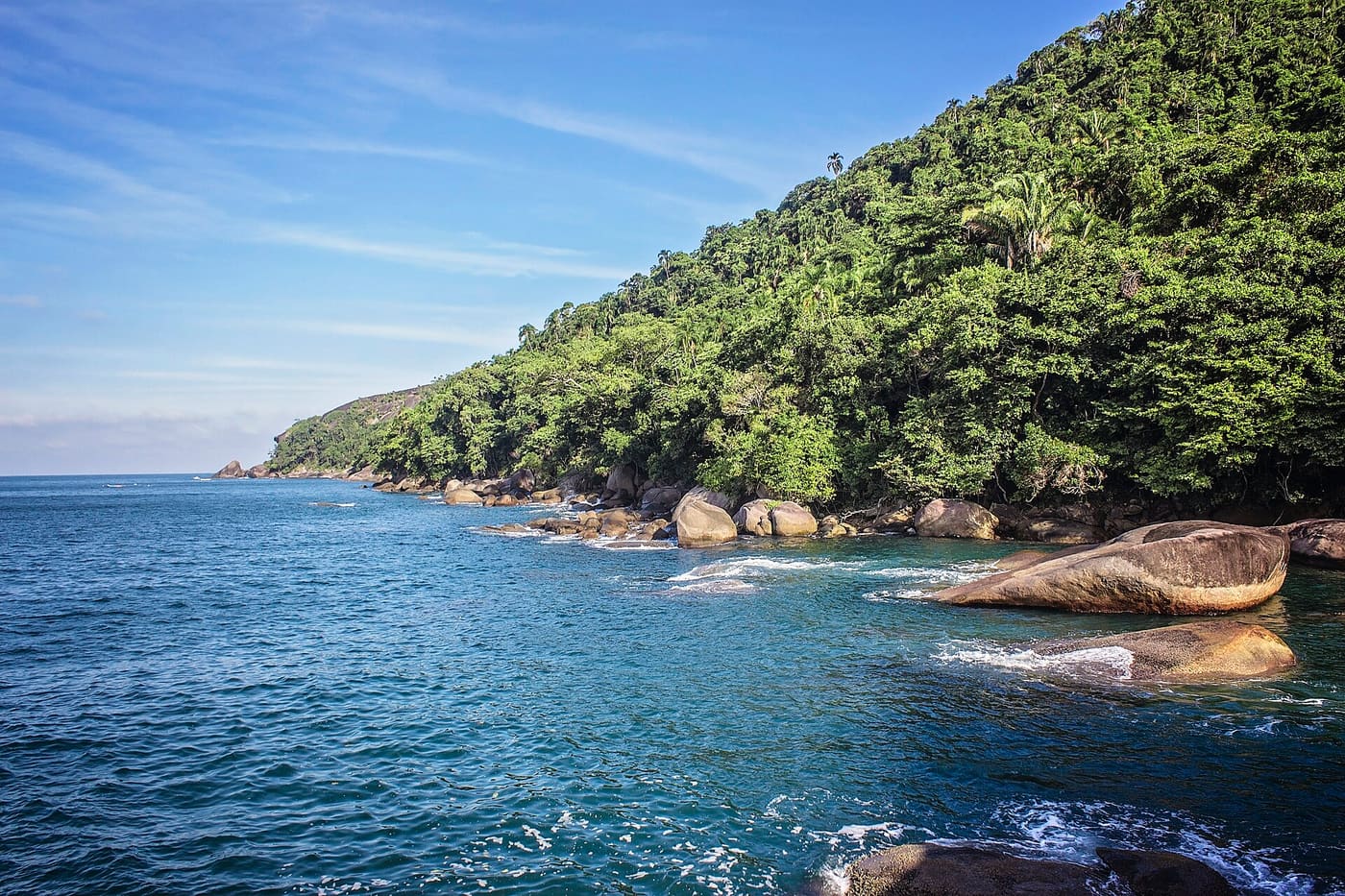 Cachadaço, in Trindade, at its best at the end of the day. Photo: Eduardo Gabão, CC BY-SA 3.0, Wikimedia Commons
The state line and Ubatuba: days 10 and 11
Day 10. In the morning, the last Rio trail: the headland path linking Trindade’s beaches. After lunch, road to Ubatuba with a stop at Vila de Picinguaba, on the state line, where boats leave for Ilha das Couves. Without a car, remember the warning that applies to the whole region: the Paraty-Ubatuba leg has few buses per day, and the connection planning is in the guide to the Costa Verde without a car. Night in Ubatuba.
Day 11. A full day in Ubatuba, which almost no crossing itinerary offers. In the morning, boat from Saco da Ribeira to Ilha Anchieta, the state park with prison ruins and aquarium-clear sea. In the afternoon, Projeto Tamar (running since 1991) and a beach of your choice among the municipality’s more than 100: Itamambuca for surf, Lázaro for floating.
Ilhabela as it deserves: days 12 to 15
Day 12. Road to São Sebastião, 20 minute ferry (car R$ 19 on weekdays, R$ 28.50 on weekends; pedestrians ride free) and arrival in Ilhabela. A light afternoon: the waterfront, the channel beaches, the sunset facing the mainland. The declaration of interest is due: Hostel da Vila, the eco lodge that signs this blog, has been in Ilhabela’s historic center since 2016, with 8,000 m² of Atlantic Forest, out-of-the-ordinary accommodations (dome, treehouse, kombi) and a pool heated to 32°C that means something different to anyone carrying eleven days of road in their legs.
Day 13. The 4x4 crossing to Castelhanos beach, through the state park that covers most of the island, or a day of waterfalls for anyone already overdosed on sand. Between May and August, watch the channel: it is humpback whale season, peaking in June and July.
Day 14. Bonete. The caiçara village of some 300 residents in the island’s south has only two ways in: boat (dependent on the sea, which is open there) or the 16 km trail that takes most of a day of walking, with waterfalls along the way to break the effort into chapters. The most common combination is boat there and boat back the same day; the most beautiful is walking in and boating back the next day, sleeping in the village. If the sea does not allow it (it happens), the day becomes a technical reserve for any island loose ends.
Day 15. The rest day, and we insist it be taken seriously: it is the day to enter island time. A hammock, a beach near your lodging, a long lunch. Fourteen days of crossing ask for a day of nothing before the ferry and the 4 hours of road to São Paulo. If you need to cut something from this itinerary, cut something else.
Fine tuning
This itinerary assumes you are willing to change beds seven times. Anyone who prefers fewer moves can fold Trindade into Paraty (sleeping back in town) and stretch Ilhabela. Anyone with 12 days cuts the rest day and one Ubatuba day and lands close to our 10 day itinerary, which is the version without the hard-to-reach jewels.
On money: the cost structure is the same as the short trip (hostel bed between R$ 46 and 165, guesthouses from about R$ 200, boat tours from R$ 49 to 109), just multiplied by more days; the full math is in Costa Verde travel costs. And on season: fifteen days raise the odds of catching rain in any season, so aim for the stable months of April, May, September and October, compared month by month in the guide to the best time to visit. Aventureiro, Mamanguá and Bonete depend on boats and good seas: the more slack your calendar has, the more the island decides in your favor.
A final note on the order of the days: it is not sacred. This itinerary was designed so that the sea-dependent programs (Aventureiro, Mamanguá, Bonete, Ilha Anchieta) have flexible neighbors, so swap days around according to the forecast. Rough sea on day 4? Climb the Papagaio and leave Aventureiro for day 5. Rain on day 7? Mamanguá trades places with the day 8 schooner painlessly. Whoever travels for fifteen days has the luxury the one week traveler does not: waiting for the weather to open. Use it.