
Lopes Mendes beach: is it worth it?
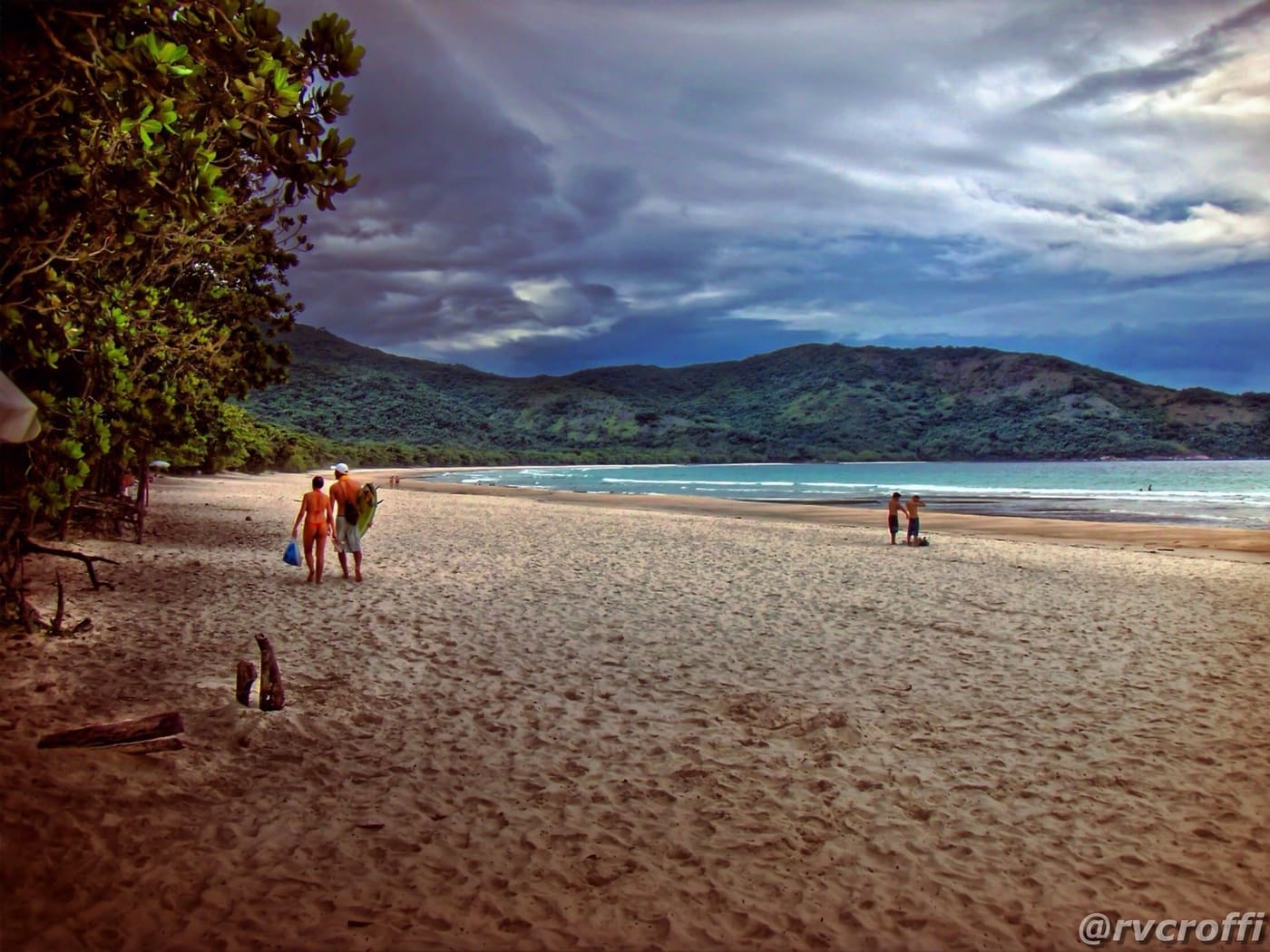
Yes, it is worth it. But the full answer comes with a set time on the clock, and that is the part almost no guide tells you.
We can speak with some authority because we sleep at its doorstep: the Albatroz, our group’s schooner, anchors in the Pouso cove on the expeditions that leave Paraty, and the crew sees Lopes Mendes in both of its states. At 8 in the morning, a 3 km strip of white sand without a single footprint. At noon, the same beach shared with the day-trip schooners that all arrived at once. It is one beach and two experiences that look nothing alike. This guide exists so you land in the first one.
What Lopes Mendes actually is
Lopes Mendes sits on the side of Ilha Grande that faces the open ocean, and it is the kind of beach that lives up to its reputation: about 3 km of fine, firm sand, the kind that squeaks underfoot, clear water, a sea with real waves and no buildings. None at all. No beach bar, no restaurant, no guesthouse, no lamppost. The restinga vegetation runs right down to the sand and the scenery is the same one the island’s first fishermen knew.
The sand deserves a paragraph of its own: it is so fine and so pale that it barely heats up, even under the midday sun, and it squeaks underfoot like dry snow. It is a small detail that changes the whole day, because at Lopes Mendes you walk a lot: the beach is long, shade is scarce and the whole point is to keep walking until it is just you and the sound of the sea.
It shows up constantly on lists of the most beautiful beaches in Brazil and the world, and we have already written about why it competes for that title in our guide to the most beautiful beaches on Ilha Grande. But a spot on a list does not answer the question in the title. On to the caveats.
The caveats you need to know first
First: there is no infrastructure whatsoever. What you do not carry in, you do not have. Water, food, sunscreen and a bag to carry your trash back out are mandatory, because on the beach you cannot buy so much as a coconut water. Shade is scarce too; the almond trees at the left end get fought over like parking spots in December.
Second: the surf is heavy. Lopes Mendes is an open-ocean beach, with currents and holes in the seabed even in shallow stretches. That is why surfers treat it as their spot (it is the most surfed beach on the island, and one of the few where a board justifies the haul along the trail). If what you want is to float in still water, the right place is elsewhere: Lagoa Azul or Lagoa Verde, on the sheltered side of the island. With small children, double the attention and stay in the shallows.
Third, and most important: it fills up on a predictable schedule. The day-trip schooners and speedboats leave Vila do Abraão and Angra mid-morning and unload everyone in the same window, roughly from 11 am to 3 pm. During that stretch, the island’s most unspoiled beach turns into a crowded beach like any other, minus the beach bars. Anyone who judges Lopes Mendes by that window goes home thinking the fame is overblown. Anyone who arrives earlier understands everything.
How everyone gets there (and what that way misses)
The classic route starts in Vila do Abraão, the island’s main village. From there, tour boats and water taxis run to Praia do Pouso, the sheltered neighbor: the schooner costs around R$ 70 round trip and takes about 50 minutes; the speedboat runs around R$ 100 and does it in about 25. No boat lands at Lopes Mendes itself, because the open sea does not allow it. From Pouso, a well-marked 1 km trail crosses the low hill in 20 to 30 minutes and drops you onto the sand.
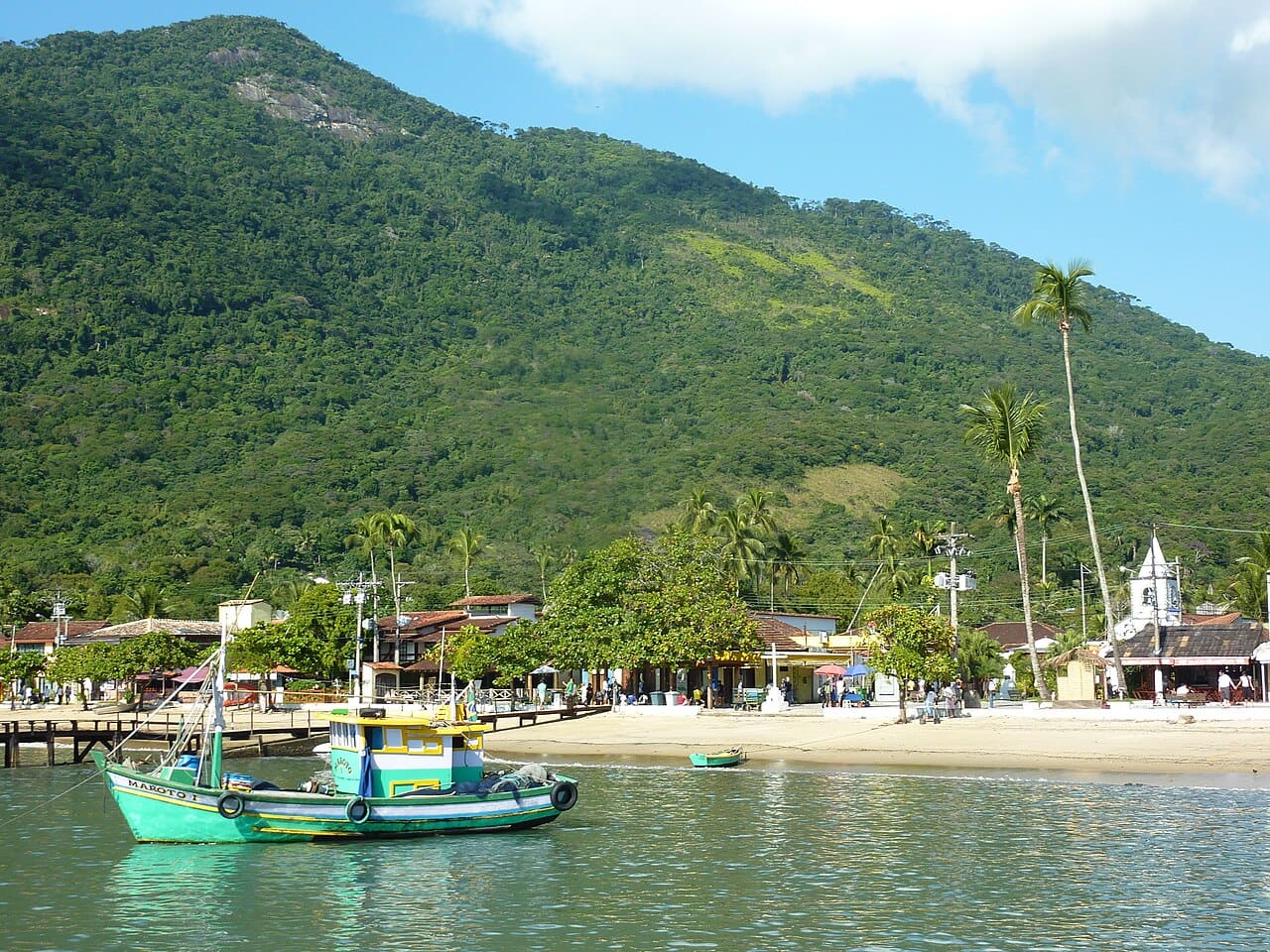 Vila do Abraão, where the water taxis to Pouso leave from. Photo: Dave Lonsdale, CC BY 2.0, Wikimedia Commons
You can also walk from Abraão, on a trail of about 3 hours that passes the beaches of Palmas and Pouso. It is beautiful, with honest climbs, and it is part of the circuit we detail in the guide to Ilha Grande’s hiking trails. The problem with both options is the same: you arrive when everyone else arrives. The 10:30 boat and the trail started after breakfast put you on the beach exactly in the crowded window.
The way we recommend: wake up on it
Here the guide picks a side, and we own the fact that the boat is ours. On the three night Albatroz expedition, which leaves from Paraty, the previous night ends at anchor after a free afternoon in Vila do Abraão. The next morning the schooner heads to Pouso early and puts its guests ashore before the day-trip schooners have even left their ports. You walk the 20 minute trail with the forest still waking up, come out of the green tunnel and find the 3 km of sand with nobody on it, the waves breaking for no audience at all.
Then you head back to the boat when the crowd shows up, have lunch on board under way and spend the afternoon at Lagoa Verde. The standard day trip sees Lopes Mendes at its worst hour; whoever sleeps on the water sees the beach that justifies the lists. That inversion of the schedule, more than any onboard comfort, is what separates “pretty but crowded” from the best beach of your trip. The videos of how this plays out in practice are on the Albatroz Instagram.
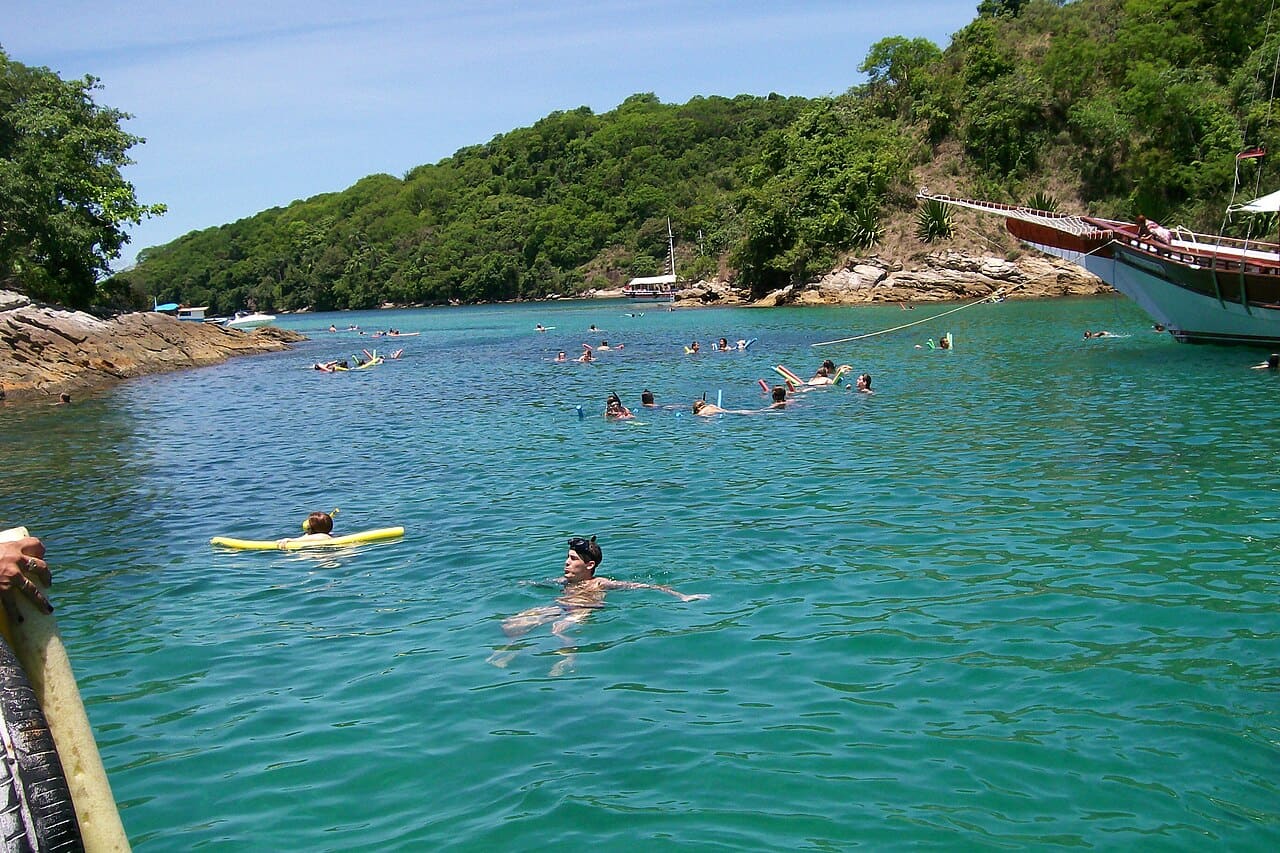 Lagoa Azul, a stop on the sheltered side of the island on the same route. Photo: Marcio Sette, CC BY-SA 3.0, Wikimedia Commons
If you go on your own
The service information, no judgment: first you need to reach the island, and we explain every crossing (the flex boat from Conceição de Jacareí, the ferries from Angra and Mangaratiba, prices and timetables) in the guide on how to get to Ilha Grande. Sleep in Vila do Abraão the night before, because a same-day trip from the mainland to Lopes Mendes is a race with a return time on the clock.
On the day, take the first water taxi of the morning to Pouso, the earliest one you can find at the pier. Bring cash (the phone signal on the island fails and the card machines depend on it), twice the water you think you need, ready-to-eat food and no glass. If the sea is rough that day, take the boatman’s suggestion and swap the plan: the island has dozens of alternatives, and our guide to things to do in Ilha Grande sorts out the best ones.
When to go
From May to August the sea gets clearer, the trails dry out and the beach empties even at peak hours. It is the season we prefer. In summer, Lopes Mendes is still lovely early in the morning, but the crowded window gets more crowded and the late afternoon rain joins the game. Long holiday weekends are the ultimate patience test: if those are your only option, the sunrise strategy stops being a luxury and becomes the only way to see the beach with room to breathe.
One expectation check: on days with a strong swell, the beach belongs to the surfers and swimming becomes a matter of wetting your feet. It is still worth it for the walk on the firm sand, which is long enough for you to find a piece of your own even on a busy day.
So: is it worth it?
It is, very much, as long as you visit on its terms: expecting no infrastructure, respecting the heavy surf and dodging the schooner window. Lopes Mendes is not a beach of convenience, it is a beach in a raw state, and that is exactly why it still shows up on lists next to beaches from entire countries, as we tell in our ranking of the most beautiful destinations between Rio and São Paulo.
If your trip is backpack and village, sleep in Abraão and get up before dawn. If you can choose, do it the way we do: sleep on the water and let the Pouso trail hand you the empty beach, still smelling of wet forest. After seeing Lopes Mendes at 8 in the morning, with the neighboring beaches of Aventureiro and Dois Rios still on your list, you understand why some people come back to Ilha Grande every year. The next step is a single one: choose the morning you will be there, and defend it in your itinerary against any temptation to arrive later.