
Best time to visit Ilha Grande: the island's year, month by month
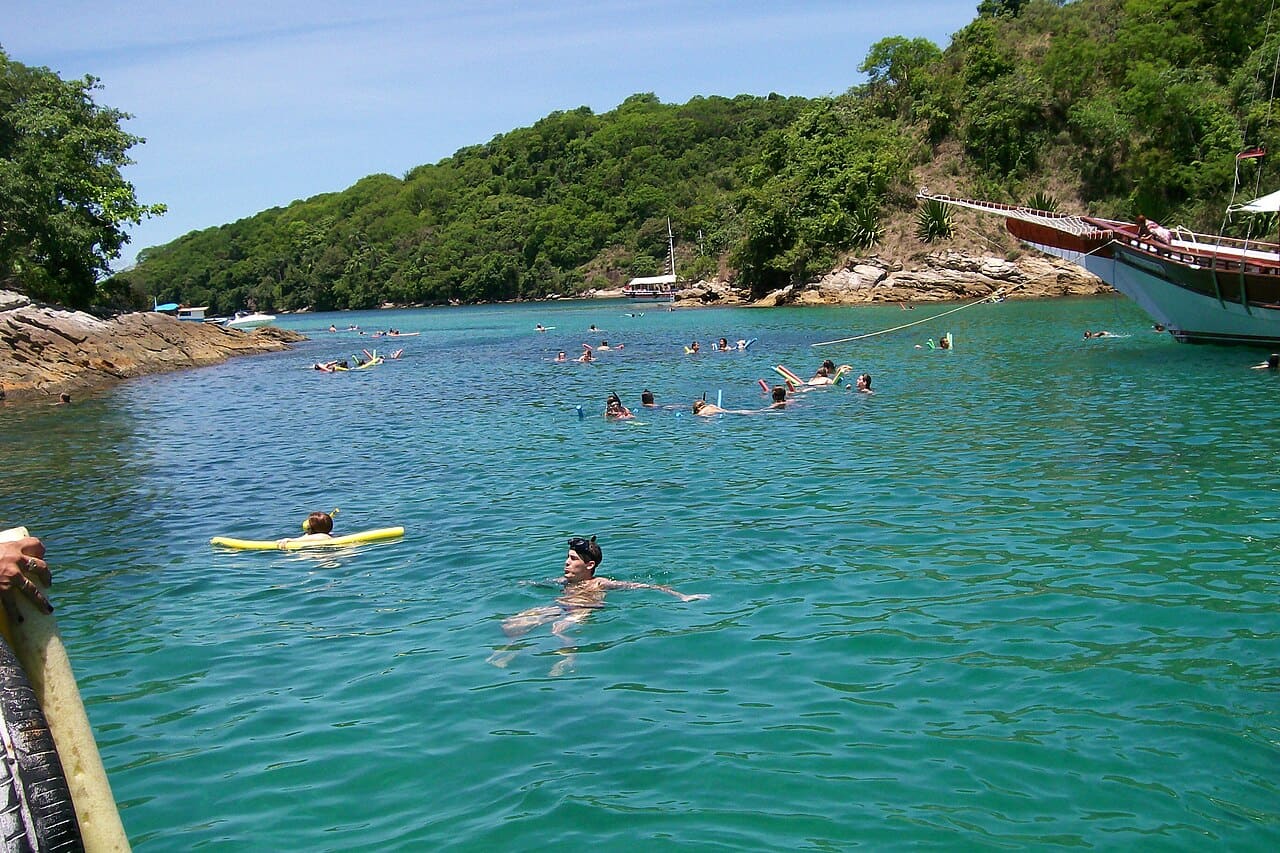
Straight answer, because that is what you came for: the best window for Ilha Grande runs from April to September, when it rains less, prices drop and the trails dry out. Summer is the most famous season and the most treacherous one, with late afternoon rain, doubled rates and lines for everything. And winter keeps the secret almost nobody uses: the clearest sea of the year.
The people writing this spend the whole year on these waters, because our group’s schooner anchors at the island every week, from New Year’s Eve to the July chill. This is the calendar we describe to anyone who asks on board, month by month and without makeup.
How the island’s climate works
Ilha Grande is a mountain of Atlantic Forest planted in the sea, and the Serra do Mar just behind it squeezes the moisture coming off the ocean. The result is a place that rains far more in summer than in winter: January usually tops 200 mm, while July and August average below 80 mm. Temperature follows suit: afternoons of 30 to 35 degrees Celsius from December to March, and days of 22 to 25 in winter, with nights that call for a jacket. The sea goes from about 26 degrees in summer to 21 or 22 in winter.
Rain on a forest island is not a defect, it is the reason the forest exists. But it changes what you can do, and that is why the month matters.
December to March: the full island
Summer is when Ilha Grande appears in the photos: warm water, long days, the village lit up late. It is also when the island charges for it. Abraão’s guesthouses double their rates and demand minimum stays, the flexboats sell out the last Sunday departures, and the rain arrives almost daily at the end of the afternoon, sometimes hard enough to turn the village’s dirt streets into lost flip flop mud. A long trail in January means guaranteed mud with horseflies thrown in.
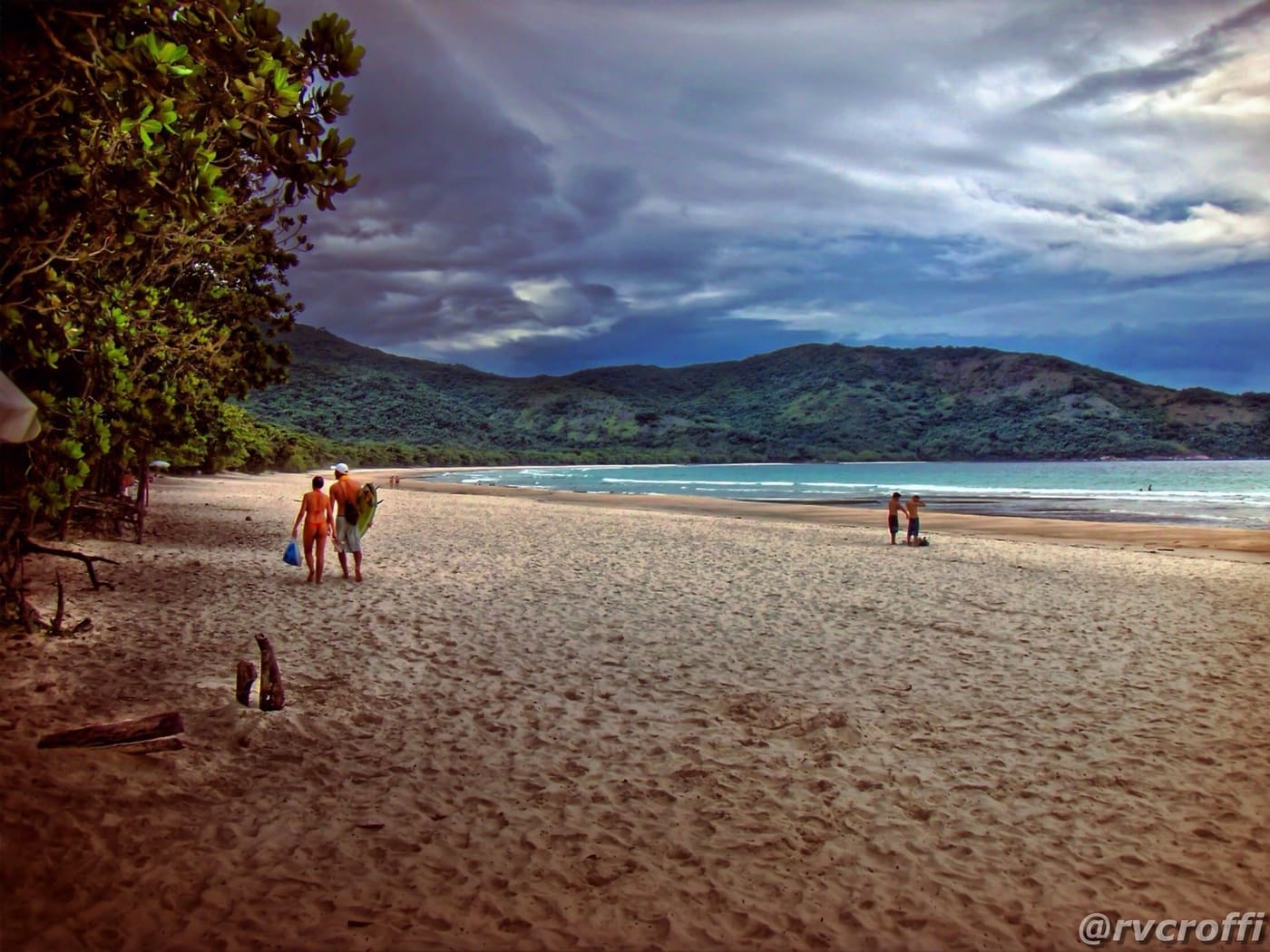 Lopes Mendes in high season: arrive early in the morning or share the sand with the day trip schooners. Photo: Rafael Vianna Croffi, CC BY 2.0, Flickr
New Year’s Eve deserves its own paragraph. The turn of the year in Abraão has a stage set up near the Casa de Cultura, with bands and DJs from the 29th to the 1st, and fireworks over the village waterfront and at beaches like Lopes Mendes and Araçatiba. It is a village party, intimate, far from the scale of Copacabana, and that is exactly the charm. The cost tracks the demand: guesthouse rates comfortably pass R$ 800 a night and packages close at four or five night minimums. Carnival repeats the logic in a smaller version, with street blocks in the village and the sea packed with speedboats. In both cases, book months ahead or do not even try.
April to June: the good turn
For us, the best value of the year. The rain fades little by little, the sea still keeps summer’s warmth, rates return to normal and the island empties from Monday to Friday. The trails dry out to the point where the T10 to Pouso becomes a clean walk, and you can do Lopes Mendes on a Wednesday in May with hardly anyone to share the sand. Long weekends (Easter, Tiradentes, Corpus Christi) are the exception: for three days the island flips back to summer mode, prices included.
July and August: the clearest sea of the year
Winter is Ilha Grande’s badly kept secret. Without the rain dragging sediment from the rivers, the water reaches its best visibility of the year: it is the season when Lagoa Verde seems to have been swapped for another one, and when snorkeling truly pays off. The comparison Lagoa Azul or Lagoa Verde and the map of snorkeling spots are worth double in these months. The clean sky also gives the stars back: on a July night anchored in the bay, the whole Milky Way shows up, something the humid summer rarely delivers.
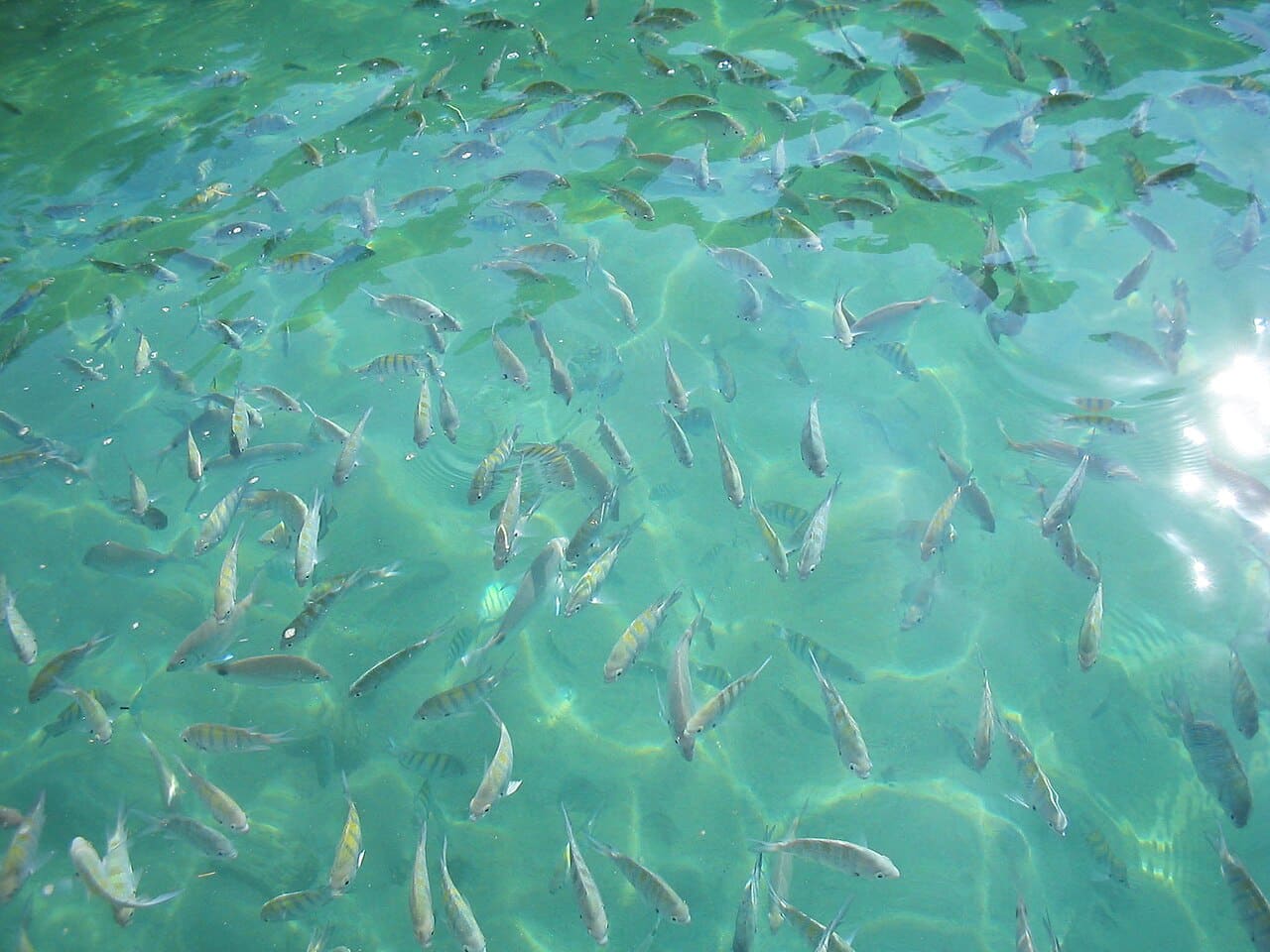 Winter at Lagoa Verde: with no rain dragging sediment, visibility is the best of the year. Photo: Ronaldo Leonardo, CC BY-SA 3.0, Wikimedia Commons
The usual honesty: winter has cold fronts, and a cold front leaves the sea rough for two or three days, with bumpy crossings and speedboat trips canceled on swell days. Water at 21 degrees is not for hours of soaking. And July has school holidays, which fill the village in the middle weeks of the month. The trade pays off: dry trails, golden light and the island at its own pace.
September to November: the empty spring
The rain comes back gradually, first in short bursts that do not ruin the day. September and October hold on to low prices and a quiet village, and November warms the water again, a rehearsal of summer without its prices. It is also when the forest answers first: waterfalls and swimming holes fill back up, and the trails take on the smell of wet ground without turning to mud. It is the season for anyone who wants the island cheap and does not mind one plan B day; for that day, keep things to do in Ilha Grande when it rains.
The year in one table
| Months | Rain | Crowds | Reading |
|---|---|---|---|
| Dec to Mar | high, late afternoon | packed and expensive | warm water; New Year’s and Carnival |
| Apr to Jun | falling | low outside holidays | best value |
| Jul and Aug | lowest of the year | medium (holidays in Jul) | clear sea, dry trails, cold nights |
| Sep to Nov | returning gradually | low | good prices, one plan B day |
The season by experience
- Snorkeling and clear water: July to September, away from swell days.
- Long trails (T10, T14, Papagaio): April to September, on dry ground. The detail on each is in Ilha Grande hiking trails.
- Surf at Lopes Mendes: winter swells work best on the open sea.
- Saving money: May, June, August outside school holidays and September. The full math is in Ilha Grande travel costs.
- Party: New Year’s Eve and Carnival in Abraão, booking months ahead.
Quick questions from the deck
Is January worth it? It is, as long as you accept the full package: warm water and a lively village, but also a rain burst almost every late afternoon, peak prices and lines for everything. Schedule beach and boat for the morning and leave the end of the day open, and the rain will thank you.
Is July too cold for the beach? No. A sunny winter day reaches 25 degrees and the sand is comfortable; the limit is how long you can stand water at 21. Short snorkel, long beach.
Does it rain all week? Outside summer, rarely. The typical December to March burst lasts an hour or two and gives the sun back. A full week of closed sky happens when a cold front parks, which is more common between September and November.
What is the cheapest month? May, June, August after the school holidays and September compete for the title, with low season rates and empty midweek crossings.
Our calendar: winter on board
Since this guide takes sides, it owns them: the season we would choose is winter, sleeping on the island from the sea. The 3 night Albatroz expedition leaves Paraty all year, but it is between June and August that the route shows its best version: Lagoa Azul without summer’s speedboat convoy, the Lopes Mendes trail on dry ground first thing, and the night at anchor with the starriest sky of the year over the deck. Upcoming departure dates are on the Albatroz Instagram.
Pick the month, then the days
There is no wrong month for Ilha Grande; there are wrong expectations for the month. Summer is a party with rain at the end of the day, winter is silence with a jacket, and the middle of the year is the balance point most people never consider. With the date chosen, the next decision is the size of the trip, and the honest math is in how many days in Ilha Grande, with the full picture in the guide to things to do on the island.