
Things to do in Ilha Grande when it rains
It rains, and the first reaction of anyone waking up in Vila do Abraão is to assume the day is over. It is not. We write this from inside the subject: the people behind this guide run a hostel in Ilhabela and a schooner that spends much of the year sailing Ilha Grande bay, and we have watched dozens of rainy days turn into good days. The island without sun does not get worse, it becomes something else: the forest steams, the short trails empty out and the sea, this surprises everyone, stays warm.
This article is the ready-made plan B: what to do, in what order, and what not to do under any circumstances. If you are still building the trip, it is worth reading the guide to things to do in Ilha Grande and the best time to visit first, because half the rain problem is solved by picking the right month.
First, understand which rain this is
On Ilha Grande there are two different rains, and your day depends on knowing which one is falling.
Summer rain is a burst: it builds in early afternoon, dumps half an hour of water and leaves. Between December and March it is almost routine, and the right response is to cancel nothing and just shift the schedule. Morning in the water, a long lunch while the sky comes down, back outside by late afternoon.
Cold front rain is a different conversation: two or three days of closed sky and drizzle, more common between autumn and spring. That is the one this article’s itinerary is for. The good news is that it usually comes with calm seas inside the cove and mild temperatures, not storms.
In either case, one rule holds for the whole island: there are no cars here, so every rainy day plan starts and ends on foot or by boat. Anyone still deciding how many days to book should factor in this possibility: the math is in the article on how many days in Ilha Grande.
Lazareto and aqueduct: the plan that improves with rain
The island’s best closed-sky program is a short, historic walk. Starting from the square of the São Sebastião church in Abraão, follow the left side of the beach: in about 20 minutes of flat, signposted path you reach Praia Preta, its sand dark with heavy minerals, and the ruins of the Lazareto.
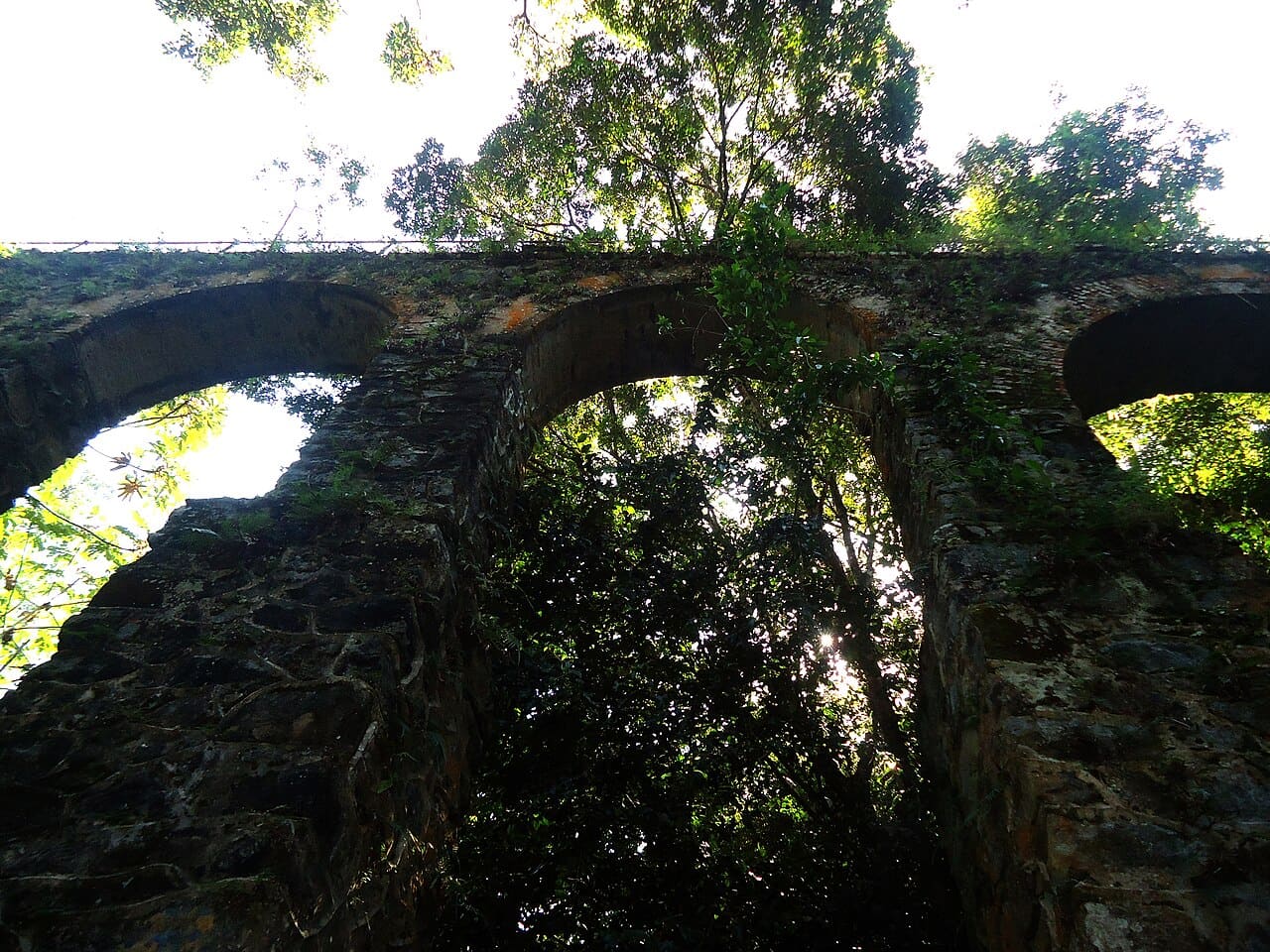
The Lazareto operated from 1886 to 1913 as a quarantine hospital for immigrants arriving in Brazil, on a site chosen back in the days of Emperor Dom Pedro II. What remains are pavilions overtaken by forest, to be observed from outside (the structure is closed off, and respecting that is not fussiness: the collapse risk is real). A little farther on, into the forest, appears the aqueduct of 1893, built of stone to carry water dammed on the hillside down to the pavilions. In drizzle, the scene works better than in sun: wet stone, dark forest, silence and almost nobody on the path.
On the same circuit, called T1 by the state park, you can finish at the swimming hole, a freshwater pool where the river pauses before dropping to the sea. A river swim under fine rain is one of the island’s most underrated experiences. Bring trail sandals or old sneakers, a simple rain jacket and the certainty that your phone is in a plastic bag.
The village, cafe by cafe
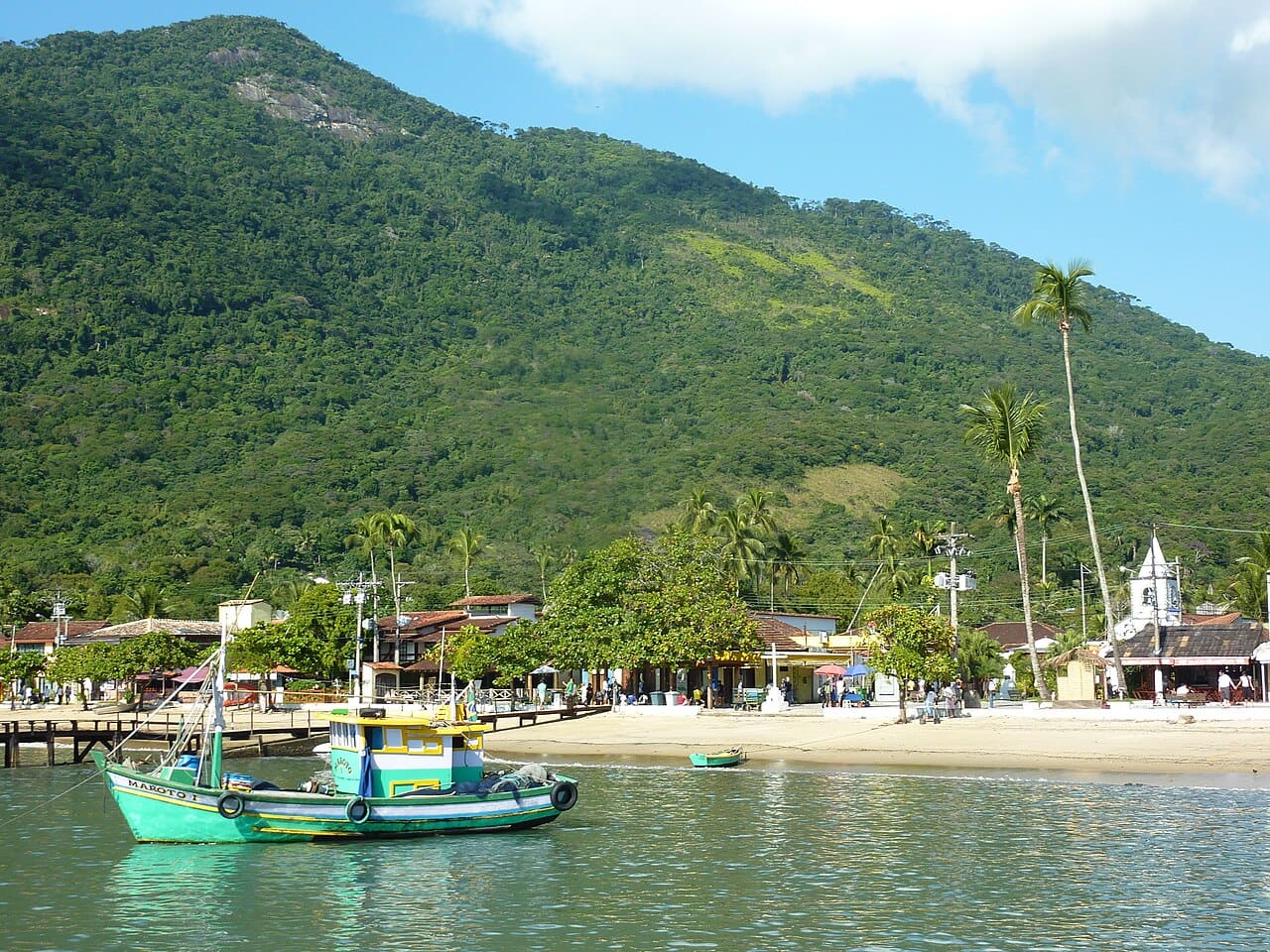 Vila do Abraão seen from the sea. Photo: Dave Lonsdale, CC BY 2.0, Wikimedia Commons
Vila do Abraão has around 5,000 residents and a good scale for slow days: everything is ten minutes from everything. On a rainy day, it becomes a circuit of interiors. Cafes with cake coming out of the oven, fish restaurants with covered tables, little craft shops, the church on the square, the coming and going at the pier when the ferries arrive. None of these places needs a name here: walk the beach street and the two or three streets behind it and you will find yours.
Two practical tips from people who have walked the village soaked. First: the phone signal and the card machines fail when the weather closes in, so withdraw cash beforehand or bring it from the mainland. Second: the rain is the moment to sort out the rest of the trip’s logistics, book tomorrow’s boat departure, check the return ferry time (the one from Abraão leaves at 10 in the morning) and reread the village guide to mark what is still missing.
Short trails yes, long trails never
Here lies the line that separates a good day from a rescue. A short, flat trail under light rain is a great plan: the Lazareto circuit, described above, and the walk to the small beaches on the east side of the cove stay safe in drizzle, because they are 20 to 40 minute stretches that start and end in the village.
A long trail in the rain is another story, and our position is hard: do not go. Pico do Papagaio, the crossing to Dois Rios and any path the park classifies as wild are off the plan on a rainy day, no exceptions. The reasons are concrete: roots and rock turn to soap, the streams you cross dry-footed rise fast, the closed forest darkens early and the phone signal disappears. Every year the island’s fire brigade goes out after people who underestimated this. The mountain will still be there tomorrow; the Ilha Grande hiking trails guide helps rebuild the plan when the sky opens.
If the frustration runs deep because the trail day was your only one, use the regional rule: on closed days, the whole Costa Verde works the same way, and the best hikes on the Costa Verde include low altitude alternatives for exactly these days.
The sea stays warm
The fact nobody tells first time visitors: the water temperature does not change because it rained. The sea in Ilha Grande bay spends the summer around 25 degrees Celsius, and swimming with fine rain falling on the surface is one of the best scenes the island offers, precisely because almost everyone gives up and goes indoors.
The swim is worth it even at Abraão’s own beach (which on a sunny day we admit is average, but warm and empty it improves considerably) or at Praia Preta, on the way to the Lazareto. What the rain does change is visibility: near the river mouths the water turns cloudy for a few hours, so a day of heavy rain is not a mask and snorkel day. The spots where it pays off, and under which conditions, are in the guide to snorkeling in Ilha Grande.
It was sailing that taught us not to fight this weather. On the Albatroz, our group’s schooner that leaves Paraty and crosses Ilha Grande bay on three night expeditions, a summer downpour means everyone under the covered deck, fresh coffee, and half an hour later the sun back over Lagoa Verde. Whoever sleeps on the island, or anchored at it, has the luxury of waiting for the good window instead of chasing a lost day trip.
What to avoid on a rainy day
- Committing to a speedboat trip to the far side of the island just because it was already paid for. A rainy sea with wind means guaranteed discomfort and, if the weather worsens, the boat turns back halfway. Rescheduling is usually possible: ask early at the pier.
- Waiting out the rain in the guesthouse scrolling your phone. The island in drizzle is walkable; the lost day is a choice, not a fate.
- Long trails, repeated because it matters: no Papagaio, no Dois Rios, no crossings. We said it already, but it is the mistake we see most.
- Leaving the return ticket for the last minute. On an ugly day the boat schedules change and the flexboat line thickens. Confirm your return in the morning; the details on ferries and speedboats are in how to get to Ilha Grande.
If the forecast already shows rain before you go
Two reads solve it: the best time to visit article, to understand each month’s pattern, and Ilha Grande travel costs, because low season with rain risk is exactly when the island’s prices fall. Some travelers make that trade on purpose: they accept two drizzles in exchange for empty trails and a cheaper bed. We think it is a good deal.
And if the rain takes over the whole trip, end to end, breathe: you will be on an island with no cars, a warm sea, 19th century ruins twenty minutes away on foot and hot coffee on every dirt street corner. There are far worse places to watch the water fall. When the sky opens, even for one morning, run to the sea: the full itinerary is in things to do in Ilha Grande.