
Things to do in Vila do Abraão, the heart of Ilha Grande
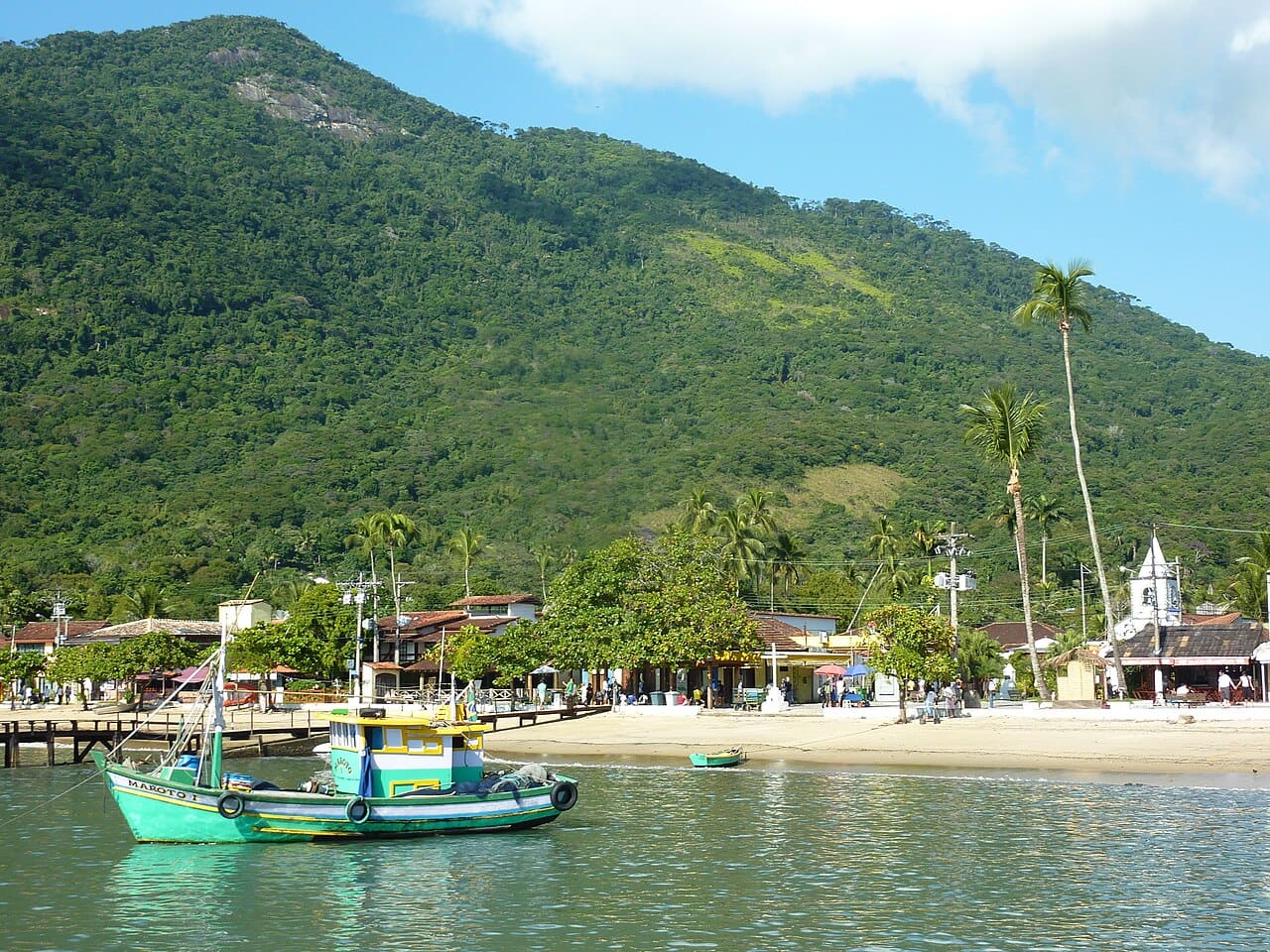
Every island has a door, and Ilha Grande’s door is called Vila do Abraão. It is where the ferry docks, where the trails begin, where the boats sleep and where the roughly 5,000 residents go about their lives without a single car on the street. The people writing this guide know that arrival from the sea: our schooner crosses Ilha Grande bay on expeditions out of Paraty, and the afternoon in the village is a fixed stop on the route. This article is what we would tell a friend about to spend a day, or a lifetime, in Abraão.
Before getting into detail, the context: Abraão is the base for practically everything done on the island, so this guide talks to the general picture of things to do in Ilha Grande and to the logistics of how to get there.
A village without cars, and what that changes
The first half hour in Abraão rearranges the head of anyone arriving from a city. There is no paved street, there is no traffic light, there is none of the background engine noise we carry without noticing. There is packed sand, wheelbarrows carrying tourist luggage, bicycles, and the sound that remains when the cars leave the scene: people talking, plates clinking, boats coming in.
In practice, this means the entire village is walkable in ten, fifteen minutes. The beach street concentrates restaurants and agencies; the two or three parallel streets behind it hold markets, guesthouses and the daily life of the people who live there. The square of the São Sebastião church is ground zero: it is from there that the walks to both sides of the cove begin.
An honest logistics warning: cash solves things. The phone signal and the card machines fail often, the ATMs are few and on holidays they run dry. Withdraw on the mainland. And if you are deciding how much to bring, the full math is in the article on Ilha Grande travel costs.
The pier and the beach street
The Abraão pier is the village’s thermometer. In the early morning it belongs to the fishermen and the boats heading out to the beaches; mid morning the ferries and flexboats arrive from the mainland and the beach street wakes up for good; at the end of the afternoon everything comes back, tanned and hungry. Sitting at a kiosk and watching that flow with a fish broth in hand is a legitimate program, not wasted time.
It is also at the pier and the beach street agencies that you book the next day’s boat departures: Lopes Mendes via Pouso, the lagoons on the northwest side, the island loop. Compare prices at two or three agencies (it varies more than it should) and always ask the return time, because it decides whether or not you get the late afternoon on the beach.
Abraão’s beach: the truth
Let’s say what the brochures do not: the village beach is average. The sand is narrow, the cove’s water is calm but lacks the transparency of the outer beaches, and anchored boats share the view. It serves well for a quick end-of-day swim and for breakfast with your feet in the sand, and that is it.
The good news is that this does not matter, because nobody comes to Ilha Grande for the village beach. The beaches that justify the trip are a walk or a boat away, and their honest ranking is in our guide to the most beautiful beaches of Ilha Grande. Abraão is not the destination: it is the starting point, and it plays that role very well.
The Lazareto walk: history 20 minutes away
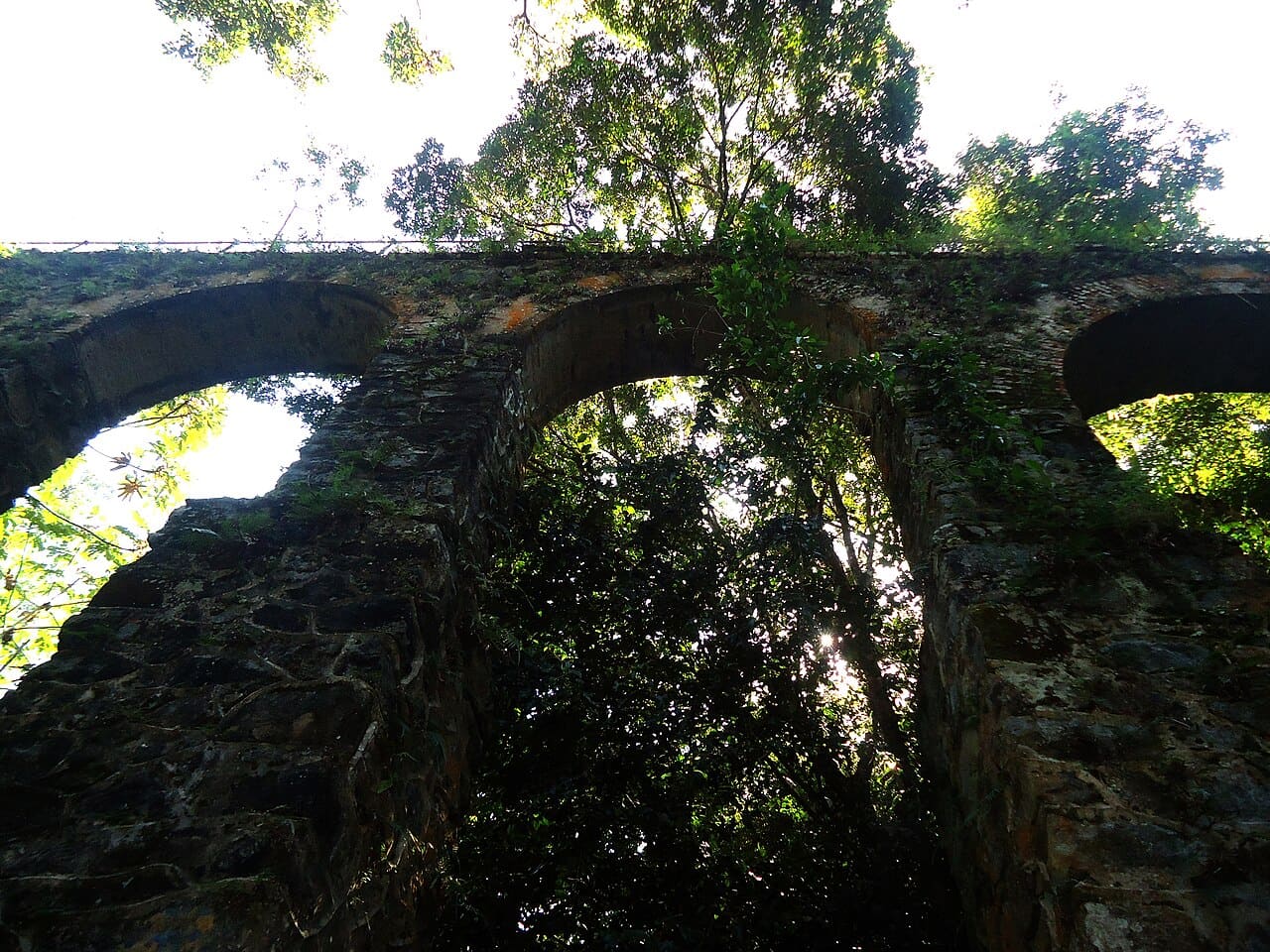 The 1893 aqueduct, on the Abraão circuit. Photo: MBelu, CC BY-SA 4.0, Wikimedia Commons
The village’s best walk leaves the church square to the left, following the beach. In about 20 minutes of flat path you reach Praia Preta, its sand dark with heavy minerals, where a stream empties out and forms a freshwater pool beside the sea. In the central part of the beach stand the ruins of the Lazareto, the quarantine hospital that received immigrants between 1886 and 1913 and later became a prison: entire pavilions being swallowed by the forest, to be viewed from outside (the structure is closed off due to collapse risk, and the sign deserves respect).
Following the trail into the forest you find the aqueduct of 1893, built in stone to carry water from the hillside to the Lazareto, and farther along the swimming hole, the river pool where residents have cooled off since forever. The whole circuit is the state park’s T1 trail, easy, signposted and doable even in drizzle; in fact, it is the backbone of our Ilha Grande in the rain itinerary. Bring water and leave before 9 am to have the ruins in silence.
The other way: the small beaches of the east
From the square to the right, the path hugs the cove toward the small beaches: praia do Canto, Júlia, Bica and, at the end, Abraãozinho, the best water in the sequence. It is a walk of about 40 minutes to the end, always along the shore, with the option of returning by taxi boat straight to the pier if your legs ask for it. On an off-season weekday, Abraãozinho early in the morning is one of those swims that fix any mood.
The village as a trailhead
Abraão is also kilometer zero of the park’s numbered trails. From here leave the T10 toward Pouso and Lopes Mendes, the T13 that climbs the 982 meters of Pico do Papagaio and the T14 that crosses the island to Dois Rios, among others. Each has its own demands of fitness and timing, and we broke them all down in the Ilha Grande hiking trails guide. What matters when planning from the village: the long ones call for a pre-dawn or very early morning start, and Papagaio requires a guide for the night hours.
If the idea is a beach at the end of the trail, the classic combo is a boat to Pouso and a 20 minute walk to Lopes Mendes, which many people consider the most beautiful beach in Brazil. It is worth it, and worth it early: the beach in the morning and the beach after 11 am are two different places.
Eating, drinking and the village at night
Abraão’s cooking is island cooking: fish of the day, shrimp, broths, and a beach street that at night lights up skewers and tables on the sand. We will not name houses (a rule of this blog), but the guideline works: where locals are eating, eat. The night is short and good: live music here and there, plastic table conversation, and the whole village asleep early because the boats leave early. Anyone looking for a big party is on the wrong island, and that is a compliment.
The village seen from the sea
There is a way of knowing Abraão that inverts the day trip logic: arriving by sea, in the middle of the afternoon, when the excursion boats have already left. On the three night expedition of the Albatroz, our group’s schooner out of Paraty, the free afternoon in the village works like this: you come ashore by dinghy as the beach street is emptying, have your afternoon coffee among locals, watch the sun drop behind the hills and return aboard to dine at anchor in the cove. The village with its lights on, seen from the deck, with the sound of dinner cutlery and nothing else: that scene stays in the memory of everyone who has done the route. Onboard videos are on the Albatroz Instagram, for anyone who wants to see the cove from the boat’s angle before deciding.
How many days the village asks for
As a base, Abraão sustains two to five days of island without repeating a program, alternating trail, boat and walk. As a destination in itself, one well-used full day (Lazareto in the morning, the small beaches in the afternoon, the beach street at night) already delivers the soul of the place. The fine math, crossed with the beaches and trails you want, is in the article on how many days in Ilha Grande, and the crowd calendar in best time to visit: on holidays the village genuinely fills up, and small village charm turns into lines.
In the end, Abraão is this: a dirt street settlement that geography put in charge of being the door to one of the most beautiful places on the Brazilian coast, and that remains a settlement despite it. Arrive, take off your shoes, leave the watch at the bottom of the backpack. The natural next step is choosing the beaches that will fill your days: start with our honest ranking of the island’s beaches.