
Best time to visit Paraty: the whole year, month by month
We dock in Paraty every week of the year, in sun, in rain and in that fine June drizzle that leaves the mountains steaming. The Albatroz, our group’s schooner, leaves Marina Píer 46 in every season, so this is not the opinion of someone who spent one holiday in town: it is the report of a crew that has seen all twelve months from the pier.
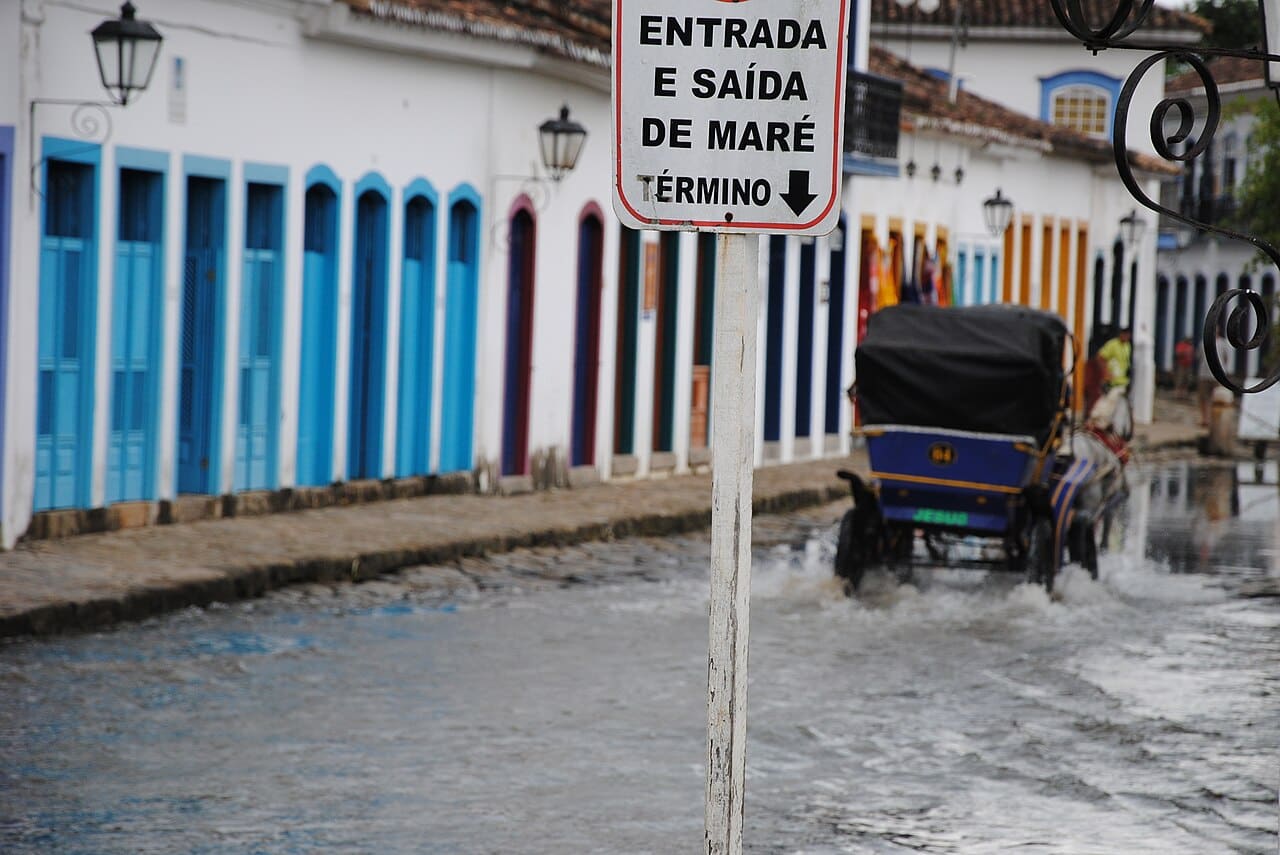
And the report starts by clearing up a confusion. In Paraty, water in the street is not always a problem. The big tides of the full and new moons flood the low streets of the historic center by design: the 18th century builders let the sea in to wash the paving and leave. That is a show, it happens all year, and you should chase those dates, not run from them. What really changes your trip is the rain, and rain in Paraty has a calendar.
The summary for people in a hurry
April, May, September and October are the best months: less rain, lower prices, emptier beaches and a sea that stays good. Summer is the most famous season and the trickiest, with January topping 500 mm of rain in ordinary years. Winter is the region’s secret: dry, clear and empty. And July and August 2026 bring two events that change everything during the week they happen: FLIP and the Cachaça Festival.
Now the whole year, season by season.
December to March: summer, honestly
Paraty’s summer is hot, crowded and wet. January averages sit around 500 mm (for comparison: the whole of São Paulo gets about 1,400 mm in a year), and summer rain here is not the late afternoon downpour that passes in twenty minutes. When a weather system leans against the Serra do Mar, it rains for a full day, sometimes two. If the rain coincides with the big tide, the low streets of the center genuinely flood, and then it is not charm: it is rubber boots.
That said, summer has its arguments. The sea reaches long-swim temperature, the mountain waterfalls run full, the days stretch past 7 pm. Carnival has the Bloco da Lama, when hundreds of people covered in mud take over the streets in a rite that began among local teenagers in the 1980s and became a town tradition. And New Year’s Eve fills the pier with boats and the square with music.
The practical rule for anyone who can only come in summer: book more days than you would in another season, because the chance of losing one to rain is real. The math on how many days is in our guide to how many days in Paraty, and the wet-day plan B is in things to do in Paraty when it rains.
April and May: the first golden window
The summer crowd is gone, the rain drops to less than half and the sea still holds March’s warmth. April and May are the months when we answer “come now” without asking anything else. Guesthouses lower their rates outside holidays, the schooners leave with room to spare on deck and the historic center gives back what summer hides: stone silence, doorway conversations, the sound of the Matriz bell with no competition.
The only caution is the holiday map. Easter week and the April and May holidays fill the town like a January Saturday. Outside them, it is the most balanced Paraty of the year, wallet included, as we show in Paraty travel costs.
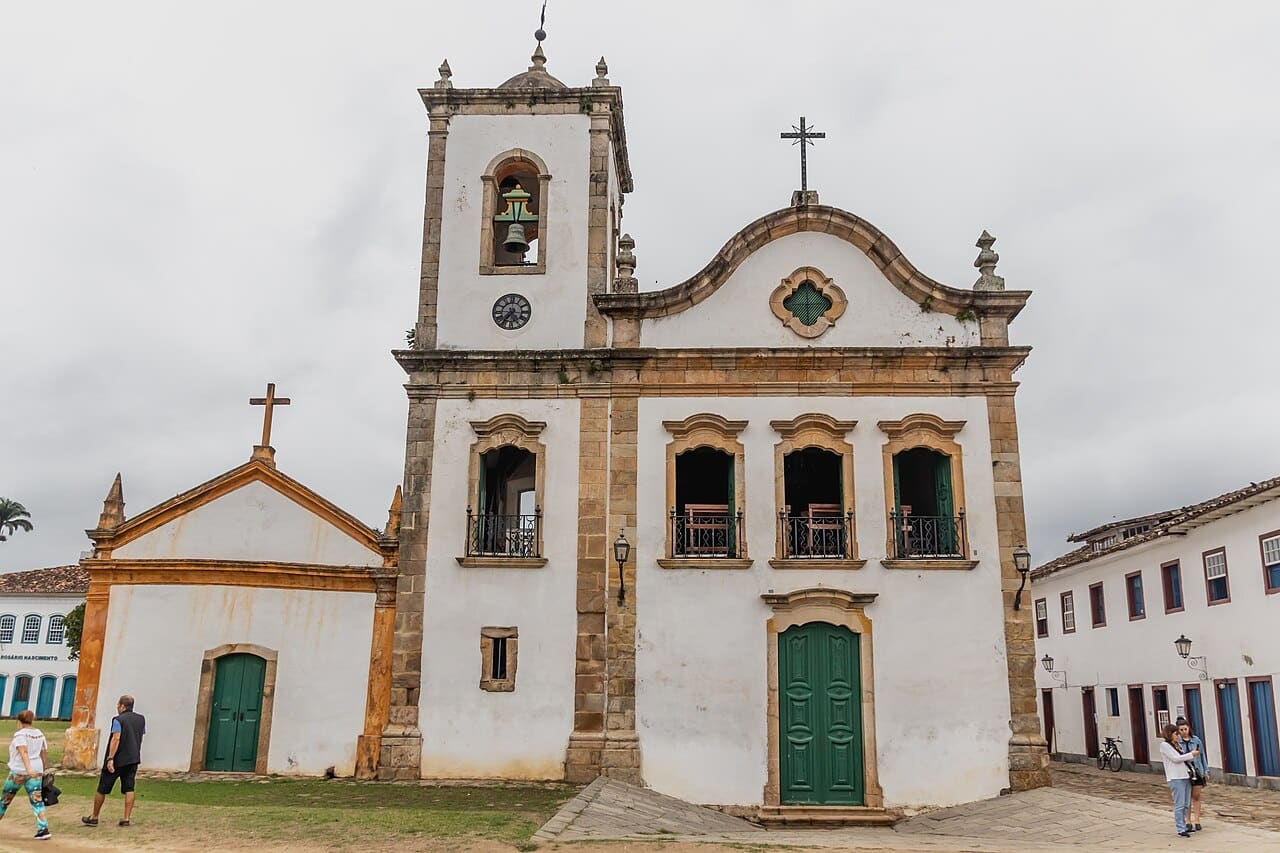 Santa Rita church, the postcard that looks better without a line. Photo: Angélica Cardoso Marinho Feijó, CC BY-SA 4.0, Wikimedia Commons
June to August: the winter almost nobody knows
Winter is the Costa Verde’s dry season. The trails firm up, the sky opens for weeks at a stretch, underwater visibility improves and the mountains take on that low golden light photographers chase. Is it cold? At night, yes: bring a real jacket. By day, the winter sun on deck makes any jacket pointless until late afternoon.
It is our favorite season to be at sea, and that is not rhetoric: the winter sea turns calm, the night sky becomes the most star-filled of the year and the anchored nights call for movies on deck and a hot shower. The next departures and this season’s onboard videos are on the Albatroz Instagram.
Winter is also the season of the big events, and here the 2026 calendar matters:
FLIP: July 22 to 26, 2026. The 24th edition of the literary festival transforms the town. Tents in the square, authors from all over the world, packed sessions and a Paraty impossible to recognize: lodging sells out months in advance and prices climb without ceremony. If you want FLIP, book in March. If you want Paraty, pick another week of July.
Cachaça, Culture and Flavors Festival: August 20 to 23, 2026. The 44th edition of the festival that celebrates the town’s oldest product, with the municipality’s distilleries gathered together, concerts and a cocktail contest. Paraty has produced cachaça since the 17th century, when the mills supplied the gold port, and the festival is the moment that history becomes a glass. It fills up less than FLIP, but it fills up.
September and October: the second golden window
The mirror of April and May, with one advantage: the water starting to warm again in October. September has south-wind days, which trade a flat sea for a rinsed sky, and October strings long afternoons together with the town still empty. It is when the schooners leave at half capacity and you pick the best spot on deck without a contest, a luxury January does not sell at any price. For anyone combining Paraty with the neighboring island, it is also the best pairing of the year, as we explain in best time to visit Ilha Grande: the two share the same weather and the same bay.
If your trip is bigger than Paraty, these two months are the window we point to for the whole corridor between Rio and São Paulo, in our definitive Costa Verde guide.
November: the wildcard month
November is a lottery with good odds. The rain begins to return, but still far from January’s volume, and the town lives its last calm before summer. Low season rates, a warming sea, long days. When it works out, and it usually does, November looks like October with warmer water. The risk: an out-of-season cold front can soak three days in a row.
The calendar in practice
| Season | Rain | Crowds | Verdict |
|---|---|---|---|
| Dec to Mar | High (Jan ~500 mm) | Packed | Warm sea, long days; book extra days |
| Apr and May | Low | Empty outside holidays | Golden window |
| Jun to Aug | The lowest | Empty, except FLIP and the festival | Trails, calm sea, starry sky |
| Sep and Oct | Low | Empty | Golden window, warming water |
| Nov | Medium | Empty | Wildcard: almost always pays off |
A note on the tide, because it confuses people: the big tides happen on the full and new moons of any month. Check the tide table for your travel week and, if you can, be in the historic center at the end of the afternoon on one of those dates. Watching the water mirror the old houses at sunset is the kind of thing that costs nothing and is worth the trip.
What we would pick for you
If the question is “when to go for the best Paraty”, the crew’s answer is May or September: dry, empty, cheap and with a good sea. If the question is “when to go for the most intense Paraty”, it is July during FLIP week or August during the festival, knowing the price of that in lines and room rates.
Season chosen, the rest of the planning resolves itself in two reads: how to get to Paraty to draw the route and the 3 day itinerary to fill the days. The right month exists, but the truth from people who live on this pier is simpler: the only bad Paraty is the one we do not visit.