
Things to do in Paraty when it rains
Let’s start with the fact travel ads hide: it rains a lot in Paraty. The town sits squeezed between the Serra do Mar and the bay, the clouds hit the green wall and unload right there, and January usually tops 500 mm. We know because we live it: the Albatroz, our group’s schooner, spends the first night of every expedition docked at Marina Píer 46, and when the free evening in the historic center lands in a downpour, the crew already knows how to point the way of people who know the place: filtered coffee, cachaça, a museum and wet streets shining under the lamps.
This guide is that path in writing. It is not an apologetic plan B: it is the Paraty many fair-weather visitors never see, and sometimes the better of the two.
First, understand the rain here
Rain in Paraty has two modes. The drizzle and the gentle rain, common outside summer, wet the mountains and leave the historic center with half the crowds and twice the charm. In that mode, almost everything in this guide works, and some things work better. The summer storm, the kind that swallows a whole day, closes the sea, swells the mountain rivers and calls for honesty: it is a day for plans with a roof, a long table and short walks.
Knowing which of the two you will meet is a matter of season, and we broke that down month by month in best time to visit Paraty.
The century-old distilleries of the Paraty-Cunha road
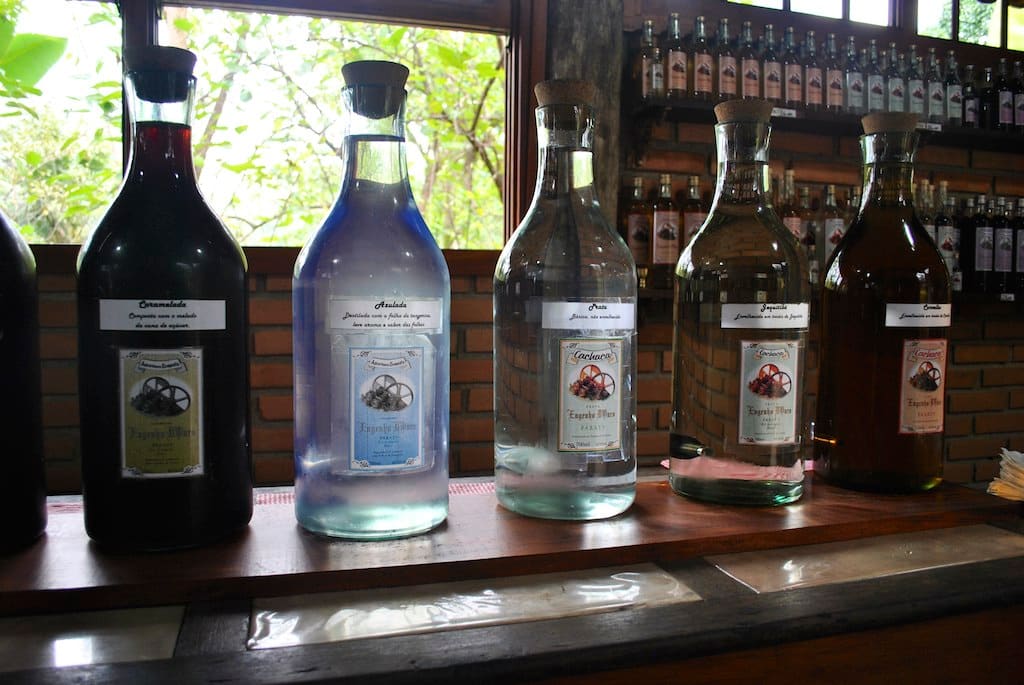
The number one rainy day plan sits on the road that climbs the mountains toward Cunha. Paraty has produced cachaça since the 17th century, when the mills supplied the port that shipped the gold of Minas out of the country, and the word “parati” was once a synonym for cachaça in Brazil. That history is still alive in the century-old distilleries scattered along the Paraty-Cunha road and the rural districts, which welcome visitors with production tours and tastings at the counter.
In the rain, the setting works in your favor: clay roofs, the smell of fermenting cane, copper stills releasing steam and the forest around it all steaming too. Take a taxi or a ride app if you plan to taste more than one glass, pick two or three distilleries at most (the tastings are generous) and set aside the afternoon. It is the kind of experience that turns a wet day into the best memory of the trip, and it feeds conversation back at any table in the center.
Caminho do Ouro: yes in drizzle, no in a storm
On the same mountain road is the Caminho do Ouro, the preserved stretch of the trail paved by enslaved hands between the 17th and 19th centuries, down which the mules loaded with gold once came. The visit is guided (the route crosses private land and only enters with an authorized guide) and the stone path inside the forest is a plan drizzle makes even more beautiful, with the forest dripping around you.
The honesty: in heavy rain, the operation can be adjusted or canceled, and even when it runs, the descent gets slippery and muddy. The practical rule we share on board: drizzle or light rain, confirm with the agency in the morning and wear sneakers with good soles; a storm, swap it for the distilleries and leave the trail for the next day.
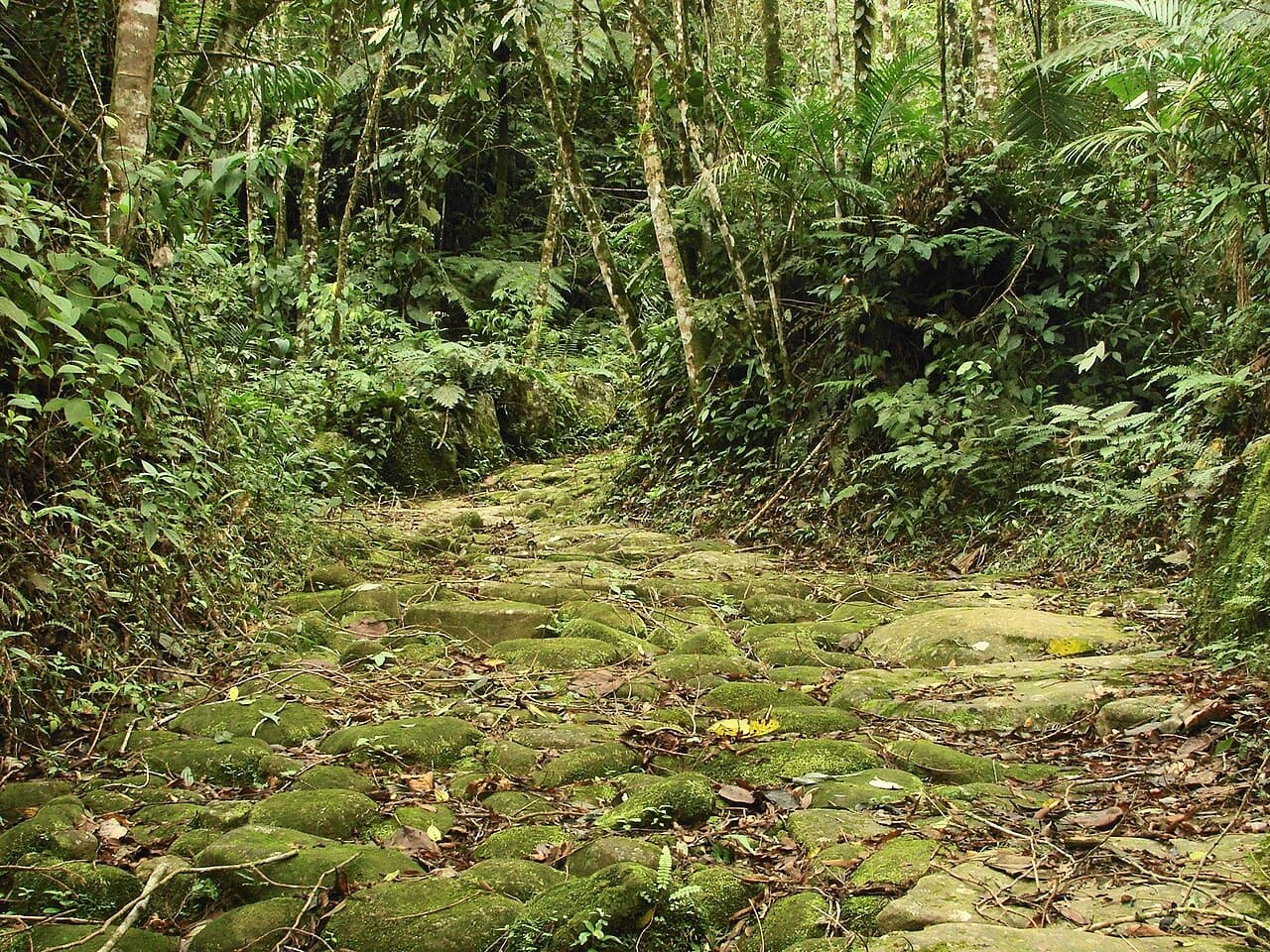 The paving of the Caminho do Ouro: centuries of history under the forest. Photo: Glauco Umbelino, CC BY 2.0, Wikimedia Commons
Museums and churches: the hours that actually work
The historic center has plenty of roofs, but the opening hours catch travelers off guard. The two addresses confirmed for 2026:
Museum of Sacred Art, in the Santa Rita church. The most photographed church in town, from 1722, keeps inside a collection of more than 2,900 pieces in wood, clay and metal gathered from the region’s churches. It opens Wednesday to Friday from 10 am to 5 pm and on Saturdays, Sundays and holidays from 10 am to 2 pm. It closes Monday and Tuesday, and that is the catch: if your rainy day falls early in the week, reorder your plans.
Casa da Cultura. A mansion from 1758 on the corner of Rua Dona Geralda, with exhibitions on caiçara life that change theme each season. It opens Tuesday to Saturday, 10 am to 6 pm, free entry. It is the best introduction to the Paraty outside the postcard: the one of embroiderers, fishermen and canoe masters.
Beyond those two, the churches of the historic quadrilateral open at irregular hours, and the local’s strategy applies: if you pass an open one on your way, go in right then, because by the afternoon it may be closed.
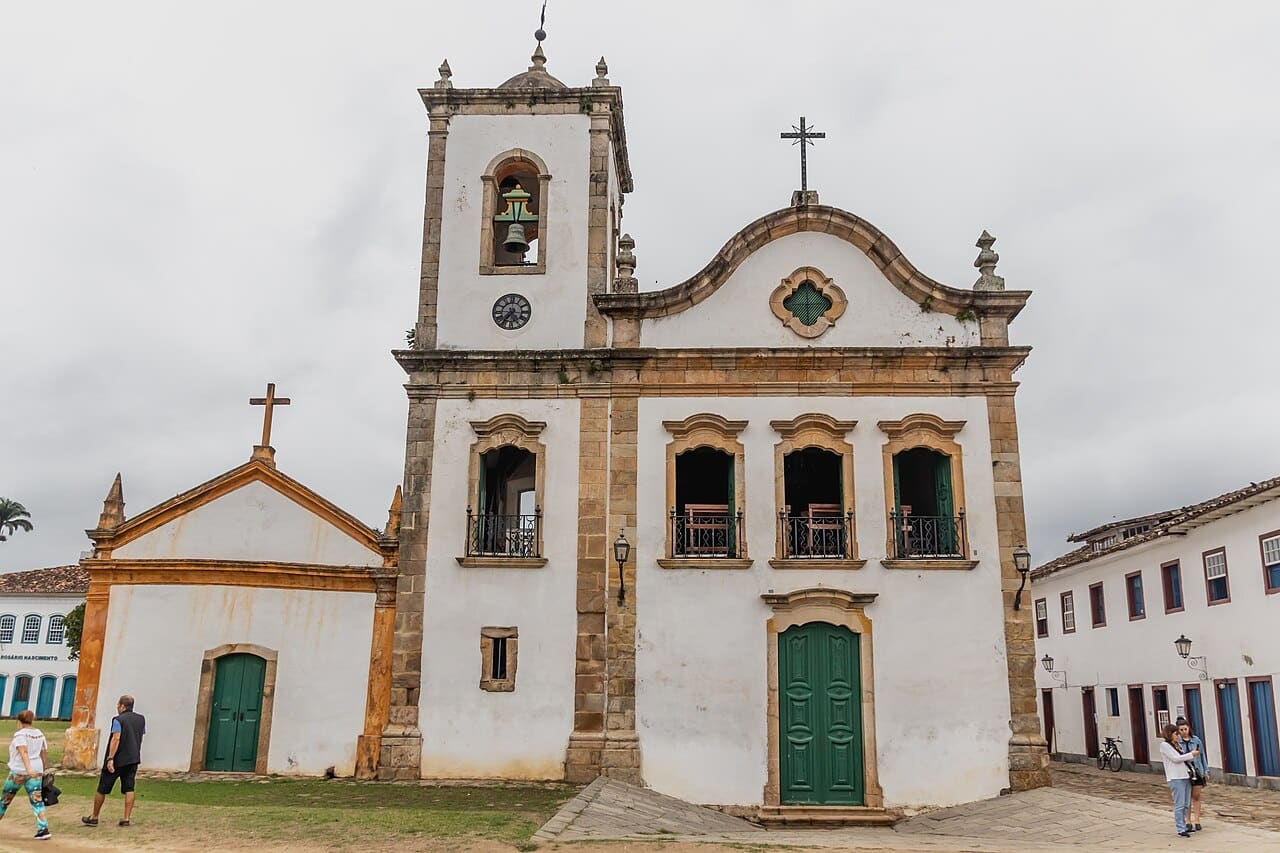 Santa Rita, from 1722: the postcard outside, the Museum of Sacred Art inside. Photo: Angélica Cardoso Marinho Feijó, CC BY-SA 4.0, Wikimedia Commons
Cafes, studios and the center in slow motion
The historic quadrilateral concentrates cafes in high-ceilinged mansions, bookshops, studios of artists who live right there and caiçara handicraft shops. On a sunny day, plenty of people rush through all of it on the way to the beach. On a rainy day, this circuit becomes the main plan, and it is a good one: a filtered coffee at the window watching the stone street darken with water, a counter conversation with someone who has painted the town for thirty years, the smell of cake coming out of an oven somewhere.
The trick is not to treat it as waiting. Treat it as the visit: two hours of cafe and studio are worth a church. And if hunger strikes, caiçara cooking was made for this weather: fish with banana, the local casadinho shrimp, hot broths. Prices by range are in our guide to Paraty travel costs.
The high tide as a plan
Here is the secret that reconciles anyone with gray weather. On the full and new moons, the big tide comes in through the low streets of the historic center, by design: the 18th century builders let the sea in to wash the paving. When the afternoon tide coincides with a gray sky, the old houses reflect whole in the still water and Paraty becomes another town, photographed a thousand times and still surprising in person.
Check the week’s tide table, put on sandals that can get wet and go. It costs zero. With torrential rain on top of the big tide, the water climbs past the point of charm; then the plan becomes watching from the veranda of a cafe, which, let’s be fair, is no hardship either.
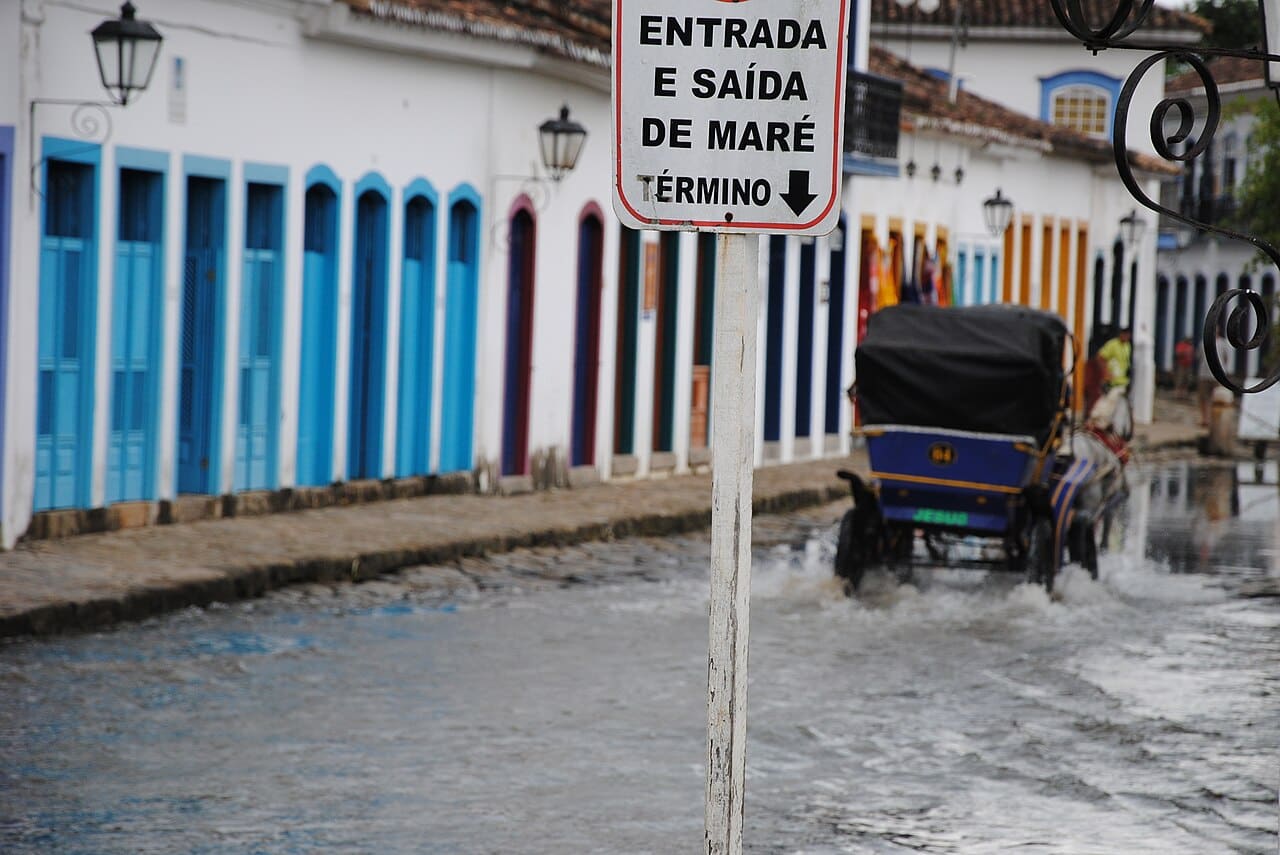 The big tide in the center: the sea comes in by design, not by accident. Photo: Leandro Neumann Ciuffo, CC BY 2.0, Wikimedia Commons
And the boat, does it cancel?
A question we get every week. Rain, by itself, does not cancel sailing: what rules is the wind and the state of the sea, judged by the crew on the day, and that goes for the few-hour schooner and for the long crossing alike (we compare the formats in the best tours in Paraty). Many of our best crossings happened under a gray sky, with the sea flat as a plate and the islands appearing between curtains of mist. On the Albatroz expedition, drizzly days come with blackout cabins, a covered deck with hammocks and the jacuzzi, which under fine rain becomes the most contested spot on the boat. A genuinely rough sea is another story, and then safety decides without a passenger vote.
For anyone on the other side of the bay, the same problem has another guide: things to do in Ilha Grande when it rains.
The ready-made wet day itinerary
Putting it all together in a sequence that works Wednesday to Sunday: morning at the Museum of Sacred Art and the Casa da Cultura, a long caiçara lunch, afternoon at the distilleries on the mountain road (or the Caminho do Ouro, if it is only drizzling), late afternoon of cafe and studio, and the night out in the street, because the wet center under the lamps is the most beautiful setting in town and charges no ticket.
A day like this is not the leftover of the trip. On itineraries of three days or more (the math is in how many days in Paraty, and the day by day version in the 3 day itinerary), we catch ourselves rooting for a gray day in the middle, because it is the one that delivers the town from the inside: the Paraty of cachaça, embroidery and wet stone, which existed long before tourism and is still there when the sun returns. If your itinerary is still open, start with the best time to visit and leave one day unplanned. The rain will fill it.