
Aventureiro beach: a guide to Ilha Grande's most protected village
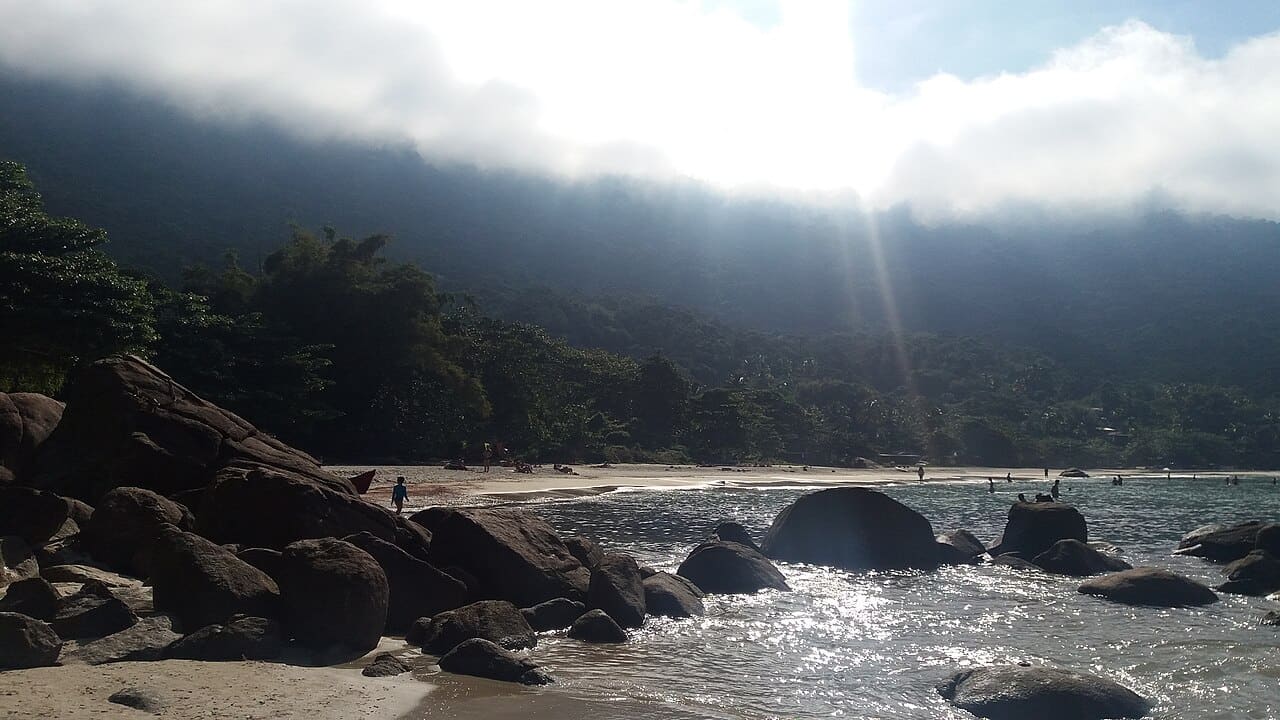
Let’s start with the honesty we owe you: the Albatroz, our group’s schooner, does not stop at Aventureiro. Our Ilha Grande route stays on the sheltered side of the bay, and the ocean-facing side, where this village lives, is a different trip, with its own rules and its own way of getting there. We work this sea all year, we host guests every week who ask “and Aventureiro, can you go?”, and the right answer is: yes, on your own, and it is worth every piece of paperwork. This guide gathers what we tell those people.
A village of a hundred residents inside a reserve
Aventureiro sits at the far southwest of Ilha Grande, facing the open ocean, inside a Sustainable Development Reserve and right against the Praia do Sul State Biological Reserve, one of the most untouched areas of the Rio de Janeiro coast. The people who live there are a small caiçara community, on the order of a hundred residents, who make their living from artisanal fishing, small crops and campsite tourism in the backyards of their own houses.
That combination of reserve plus community explains everything that makes the place what it is. There is no big guesthouse, no shopping street, no power grid: the light comes from generators that run a few hours a night and shut down around 10 pm. When they go out, what rises is a starry sky most of urban Brazil has never seen, with the entire Milky Way over the beach. And there is a ceiling on visitors: visitation is capped, currently at 560 people staying in the authorized campsites, precisely so the village does not become what it does not want to be.
It is the kind of place we would put without hesitation among the most authentic places on the Costa Verde: a village that welcomes travelers without turning into a stage set for travelers.
The leaning palm and the beach that changes its face
Aventureiro’s signature image is the leaning coconut palm: a palm that grew almost horizontal over the sand, at the corner of the beach, and became the photo everyone takes home. Go early or at the end of the day if you want the scene without a queue.
The beach itself has pale sand, rocky headlands at the ends and a sea that changes mood with the swell. On a calm day it gives easy swimming; on a swell day it becomes a surf beach that commands respect, because it is open ocean with nothing in front of it until Antarctica. From the top of the headland, the view takes in Praia do Sul and Demo, its neighbors inside the biological reserve where visitation is restricted. It is a rawer landscape than the island’s famous side, and that is the charm: in our ranking of the most beautiful beaches on Ilha Grande, Aventureiro is the one that least seems to need people in order to exist.
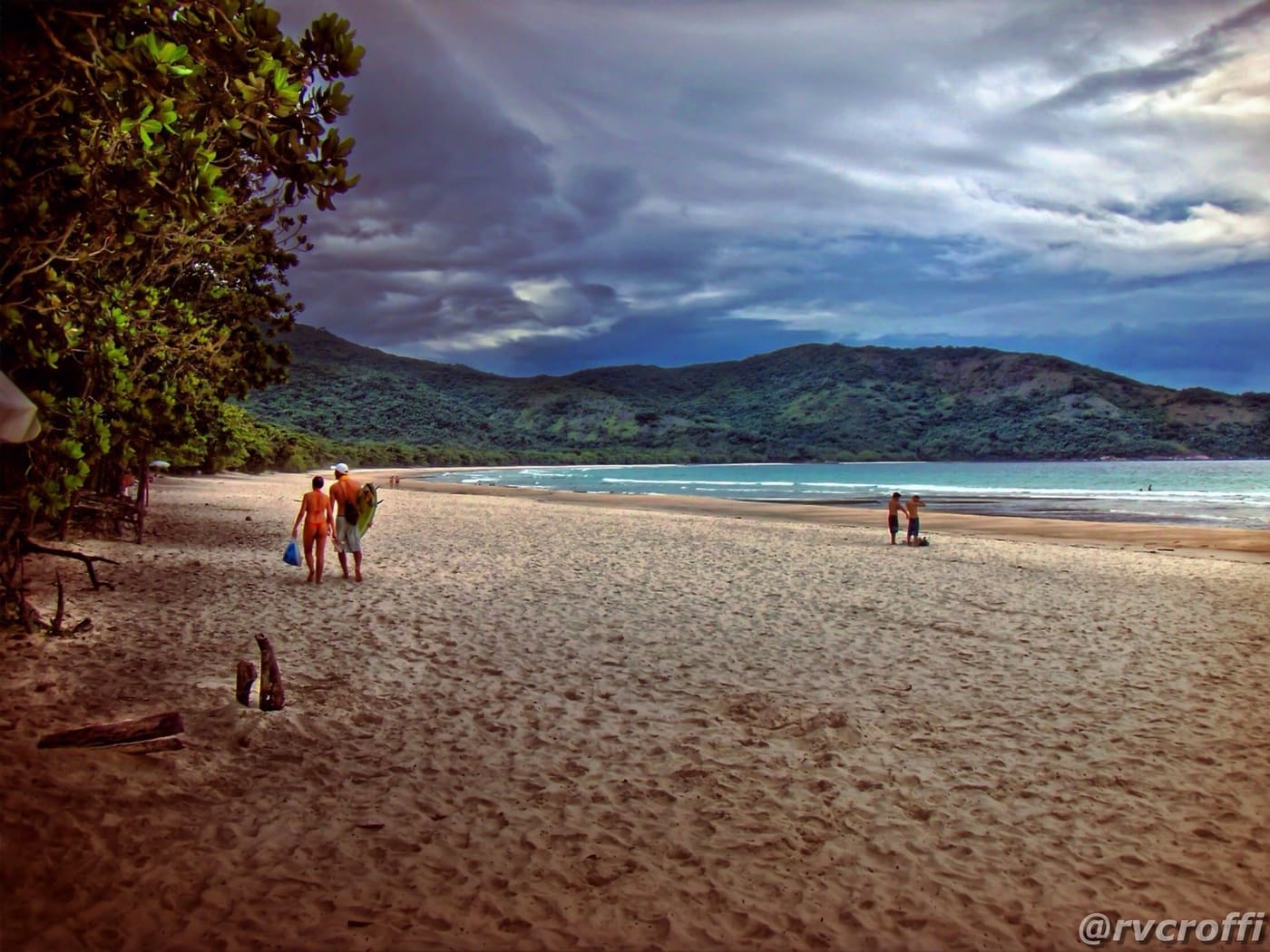 Lopes Mendes, the famous neighbor at the other end of the ocean-facing side: also open sea, but with a flow of visitors Aventureiro has never known. Photo: Rafael Vianna Croffi, CC BY 2.0, Flickr
How to get the permit in 2026
Here is the part that trips up the unprepared: buying a boat ticket is not enough. To enter the village you need a permit, and the 2026 rules work like this:
- The permit is free and the request is made in person, at Estação Santa Luzia, TurisAngra’s tourist information center in downtown Angra dos Reis (Avenida Júlio Maria, near the pier).
- No reservations by phone, email or website. It is first come, first served, on the day of departure, for the applicant in person.
- You fill out a form, sign a commitment to the reserve’s rules and receive a wristband and a voucher that will be checked on arrival.
- The 560 visitor cap applies to those staying in the village’s authorized campsites. When it is full, it is full; on big holidays that happens.
Reservation rules change, so confirm on the Angra city hall tourism portal before building the trip. But the spirit does not change: Aventureiro chose to grow slowly, and the visitor who gets there has accepted the deal.
How to get there
From the Angra dos Reis pier there are two speeds: the wooden boats, which take 2 to 3 hours and cost around R$ 60, and the speedboats, which do it in about 1 hour for around R$ 100. The route rounds the island through open sea, so on a rough day the departure may simply not happen; have a plan B and a spare day in the schedule.
The land alternative is for people who like to sweat: the T9 trail, which starts at the end of the village of Provetá and crosses the ridge in 3.7 km of hard climbing, about 2h30 of walking. It is one of the classic legs of the circuit we describe in the guide to Ilha Grande’s hiking trails. And if you are still working out the island’s general logistics (which port to leave from, what each crossing costs), the step by step is in how to get to Ilha Grande.
Sleeping at a caiçara campsite
Aventureiro’s lodging comes in one form, in many versions: camping in the families’ backyards. Some rent ready-pitched tents or simple little rooms, almost all serve home cooking with the day’s fish, and the bathroom is shared and free of luxury. The list of authorized campsites is on the region’s official tourism site; pick any of them and you will be, literally, a guest in someone’s home.
What to bring: cash (phone signal is a rarity and the card machine does not always work), a headlamp for after 10 pm, repellent, a rain jacket and island patience. What to leave at home: a speaker and hurry. The generator shutting down is not a malfunction, it is the moment the village shows you what it is really about.
What to do beyond the beach
Beyond the swimming and the palm, Aventureiro fills whole days: climb the headland to see Praia do Sul, watch the fishing boats come back at the end of the afternoon, eat fried fish with the campsite family and, the next day, cross the trail to Provetá to meet the neighboring village, evangelical and devoted to fishing, another Brazil inside the same island. If you like the sea with a mask and snorkel, there is life along the headlands on calm days, although the island’s classic floating spot is on the sheltered side, as we show in the guide to snorkeling beaches on Ilha Grande.
And the obvious deserves saying: you are in other people’s home. Buy from the residents, ask before photographing people, take your trash back on the boat and keep the guitar put away once the village sleeps.
Where Aventureiro fits in your trip
If your island itinerary is schooner and calm water (Lagoa Azul, Abraão, Lopes Mendes), Aventureiro does not fit inside it: it is a destination in itself, asking for two or three nights of camping and separate logistics through Angra. The route of our schooner expedition stays on the protected side of the bay precisely because that is where you sleep at anchor in comfort; the ocean face belongs to those who arrive with a backpack, a wristband on their arm and a tent on their back. They are two different ways of loving the same island, and our guide to things to do in Ilha Grande helps decide how many days to give each one.
For anyone who wants more ground and fewer people, pairing it with Dois Rios, at the other end of the ocean-facing side, builds an entire trip far from the schooners.
When to go
From April to November, outside holidays, you get the village nearly to yourself and a more predictable sea for the crossing. In winter the night sky reaches its peak, with cold nights that demand a real sleeping bag and repay you with the sharpest Milky Way of the year. In summer and on long weekends, the visitor cap gets hit, the line at Estação Santa Luzia moves early and rain can hold the boats for a full day. If high season is your only window, get to Angra the day before, be at the station door when it opens and keep a spare day up your sleeve for the return.
Aventureiro is one of the last beaches in southeastern Brazil where the night is still dark and the day still belongs to the people who live on it. Go with time, go with respect, and start by solving the one thing that cannot be improvised: the permit in Angra. The village teaches you the rest.