
The most authentic places on the Costa Verde
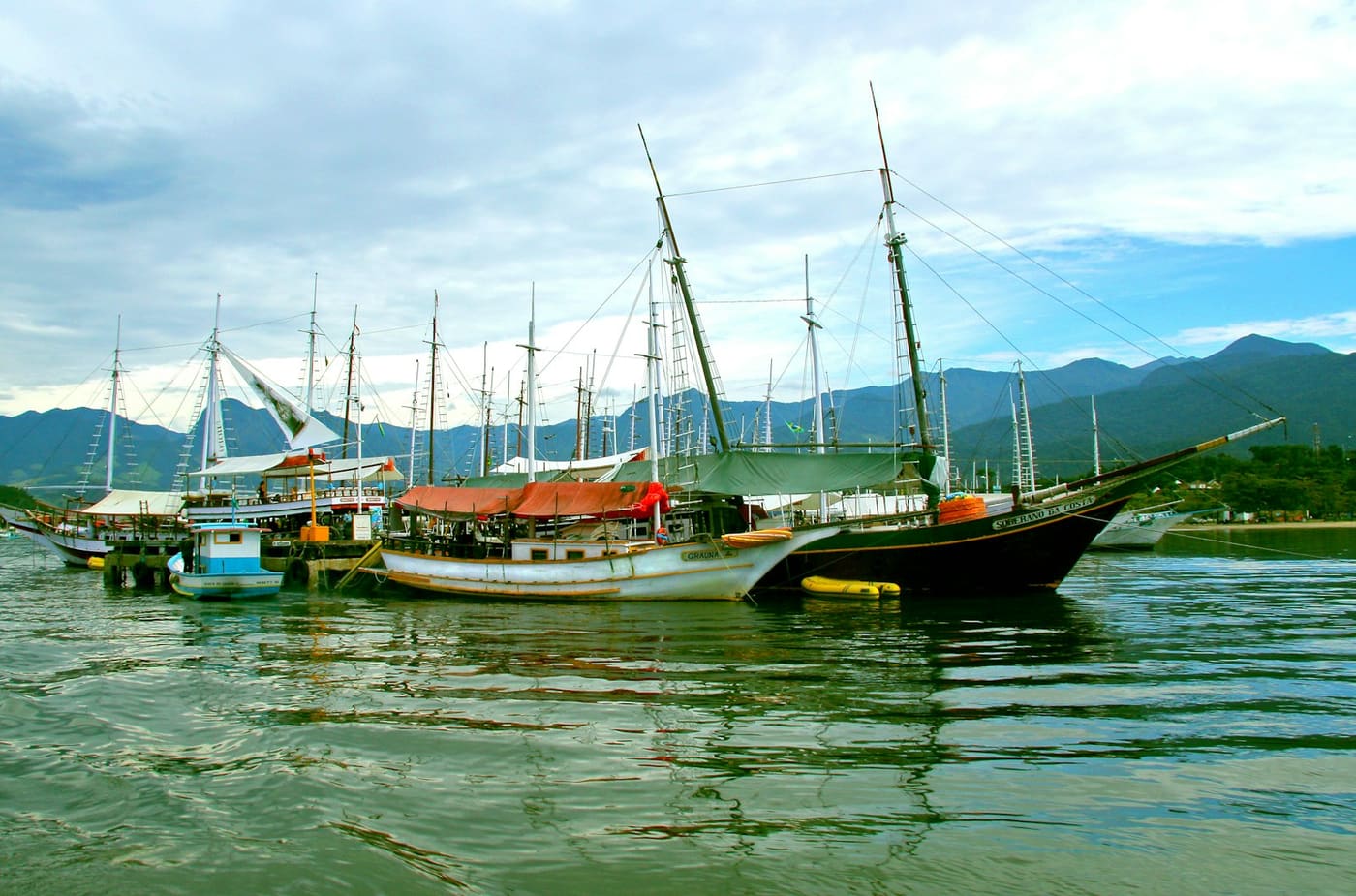
Get to the Paraty pier before eight in the morning and you will see the town that existed before tourism. Wooden boats unloading crates of fish, gulls fighting over scraps, fishermen mending nets while they catch up on the news. No ticket, no line. Just the routine of people who have always lived from the sea, playing out next to the most photographed historic center in Brazil.
That routine has a name: caiçara culture. We write about it from up close: our hostel sits in the historic center of Ilhabela, and much of what we know about these villages came from years of welcoming guests who return from Bonete with stories to tell, and from living alongside people who make their living from the sea. The caiçaras are the traditional communities of the coast between Rio de Janeiro and Paraná, formed over centuries from a mix of Indigenous peoples, Portuguese settlers and enslaved Africans. Their way of life revolves around small-scale fishing, cassava plots that become flour, canoes carved from a single trunk and the saints’ festivals that organize the calendar. On the Costa Verde, this world is not a museum piece. It lives in villages you can visit, eating fish a resident caught that morning, as long as you understand one thing before you go: in these places, a traveler is a guest in someone’s home, not a customer in a theme park.
This guide gathers the corners of the region where caiçara life still sets the pace, and the right way to get to know each one.
Bonete, the village on the far side of Ilhabela
On the ocean side of Ilhabela, with no road at all, lives a community of around 300 residents. You reach Bonete in one of two ways: by a 16 km trail that crosses the state park, fording rivers and passing waterfalls, or by boat from the urban side of the island. The choice of route already filters who goes.
There, the houses spread out behind the beach, canoes rest upturned on the sand and the village school teaches the fishermen’s children. Electricity arrived late and the internet is recent, so nights still belong to starry skies and conversation. Spend one night in Bonete, in campsites and rooms rented out by the families themselves, and you understand why residents resisted every road project for so long: the isolation is not backwardness, it is a choice.
Aventureiro, the beach a community holds in its hands
Aventureiro sits on the ocean side of Ilha Grande, far from the flex boats and the bustle of Abraão. It is a community of around 100 residents that became the symbol of a fight they won: after decades living under the restrictions of a marine park, the caiçaras managed, in 2014, to have the area redesignated as a Sustainable Development Reserve, a category that guarantees their permanence on the land.
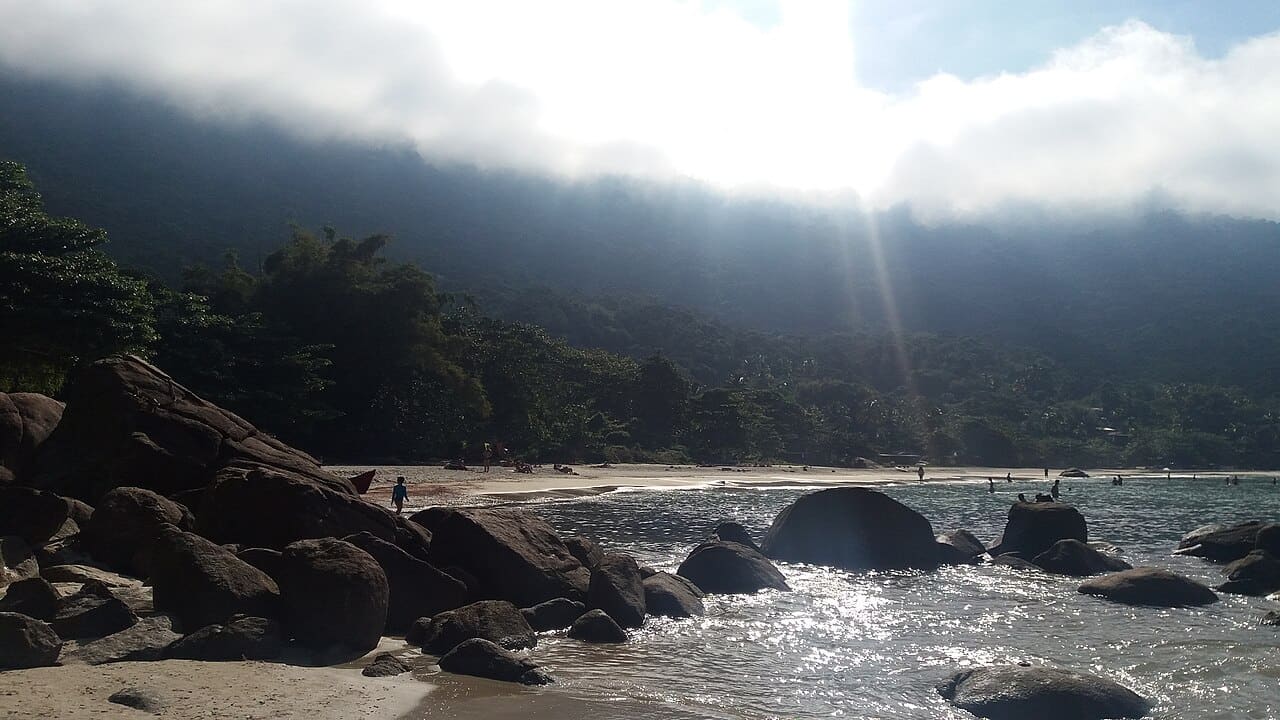 Aventureiro beach, on the ocean side of Ilha Grande. Photo: Renata Paganotto, CC BY-SA 4.0, Wikimedia Commons
In practice, that changes your visit. Entry is capped at 560 people per day, lodging means camping or a room on the residents’ own land, and the boat that takes you there leaves from Angra, rounding the island through open sea. The reward is a beach of pale sand with the famous leaning coconut palm, a sea that changes mood with the wind, and a silence the rest of Ilha Grande no longer has in January. Book ahead: the daily cap is taken seriously.
Praia do Sono and Ponta Negra, Paraty’s trail-only neighbors
South of Trindade, the peninsula the maps call Juatinga holds a string of villages with no road. The two most accessible for visitors are Praia do Sono and Ponta Negra.
Sono is the bigger one: around 60 caiçara families live there, between fishing and a camping tourism they run themselves. Access starts at Vila Oratório, next to the Laranjeiras condominium (a municipal bus leaves from Paraty’s bus station and takes about 45 minutes), and from there it is 3 km of trail, roughly an hour and a half of climbing and descending through forest, or 15 minutes by boat. On the beach, the families’ restaurants serve set plates with the fish of the day, and nights pass by lantern light and guitar at the campsites.
Ponta Negra is smaller and deeper into the peninsula: some 35 families, protected by the Cairuçu Environmental Protection Area and the Juatinga reserve. You get there by boat from Laranjeiras, around half an hour on the water, or by another two hours of trail beyond Sono. It is the starting point for the hike to the Saco Bravo waterfall, which drops into a rock pool with the sea as a backdrop. In Ponta Negra people still live from fishing and small farming, and a good share of family income comes from hosting and feeding those who arrive. Accept the pace of the place: the generator shuts off early, and the fish runs out when it runs out.
Saco do Mamanguá, the inhabited fjord
The Saco do Mamanguá is a tongue of sea about 8 km long that pushes into the mountains south of Paraty, so narrow and hemmed in by hills that it earned the nickname of tropical fjord. What few people notice in the aerial photo is that Mamanguá is inhabited: caiçara communities live scattered along the fjord’s beaches, in houses reachable only by boat or canoe. A place that lives by the rhythm of the tide asks to be visited at the same rhythm, which is why the way we recommend getting to know it is by sleeping inside it: the Albatroz, our group’s schooner out of Paraty, spends nights at anchor in the fjord. With the engine off, the water goes so still that the boat becomes part of the landscape, and the next morning starts on local time: the tide sets the schedule, not the clock. A visit of a few hours crosses the fjord and turns back; a night inside it is what lets the place introduce itself.
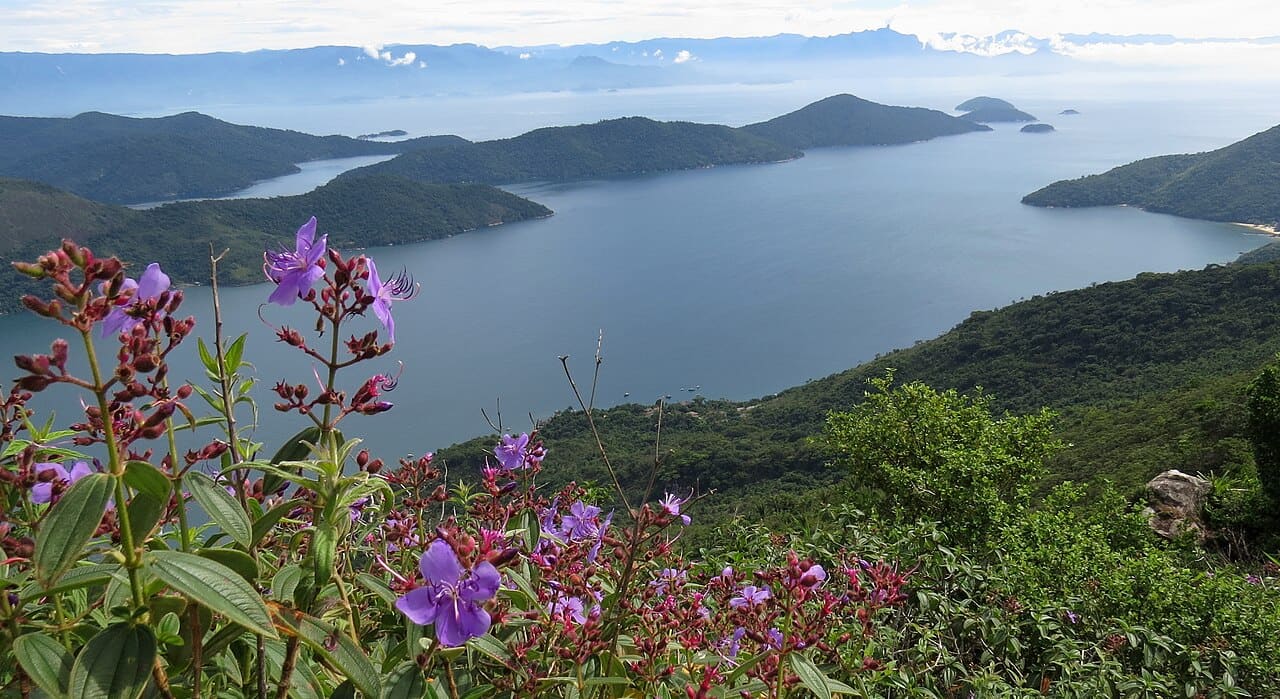 The Saco do Mamanguá from above: down below, the fjord’s communities. Photo: Pedro Gabriel Maciel, CC BY-SA 3.0, Wikimedia Commons
Paddling the Mamanguá by canoe or kayak, sleeping at a resident’s campsite, eating Dona Dica’s stingray pastel and climbing the Pão de Açúcar trail to see the whole fjord from above ranks among the best experiences on the Costa Verde. And it is one of the most community-dependent: residents provide the transport, the food and the crossings. Hiring them directly, instead of arranging everything from outside, is what keeps the wheel turning.
Trindade out of season
Trindade appears in every summer itinerary, and with reason. But on a January holiday weekend we advise against it without hedging: the little access road jams while you are still up in the hills and the natural pool becomes a queue. The village, which was a caiçara community long before it became a destination, only goes back to being itself when the season ends. Between April and November, outside holidays, you share the Cachadaço natural pool with half a dozen people, eat fish in the village without waiting for a table, and watch the boats head out to fish in the morning, the way they always have.
If you can choose, go on a weekday in low season. The difference is not subtle: it is a different beach, a different village, a different price. Our guide to the best time to visit the Costa Verde helps you hit the window.
Cassava flour, fishing nets and saints’ festivals
Caiçara culture is not just in the landscape, it is in what people eat and what they celebrate. Cassava flour made in a traditional flour house, toasted in a copper pan, is still produced in communities around Paraty, and buying it straight from the maker means taking home a real piece of the trip. The fish, shrimp and squid in village restaurants come from that day’s artisanal catch, which explains why the menu changes with the sea.
And there is the religious calendar. The Festa do Divino, in Paraty, is a centuries-old tradition that takes over the town between May and June, with processions, folk music troupes and the crowning of the Divino emperor. In late June, fishing communities all along the coast celebrate Saint Peter, patron of their trade, often with a procession of decorated boats. If your trip crosses paths with one of these festivals, change your plan and go. It is caiçara culture with its doors open, shown the way it chose to show itself.
How to visit without becoming a burden
A few ground rules from people who have hosted visitors for generations, translated for those arriving:
- Bring cash. In the villages without roads the phone signal fails, and a card machine with no signal is a paperweight.
- Sleep and eat with the families. A resident’s campsite, a resident’s room, the village set plate. That is what makes tourism worthwhile for the people who live there.
- Ask before photographing people, houses or fishing nets. It sounds obvious. It is not.
- Do not ask for what the place does not have. Sometimes there really is no hot shower, and no wifi either. That is part of it.
- Take your trash back with you. No garbage truck reaches these beaches.
The Costa Verde has a famous circuit, which we describe in the definitive guide, and it has this other, quieter map that this article has tried to draw. The two complete each other. To keep following the second map, the path continues in the places foreigners have not discovered yet and in our manifesto on how to get to know the real Costa Verde; anyone with two full weeks will find room for almost all of it in the 15 day itinerary. And if your trip starts in Paraty, you already know: the pier, before eight.