
The best hikes on the Costa Verde
On the Costa Verde, hiking is not an optional activity: it is the means of transport. A good share of the best beaches and waterfalls in the corridor between Rio and São Paulo simply have no road, and that is what keeps them the way they are. We live here, point travelers down these paths all year and hear the reports when they return, from the blister on the heel to the sunrise at the summit. Whoever walks sees the region the car never reaches.
So take the bias as given: the list below has the eight hikes we would point a friend to, from the 20 minute walk anyone can do in flip-flops (do not do it in flip-flops) to the 16 km traverse that demands real fitness and an early start. For each one: honest difficulty, real time and what you get at the end. The overview of the region, with transport and bases, is in our definitive Costa Verde guide.
One warning first: the times below are for an average walker with photo stops. In the rain, everything takes longer and slips more. The region’s trails truly dry out between May and August, the best window for walking, as explained in the guide to the best time to visit the Costa Verde.
Pico do Papagaio, Ilha Grande
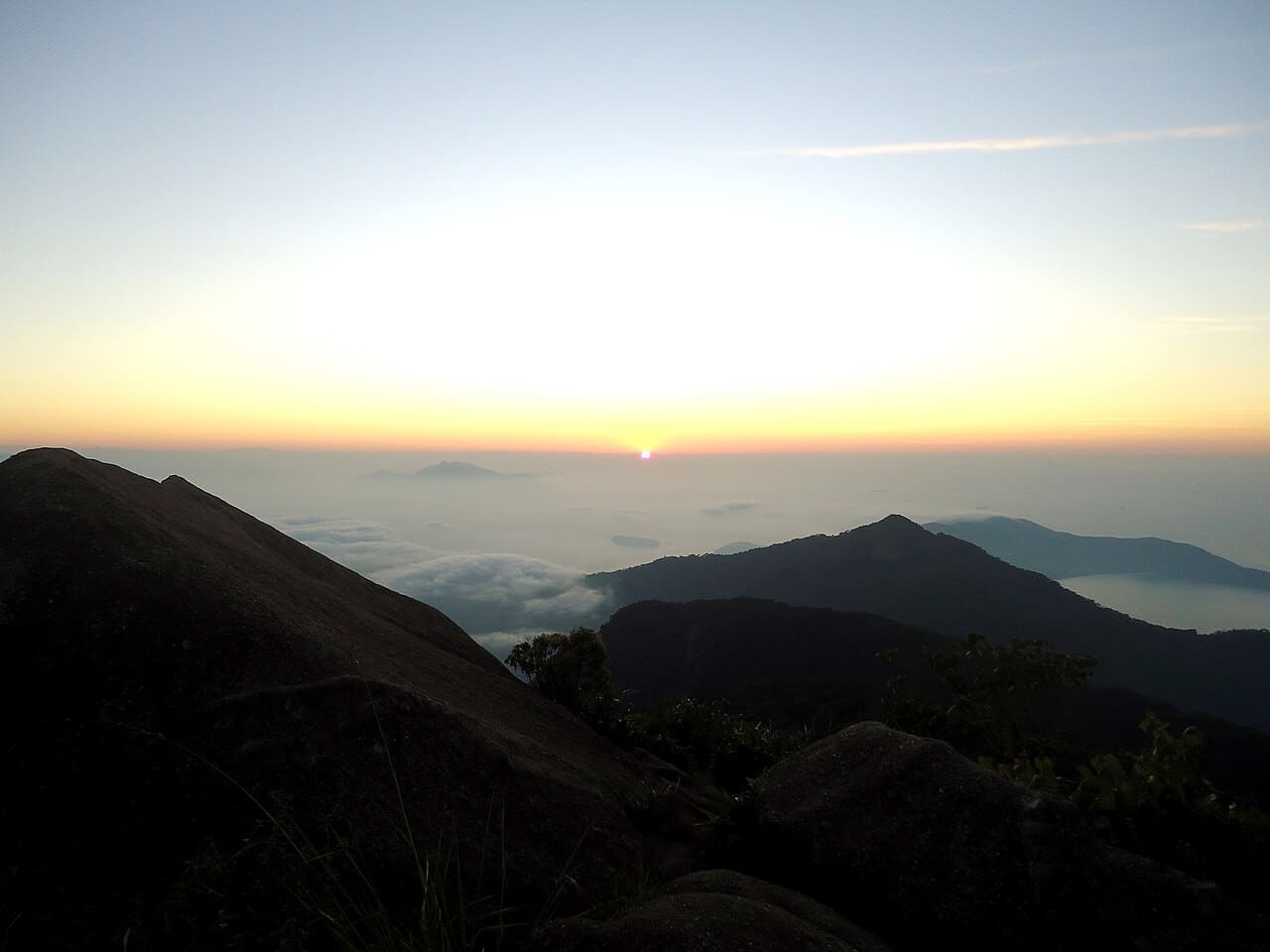
The hardest and most rewarding hike in the region. About 6 km of continuous climbing through dense forest to the 982 meter summit, with stretches of steep grade; counting the round trip, the outing takes around 6 hours. The local tradition is to leave Vila do Abraão in the small hours, around 2 or 3 am, to watch the sunrise from the top, with the whole bay of Ilha Grande waking up below you. At that hour (between 5 pm and 7 am), the park requires an accredited guide or conductor; by day, you can go on your own.
Difficulty: hard. Time: 5 to 7 hours round trip. What you see: the widest view of the Rio de Janeiro side of the Costa Verde, preferably tinted orange.
The Bonete traverse, Ilhabela
The 16 km separating Ponta da Sela, where Ilhabela’s asphalt ends, from the caiçara village of Bonete. The path climbs and descends inside the state park, crosses rivers and passes the Laje and Areado waterfalls, which work as strategic swimming stops. At the end, a community of 300 residents with no road and a beach The Guardian listed among the ten most beautiful in Brazil. Many people sleep there and return by boat the next day, which we recommend. The night before, the usual move is to sleep in the island’s central area and start at dawn: a car or taxi gets you to Ponta da Sela, where the asphalt ends and the trail begins.
Difficulty: moderate to hard, more for the distance than the technique. Time: 4 to 6 hours each way. What you see: raw Atlantic Forest, waterfalls and the most cinematic arrival on the island. Full route on the Bonete trail page.
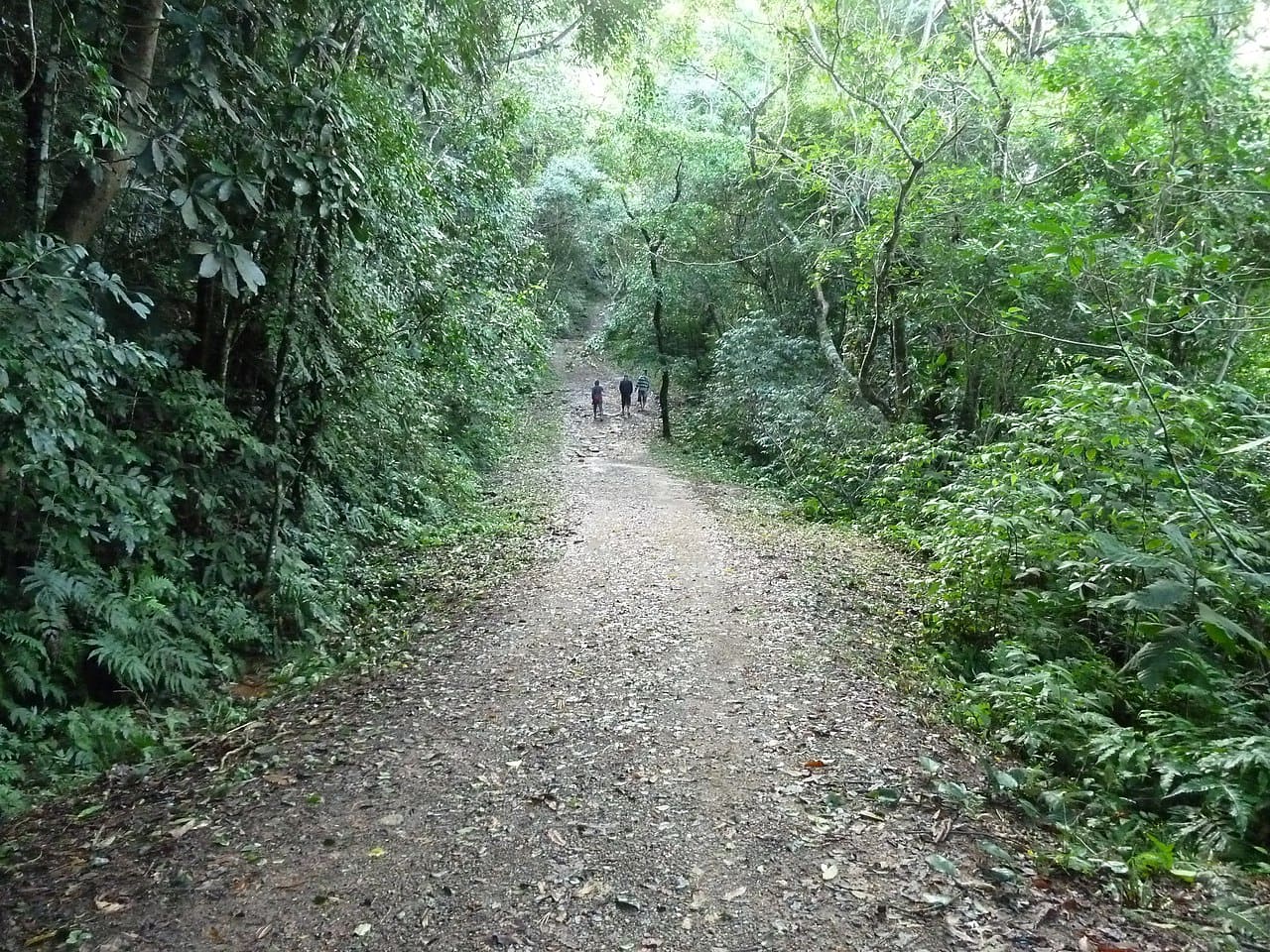 The dense forest of Ilhabela State Park, setting of the Bonete traverse. Photo: Boris Karpuk, CC BY-SA 3.0, Wikimedia Commons
Pão de Açúcar do Mamanguá, Paraty
Short and steep: 1.5 km of climbing that most people finish in 1h to 1h30, with fixed ropes helping on the more vertical stretches. The prize is out of proportion to the effort: from the top, at 425 meters, you look down over the entire Saco do Mamanguá, the 8 km arm of sea nicknamed the tropical fjord, with the bay of Ilha Grande in the background. On the logistics, our advice is openly ours: the best way to do this hike is to wake up at the foot of it. The Albatroz, our group’s boat hostel, leaves Paraty and spends the night anchored in the Mamanguá; you drink your coffee looking at the hill you are about to climb and start walking with no scheduled launch cutting your morning short. On your own, the trail starts at Praia do Cruzeiro, reachable only by boat, with launches hired in Paraty or Paraty-Mirim.
Difficulty: moderate, with hands-on-rock stretches. Time: 3 to 4 hours round trip, not counting the boat. What you see: the most photographed view in Paraty.
The Sono and Antigos trail, Paraty
The backpacker classic of the southern Rio coast. From Laranjeiras (where the Colitur bus from Paraty arrives), it is about 3 km of trail with climbs and muddy stretches to Praia do Sono, a caiçara village with no road; count 1h to 1h30. Whoever wants more crosses the river at the end of Sono and continues another 30 minutes, with a steep staircase at the start, to Antigos beach, deserted and golden-sanded, and another 10 minutes to Antiguinhos.
Difficulty: moderate. Time: half a day there and back at an easy pace; many people return by boat in 10 minutes. What you see: Paraty’s wild coastline in sequence.
The Cachadaço natural pool, Trindade
The trail leaves from the end of Cachadaço beach, in Trindade, and winds about 30 minutes through forest and rocks to the natural pool: an aquarium of calm water sheltered from the open sea by giant granite blocks, where the water rarely passes your waist. Bring a snorkel mask, the fish come close. Early in the morning, before the tour boats, the place is something else.
Difficulty: easy, with roots and rocks along the way. Time: 30 minutes each way. What you see: the best floating water in the region.
The Castelhanos trails, Ilhabela
Castelhanos yields two distinct walks. The main one is the Gato waterfall trail: 2 km, self-guided and easy, from the left end of the beach, ending at a tall drop inside the park, free of charge. The other is the 17 km dirt road that crosses the island itself, which cyclists and strong hikers take on as a traverse; most people, sensibly, go by jeep and walk only once inside.
Difficulty: easy (Gato waterfall). Time: 1h30 round trip from the beach. What you see: the heart-shaped bay and one of the island’s most beautiful waterfalls. Context in the guide to Castelhanos beach.
The Lopes Mendes trail, Ilha Grande
The entry door to trekking on the Costa Verde: a 20 minute walk through the forest linking Praia do Pouso to Lopes Mendes. Up a small hill, down the other side and there it is: 2.5 km of white sand with no construction at all. It is short, but it has roots and rocks; wear proper shoes. And it has a right time of day, in our house opinion: sleeping at sea the night before, the way the Albatroz expedition does it, you land at Praia do Pouso early in the morning and cross the forest before the day’s traffic begins, with the beach on the other side still untouched. On your own, the taxi boats from Abraão drop passengers at the same Praia do Pouso throughout the day.
Difficulty: easy. Time: 20 to 30 minutes each way. What you see: one of the most beautiful beaches in the world appearing through the leaves. Anyone wanting to stretch it can walk back to Abraão by trail, on a much longer path within the island’s trail circuit, described in the guide to things to do in Ilha Grande.
The Praia do Sul trail, Ilha Anchieta (Ubatuba)
Inside Ilha Anchieta State Park, reached by schooner from Saco da Ribeira, the Praia do Sul trail runs about 1.1 km from Praia das Palmas, past a biodiversity lookout, to an isolated beach of green water, great for free diving. Because it is a conservation unit, the walk is done with an accredited environmental monitor. On the way back, the ruins of the decommissioned prison round out the visit.
Difficulty: easy to moderate. Time: about 1 hour each way, within a full-day outing. What you see: clean seabed, regenerated forest and history.
To close the pack
Three items solve 90% of the problems on the trails here: shoes with good soles (wet roots are soap), plenty of water and repellent, especially in Ilhabela, where the borrachudo lives along the riverbanks. Always start early: the weather in the Serra do Mar turns fast after midday.
And if your motivation is what waits at the end of the path, we have the two natural companions to this guide: the best beaches on the Costa Verde, almost all of them at the end of one of these trails, and the best waterfalls on the Costa Verde, for those who prefer fresh water at the end of the walk. In both cases, the conclusion is the same one we reached by living here: the best of the Costa Verde is still on foot.