
The best waterfalls on the Costa Verde
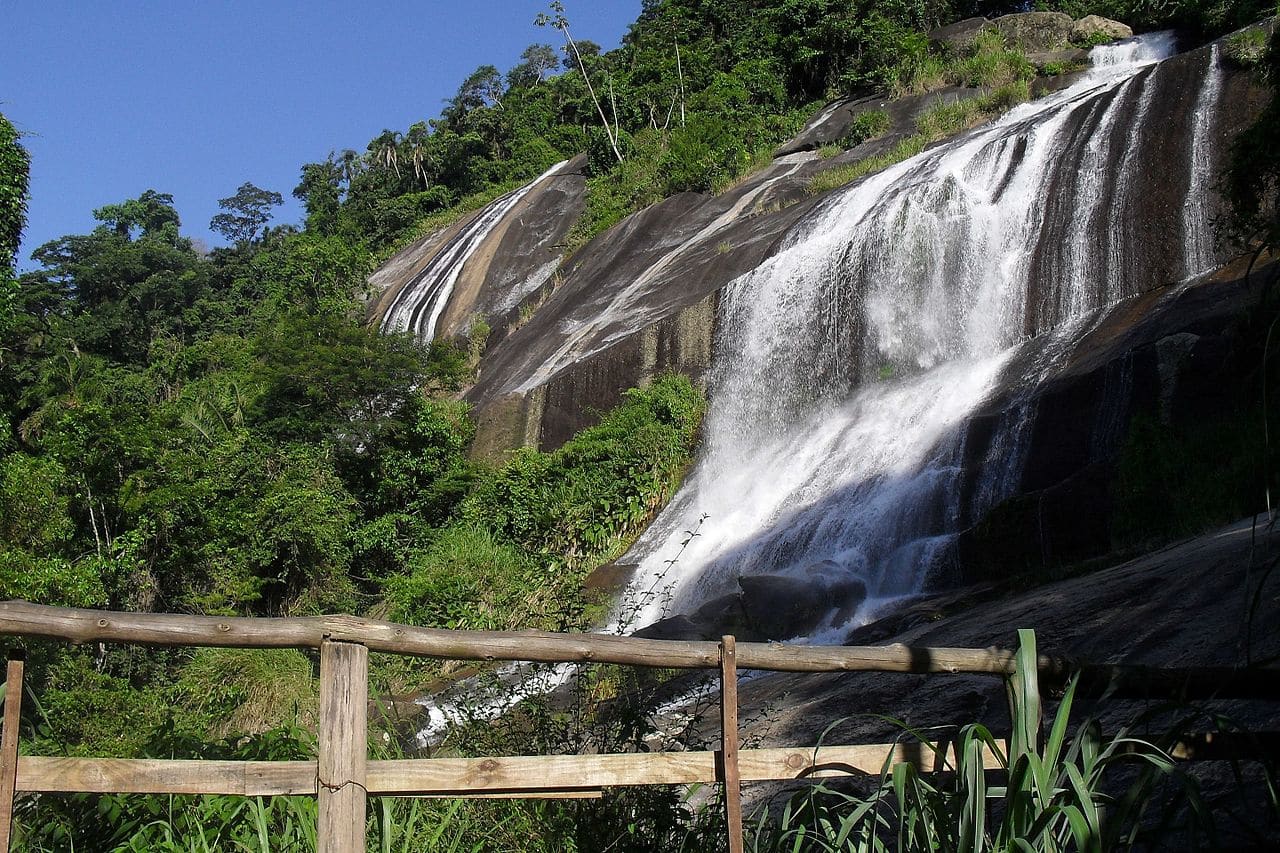
The Costa Verde is famous for its beaches, but anyone who lives here knows half the fun is in the fresh water. We write from Ilhabela, where the sound of a river running over rock is part of the landscape in almost every neighborhood, and we spend the year pointing these falls out to people who arrive thinking they came only for the sea. The Serra do Mar pours rivers over this coastline all year round, and the result is a collection of waterfalls, swimming holes and natural rock slides minutes from the most famous beaches in the country. A cloudy day here is not a lost day: it is a waterfall day.
This guide gathers the falls worth the detour in the region’s four corners: Ilhabela, Paraty, Trindade and Ilha Grande. We are biased, and that is precisely the guarantee: only places we know ourselves or confirmed with local sources made the list, with the real access route and a note about paid entry where it exists. One rule applies to all of them: after heavy rain, the flow rises fast and the rocks turn to soap. Respect the water. The overview of the region, with transport and bases, is in the definitive Costa Verde guide.
Ilhabela
Brazil’s largest sea island is, in practice, a state park with an urbanized edge. That protected forest feeds dozens of waterfalls; the four below best combine access and reward. As a base, our recommendation is the historic center: staying there lets you string together a waterfall in the morning and a beach in the afternoon without crossing the island twice. That is where we write from, at Hostel da Vila, an eco lodge open since 2016 on a property with 8,000 m² of Atlantic Forest, where some days the late-afternoon walk goes no farther than the deck of the Floresta Bar. Before you go, a resident’s warning: bring repellent, because the borrachudo lives exactly where the water is clean. The island’s full list is in the guide to Ilhabela waterfalls.
Água Branca waterfall
The best value on the island: a free, self-guided trail of about 4 km (round trip) right at the entrance to the state park, at the start of the Castelhanos road, with parking, restrooms and signage. Along the way, five swimming holes formed by the Água Branca stream, from Poço da Pedra to Poço do Jabuti, in increasing difficulty. The main fall, about 60 meters split into two drops, is admired from a lookout: swimming is not allowed there, and for good reason.
Access: 6.3 km from the ferry, park gate on the Castelhanos road. Allow 2 hours to visit all the pools.
Toca waterfall
The most famous and the only paid one on the list, because it sits inside a private property, Fazenda da Toca, open to visitors since 1967. The reason for the fame: a natural rock slide of roughly 50 meters carved into the stone, the island’s largest, plus a 3 meter drop with a good swimming hole. It is the easiest waterfall to fit into a day exploring the urban side.
Access: Castelhanos road, shortly past the park entrance, with a ticket charged at the farm gate.
Gato waterfall
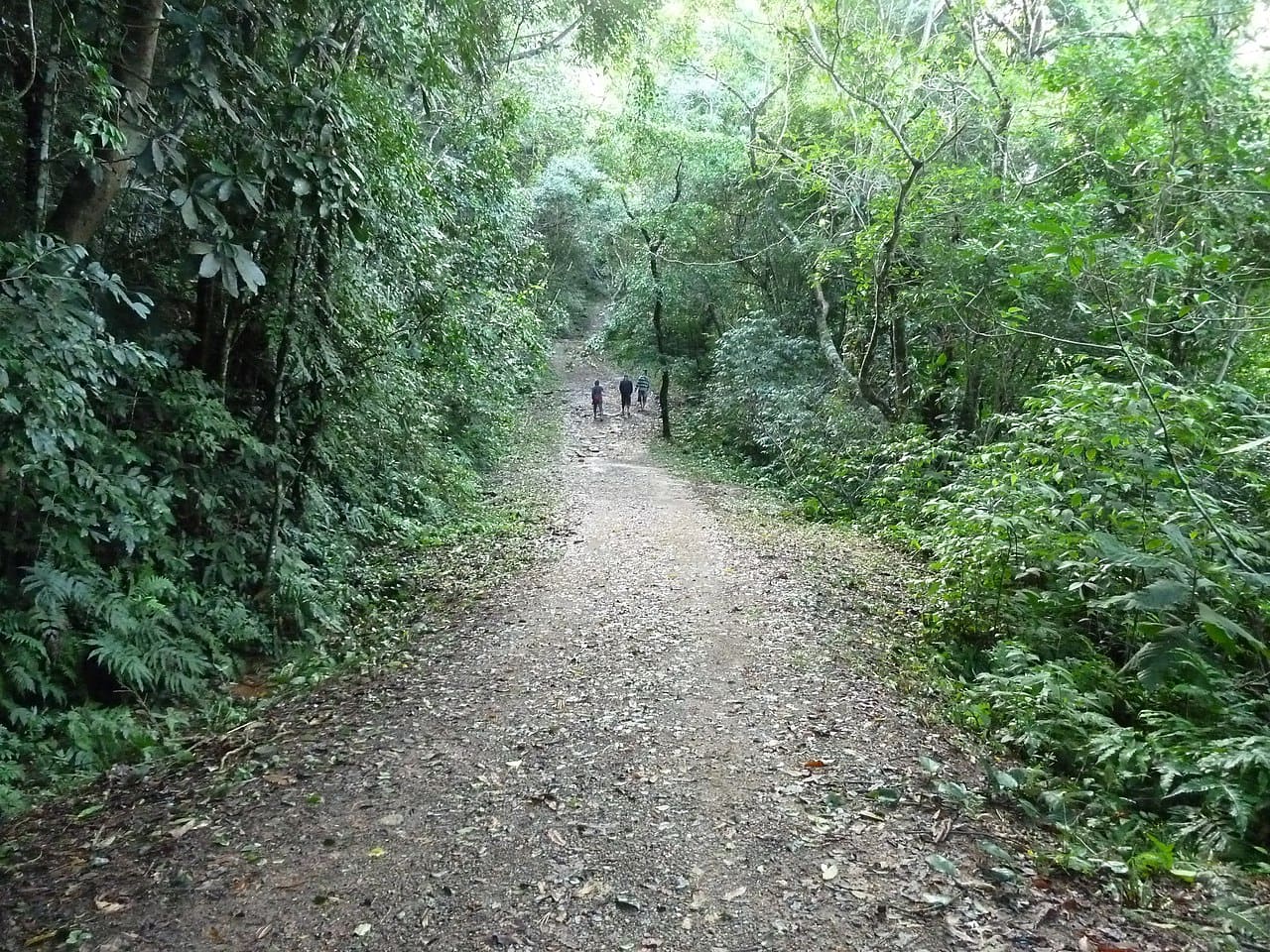 The forest of Ilhabela State Park hides dozens of waterfalls. Photo: Boris Karpuk, CC BY-SA 3.0, Wikimedia Commons
The reward for crossing the island to the bay of Castelhanos. From the left end of the beach, an easy, self-guided 2 km trail leads to the fall, tall and full, inside the park and free. Combined with a beach day, it makes the most complete outing in Ilhabela. Getting there is the expensive part: Castelhanos beach can only be reached by jeep on the park’s dirt road or by boat.
Access: 2 km trail from Castelhanos beach, easy level.
Veloso waterfall
The tallest fall on the island’s urban face, at more than 30 meters, and still little visited: the monitored trail admits only 110 people a day, from 7 am to 5 pm. It is about 35 to 45 minutes of climbing through forest from the gate in the Veloso neighborhood, in the island’s south. A good high season choice, when Toca and Água Branca fill up.
Access: gate at the end of Rua José Pereira Carolo, Veloso neighborhood; trail of about 2.3 km round trip, medium level. Pushing past Veloso puts you on the path to the island’s wild south, toward the Bonete trail, which passes two more waterfalls.
Paraty
On the Rio de Janeiro side, the waterfalls cluster on the climb into the mountains, along the Paraty-Cunha road, in the same area as the Caminho do Ouro, the paved colonial-era trail. The jeep tours leaving from the historic center combine waterfalls and cachaça distilleries in a half-day circuit, but you can go on your own by car.
Tobogã waterfall (also called Penha)
Paraty’s freshwater postcard: a smooth, sloping slab of rock where the river runs down forming a natural slide, with an audience seated on the rocks and the little Penha church next door. Locals ride it standing up, as if surfing the stone; a first-time visitor goes down seated, and even then with care. Nearby is Poço do Tarzan, with a rope for jumping into the water.
Access: Penha neighborhood, on the Paraty-Cunha road, about 15 minutes by car from the center; part of the Caminho do Ouro circuit.
Pedra Branca waterfall
Less scenic than the Tobogã and better for actual swimming: a sequence of falls with a wide, calm pool, one of the region’s best for spending an afternoon. It usually enters the jeep circuits precisely as the long swimming stop.
Access: Paraty-Cunha road as far as Ponte Branca, then another 3.5 km of dirt road.
Poço das Andorinhas
The shallow, quiet swimming hole of the Corisco neighborhood, some 20 or 30 minutes from the center along a small road that follows the river. The first part is shallow, perfect for kids; 200 meters on there is a smaller, deeper pool, almost always empty. It is the plan for anyone who wants a river without a crowd.
Access: Corisco neighborhood, off the Paraty-Cunha road.
Trindade
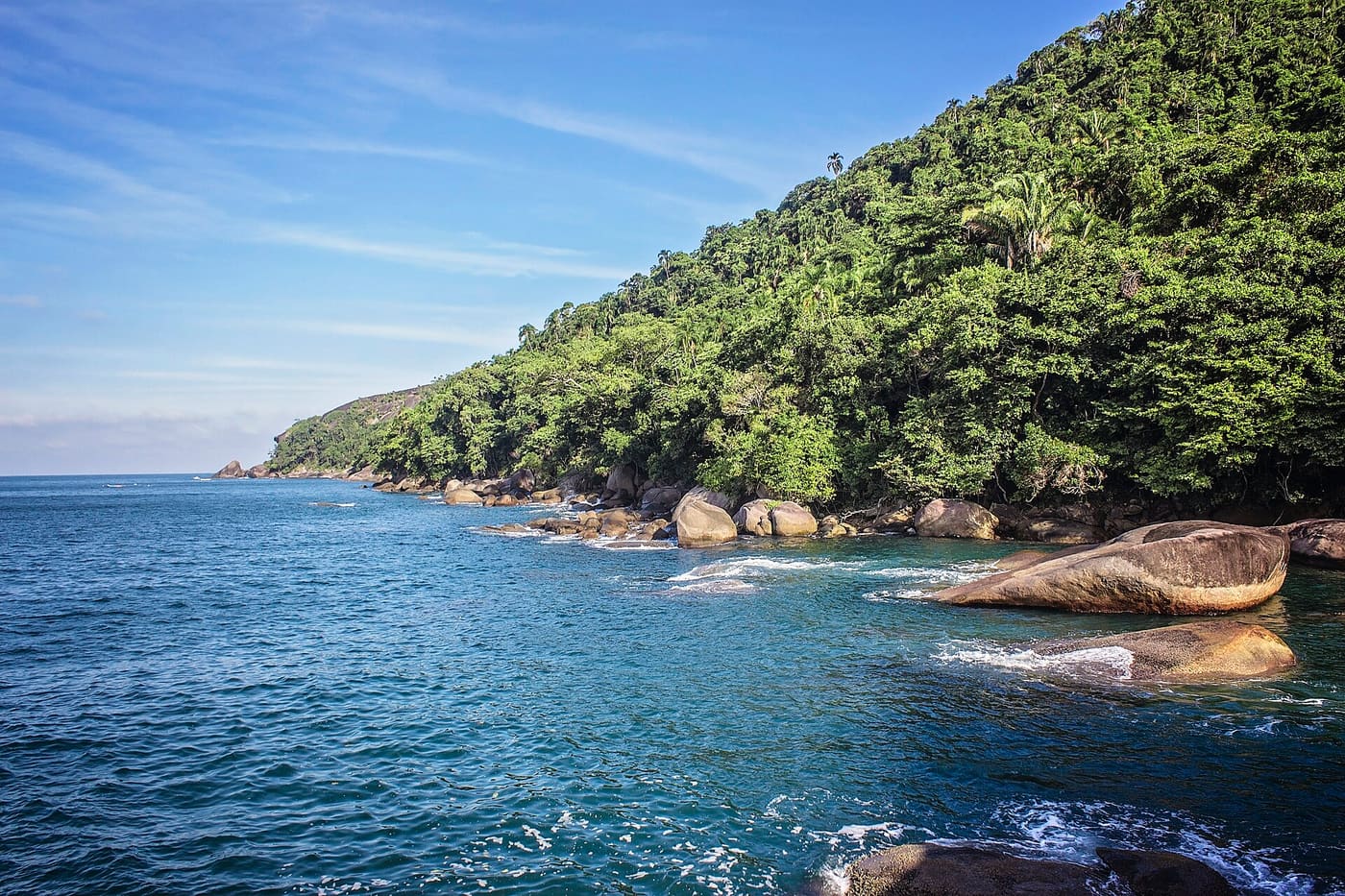 Trindade: beaches out front, waterfalls on the mountainside right behind. Photo: Eduardo Gabão, CC BY-SA 3.0, Wikimedia Commons
The village of Trindade, 27 km south of Paraty, has the rare combination of beach and waterfall in the same walking outing. The falls sit on the climb of the Rio dos Codós, inside Serra da Bocaina National Park, along a signed trail that starts at the end of Praia do Meio; it is about 600 meters of climbing alongside the river, some 40 minutes to the highest point.
Escorrega waterfall and Poço Fundo
The trail’s first two stops. The Escorrega is a natural slide of about 4 meters, sloped enough to be fun and gentle enough for accompanied kids. Just beyond, Poço Fundo catches a drop of about 2 meters that works as a natural hydromassage, with a deep section near the fall and another that is shallow and wide.
Access: trail from the end of Praia do Meio, in Trindade; the Colitur bus leaves Paraty for about R$ 5.
Pedra que Engole
The region’s most curious attraction: a stretch where the river dives under blocks of stone and forms a natural gallery. Whoever lets the water carry them is “swallowed” by the rock and comes out seconds later in a shallow, covered pool, from which you crawl out. It looks extreme, and it is less than it looks, but only do it with someone who knows the spot and with the river at low flow. After rain, do not even think about it.
Access: same trail as the Escorrega, continuing upriver to the park sign.
Ilha Grande
Feiticeira waterfall
The classic waterfall of the car-free island: a drop of about 12 to 15 meters with a pool to cool off in, in a setting of dense forest that also draws rappelers. You can get there two ways, and the choice defines your day: by the T2 trail from Vila do Abraão, about 3 hours of walking with climbs, or by boat to Feiticeira beach and, from there, half an hour of trail with lookouts along the way.
Access: trail from Abraão or boat plus a short walk; details in the guide to things to do in Ilha Grande.
When to go and how to fit them in
Waterfalls here run on the inverse logic of beaches. In summer it rains more: the falls get full and beautiful, but the trails slip and the risk of flash floods is real. In the dry winter (May to August), the flow drops and everything gets safer and colder. The middle ground of April, May, September and October, detailed in the guide to the best time to visit the Costa Verde, pleases almost everyone.
In the itinerary, the practical rule is one waterfall per beach day: Água Branca or Toca on a channel day in Ilhabela, the Gato on the Castelhanos day, the Tobogã on a free afternoon in Paraty, the Escorrega on the Trindade day. And if the walks to the falls excite you more than the swims, the guide to the best hikes on the Costa Verde follows the same logic, with difficulty and time for each one. A crowded sea out front, empty fresh water in the hills just behind: here no day goes to waste.