
Paraty historic center: the complete guide
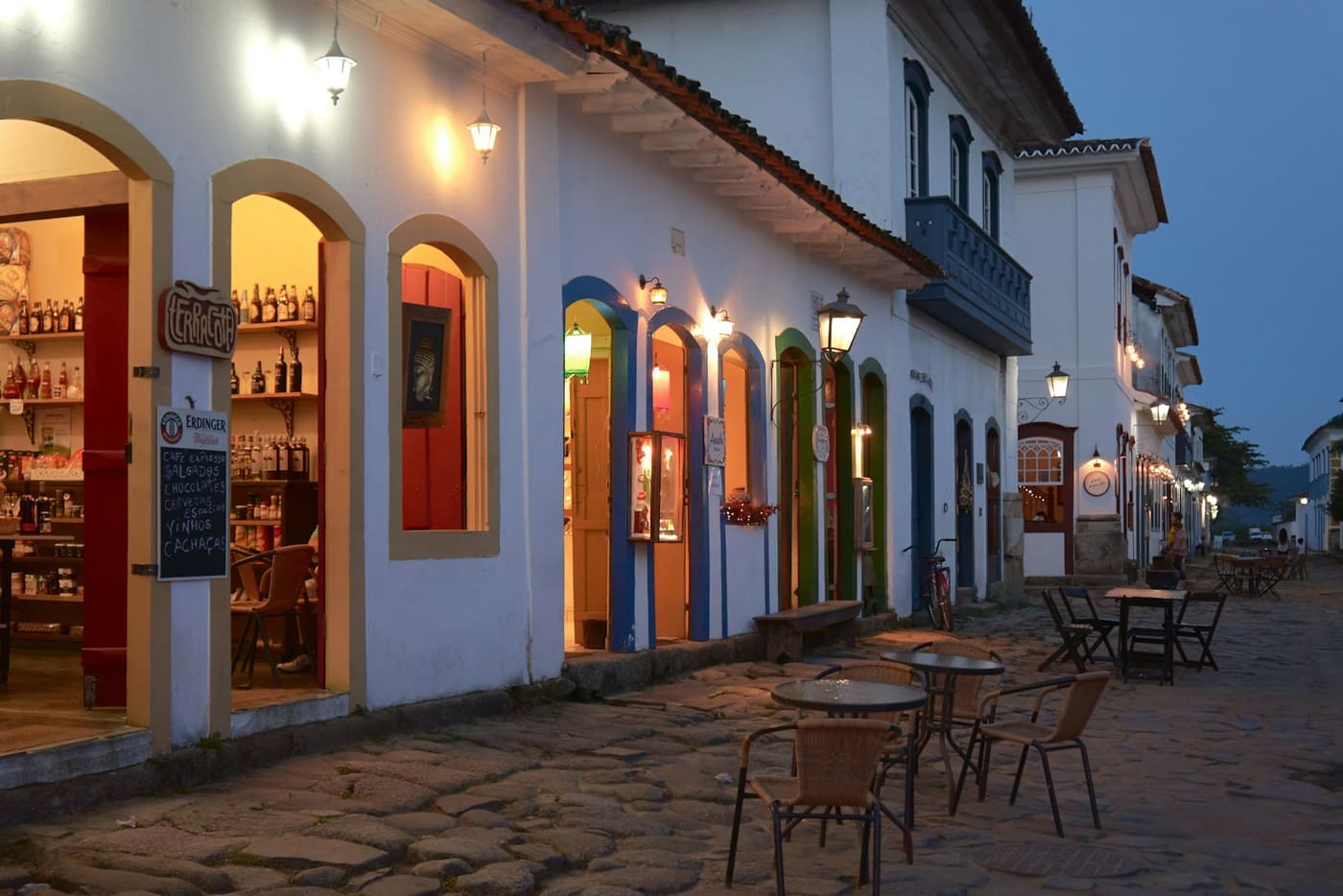
There is an hour when Paraty’s historic center explains itself: the end of the afternoon, when the sun drops behind the mountains, the lamps come on one by one and the white houses turn the color of a lit candle. We know that hour from a privileged vantage point: the Albatroz, our group’s schooner, docks at Marina Píer 46 every week, and the first night of each expedition is exactly that scene, with the evening free for dinner among the lamps before sleeping on board. This guide gathers what we have learned walking these streets all year: the real history, the churches and what they reveal, the tide that floods the streets on purpose, a walking route and the warnings nobody gives.
Why these streets exist: the gold port
Paraty was born of geography. At the end of the 17th century, when gold began to leave Minas Gerais, the most viable path to the sea came down the Serra do Mar on a paved trail that ended here. The village became a mandatory port: the gold shipped to Portugal via Rio de Janeiro, and up the same streets came goods, enslaved people and the crown’s bureaucracy. That period produced the urban layout you walk on today, and also the Caminho do Ouro, the paved stretch in the mountains that can still be visited (we explain how in the guide to Paraty beyond the historic center).
What preserved the center was, ironically, decline. When the gold thinned out and, later, the railroad rerouted the coffee through the Paraíba valley, Paraty fell off the routes and stopped in time. The old houses were not torn down to make way for buildings because there was no money and no reason. The 20th century rediscovered the town, the ensemble was protected, and in 2019 came the biggest recognition: Paraty and Ilha Grande became a UNESCO World Heritage site in the mixed category, Brazil’s first site listed at the same time for culture and for nature.
The ground: pé de moleque and the tide that comes into the streets
The irregular paving of large stones has a local name: pé de moleque, after a lumpy peanut brittle. It is beautiful in photos and treacherous on ankles, so the guide’s first practical tip is about footwear: sneakers or strapped sandals with a firm sole. Thin heels stand no chance.
The brilliant detail is in the leveling. The streets were designed in the 18th century so the sea would come in: on the big tides of the full and new moons, the water of the channel climbs the lowest streets, floods the paving and retreats hours later, taking the village’s dirt with it. It was the urban cleaning system of the time, and it still works.
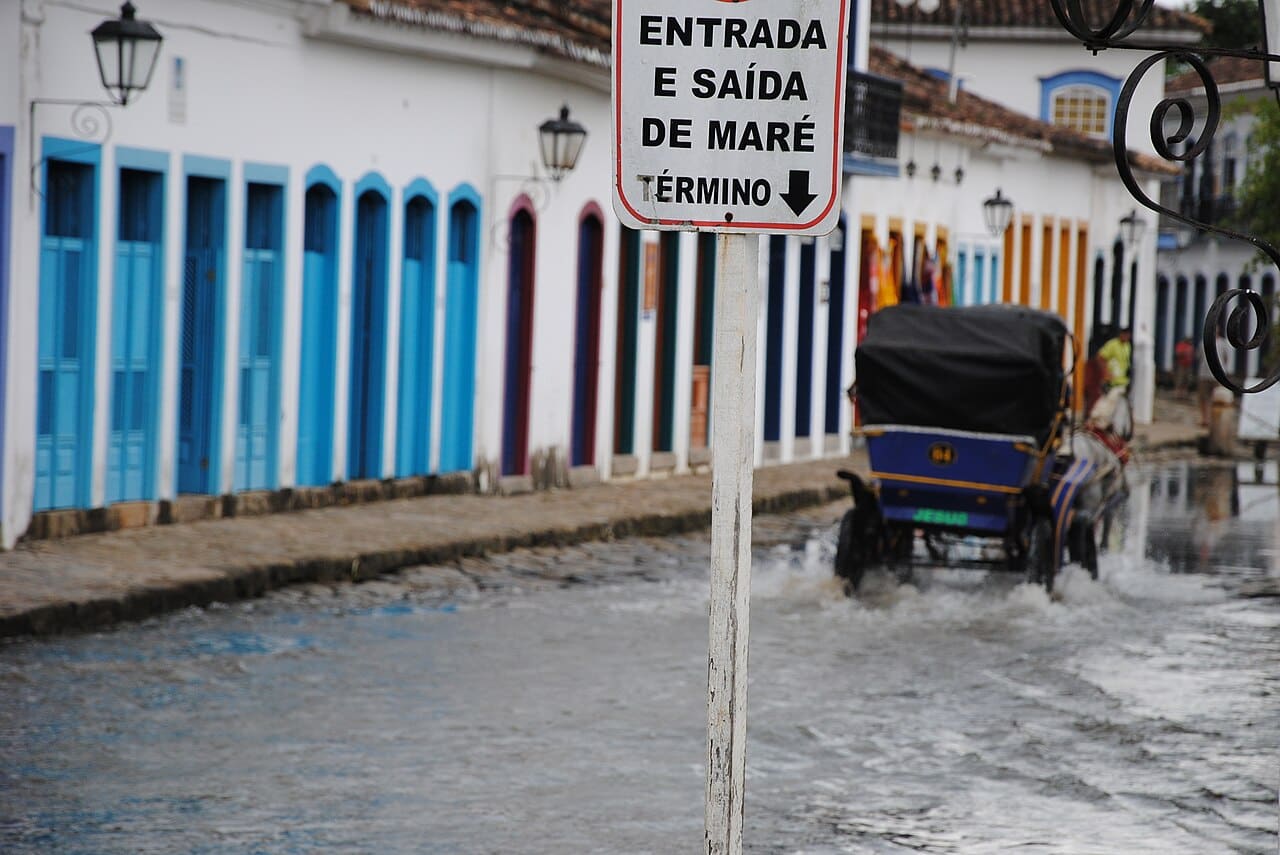 Big tide in the historic center. Photo: Leandro Neumann Ciuffo, CC BY 2.0, Wikimedia Commons
For the traveler, this means you can plan for a free show: check the phase of the moon before locking your dates. Near the full and new moons, the high tide floods the streets near the pier, the houses double in the reflection and the whole town stops to photograph it. If your trip lands on the wrong moon, nothing is lost; but if you can choose, choose. We cover the full calendar (rain, crowds, events) in the article on the best time to visit Paraty.
The churches tell the town: one for each social class
Here is the reading key that turns a pretty walk into a lesson on Brazil. Colonial Paraty was a society divided by color and by wealth, and each group raised its own church. They are all still standing, a few blocks from each other.
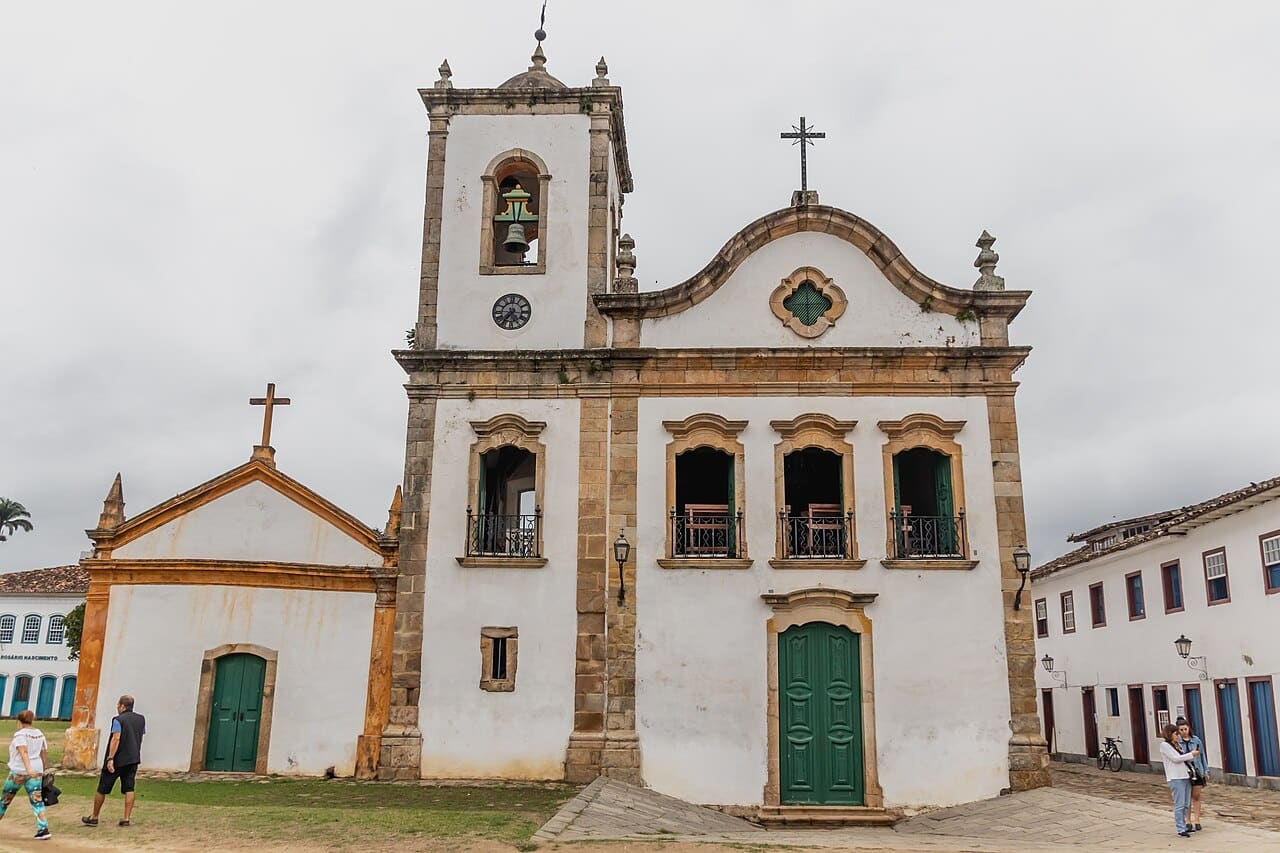 Santa Rita church, from 1722, the town’s postcard. Photo: Angélica Cardoso Marinho Feijó, CC BY-SA 4.0, Wikimedia Commons
Santa Rita church (1722). The most photographed in Paraty, with its white facade of pale moldings framed by the sea, was raised by the brotherhood of freed mixed-race people: men and women who had won their freedom and wanted a space of faith of their own. It is the building on practically every postcard of the town, and it stands next to the pier the schooners leave from.
Nossa Senhora do Rosário e São Benedito church (1725). On Rua do Comércio, it was built by enslaved Black people, who later formed the brotherhood of the Rosário dos Homens Pretos (1750) and rebuilt it in 1757. It keeps a rarity: it is the only church in Paraty with gilded carved altars. The festival of Rosário and São Benedito, in November, is still going.
Matriz de Nossa Senhora dos Remédios. The big church on the central square was the one of the ordinary white population, the common people of the village. The current building was begun in 1787, but the work was too expensive for the town and stopped several times for lack of money: the Matriz was only handed over to worship in 1873, almost a century later. The square in front of it is the town’s meeting point to this day.
Nossa Senhora das Dores church (1800). On Rua Fresca, near the sea, the Capelinha was built by the town’s white elite and housed an exclusively female brotherhood, of the ladies of Paraty’s aristocracy. It went through a major renovation in 1901 and keeps a contained charm, like a private chapel.
Four churches, four Paratys. Visiting the four in sequence, knowing who built each one, is the cheapest and densest walk in town.
Walking route: half a day well spent
The historic center is closed to cars and small enough to cover on foot in a morning, which does not mean it should be rushed. A shape that works:
- Start at the Matriz square before 9 am, when the streets still belong to the locals. Breakfast nearby and a look at the Matriz dos Remédios.
- Walk down Rua do Comércio, the spine of the center, stopping at the Rosário church. It is the street of shops, studios and galleries; in the morning you can see it all without elbowing through.
- Continue to the pier and Santa Rita. The meeting of the old houses and the boats is the town’s postcard. If the tide is low, look at the algae on the facades near the pier: it is the signature of the rising tide.
- Loop around along Rua Fresca, the street closest to the sea, to the Capelinha das Dores. It is the quietest stretch of the center.
- Finish with no plan. Paraty’s golden rule is to leave at least an hour to get lost: the side streets keep courtyards, artist studios and doorways worth more than any list.
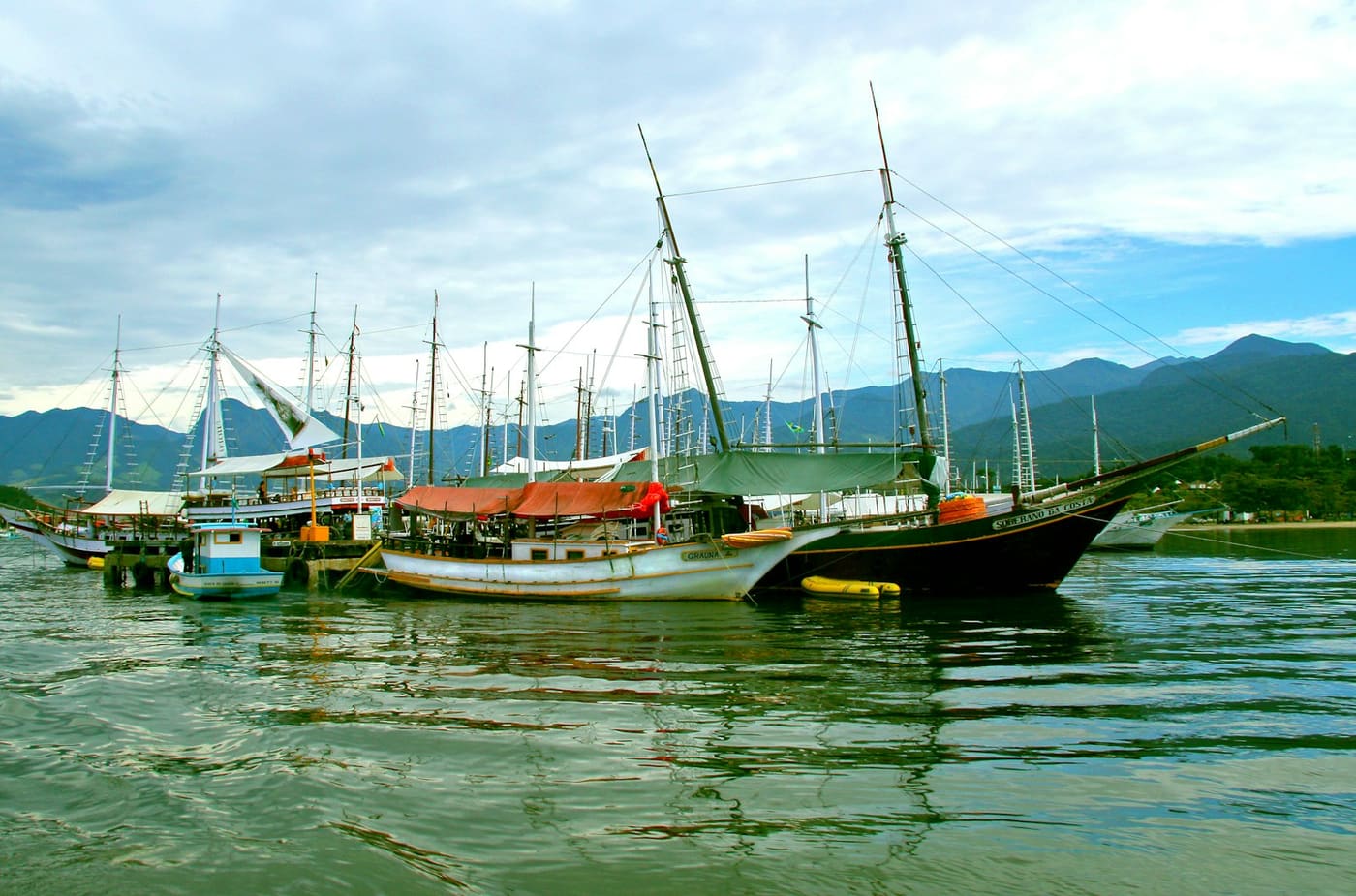 The pier, end point of the walking route and starting point of the sea. Photo: Nareeta Martin, Unsplash
In the afternoon, the sun heats up and the center calls for shade and ice cream. That is the cue to plan the rest of the trip: Paraty’s sea (around 60 beaches and 65 islands, almost all reachable only by boat) is broken down in our tour ranking, and the Saco do Mamanguá deserves its own read before you decide how many days to give the town.
Eating and drinking between the stones
The historic center concentrates the best tables in town, and you can choose well without memorizing restaurant names. Three clues from people who eat here often. First: look for caiçara cooking, the local tradition that brings together fresh fish, banana, shrimp and clay pots; it is a flavor that only exists on this coast. Second: the streets closest to the pier and the area around the Matriz square hold the most sought-after houses; in the side streets, prices drop and tables open up. Third: Paraty is cachaça country with history, and the center’s cachaça bars serve tastings of the region’s production, often with the producer on the other side of the counter. Trying a local white and a gabriela (the version with clove and cinnamon) is part of the town’s curriculum.
In summer and on holidays, book a table for dinner or arrive before 7:30 pm: the whole center dines at the same hour, and a line on a stone street tires you more than a trail.
FLIP and the center’s calendar
FLIP, Paraty’s international literary festival, happens in 2026 from July 22 to 26 and is the event that most transforms the center. During that week, the town becomes an open-air reading room, with sessions, authors and parallel programming on every corner. It is special, and we say that without irony. But the honest warning comes with it: the center genuinely fills up, lodging sells out months in advance and prices climb without ceremony. If you want FLIP, book early and embrace the crowd; if you want the quiet old town, aim for any other week. There is no middle ground in that choice.
Outside FLIP, the traditional calendar stays alive, with the Festa do Divino among the town’s oldest celebrations and the festival of Rosário and São Benedito in November. And summer carries its own warning: heavy rain (January can top 500 mm) and packed holidays. April, May, September and October are the months when the center is most yours.
The best hour of the day (and the scene we live every week)
If you follow only one recommendation from this whole guide, make it this one: be in the historic center at the end of the afternoon. Between the sun dropping behind the mountains and the lamps coming on, there is a window of about forty minutes when Paraty takes on the light painters look for. The restaurants set tables in the street, someone tunes a guitar, and the pé de moleque, which punished your ankles all day, becomes the most beautiful floor in Brazil.
We live a version of that scene every week, and it is how our trips begin: whoever boards the Albatroz expedition checks in at 6 pm at the marina and gets the first night docked, free in the center. You dine in the historic center and sleep on the boat. The next day, you wake up sailing out of the bay with a coffee in hand, watching the old houses shrink off the stern. It is a way of knowing Paraty in which the town and the sea do not compete: one introduces the other.
Practical warnings from people who walk here all year
- Firm footwear, always. The pé de moleque forgives no one.
- Cash and signal. The center has good infrastructure, but in the surroundings (Trindade, boat-access beaches) the card machine depends on a signal that fails. Withdraw beforehand.
- Rain does not cancel the center. Museum, church, studio, cafe and cachaça bar all work wet, and the old houses turn beautiful in a different way. The full plan is in things to do in Paraty when it rains.
- High season lodging sells out. Holidays, FLIP and New Year’s call for booking months in advance. The math for all of it is in Paraty travel costs.
- The center is the beginning, not the end. Trindade, the Caminho do Ouro, the distilleries and the fjord are less than an hour away; the full map is in Paraty beyond the historic center.
To close
Paraty’s historic center is one of the rare places in Brazil where history is not behind glass: you step on it, dine in it and, if you pick the right moon, watch the sea come in through it. Set aside a full day, end it under the lamps and let the rest of the trip grow from there.
The natural next step is deciding the size of the stay: our 3 days in Paraty itinerary starts from this center, and the 5 day one turns it into a launching point for the sea. If your question comes before that, the comparison in how many days in Paraty settles it in a five minute read. And if Paraty is only the beginning of the coast for you, the definitive Costa Verde guide shows how much good road there is from here on.