
Things to do in Paraty in 3 days
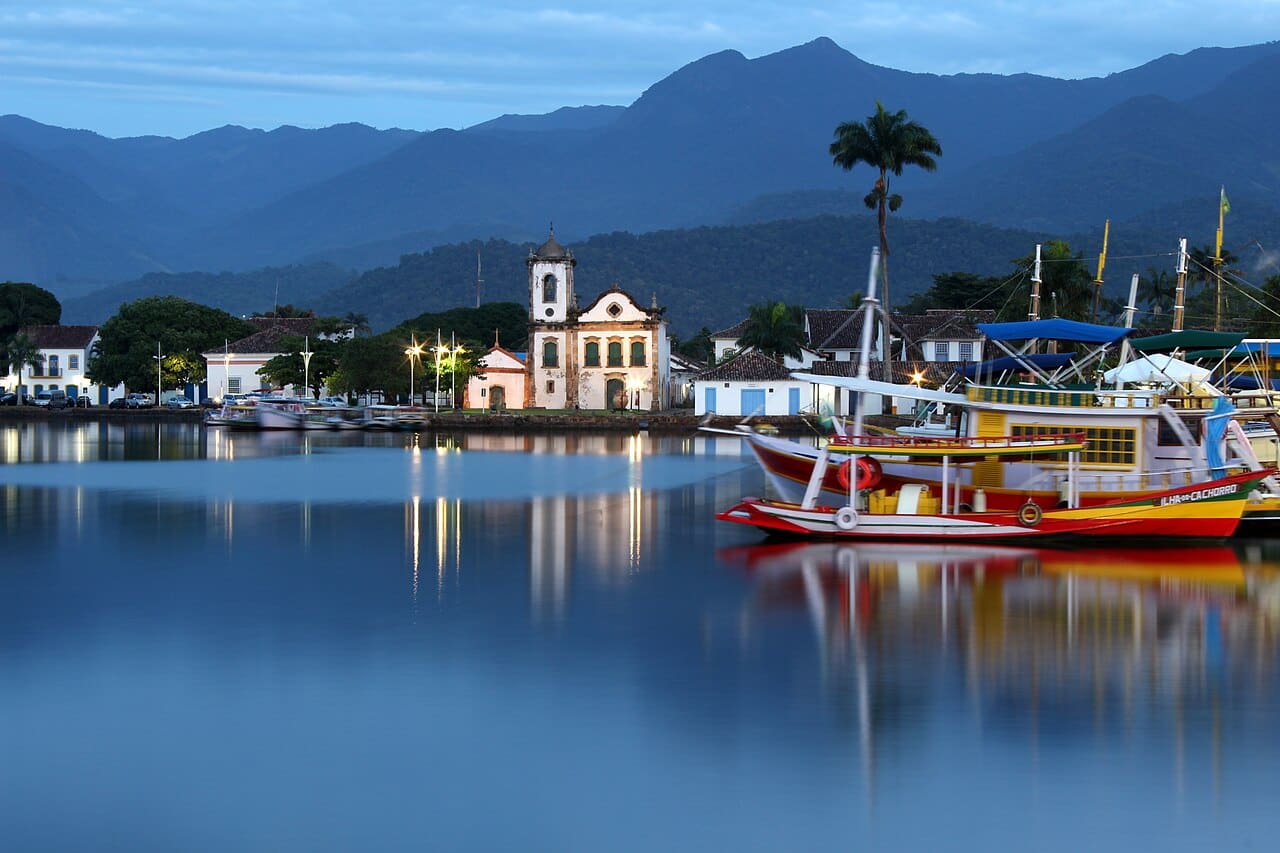
Three days is what most people set aside for Paraty, and it is a good number: enough to live the historic center without rushing, spend a full day at sea and still get to Trindade. We write from experience, and from a specific angle: the Albatroz, our group’s 23 meter schooner, lives at Marina Píer 46 and leaves Paraty on expedition every week. The old houses seen from the deck at the end of the day are our office view.
This itinerary assumes you arrive the night before or on the morning of day 1. If you are still deciding how long to stay, the article on how many days in Paraty compares the formats, and how to get to Paraty sorts out the bus and car logistics.
Day 1: the historic center at its own pace
Start early, before 9 am, when the stone streets still belong to the locals: the bread delivery guy, shop owners opening windows, a dog everyone knows. The irregular paving, known as pé de moleque (after a lumpy peanut brittle), calls for sneakers or strapped sandals with a firm sole. Heels and flat flip-flops genuinely suffer here.
The classic walking route passes the Matriz square, goes down Rua do Comércio and ends at the pier, with stops at the churches. They tell the town’s social history: each one was built by a class of colonial Paraty, from the 1722 Santa Rita, raised by the brotherhood of freed mixed-race people, to the 1800 Capelinha das Dores, built by the women of the elite. That layer deserves calm, and we broke it all down in the complete historic center guide.
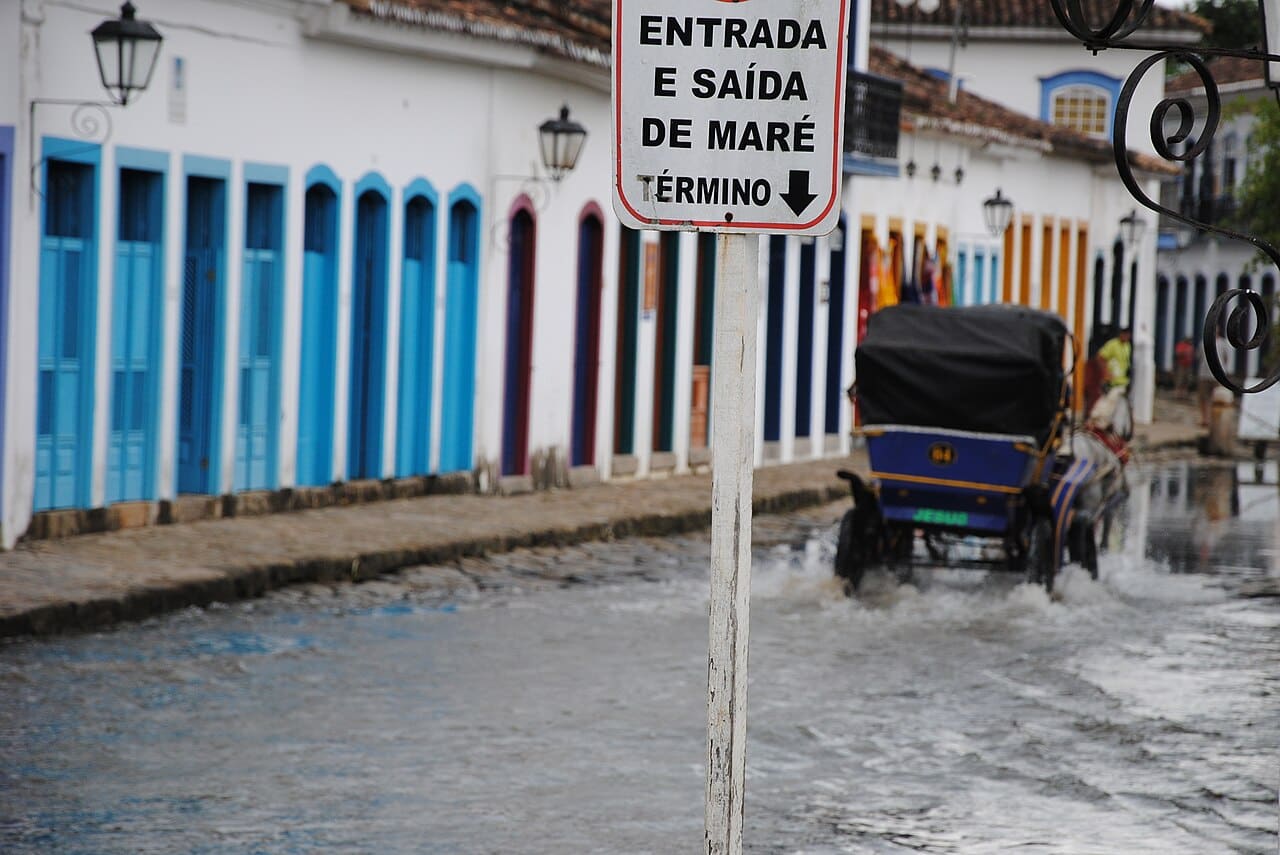 The tide coming into the center’s streets. Photo: Leandro Neumann Ciuffo, CC BY 2.0, Wikimedia Commons
If your trip falls near a full or new moon, you get a free show: on the big tides, the sea comes in through the lowest streets of the center, floods the paving on purpose (the streets were designed for it in the 18th century) and leaves a few hours later. The old houses reflected in the water make the town’s most famous photo, and it costs nothing.
In the afternoon, the heat sets the agenda: ice cream, church shade, a loop through the studios and galleries that occupy the ground floors of the old houses. Paraty has an old, active artist scene, and wandering into three or four studios with no agenda is half the charm of the afternoon. Save energy for the end of the day, because the historic center has a precise hour when it turns achingly beautiful: when the lamps come on and the restaurant tables take over the sidewalks. Have a slow dinner in the center, ideally something from caiçara cooking, which is fish, banana and shrimp making peace on the same plate. It is the scene that makes Paraty worth the trip.
An honest warning from people who circulate here all year: during the week of FLIP, the literary festival that runs July 22 to 26 in 2026, and on summer long weekends, that same center gets packed and expensive. If your idea is peace and quiet, check the best time to visit Paraty before locking in your dates.
Day 2: the sea day
Paraty has around 60 beaches and 65 islands, and most of them can only be reached by water. In other words: a 3 day itinerary without a boat is half an itinerary. The question is how to go, and here we lay our cards on the table, because there is the usual way and there is the way we would recommend to a friend.
The usual way is the day-trip schooner: it leaves the pier, costs around R$ 60 per person in 2026 and runs a circuit of swimming stops around the bay, with the clock ticking at each one. It is a service that works and fits any budget, which is why it is listed in our ranking of Paraty tours. Tips from people who watch these schooners leave every day: buy at the pier the day before, pick the morning departure (calmer sea and shorter lines at the stops) and bring sunscreen, water and small bills, because the onboard bar charges onboard bar prices. What the format does not deliver: silence. In summer, you share every stop with other schooners playing music, and just when the swimming gets good, the engine starts for the next one.
The way we recommend, with the ease of people who own the boat and admit their side: sleep at sea. The 2 night Albatroz expedition fits inside the same 3 days of this itinerary, because boarding is at 6 pm on day 1 and the first night is spent docked at the marina, with the evening free in the historic center. You have dinner among the lamps and sleep on the boat. The next day, you wake up sailing: breakfast and snorkeling at Ilha dos Meros, the chef’s barbecue at Praia Grande da Cajaíba and the late afternoon in Saco do Mamanguá, where the boat spends the night inside the fjord and the evening ends with a bonfire party on the beach, at the foot of the Sugarloaf. You are back in Paraty around 5:30 pm on day 3. No day-trip schooner anchors where you will sleep.
The practical difference between the two formats is this: the day trip visits Paraty’s sea; the expedition lives in it for two days. If budget decides for you, no drama, the schooner does the job. We cover real prices for both in the article on Paraty travel costs.
A calendar note: whoever boards the expedition has dinner in the center on the night of day 1, so the historic center walk moves to the morning and afternoon of that same day, and the Trindade day becomes whatever is left before boarding, or a next trip. An itinerary is a tool, not a contract.
Day 3: Trindade
Trindade is a district of Paraty, 27 km south of the center, with a personality of its own: a caiçara village squeezed between Serra da Bocaina National Park and a string of open-sea beaches, with pale sand and real waves. The municipal Colitur bus leaves from Paraty’s bus station and costs about R$ 5, one of the best deals on the Costa Verde.
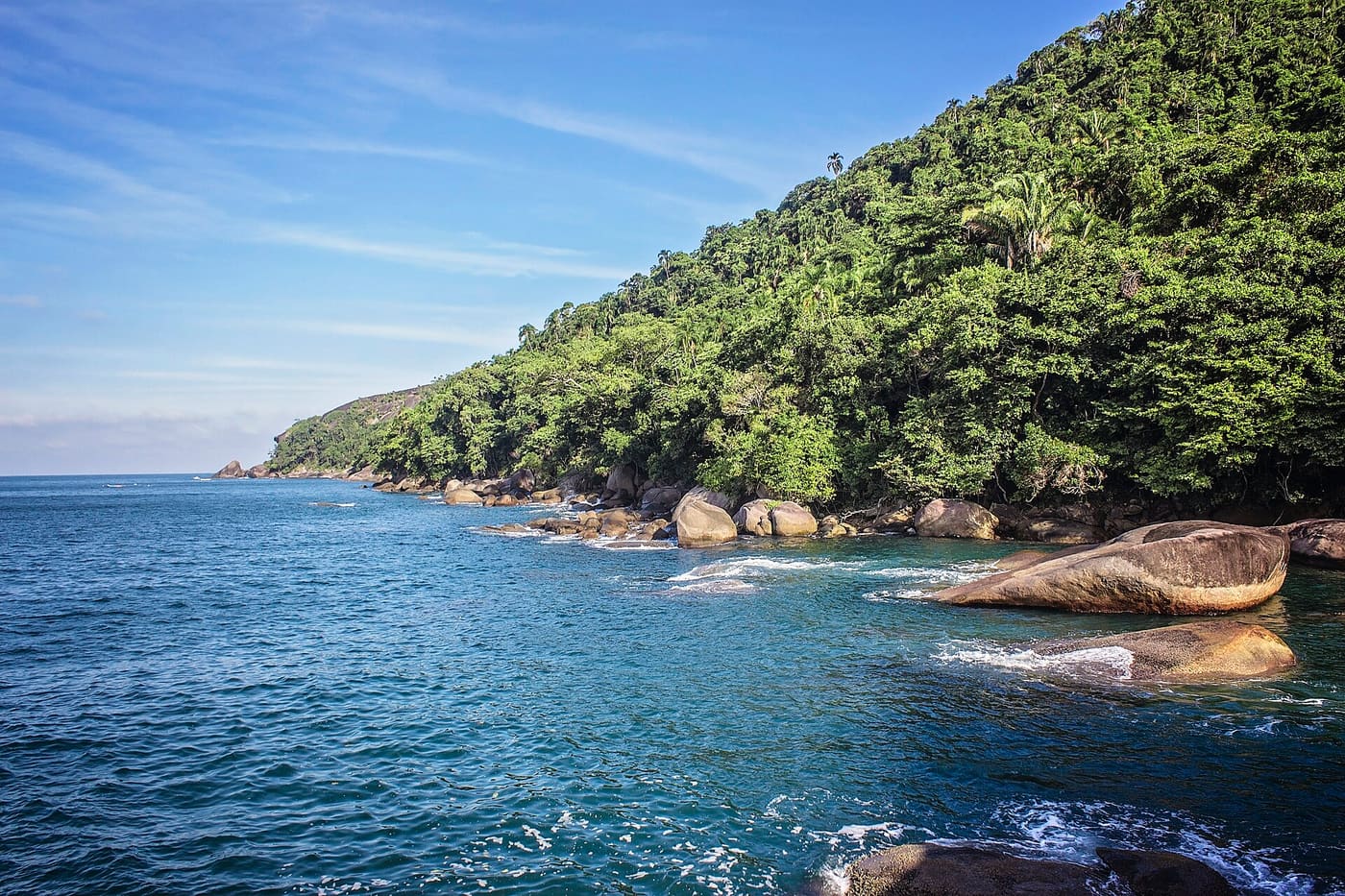 The Cachadaço natural pool. Photo: Eduardo Gabão, CC BY-SA 3.0, Wikimedia Commons
The village lines up beaches that change temperament one by one: proper waves for those who like getting tossed around, more sheltered stretches for those who want to float. The high point comes at the end: the Cachadaço natural pool, a ring of boulders where the water rarely passes your waist and fish circle your shins. You reach it by a short trail from Praia do Meio or by taxi boat. Go early. On holidays and in summer, the little access road jams before noon, and the natural pool with 40 people inside is a different experience. On an off-season weekday, you share the place with half a dozen travelers and the fish.
On the way back to the center, if the day allows, get off the bus in time for one last late afternoon at the pier: a Paraty farewell is done watching the boats, with the old houses lighting up behind them.
Bring cash: the phone signal in Trindade fails, and a card machine with no signal is a decoration. And if the day dawns overcast, swap without guilt: the town has a whole plan B of old houses, waterfalls and cachaça distilleries that we list in the article on things to do in Paraty when it rains.
If you have energy left over (or run short)
With an extra half day, the Paraty-Cunha road leads to distilleries and waterfalls, and the rest of the municipality beyond the old town would fill a week. With two more days, the itinerary changes category: the 5 day format includes sleeping in the Mamanguá and a choice between Praia do Sono and the Caminho do Ouro gold trail, all detailed in our 5 day Paraty itinerary.
And if Paraty is part of a bigger trip along the coast, read the plan for Ilhabela, Paraty and Ilha Grande on one trip: the three destinations stitch together better than the map suggests.
The summary from people who live on this sea
Day 1 for the old houses and the lamps, day 2 for the sea, day 3 for Trindade. It is a simple itinerary because Paraty needs no juggling: the town delivers a lot in a small space. What changes everything is the day 2 choice. We have seen plenty of people come back from the day trip satisfied, and we have never seen anyone come back from the night in the Mamanguá the same as they boarded. Sleeping in a fjord with a bonfire on the beach changes the rest of the trip.
Pick your dates, check the moon (high tide in the center is a bonus for planners) and start with step one: deciding whether your sea day ends at the pier or at anchor. The expedition’s next departures are at albatroz.hosteldavila.com.br/pacotes.