
The places foreigners haven't discovered on the Costa Verde
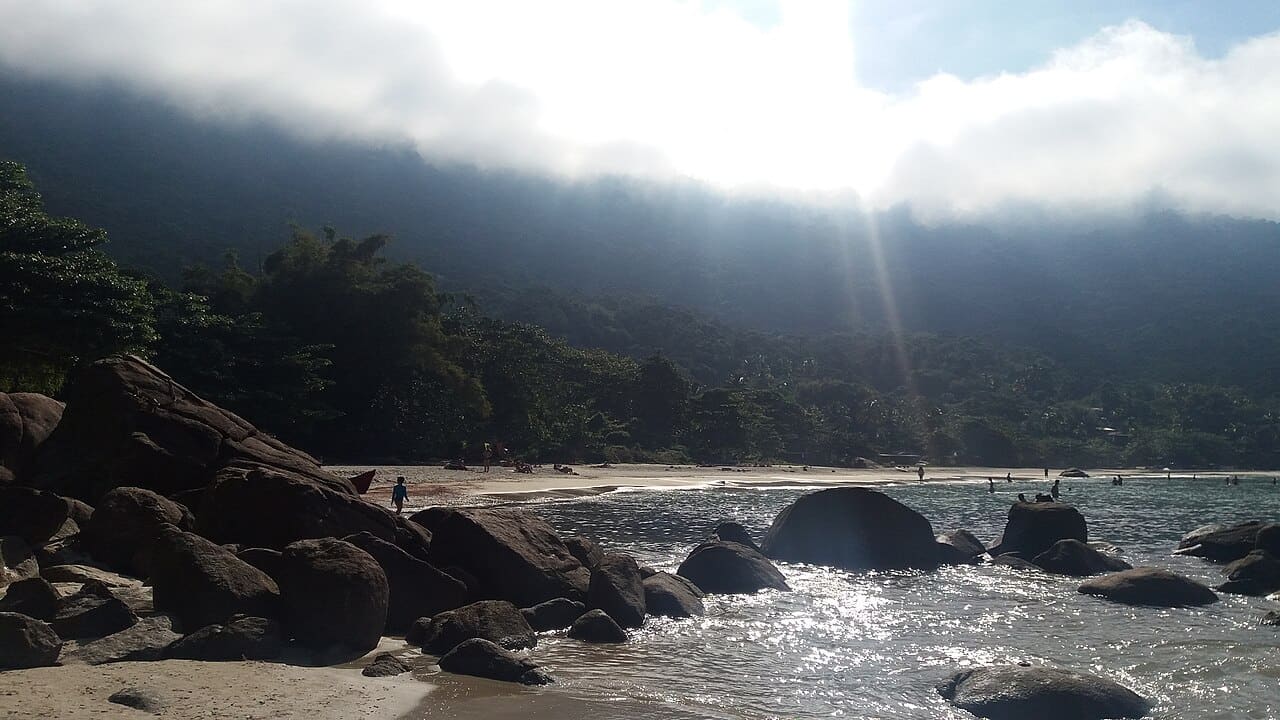
There is a route almost every foreign backpacker follows through southeastern Brazil, with barely any variation: Rio de Janeiro, Ilha Grande, Paraty. From there, most continue to São Paulo city, to Iguaçu Falls or down south, and the Costa Verde drops off their map exactly at its halfway point. We have been hosting travelers on this coast for ten years and we watch the invisible border work every day: in Abraão and in Paraty’s historic center you hear English, French and Spanish at any table; cross the São Paulo state line and the accents turn paulistano and the menus go back to a single language.
Nothing against the classic circuit. Ilha Grande and Paraty have formed a UNESCO World Heritage site since 2019, the first in Brazil recognized for culture and nature at the same time, and they deserve every star the international guidebooks give them. The point is a different one: the 294 km corridor we introduce in the definitive Costa Verde guide keeps going after Paraty, and the São Paulo half, plus a few tucked-away corners of the Rio half itself, remains the territory of Brazilian travelers. If you like getting somewhere before the international crowd does, this article is the map.
Ilhabela, the island that still speaks Portuguese
It is a curious thing: Ilhabela is the country’s largest sea island, has more than 40 beaches and a state park covering nearly all of its territory, and still barely appears in foreign itineraries. The explanation is logistics. International guidebooks draw Brazil outward from Rio, and Ilhabela sits on the São Paulo side, 4h30 by bus from the capital plus a 20 minute ferry. For the foreigner who is already leaving after Paraty, it is far. For the Brazilian, it is the weekend.
The result: you step off the ferry and hear Portuguese in the açaí line, on the trail and on the boat. The exception lasts one week a year, the International Sailing Week, which in 2026 runs from July 24 to August 1, when sailors from all over the world take over the channel and the island turns into a tower of Babel. The rest of the calendar, Ilhabela is the biggest destination on the Costa Verde that foreigners have not yet folded into the route. We speak from the inside: the people writing this run Hostel da Vila, an eco lodge in the island’s historic center, and outside regatta week a foreign guest is the exception at our front desk.
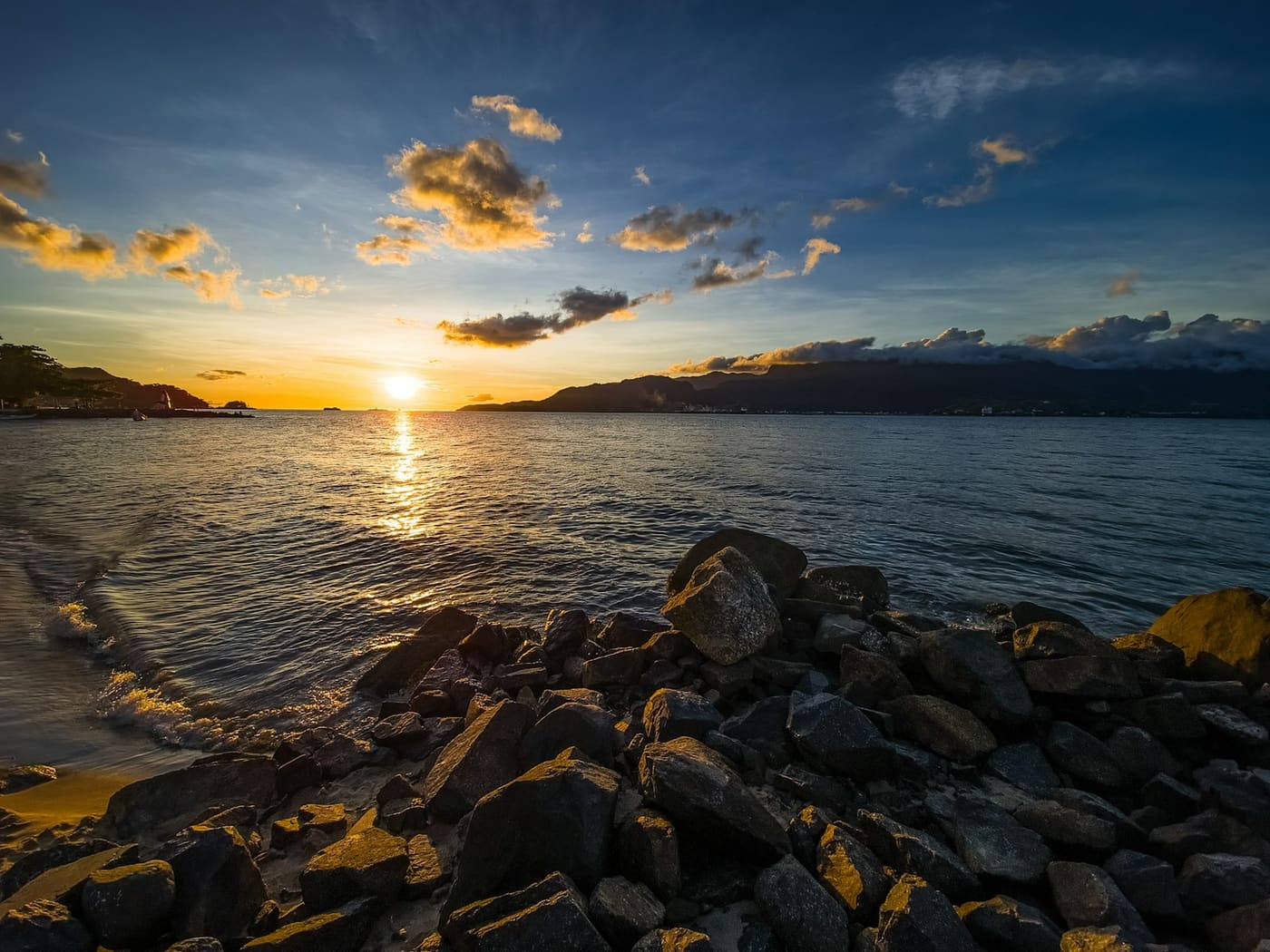 The São Sebastião channel at the end of the day. Photo: Vitor Camilo, Unsplash
Jabaquara and Castelhanos, Ilhabela’s ends of the road
Within Ilhabela, two places filter the crowd even further. Jabaquara sits at the far north, some 22 km from the ferry, and the last 8 km are dirt road ending at a lookout and a walk down to the beach. No bus gets there, no big tour group either. Whoever arrives came by car, by boat or by bicycle, and finds a cove of pale sand with a river emptying into a lagoon. On a weekday out of season, it is common to have almost the entire beach to yourself.
Castelhanos, on the ocean side, is the other end of the road: you only get there by 4x4, crossing the state park on the dirt traverse, or by boat around the island. The beach is shaped like a heart when seen from above, takes open-ocean waves and has a fishing community that serves lunch. It is the island’s most classic outing among Brazilians and remains practically unknown abroad. And it is worth remembering the detail that protects them both: the borrachudo, a tiny biting fly. Bring repellent and reapply without laziness, because that little insect has already driven off many an unprepared visitor.
Dois Rios, the empty corner of Brazil’s most international island
Here is the most beautiful paradox on the list: a place with almost no foreigners inside the most foreign island in Brazil. Dois Rios sits on the ocean side of Ilha Grande, about 9 km from Abraão along a wide trail that climbs and descends the ridge, some two to three hours of walking. The distance does the sorting: the crowd that packs Lopes Mendes rarely shows up there.
Those who go find a beach between two rivers, as the name gives away, and the traces of the Cândido Mendes prison, which operated there until 1994 and held inmates like the writer Graciliano Ramos, who turned the experience into the book Memórias do Cárcere. The buildings were demolished, and the site now houses the Museu do Cárcere, a museum keeping photos, documents and objects from that era. It is an outing unlike anything else in the region: half raw nature, half heavy Brazilian history, with a tiny, silent village in the middle.
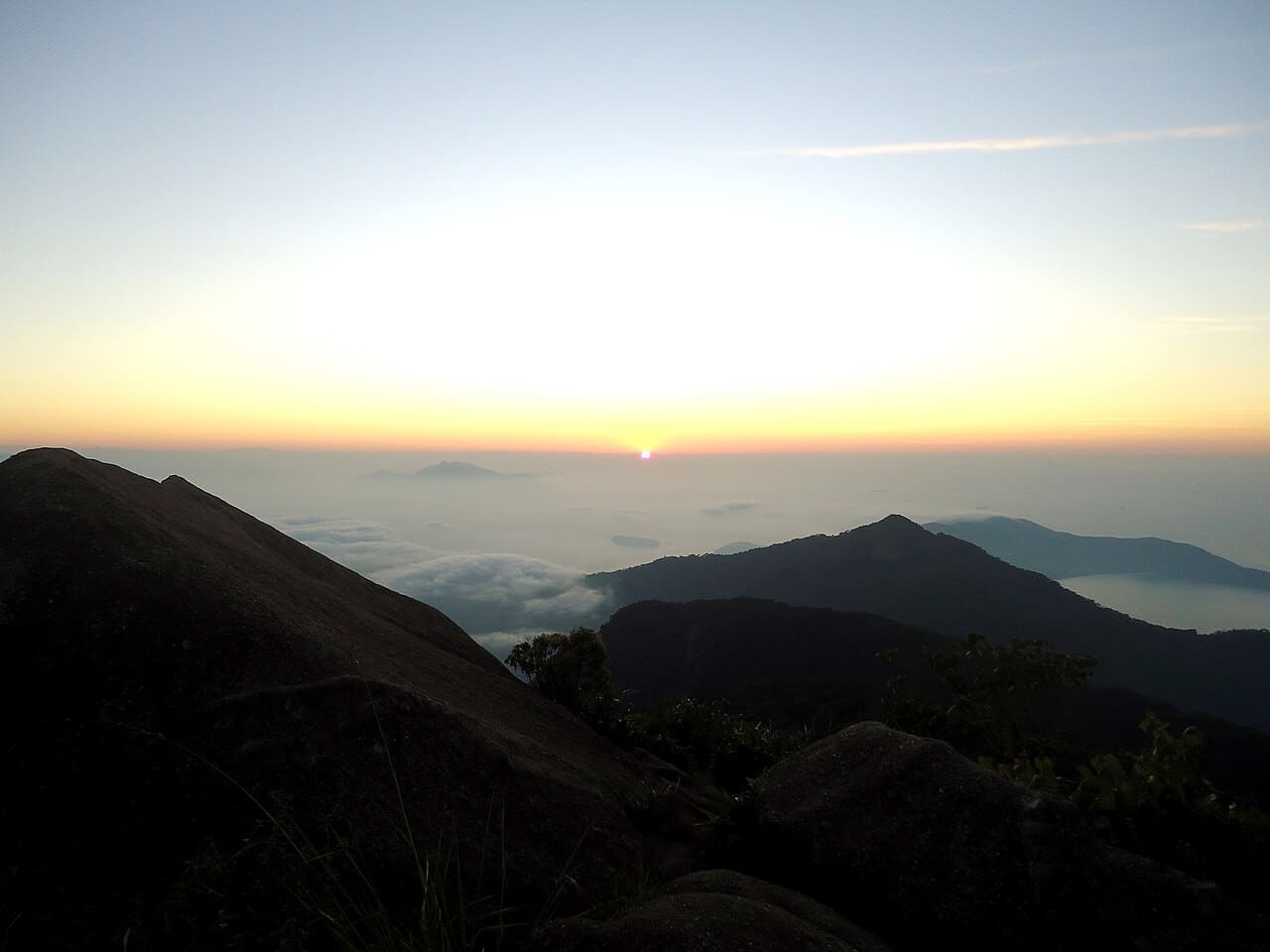 The interior of Ilha Grande seen from Pico do Papagaio: the trail to Dois Rios descends from this ridge. Photo: MBelu, CC BY-SA 4.0, Wikimedia Commons
Mamanguá, the fjord with no sign
The Saco do Mamanguá lies just a few kilometers from Paraty as the crow flies and still escapes the international radar. There is no sign on the road, no schooner pier, no half-day package. It is a tongue of sea about 8 km long ringed by hills, inhabited by caiçara communities. And on how to get to know it, we do not sit on the fence: you get to know Mamanguá by sleeping in it, and the way we recommend is aboard the Albatroz, our group’s 23 meter schooner, which anchors inside the fjord on its expeditions out of Paraty. The part guests talk about most afterward is the night: the chef’s dinner on deck, the hills darkening all around and not a single city light on the horizon. A one-day visit, by boat or kayak, remains the alternative for anyone who cannot stay over: you can climb the Pão de Açúcar trail and see the whole fjord from the top, except that the return leaves exactly when the place starts getting good.
The foreigners doing schooner day trips in Paraty pass one boat ride away from all this without knowing it. Better for those who know.
Southern Ubatuba and the beaches of São Sebastião
The São Paulo half of the Costa Verde is almost entirely Brazilian in its crowd, but two stretches deserve a mention. The first is southern Ubatuba, near Saco da Ribeira, where beaches like Lázaro and Domingas Dias combine calm sea and forest right down to the sand; on weekdays outside summer, they go back to being neighborhood beaches. The second is the São Sebastião coast, on the mainland facing Ilhabela: a string of beaches that paulistas fight over in summer and foreigners have simply never seen, including Maresias, which raised two-time world surfing champion Gabriel Medina.
They make good bases for anyone driving the Rio-Santos who wants to sleep outside the main hubs. In the Costa Verde road trip guide we show how to fit them in without stretching the trip too far.
The classics still count
This article is not a manifesto against Paraty or Abraão. The classics are classics on merit: the tide rising through Paraty’s stone streets and the boat arrival at Ilha Grande are among the finest scenes on the Brazilian coast, and cutting them from a first trip would be a mistake. The suggestion is different: use the classics as your gateway and set aside two or three days for what lies off the international route. The itinerary that combines Ilhabela, Paraty and Ilha Grande in one trip shows how to do that without logistical stress.
And if what draws you to these less visited places is less the emptiness and more the way of life that persists in them, the natural next step is our guide to the most authentic places on the Costa Verde, which goes into the caiçara communities one by one. Go before the international guidebooks update the route. Sooner or later they will.