
Snorkeling in Ilha Grande: the spots where the mask pays off
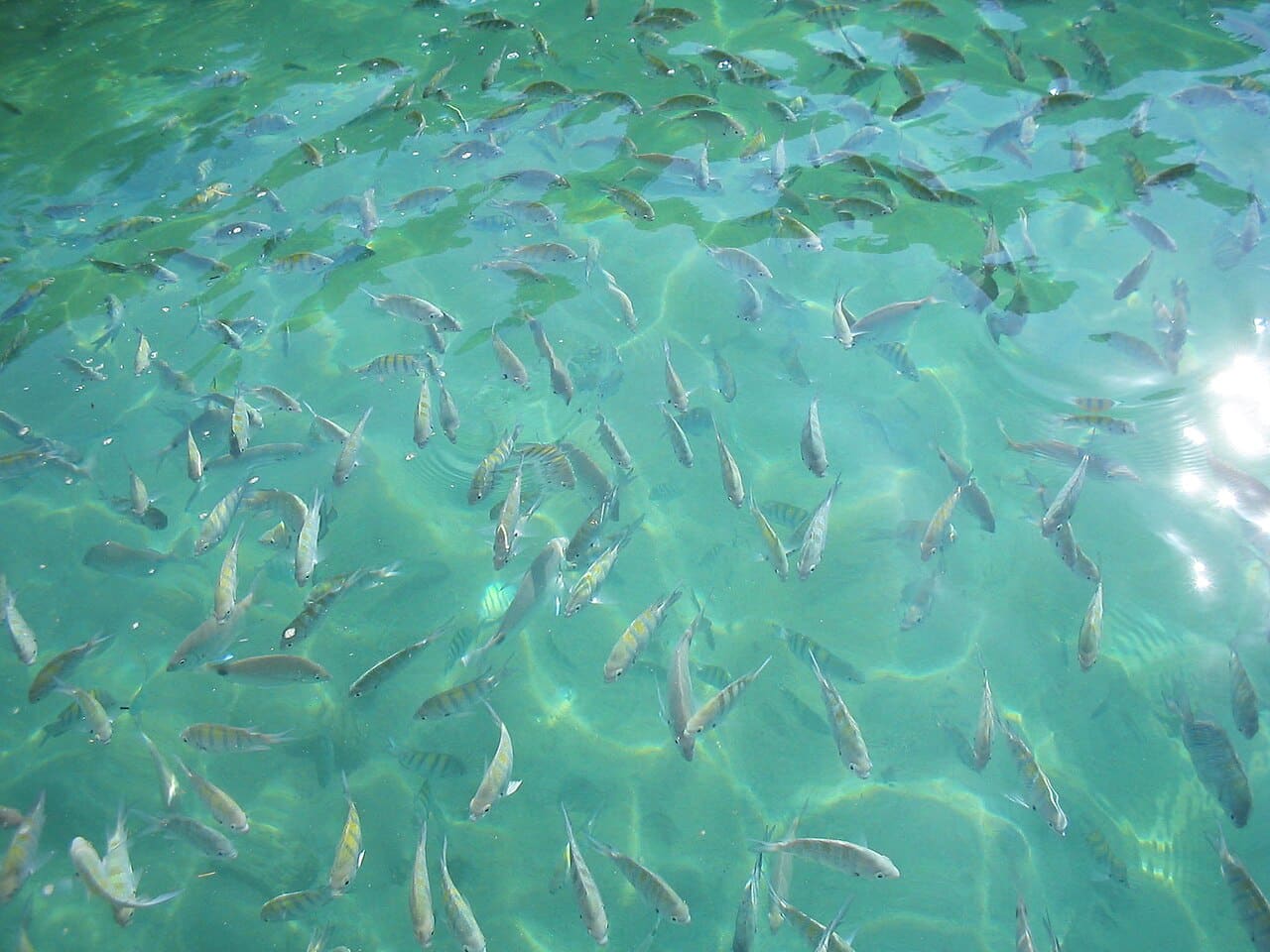
There is a moment that repeats with every traveler who enters Ilha Grande’s water with a mask for the first time: the person lifts their head, pulls out the mouthpiece and says something garbled to whoever is nearby. It usually involves the word “fish” and an exaggerated number. We watch this happen all year, because our group’s schooner works this bay out of Paraty and carries masks and a transparent kayak on board precisely to provoke that moment.
The island is generous for snorkeling for a simple reason of geography: the coast facing the mainland is all sheltered coves, where the sea stops, settles and clears. But not every pretty beach is good with a mask, and that curation is what this guide does: where the water pays off, at what hour, and where not to waste your time. It goes hand in hand with the comparison Lagoa Azul or Lagoa Verde and the ranking of the most beautiful beaches on the island.
The golden rule before the list
Snorkeling on Ilha Grande is a matter of side and hour. Side: the good spots are almost all on the north and northwest coast, the sheltered one; the open sea of the south and east, the one at Lopes Mendes and Dois Rios, is beautiful to look at and bad for a mask, because the waves stir up sand and visibility dies. Hour: early morning and late afternoon, before and after the excursion boats, and preferably a day or two after heavy rain, because the rivers that empty here cloud the water for a few hours (the wet day plan is in the article on things to do when it rains).
The spots, from easiest to most hidden
Praia Preta
The island’s most democratic snorkeling is 20 minutes on foot from Vila do Abraão, on the Lazareto circuit trail. Along the rocky corners of Preta beach the water clears and small schools appear, plus sea urchins and octopus for those with the patience to check the crevices. It is the perfect spot for the first or last day, no boat involved: mask in the backpack, easy walk and done. Combine it with the ruins and the aqueduct on the same circuit, described in the Vila do Abraão guide.
Lagoa Azul
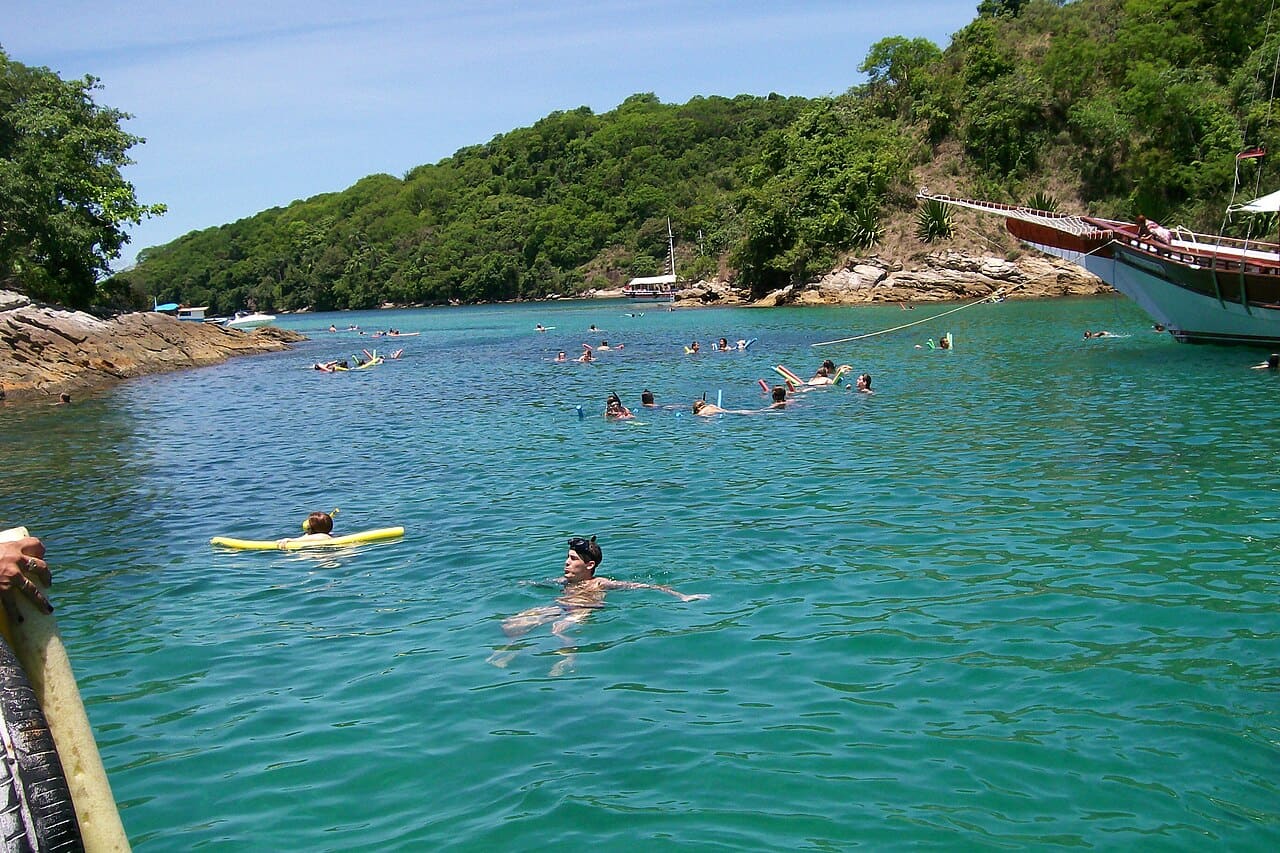 Lagoa Azul before the boats. Photo: Marcio Sette, CC BY-SA 3.0, Wikimedia Commons
The postcard: a shallow natural pool between islets next to Freguesia de Santana, on the stretch of the island closest to the mainland. Underwater, sergeant majors by the dozen, starfish on the pale bottom and, with luck, a turtle. The usual caveat, said plainly: at midday in summer the lagoon becomes a parking lot for schooners out of Angra, and the experience collapses. Go early or do not go; the hour by hour detail is in the lagoon comparison.
Lagoa Verde
Our favorite for a mask. It sits on the northwest coast, between Longa beach and Araçatiba, and concentrates what the Azul has plus a little more: greenish corals, seahorses hidden by the rocks (search slowly, they disguise themselves rather than flee) and turtles with good frequency. At the end of the afternoon, when the excursion boats have gone home, the low light switches on the green of the water and the lagoon falls silent. Anyone sleeping in Araçatiba can reach it by a 25 minute trail or by kayak, which makes it the island’s best snorkeling without an excursion.
Caxadaço
A fold of rock near Dois Rios: a beach a few meters long protected by giant boulders, forming a deep, transparent natural pool with reefs in the right corner, corals, schools of fish and turtles showing up often. The toll is the access: the T15 trail from Dois Rios (with a steep final descent) or the round-the-island boat routes, which stop there on days of good sea. It is snorkeling with a taste of achievement; the full path is in the trail guide.
Praia dos Meros
On the west coast, near Sítio Forte, Meros beach is a classic stop on the round-the-island routes precisely for its calm, crystal-clear water, dense marine life and nearly guaranteed turtles. The name honors the mero, the giant and threatened goliath grouper that has shown itself around here for generations. Do not confuse it with the Ilha dos Meros on the Paraty side: they are two different places, and both live up to the name.
Saco do Céu
A cove so enclosed it looks like a lake, northwest of Abraão, famous among sailors because on a clear night the sky reflects whole in the still water (hence the name, “sky cove”). By day, the calm water makes for easy snorkeling, the kind for beginners or for kids in tow. It features on several half-loop boat routes; if you can, stay for the start of the sunset.
Feiticeira and Araçatibinha
Two small coves on the northwest side that the boat routes visit: transparent water, rocky shores with fish and, at Feiticeira, a waterfall a short trail away to close the day washing off the salt. In both cases the boats’ stop tends to be quick; if you want longer, negotiate a water taxi on the spot or sleep on that side of the island.
Where snorkeling is not worth it (so you do not waste a day)
Honesty from people who have already made the mistakes: Lopes Mendes is possibly the most beautiful beach in Brazil and one of the worst places on the island for a mask, because it is open sea over churned-up sand; go for the beach, not the fish. The same goes for Dois Rios and Parnaioca. And Abraão beach, at the village’s front door, has harbor water: passable for a swim, dispensable for snorkeling.
Gear: what to bring and what to expect
Your own mask is the best R$ 100 investment of your trip: the loaners on excursions fog up, leak and have passed through three hundred mouths. If you do rent or borrow, test the seal on your face before the boat leaves. Fins help but are not mandatory in the shallow lagoons; life vests, the boats provide.
We settled this chapter our own way aboard the Albatroz: the schooner carries snorkeling kits and transparent kayaks for everyone, and the scene that defines the three night expedition may be exactly that, the glass-hulled kayak sitting over Lagoa Verde at the end of the afternoon, the fish passing underneath as if the boat did not exist, and the deck waiting with the chef’s dinner. Snorkeling there is not an activity booked separately: it is what you do between one anchorage and the next.
A full day of mask, assembled
For anyone who wants to make snorkeling the axis of a day, the layout that works out of Abraão: early morning at Preta beach, on foot, while the village is still having breakfast; a mid-morning boat along the northwest side, with a stop at Meros or Saco do Céu at the brightest hour; and Lagoa Verde as the last stop before heading back, in the low light. If you take the agencies’ standard package you will do the route in reverse and catch everything crowded; the counter conversation to choose the right departure is worth it, and so is checking the order of stops before paying.
Two pocket warnings: bring cash for the boat and the kiosk (card machines fail all over the island) and protect your phone in a dry bag if you want photos from the water. The full budget for the day, boat included, is in the article on Ilha Grande travel costs.
Clear water etiquette
- Sunscreen half an hour before entering, never at the water’s edge: the film it sheds at the surface harms the coral. Better yet: a UV shirt and less chemistry.
- Do not feed the fish, however much the sergeant majors insist. Fish hooked on bread change the balance of the entire rocky shore.
- Do not step, do not hold, do not collect. Coral breaks at a touch and takes decades to come back.
- A signal buoy if you swim far from the boat: speedboats do not see a head in the water.
When to go and the next step
Summer has the warmest water, around 25 degrees, but you share the lagoons with the crowds and the afternoon downpours; winter, from May to August, delivers the clearest water of the year, calm seas and empty spots, charging only a thin wetsuit from anyone who feels the cold. The month by month reasoning is in the best time to visit Ilha Grande, and the trip out here, by ferry or flex boat, in how to get there.
Below the surface is where Ilha Grande keeps the half of the show most visitors never see, for the cheap lack of a R$ 100 mask in the backpack. Do not make that inexpensive mistake. Pick two spots from this list, one easy and one hidden, and build the rest of your days around them: the island’s general guide helps fit the pieces together.