
Lagoa Azul or Lagoa Verde: which one to pick on Ilha Grande
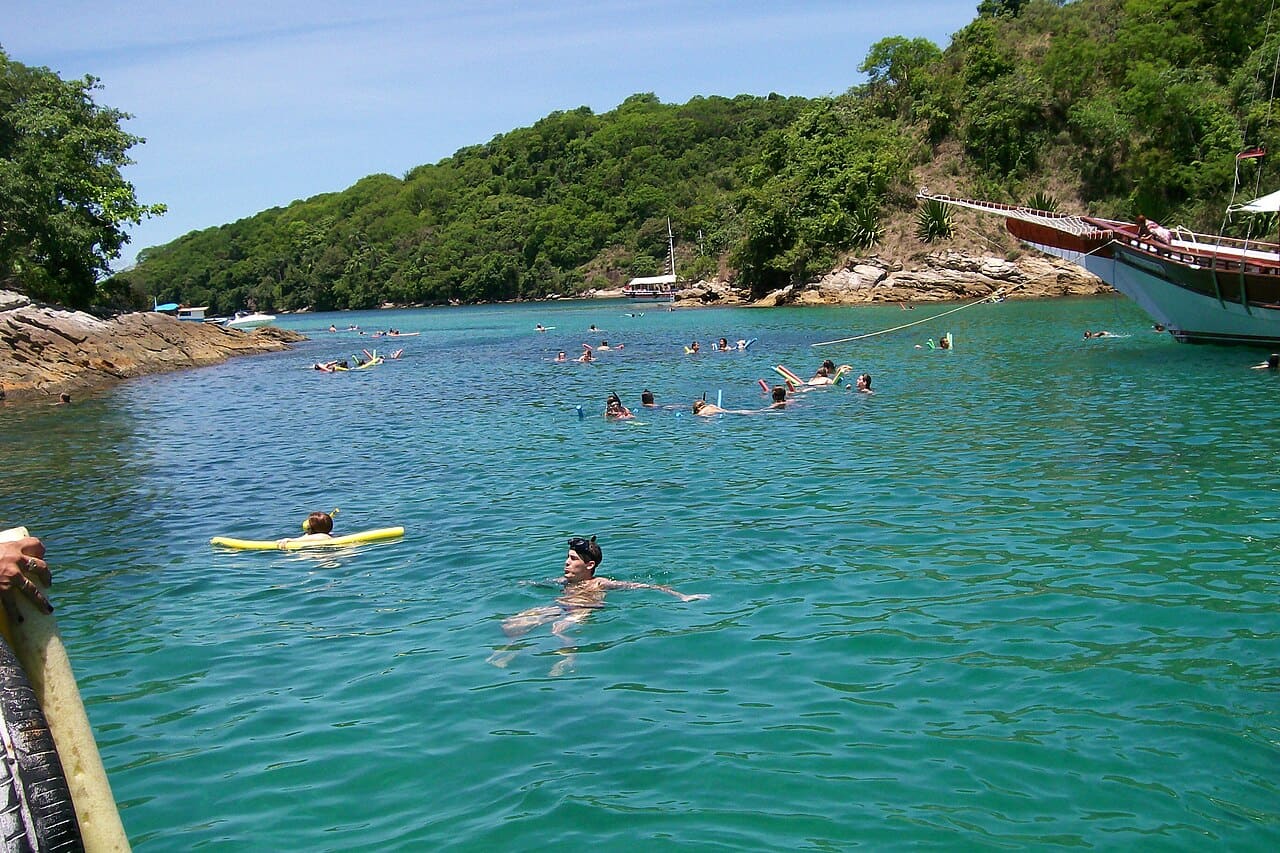
It is the question every tour agency counter in Abraão hears before 9 in the morning: Lagoa Azul or Lagoa Verde? We answer from a privileged spot, because both sit on the route of our group’s schooner, which crosses the Ilha Grande bay all year long out of Paraty. The short answer: the question is wrong. It is not “which one”, it is “when”. Both are worth it; the hour is what decides whether you will remember fish or schooner horns.
This comparison explains where each one is, what you see underwater, how each one fills up and how to build the day to catch both at their best. It works alongside the general guide to snorkeling on Ilha Grande and the overview of things to do on the island.
First: neither one is a lagoon, or a beach
The name misleads twice. They are not freshwater lagoons: they are patches of sea, shallow and sheltered coves where the water stops and clears. And they are not beaches: there is no strip of sand to lay out a sarong, plant an umbrella and spend the day. You arrive by boat, jump in with a mask, float for half an hour or an hour and move on.
Understanding this changes the planning. The lagoons are not the day’s program: they are its best half hour. The classic mistake is to treat them as a final destination and step off the packed midday boat frustrated; the smart move is to slot them in early or late, with the rest of the day spread across actual beaches, which we ranked in the most beautiful beaches on the island.
Lagoa Azul: the famous one
Lagoa Azul sits between islets next to Freguesia de Santana, on the part of Ilha Grande closest to the mainland. That geography explains both the fame and the problem: being a few minutes’ sailing from Angra dos Reis and Conceição de Jacareí, it is stop number one for practically every schooner and speedboat leaving the mainland.
Underwater, the show belongs to the sergeant majors, the little striped fish that surround anyone within seconds (years of people throwing bread have made them bold; do not feed them, the clear water will thank you). With a mask, on a good day, starfish appear on the pale bottom, sea urchins on the rocks and, with luck, a passing turtle. The water is shallow, pool blue and so transparent the bottom shows even where it gets deeper.
The crowds follow the boats’ clock: until 10 in the morning the lagoon is yours; between 11 am and 3 pm the schooners from Angra arrive blasting music, dozens of hulls anchor side by side, and the natural pool becomes an aquatic parking lot. In summer and on holidays, midday there is a portrait of the tourism this blog tries to avoid. The service information, because it is useful: schooner and speedboat departures from Abraão and from the mainland start at a few dozen reais, and almost all of them hit the Azul in the middle of the day. If you are going on your own and want the lagoon empty, you need to book a private early departure or sleep close by, on the island’s northwest side.
Lagoa Verde: the quiet one
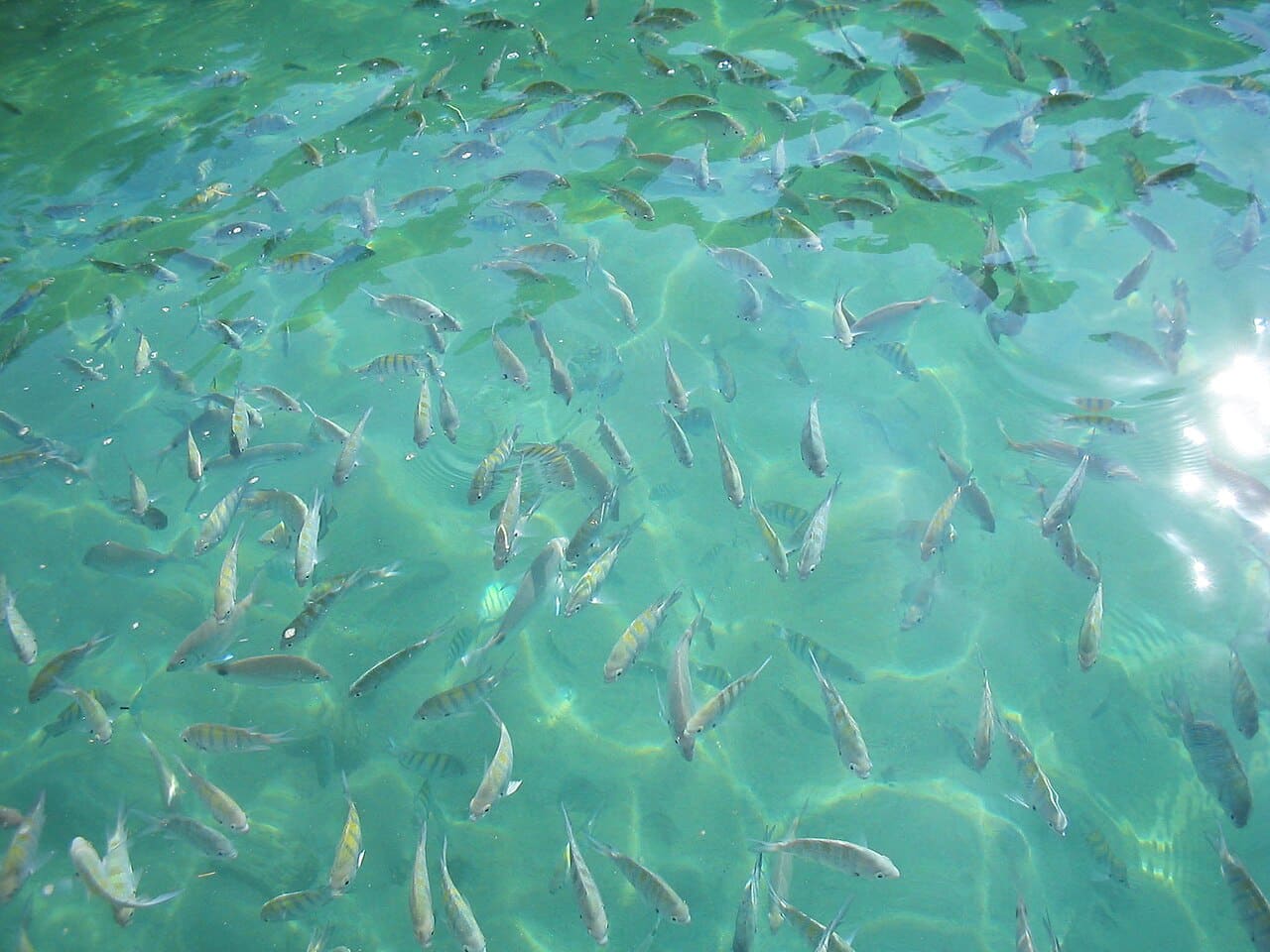 Underwater at Lagoa Verde. Photo: Ronaldo Leonardo, CC BY-SA 3.0, Wikimedia Commons
Lagoa Verde lies on the northwest coast, between Longa beach and the Araçatiba cove, farther from the mainland flow. The color is another story: instead of pool blue, a deep bottle-glass green, made of the reflection of the surrounding forest and the algae and coral bottom. It is smaller and more tucked away than its sister, ringed by hills on every side.
Underwater it wins the duel for anyone who likes marine life: besides the usual sergeant majors, there are greenish corals, seahorses clinging to the bottom (look slowly near the rocks, they do not flee, they just disguise themselves) and turtles more often than at the Azul. Visibility tends to be good in the morning and at the end of the afternoon, when the light comes in low and the green switches on.
It also receives excursion boats from mid-morning on, but in smaller numbers. And it holds one trump card the Azul does not: anyone staying in Araçatiba can reach it by a trail of about 25 minutes or by kayak, without depending on any excursion.
The verdict, column by column
- Water and color: a technical tie, pure taste. Pool blue against bottle green.
- Marine life: Lagoa Verde, for the seahorses and corals.
- Ease of access: Lagoa Azul, a stop on nearly every boat departure.
- Odds of finding it empty: Lagoa Verde, by a wide margin.
- The scene you will remember: whichever one you catch without a schooner alongside.
If you have to pick just one on a standard day trip, honesty demands we say it: you probably will not pick, the boat will pick for you, and it will be the packed midday Azul. That is the standard package. You can improve on it by asking the agency for the exact time of each stop and preferring the departures that start with the lagoon instead of ending at it.
The owner’s answer: one in the morning, the other at dusk
Now the way we recommend, and here the interest is declared because the boat is ours. On the three night Albatroz expedition, which leaves Paraty and sleeps inside the Ilha Grande bay, the route was designed around the lagoons’ clock: the morning of day two starts at Lagoa Azul (or at Dentista beach, depending on the sea) right after breakfast, hours before the schooners from Angra arrive; and the afternoon of day three ends at Lagoa Verde, when the excursion boats have already gone home and the lagoon falls silent again.
The late afternoon scene at the Verde is the whole argument: the schooner at anchor, the transparent kayaks on the water, the green darkening as the sun drops behind the hill, and nobody else there. If you want to see it in motion before deciding: the onboard videos are on the Albatroz Instagram. It is not the only way to visit the lagoons, but it is the only one that guarantees both at the hours when they empty out, and we know of no day trip that manages the same.
Practical tips for any format
- Bring your own mask, even if the boat lends one: the right strap and an unscratched lens make a difference, and the borrowed ones fog up.
- Put on sunscreen half an hour before entering the water, never right before: the layer that comes off at the surface is poison for the coral.
- Do not stand on the bottom and do not feed the fish. The sergeant majors come on their own.
- Seasickness: the stretch between the mainland and the island rocks more than the lagoon itself. A pill half an hour before boarding saves the day for anyone who suffers; the rest of the maritime logistics is in how to get to Ilha Grande.
- Winter is worth it: from May to August the water gets colder but clearer, and the boats thin out. The full calendar is in the best time to visit.
- Heavy rain yesterday? Visibility near the coast drops for a few hours. The wet day plan B is in things to do in Ilha Grande when it rains.
How to fit the lagoons into your itinerary
A common mistake is to set aside an entire day “for the lagoons” and discover that the good visit lasts an hour at each. Treat the two as commas in the itinerary, not full sentences. On a self-organized itinerary out of Abraão, the natural fit is a boat day along the northwest side, with the lagoons at the ends and sandy beaches in the middle; the base for sleeping, eating and booking all of it is still the village, which we describe in the Vila do Abraão guide.
In the count of days, the lagoons take up one well-spent half day of a trip that asks for at least two full ones: the complete math, crossing beaches, trails and boats, is in the article on how many days to stay in Ilha Grande. And if the budget is tight, know that the lagoons are among the cheapest programs on the island per person aboard; the numbers are in Ilha Grande travel costs.
What stays with you
Floating with a mask in clear water, surrounded by fish that are not afraid of you, is one of the simplest and oldest pleasures of this coastline, and both lagoons deliver it when the timing is respected. Azul or Verde is a detail; early or late is everything. Choose the clock before you choose the color, and the rest of the day builds itself around it: the island’s snorkeling guide shows the other spots where the mask pays off.