
Ilha Grande travel costs: three real budgets
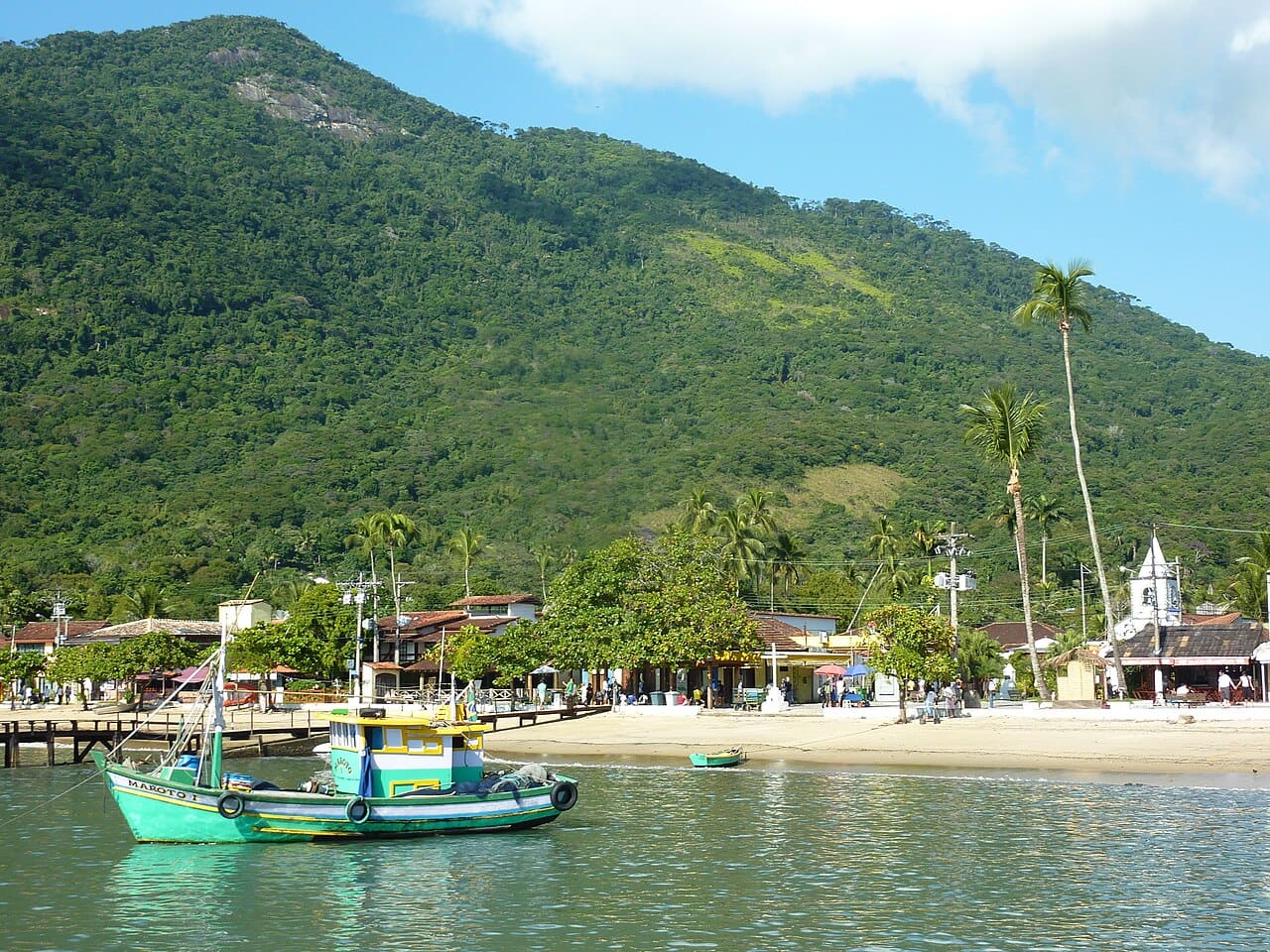
Everything you consume on Ilha Grande arrived there by boat: the kitchen gas, the kiosk beer, the guesthouse mattress. That sentence explains half the island’s prices, and the other half is explained by the lack of competition in places where there is only one bar on the beach. None of this makes the trip expensive by obligation: you can do Ilha Grande on R$ 200 a day or on R$ 800, and the difference lies in the choices, not in luck.
The people writing this operate a boat in this bay every week and talk to travelers of every budget on the same deck. These are the 2026 numbers, organized into three budgets, with our owner’s reading at the end.
What you pay before stepping onto the sand
The crossing is the entry fee. The flexboat from Conceição de Jacareí costs R$ 45 to 150 each way; the ferry from Angra or Mangaratiba costs R$ 20.50, with very few departures. Anyone coming from Rio by bus pays R$ 53 to 117 to Angra, and anyone coming by car leaves R$ 30 to 40 per day at a mainland parking lot, a charge that keeps running while you are on the island: four days add up to about R$ 120 to 160 of parked car. One simple saving almost nobody makes: buy the flexboat round trip together, which usually comes out cheaper and also guarantees a seat on the Sunday crossing, the first to sell out. Schedules and details for each door are in how to get to Ilha Grande.
Sleeping: from R$ 46 to no price ceiling
The 2026 range in Vila do Abraão:
- Hostel bed: R$ 46 to 165 a night, depending on season and dorm. It is the island’s most stable bracket.
- Camping: R$ 40 to 80 per person, with simple facilities.
- Simple guesthouse: R$ 200 to 350 for a double room with breakfast.
- Mid-range guesthouse: R$ 350 to 600, usually with a balcony and hammock.
- Charm and comfort: from R$ 700 up, with beachfront charging the top of the table.
Two caveats from people who watch the price tide rise and fall: on New Year’s Eve rates comfortably pass R$ 800 and come tied to four or five night packages, and on any holiday the island charges summer rates. The full high and low season calendar is in best time to visit Ilha Grande.
There is also the cheapest and most beautiful way to sleep on the island: camping in the locals’ backyards at Aventureiro, on the ocean coast, inside the limited visitation reserve. The overnight permit is free and the process is explained in Aventureiro beach.
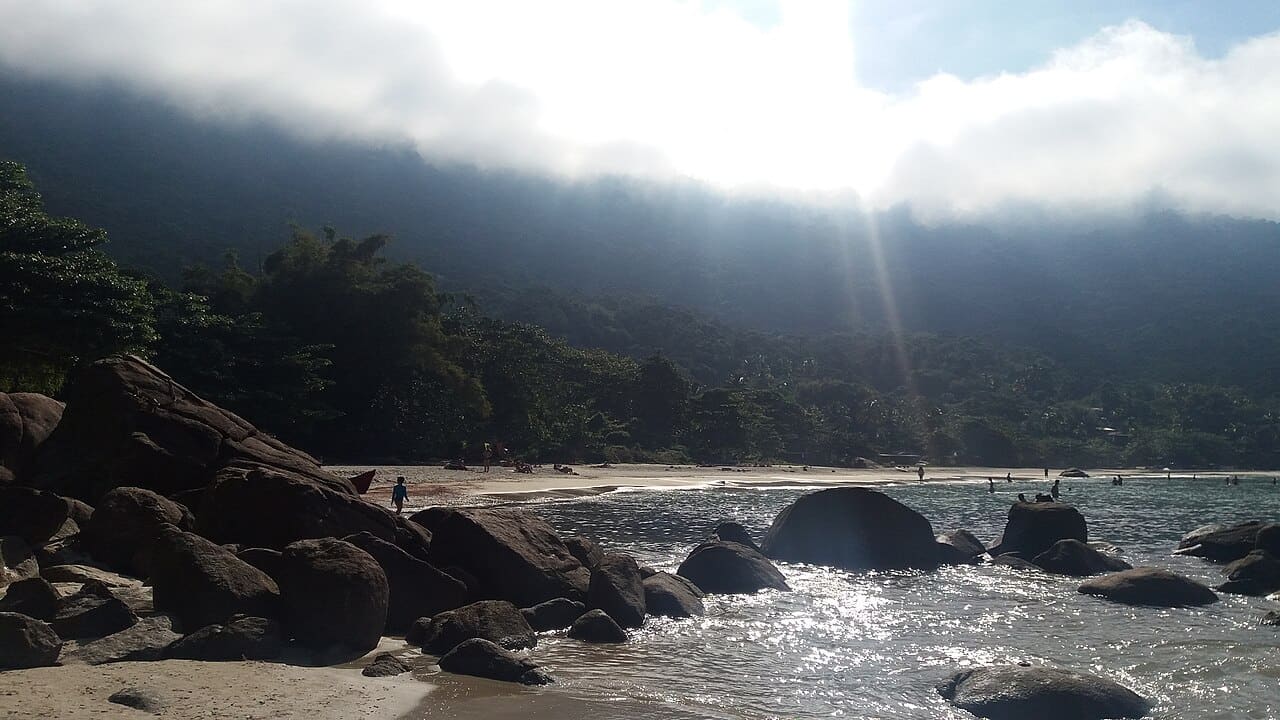 At Aventureiro, you sleep at campsites in caiçara family backyards: the island’s smallest budget. Photo: Renata Paganotto, CC BY-SA 4.0, Wikimedia Commons
Eating: the village, the buffet and the lonely kiosk
In Abraão, an honest set lunch runs between R$ 35 and 55, and the pay-by-weight buffets hold up lunch for anyone counting coins. Fish or moqueca stew for two, at a waterfront restaurant, goes from R$ 120 to 180. The village mini-market charges an island premium on everything (remember the boat that brought every can?), so anyone cooking at the hostel does well to cross over with groceries from the mainland.
The hidden cost is the isolated beach: a kiosk with no competitor charges whatever it wants, and beaches like Lopes Mendes simply have none. Water and snacks in the backpack are no small saving; they are the difference between coming back from the trail fine or in trouble. And bring cash: the phone signal fails and the village card machines go down with it.
If it moves, it costs: taxi boats and tours
Walking is free and is the island’s best investment: the park’s 16 numbered trails charge nothing, and they are mapped in Ilha Grande hiking trails. The rest goes by boat and has a price list:
- Taxi boat between Abraão and nearby beaches, like Pouso (the doorway to Lopes Mendes): around R$ 50 per person each way, almost always with a four passenger minimum to depart.
- Shared speedboat around the lagoons and northern beaches, the village’s best selling trip: R$ 120 to 250 per person, depending on route and season. It is the usual way to reach Lagoa Azul and Lagoa Verde.
- Schooner on a partial island loop: slightly cheaper than the speedboat, in exchange for more people and fewer stops.
Where the money disappears without warning
Every Ilha Grande spreadsheet blows up in the same four places, so here is the ready-made list. Mask and fin rental costs R$ 20 to 40 a day, and three days of use would already pay for your own kit bought on the mainland. The late afternoon taxi boat charges more than the morning one, because it knows you have no other way back. A speedboat trip canceled by swell does not always get a new date, and refunds are a patience conversation: in cold front season, book the trip for the start of your stay, not the end. And the lonely kiosk on the isolated beach charges triple the mini-market price for water, which hands the backpack back its title of best investment of the trip.
On cash: the rule that works is R$ 100 to 150 per day per person on the mid-range profile, enough to cover taxi boat, kiosk and dinner on the day the signal goes down for good.
The three budgets, per day and per person
| Style | Sleeps | Eats | Moves | Total per day |
|---|---|---|---|---|
| Backpacker | hostel or camping (R$ 46 to 90) | buffet and hostel kitchen (R$ 60 to 90) | trails and 1 shared speedboat over the stay | R$ 180 to 260 |
| Mid-range | simple to mid guesthouse, shared (R$ 130 to 250) | set lunch, waterfront dinner (R$ 100 to 150) | 1 tour every other day | R$ 320 to 480 |
| Comfort | boutique guesthouse (R$ 350+) | restaurants at both ends of the day | taxi boat and private tour | R$ 650 or more |
Outside the table sit the crossing, transport to the boarding point and parking, which are the same for all three styles. Multiplying by the right number of days (the math on how many days the island deserves is in how many days in Ilha Grande), a mid-range three day itinerary for a couple closes at around R$ 2,100 to 2,600, all in.
The owner’s reading: add up the parts or take the whole package
Now the math we do from inside the business, with the interest declared: the boat is ours. The 3 night Albatroz expedition to Ilha Grande, leaving from Paraty, costs from R$ 1,491 per person, in up to 10 interest-free installments, and that price already includes the air-conditioned cabin bed, the onboard chef with full board from the second day, the entire crossing (which stops existing as a line item, because the boat is the accommodation) and the route’s high points at no extra cost: Lagoa Azul in the morning, an afternoon in Vila do Abraão, Lopes Mendes early via Pouso and the late afternoon at Lagoa Verde, with a transparent kayak and snorkel gear in the boat’s locker.
Against the R$ 1,050 to 1,300 per person of the mid-range land itinerary, the difference buys what has no line in the spreadsheet: waking up already inside the tour and seeing Brazil’s most famous beach before the day’s schooners. The usual honesty closes the account: in backpacker mode, going on your own wins comfortably, and anyone who wants Aventureiro, Dois Rios or Pico do Papagaio needs the days on land anyway, because the expedition does not go there.
The spreadsheet closes, the tide opens
Ilha Grande fits almost any pocket, as long as the pocket knows the season and the style it picked. Settle your number, add a 15% cushion for the unexpected (rain changes plans, and plan B is in things to do when it rains) and go. The full picture of what the island offers, to decide where the spending is worth it, is in our guide to things to do in Ilha Grande.