
How to get to Ilha Grande: crossings, prices and the route by sea
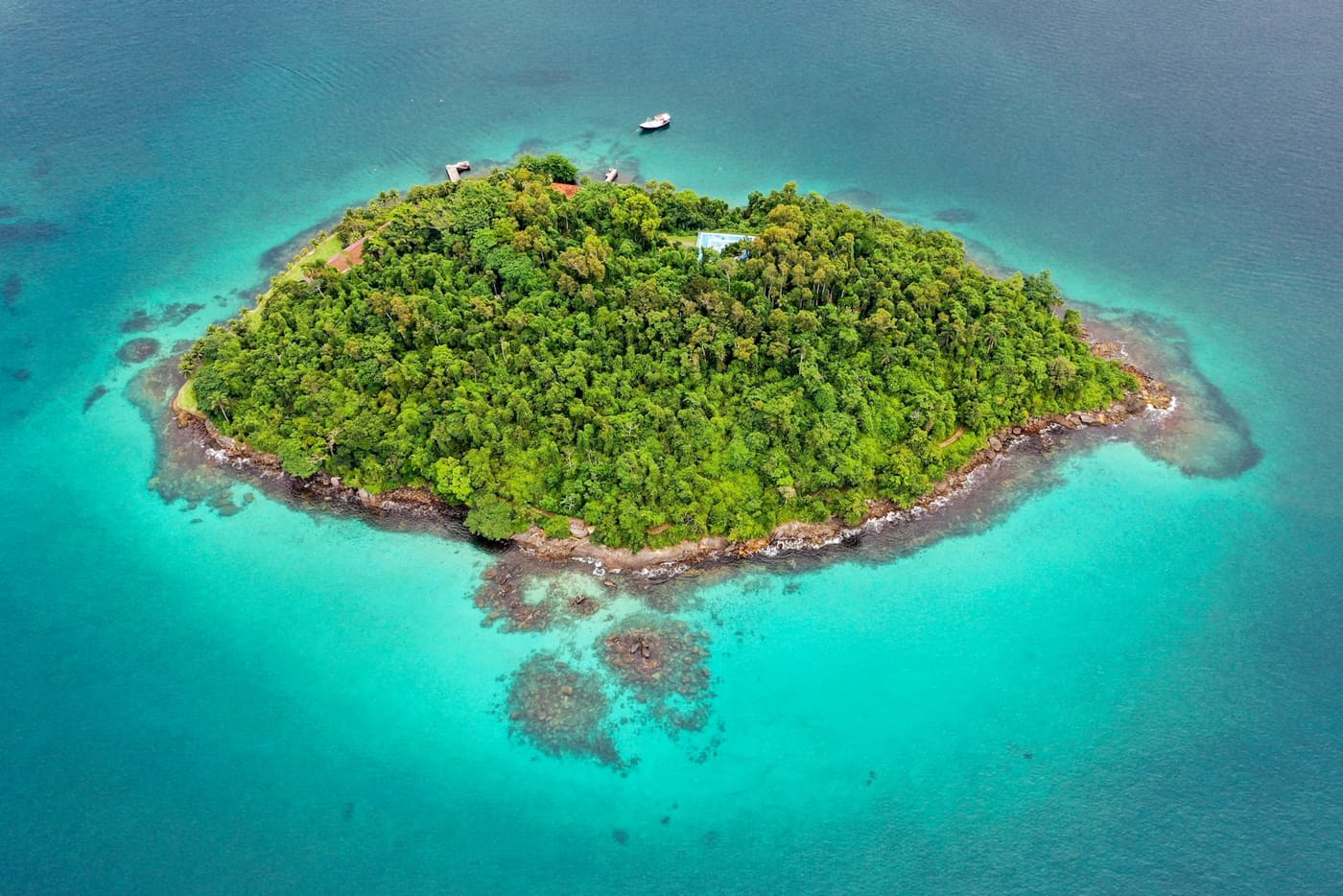
Ilha Grande has no bridge, no airport and no cars. Every arrival is by sea, and the real choice is not “how to get there” but through which door: three points on the mainland run regular crossings to Vila do Abraão, each with its own price, timing and trap. We know these waters from work, because our group’s schooner crosses the bay every week, and this guide is the answer we give when someone asks on the pier which route would suit them.
Here are the four doors, with 2026 prices, and at the end the option outside the box: arriving asleep at sea.
The crossing map
| Departure | Type | Time | Price each way | Frequency |
|---|---|---|---|---|
| Conceição de Jacareí | flexboat and catamaran | 20 to 25 min | R$ 45 to 150 | roughly hourly, 8 am to 5 pm |
| Angra dos Reis | flexboat | 30 to 50 min | R$ 75 to 100 | throughout the day |
| Angra dos Reis | ferry | 1h10 to 1h30 | R$ 20.50 | 1 per day: 3:30 pm weekdays, 1:30 pm weekends; return 10 am |
| Mangaratiba | ferry | 1h20 to 1h40 | R$ 20.50 | 1 per day: 8 am; return 5:30 pm |
Ferry schedules change often and holidays reshuffle everything; confirm the day before with the operator or your accommodation.
Conceição de Jacareí: the fast door
Conceição de Jacareí is a district of Mangaratiba on the edge of the Rio-Santos highway, half an hour before Angra for anyone coming from Rio, and it became the island’s default door for a simple reason: it is the closest point on the mainland to Abraão. The flexboat crosses in 20 to 25 minutes and costs R$ 45 to 150 each way, depending on operator, time and how far ahead you buy. Departures run roughly every hour, from 8 am to 5 pm, with returns from Abraão until around 5:30 pm.
The tip from people who watch the flow: on holidays, buy the round trip together and in advance, because the last Sunday departures sell out and the pier line grows to the size of nobody’s patience.
Angra dos Reis: the cheap ferry and the flex
Angra offers both ends of the spectrum. The ferry costs R$ 20.50 and is by far the cheapest crossing, but our honest opinion is that it only works for people with a flexible itinerary: one departure per day (3:30 pm on weekdays, 1:30 pm on weekends), a trip of up to 1h30, and a return from Abraão at 10 in the morning, which amputates your last day of island. We did that math in detail in the guide to how many days in Ilha Grande.
For civilized departure times out of Angra, flexboats leave from around the pier throughout the day, at R$ 75 to 100 each way, crossing in 30 to 50 minutes.
Mangaratiba: the 8 am ferry
The Mangaratiba ferry leaves at 8 in the morning, every day, for the same R$ 20.50. It is the best friend of anyone who sleeps in Rio and gets up early: you can be on Abraão’s sand before 10 am having paid the price of an açaí bowl. The matching return leaves Abraão at 5:30 pm, which makes Mangaratiba the only ferry that gives you back a full last day. The limitation is the same as its Angra sibling: a single departure, and real crowds in summer.
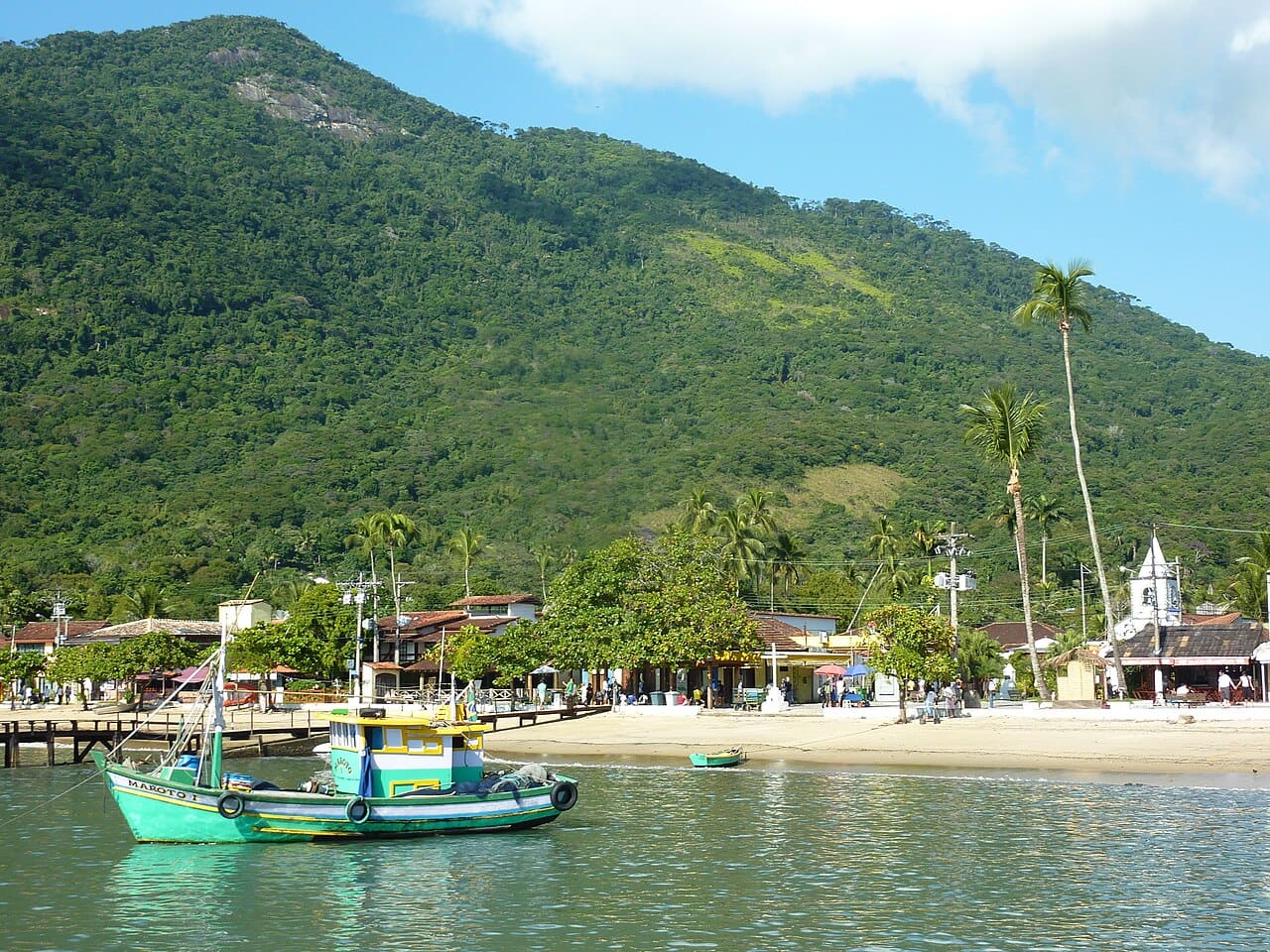 The Abraão pier, where all the doors lead. Photo: Dave Lonsdale, CC BY 2.0, Wikimedia Commons
By bus from Rio
The Costa Verde bus company links Rio’s bus terminal to Angra for R$ 53 to 117, in 3h to 3h30 of travel. For the crossing via Conceição de Jacareí, ask to get off at the district’s highway junction (drivers know the request by heart) and walk about 10 minutes to the pier ticket windows. The bus plus flexboat combination is the standard route for car-free travelers, and the rest of the region works the same way: the guide to the Costa Verde without a car ties all the connections together.
By car: where it stops (because it does not cross)
Cars do not enter the island, so the car’s trip ends at a mainland parking lot. In Conceição de Jacareí and in Angra, daily rates run around R$ 30 to 40, in simple lots a few minutes from the boarding point. It works well, with two warnings: on holidays the lots closest to the pier fill up before 9 am, and the charge is per running day, so four days of island add up to about R$ 120 to 160 just for a parked car. That line goes into the full spreadsheet of Ilha Grande travel costs.
Anyone coming from São Paulo along the Rio-Santos passes through Paraty first, in which case read the next section before choosing your boarding point; the route there is in how to get to Paraty.
Coming from São Paulo
There is no direct bus line between São Paulo and the boarding piers. By car, the route is the Rio-Santos: about 5 hours to Paraty and another 1h40 of curves to Conceição de Jacareí. By bus, the least bad path is to break the trip in Paraty and continue on a local line to Angra the next morning, which, let’s be fair, is already half an argument for treating Paraty as part of the itinerary instead of a corridor. For anyone coming from the São Paulo side, the door in the next section solves the whole equation: boarding happens in Paraty itself, no stretch to Angra required.
The arrival in Abraão
It helps to know what awaits on the other side: the boat pulls up to the village’s concrete pier, with no terminal, no baggage belt and no taxi, and your luggage continues along a dirt street, in your hands or in one of the wheelbarrows that work as freight. Guesthouses farther out usually send someone to fetch you if you tell them your arrival time; hostels generally do not. In ten minutes of walking you cross the entire village, which gives you the measure of the place: the big city stayed on the other side of the water, and that is the good news.
The door outside the box: arriving asleep at sea
All the routes above treat the crossing as a toll: a stretch to get through before the trip begins. There is a way in which the crossing is the trip. The 3 night Albatroz expedition, our group’s 23 meter schooner, leaves from Paraty: boarding at 6 pm at the marina, first night docked with the historic center on foot, and the crossing to the island happens in the small hours, with you asleep in your cabin. When you wake, the chef’s coffee is already served with Ilha Grande bay in the window, and the morning starts at Lagoa Azul, before the day’s speedboats.
The contrast with the flexboat line needs no adjectives: nobody hauls a backpack through a ticket window at 7 am. It is the door we would recommend to a friend, said with the usual transparency: the boat is ours, and the route covers the island’s core (Lagoa Azul, Abraão, Lopes Mendes early, Lagoa Verde), not the far ends like Aventureiro and Dois Rios. Upcoming departures are on the Albatroz Instagram.
Crossing tips from people who cross all the time
- The wind enters the bay almost every afternoon and the sea gets choppy: anyone prone to seasickness should prefer morning crossings, a seat toward the back and the horizon in view.
- Bring a soft backpack, not a hard suitcase: in Abraão your luggage travels by wheelbarrow along dirt streets.
- Withdraw cash before boarding. In the village the signal fails and a card machine is a promise, not a guarantee.
- Confirm the last return crossing as soon as you arrive, especially outside summer, when schedules shrink without notice.
- Rain alone does not cancel the flexboat, but a cold front swell does. Keep half a day of slack in your plan if your return flight or bus cannot move, and a plan B up your sleeve: things to do in Ilha Grande when it rains.
The pier is only the beginning
Whichever door you pick, the moment is the same: the boat slows, Abraão appears between the hills and someone on board goes quiet mid sentence. From there the island takes command. The next step is deciding what it will show you first, and our full guide to things to do in Ilha Grande exists exactly for that, with the best time to visit as backup for picking the date.