
Costa Verde without a car: the complete guide
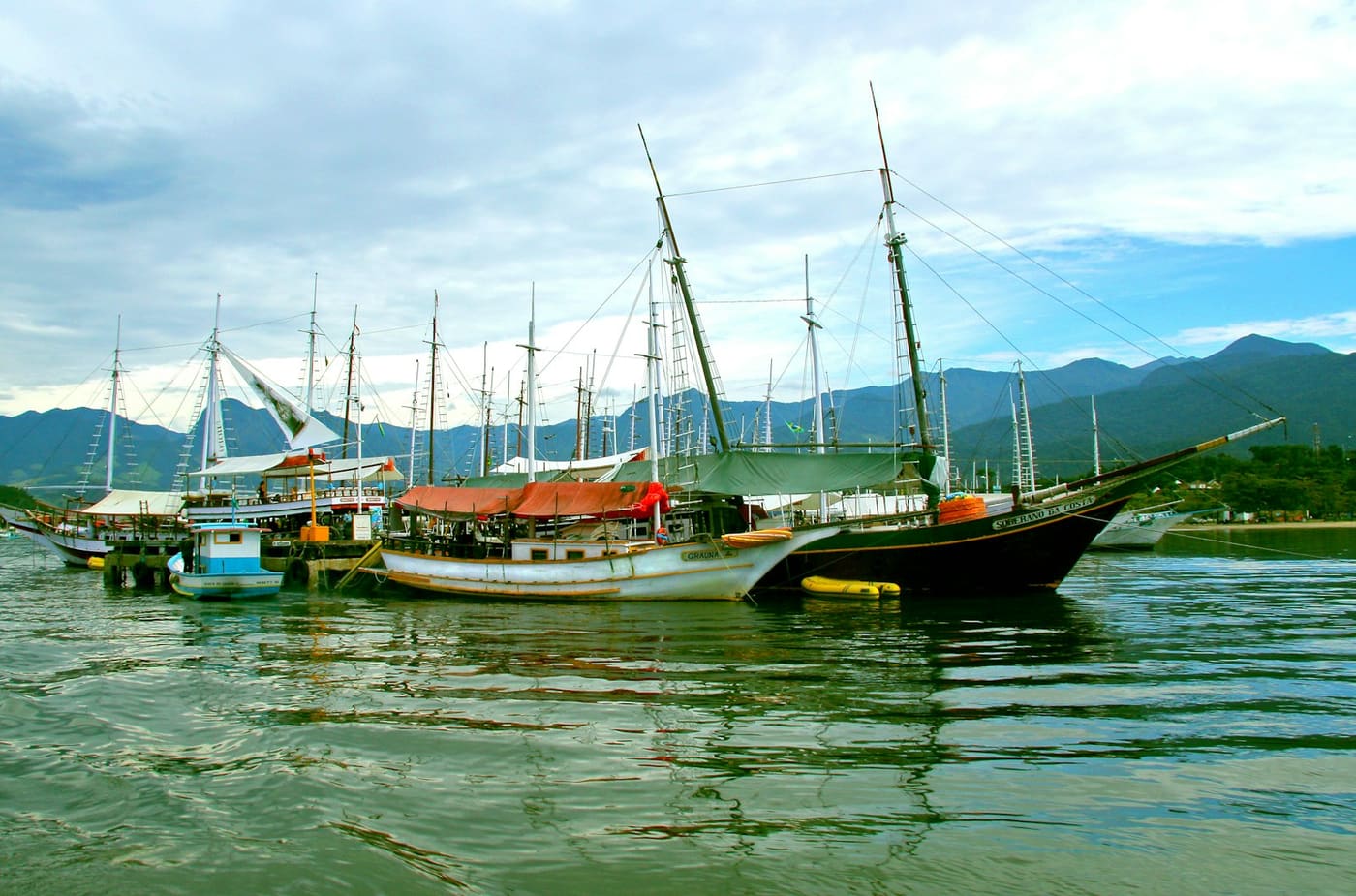
Every week someone asks whether the Costa Verde can be done without a car. We answer with the calm of people who live at the end of the line: our group’s hostel sits in Ilhabela’s historic center, on the far side of a ferry that charges nothing to anyone who crosses on foot, and every day we watch travelers step off with backpacks on, having spent not one real on the crossing. It can be done, and on some legs the car-free trip is objectively better, because Ilha Grande does not admit vehicles, the historic centers have nowhere to park, and the Rio-Santos jammed on a holiday turns any driver into a regretful passenger.
What you cannot do is improvise. The region’s public transport works, but some legs have very few departures and there is one weak link in the middle of the route. This guide covers the whole corridor, leg by leg, with 2026 prices and the warnings that make a difference. For the overview of the region before diving into logistics, start with the definitive guide to the Costa Verde.
The general logic
The Costa Verde is a line of about 294 km between Mangaratiba (RJ) and São Sebastião (SP), with the Rio-Santos highway as its backbone. Without a car, you will travel that line combining four modes: long-distance bus at the ends (leaving Rio or São Paulo), regional bus between the towns, a boat to Ilha Grande and the ferry to Ilhabela.
The direction does not matter much, but the order of the connections does. Arriving through Rio, you go down the coast: Ilha Grande, Paraty, Ubatuba, Ilhabela. Arriving through São Paulo, you do the reverse. Either way, the jump between Paraty and Ubatuba is the leg that demands planning, and we will get there.
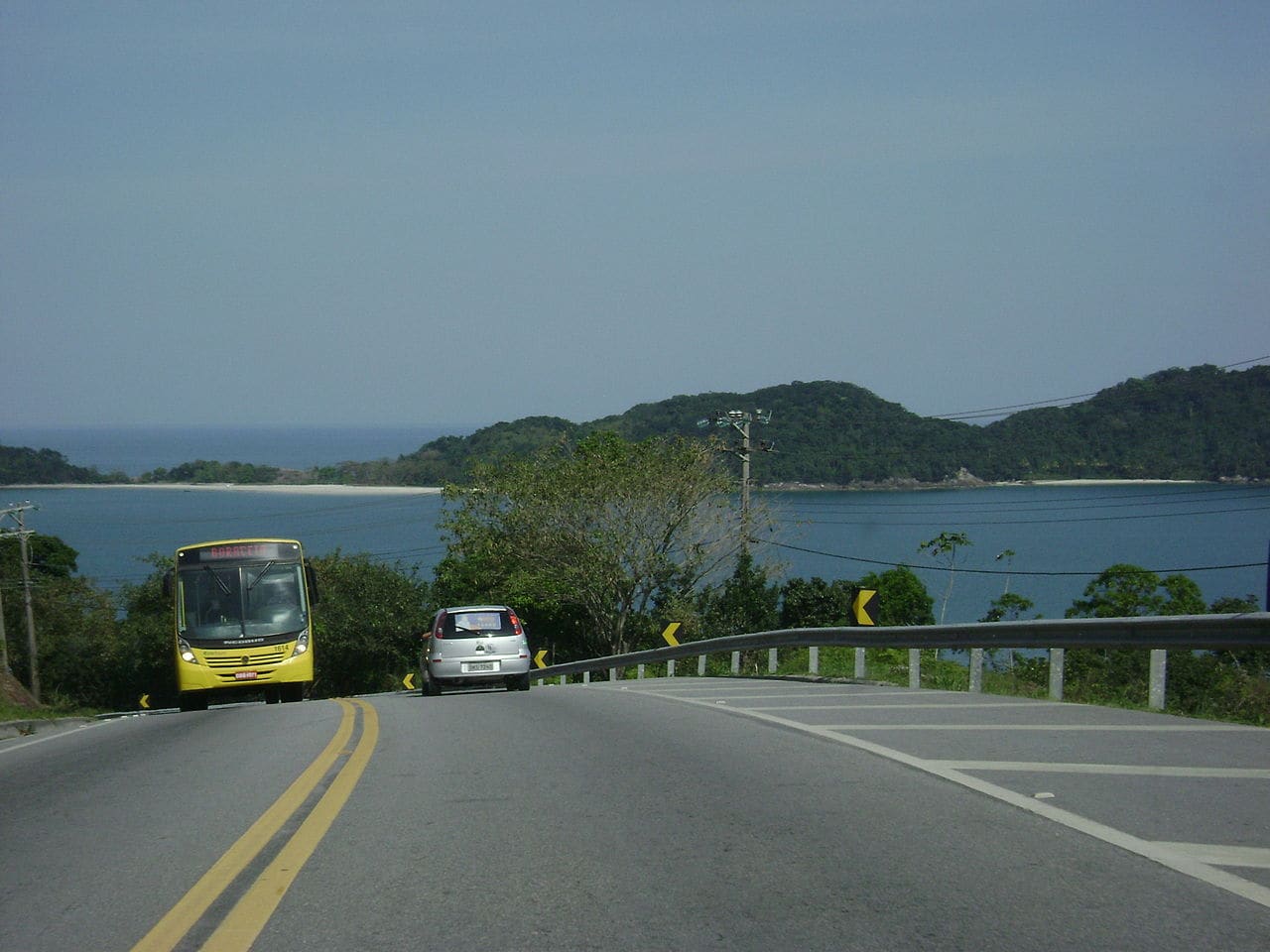 The Rio-Santos: every bus on this trip runs along it. Photo: Cacobianchi, public domain, Wikimedia Commons
Leg 1: from Rio to Angra or Conceição de Jacareí
The Costa Verde bus company links Rio’s bus terminal (Novo Rio) to Angra dos Reis in 3h to 3h30, with tickets between R$ 53 and R$ 117 depending on the departure time and how far ahead you buy. The same company continues to Paraty, from about R$ 120 and 4h30 of travel.
One trick that saves time: if your destination is Ilha Grande, you do not need to go all the way to Angra. The bus passes through Conceição de Jacareí, a roadside village where the fastest boats to the island depart. Tell the driver and get off there.
Leg 2: the crossing to Ilha Grande
One thing before the boats: if your plan joins Ilha Grande and Paraty, and without a car it almost always does, the number one recommendation from the people writing this is not in this section, it is in leg 4, because it leaves from the Paraty pier and solves crossing, bed and food in one move. What follows is the independent path, and it has two schools. The first is the flex boat (shared speedboat) from Conceição de Jacareí: a 20 to 25 minute crossing, departures roughly every hour between 8 am and 5 pm, prices between R$ 45 and R$ 150 each way depending on the operator and the season. It is the option for anyone short on time.
The second is the conventional ferry (Barcas Rio), which costs R$ 20.50 and is the favorite of anyone counting coins. The catches: from Mangaratiba the crossing takes 1h20 to 1h40, from Angra the ferry leaves at 3:30 pm on weekdays (1:30 pm on weekends), and the return from Vila do Abraão is at 10 in the morning. There are very few departures per day, so the ferry defines the shape of your itinerary instead of fitting into it. Check the return before you cross; missing the 10 am ferry means paying for a speedboat or sleeping one more night.
On the island, transport is on foot, by bicycle or by taxi boat. We detail the distances and routes in the guide to things to do in Ilha Grande, including how to reach Lopes Mendes combining boat and trail.
Leg 3: Angra to Paraty
Back on the mainland, Colitur’s L101 line connects Angra to Paraty in about 2h for R$ 27.50. It is a regional bus that stops along the Rio-Santos, which also makes it useful for getting off at beaches and condominiums along the way. The ticket is settled on the spot, with no need to buy in advance most of the year; on long holiday weekends, get to the terminal with time to spare because the line grows.
Leg 4: Paraty and surroundings
Paraty itself needs no vehicle: the historic center is closed to cars and everything is done on foot. For Trindade, 27 km away, the municipal Colitur bus covers the trip in about 40 minutes for around R$ 5, climbing and dropping over the ridge with the sea appearing between the curves. The sea outings, like the classic schooner (around R$ 60) and the boats to Saco do Mamanguá, leave from the pier in the center. And from that same pier departs the number one recommendation we promised back in leg 2, said with the interest of people who belong to the group and the conviction of people who board: the Albatroz, the house’s 23 meter schooner. These are two to five night expeditions where the bed travels with you, dinner comes out of the onboard chef’s kitchen and the night can end with the boat anchored on the still water of Mamanguá. The three night departure solves the entire Paraty to Ilha Grande stretch in one stroke, transport, bed and food together, passing Lagoa Azul, Vila do Abraão and Praia do Pouso, where the Lopes Mendes trail begins before the day’s first speedboat arrives. It is the only format in the region where transport and lodging become the same thing, and the difference shows on the clock: whoever crosses by ferry lives watching the 10 am return; whoever sleeps on board wakes up where the day begins.
Leg 5: Paraty to Ubatuba, the weak link
This is the leg that trips up the unprepared traveler. The bus connection between Paraty and Ubatuba exists, but it operates with few departures per day, and they change more often than the booking sites register. The house rule: confirm the times at the Paraty bus station as soon as you arrive in town, the day before your departure at the latest, and favor the morning departures, which leave margin for any surprise.
If the times do not match your plan, the honest alternatives are few: reorganize the itinerary to sleep one more night in Paraty, or split a taxi or transfer for the leg (sound out the cost in the hostel group chat, alone it is not worth it). What we do not recommend is betting on the last bus of the day. When it fills up or does not come, you stay.
Leg 6: Ubatuba to São Sebastião and the ferry to Ilhabela
From Ubatuba south, São Paulo’s north coast has intermunicipal buses running down the SP-055, with stops in Caraguatatuba and São Sebastião; confirm the times at the Ubatuba bus station, because they vary across the week. Anyone coming straight from São Paulo city uses Pássaro Marron: São Paulo to Ubatuba costs R$ 126 to 142 and takes about 4h; São Paulo to Ilhabela runs R$ 101 to 123, in 4h30 plus the ferry.
The São Sebastião ferry to Ilhabela is the easiest leg of the whole trip: a 20 minute crossing, departures every 30 minutes from 5:30 am to 11:30 pm, and pedestrians and cyclists pay nothing. Cars pay R$ 19 on weekdays and R$ 28.50 on weekends, charged only on the way in. In other words: for anyone traveling without a car, entering Ilhabela costs zero. From the landing, municipal buses and taxis spread out across the island, and the historic center is a short walk from the ferry; that is where we keep Hostel da Vila, an eco lodge open since 2016, where the ritual of whoever arrives on foot tends to be dropping the backpack and getting straight into the pool heated to 32°C, with the property’s 8,000 m² of forest closing in around it. What to do after that is in our Ilhabela guide.
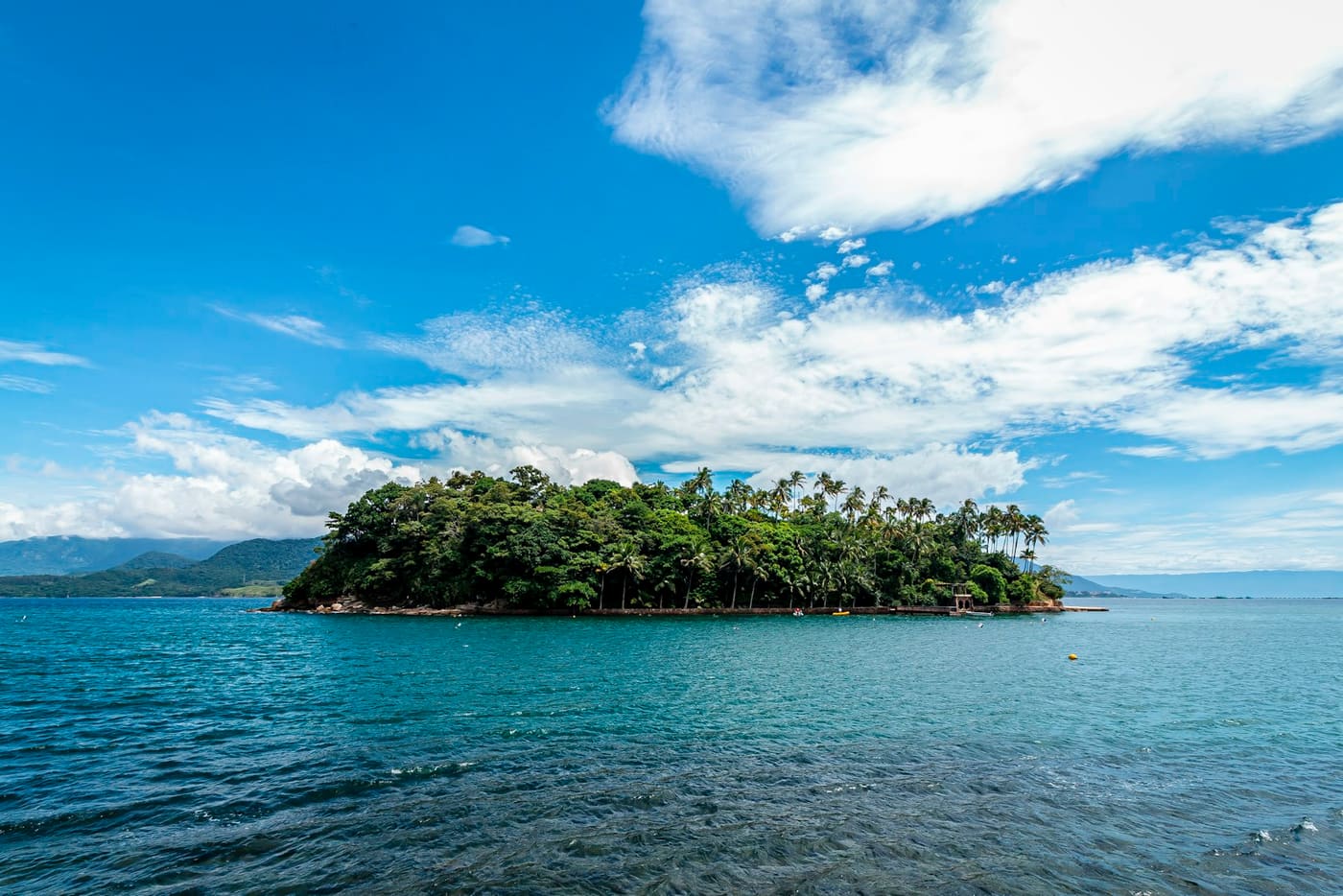 Ilhabela: the ferry is free for anyone arriving on foot. Photo: Marcos Assis, Unsplash
The complete table
| Leg | Mode | Approx. price | Time | Watch out |
|---|---|---|---|---|
| Rio → Angra | Costa Verde bus | R$ 53 to 117 | 3h to 3h30 | Get off at Conceição de Jacareí for Ilha Grande |
| Rio → Paraty | Costa Verde bus | from R$ 120 | 4h30 | Buy ahead on holidays |
| Conceição de Jacareí → Ilha Grande | Flex boat | R$ 45 to 150 | 20 to 25 min | Hourly departures, 8 am to 5 pm |
| Mangaratiba → Ilha Grande | Ferry (Barcas Rio) | R$ 20.50 | 1h20 to 1h40 | Return from Abraão at 10 am |
| Angra → Paraty | Colitur L101 | R$ 27.50 | 2h | Pay on the spot |
| Paraty → Trindade | Colitur local | R$ 5 | 40 min | Fills up on summer holidays |
| Paraty → Ubatuba | Regional bus | varies | 1h30 to 2h | Few departures, confirm at the station |
| SP → Ubatuba | Pássaro Marron | R$ 126 to 142 | 4h | |
| SP → Ilhabela | Pássaro Marron | R$ 101 to 123 | 4h30 + ferry | |
| São Sebastião → Ilhabela | Ferry | free on foot | 20 min | Every 30 min, 5:30 am to 11:30 pm |
Tickets: where and when to buy
The long-distance carriers (Costa Verde and Pássaro Marron) sell online, on their own sites and on the ticket platforms, and buying in advance usually catches the bottom of the price ranges above. The regional lines, like Colitur, work the old way: terminal ticket window or payment on the spot, no reservations. Flex boats to Ilha Grande sell at the pier and online; in high season, locking in your return time on the way out avoids a line.
The golden rule for holidays and July: treat bus tickets the way you treat lodging and buy as soon as your dates are set. The region genuinely sells out, and that applies to bus seats too. What all of this does to your wallet is detailed in Costa Verde travel costs.
Backpack or suitcase?
Backpack, no debate. The car-free trip includes: irregular stone paving in Paraty, dirt and sand streets in Vila do Abraão, boarding a speedboat while it rocks, the luggage hold of a regional bus and, if you go all the way, the ferry ramp. A wheeled suitcase survives all of that, but whoever drags one down Ilha Grande’s dirt streets swears never again.
Size matters too: a 40 to 50 liter backpack goes the whole trip with you without becoming punishment, and it leaves room on the flex boat, where big luggage sometimes pays extra or waits for the next boat. Leave what you do not need at home; beach clothes dry overnight in this climate.
When the car is worth it
Full honesty: there is one scenario where the car wins. If your focus is the remote beaches of Ubatuba and southern Paraty, which buses do not reach well, renting a car for a few days solves it, and we built the Costa Verde road trip guide exactly for that plan. But for the classic itinerary, with Ilha Grande, Paraty’s center and Ilhabela as anchors, the car spends more time parked (and paying) than moving.
Without a car, your itinerary needs to respect the timetables of each leg, which is why our 7 day itinerary and 10 day itinerary were designed with the public transport connections in mind. Follow their order and the timetables stop being a problem.