
The 9 most beautiful beaches of Ilha Grande, with honest access
Ilha Grande has more than a hundred beaches and no car to reach them. That combination explains why the most beautiful ones stay beautiful: each charges a toll of trail, boat or early alarm, and the toll filters the crowd. We write with the ruler of people who work this bay: our group’s schooner leaves Paraty and spends the year crossing Ilha Grande, so some of these beaches are part of our routine and others we know like any traveler, paying the toll.
This ranking is honest in both directions: it says what each beach does best and what it truly charges to get there. For the island’s general context, the starting point is the guide to things to do in Ilha Grande; for ferry and speedboat logistics from the mainland, the one on how to get there.
1. Lopes Mendes
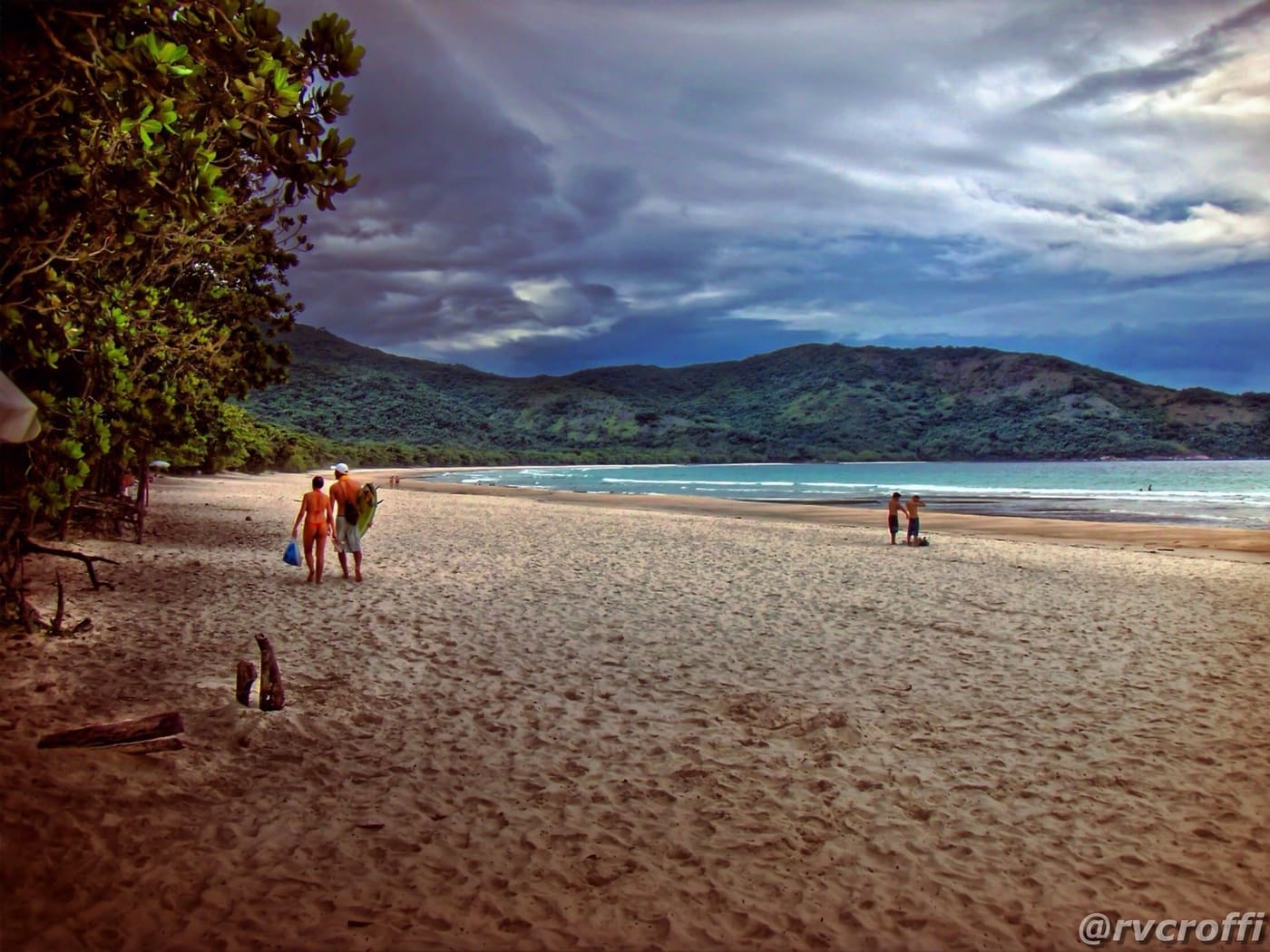
The 2.5 km of fine white sand that put Ilha Grande on the lists of the world’s most beautiful beaches. Open sea, waves that raise surfers, not one building on the shore: just sand, almond trees and the sound of the sea. The access is the island’s classic toll: boat from Abraão to Pouso beach and a 20 minute trail over the hill, or a walk of about 3 hours along the T10 and T11 trails. There is no kiosk; bring water and whatever you plan to eat.
The truth about timing: Lopes Mendes early in the morning and Lopes Mendes at noon are different beaches. The excursion boats unload people from late morning on. That is why, on the three night expedition of the Albatroz, the schooner sleeps at anchor and lands at Pouso first thing: you cross the trail with the forest still damp and reach the giant beach nearly empty, ahead of the flow. If the choice were ours (and it is, every route), it would always be this way. The beach’s full dossier is in the Lopes Mendes article.
2. Aventureiro
 Aventureiro beach and its leaning coconut palm. Photo: Renata Paganotto, CC BY-SA 4.0, Wikimedia Commons
On the other side of the island, facing the open sea of the south, Aventureiro is a caiçara village of about 100 residents inside a sustainable development reserve. The coconut palm lying over the sand became the island’s most famous portrait, but what holds the traveler is the whole: a wild beach, a community that hosts people at simple authorized campsites and visits capped at 560 people per day, which guarantees it never turns into a resort strip.
Transparency from the writers: our schooner’s route does not pass through Aventureiro, and we will not pretend it does. Go on your own, by flexboat from Angra dos Reis (the sea on the way is open, be kind to anyone who gets seasick) or by the trail from Provetá. Sleep at least one night: the day trip wastes the best of the place, which is the late afternoon without boats. The full guide is in Aventureiro beach.
3. Dois Rios
The most history-laden beach on the Rio de Janeiro coast: between two rivers that empty at the ends of the sand sit the ruins of the Cândido Mendes prison, which operated from 1903 to 1994 and gave the island decades of isolation (it is to the prison that the beaches owe being so preserved). Today the village is run by the state university, which maintains the Museu do Cárcere prison museum on site. Strong sea, wide sand, almost nobody.
Access is by trail, the T14, about 2 hours of walking each way from Abraão along the old prison road. Leave by 8 am, carry 2 liters of water and check the museum’s opening hours before going. The full story is in the Dois Rios article.
4. Lagoa Azul
Here an explanation is due: Lagoa Azul is not a beach, it is a patch of sea. It sits among islets near Freguesia de Santana, in the part of the island closest to the mainland, and it is a shallow natural pool of light blue water where schools of sergeant majors surround anyone who gets in. There is no sand to spread a towel on: you arrive by boat, swim, snorkel and move on.
The detail that changes everything is the clock: being close to Angra, the lagoon receives the mainland schooners and fills up in the middle of the day. Early in the morning, it is another place. The comparison with its sibling on the northwest side, timing included, is in our Lagoa Azul or Lagoa Verde piece.
5. Lagoa Verde
The other lagoon, on the northwest coast, between Longa beach and Araçatiba. Also a patch of sea, not a beach, and here the color comes from the reflection of the forest and the bottom: a bottle-glass green, with greenish corals, seahorses and, with luck, a turtle. It is more sheltered and usually calmer than the Azul, especially in the late afternoon, when the excursion boats have gone back and the light drops low. If you are staying in Araçatiba, you can reach it by a short trail or by kayak; from Abraão, only by boat. Between the two lagoons, it is our favorite, and we explain why in the comparison.
6. Caxadaço
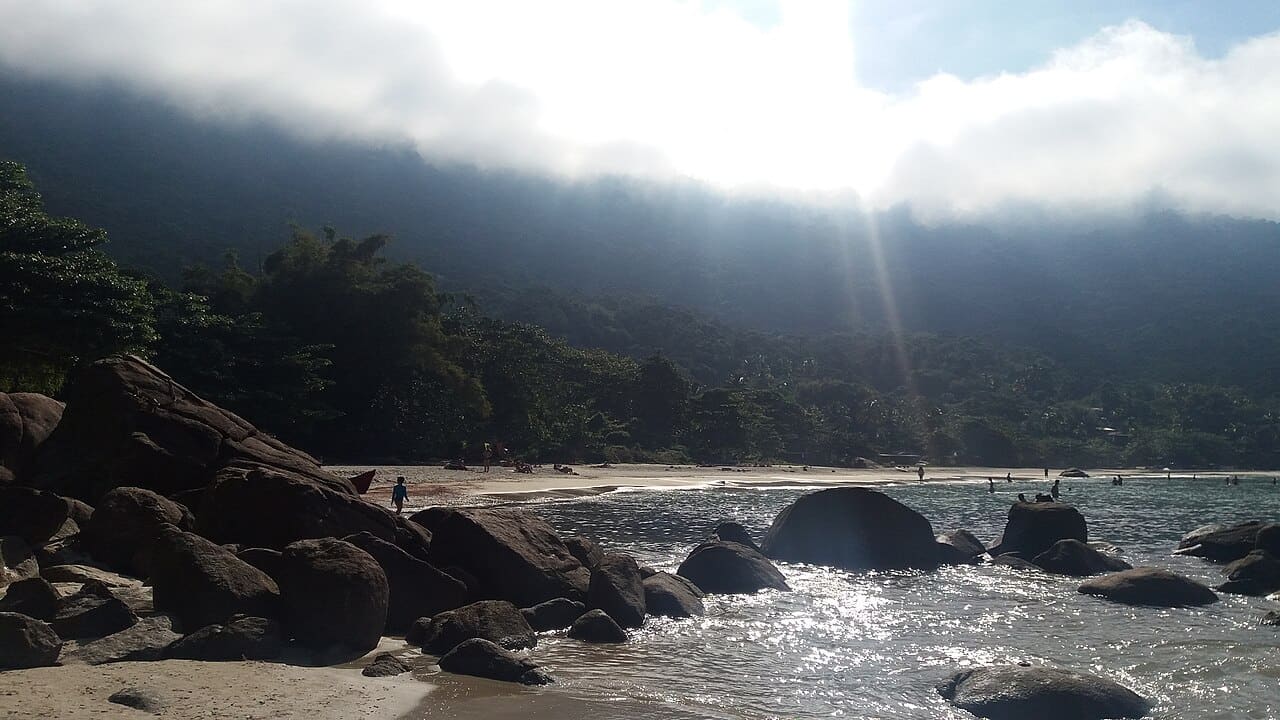
A hidden fold of rock near Dois Rios: a small beach, a few meters long, protected from the open sea by enormous boulders that form a deep, transparent natural pool. It is one of the island’s best mask and snorkel spots, with corals and fish in the right-hand corner. You reach it by the T15 trail, about 4 km from Dois Rios with a steep final descent, or by boat on the island loop routes. Combine it with Dois Rios on the same day and go in shoes with good soles: the descent is slippery.
7. Parnaioca
The deserted beach for anyone who thinks Lopes Mendes has too many people. It sits on the south coast, past Dois Rios along the T16 trail, and combines open sea, a freshwater river to rinse off the salt and the silence of a place where a caiçara village once stood and where today only a few houses and a campsite remain. It is a long, wild crossing: only with the whole day ahead of you, good fitness and, preferably, company. On good sea days, some island loop boats stop at the sand; ask at the Abraão pier.
8. Praia Preta
The most underrated on the list, because it is only 20 minutes on foot from the village and people confuse close with dull. The sand, dark with heavy minerals, glitters in the sun, a stream forms a freshwater pool at the entrance, the ruins of the Lazareto (1886-1913) molder in the background and the rocks at the corners hold good snorkeling. It is the perfect beach for the first or last day, when there is no time for a boat. Combine it with the 1893 aqueduct on the same circuit, the T1 trail, and bring a mask: the details are in the Vila do Abraão guide.
9. Feiticeira
A small cove on the northwest side, with calm, transparent water and a waterfall up a short trail nearby to complete the day of fresh and salt water. It appears on the half-loop boat routes and offers good snorkeling by the rocks. Micro tip: on the boat routes it is usually a quick stop; if the idea is to stay, arrange a taxi boat to pick you up later.
The mental map for choosing
A simple way to organize the decision: beaches on the mainland side (Abraão, Preta, Feiticeira, the lagoons) have calm water and easy access; open sea beaches (Lopes Mendes, Dois Rios, Parnaioca, Aventureiro) are the wild giants that charge a trail or a longer boat. Whoever has two days stays in the first group plus Lopes Mendes; whoever has four or more reaches the second. The time math is in the article on how many days to stay and the money math in what it costs.
And a reminder from people who live this coast: the beach is not everything. The island has forest trails, ruins, a 982 meter peak and a village that deserves your late afternoon; the balance is in the hiking guide. And if the trip is bigger than the island, the whole coastline between Rio and São Paulo follows the same logic of sea and forest: it is worth opening the best beaches of the Costa Verde before locking the itinerary.
In the end, the most beautiful beach on Ilha Grande is the one you catch at the right hour: Lopes Mendes at 8 in the morning beats any other at noon. Pick two or three from this list, get to them early and leave the rest for the next visit, because there will be one. Start by deciding your first: the Lopes Mendes article is the natural next step.