
Dois Rios beach: the hike, the prison ruins and the nearly empty beach
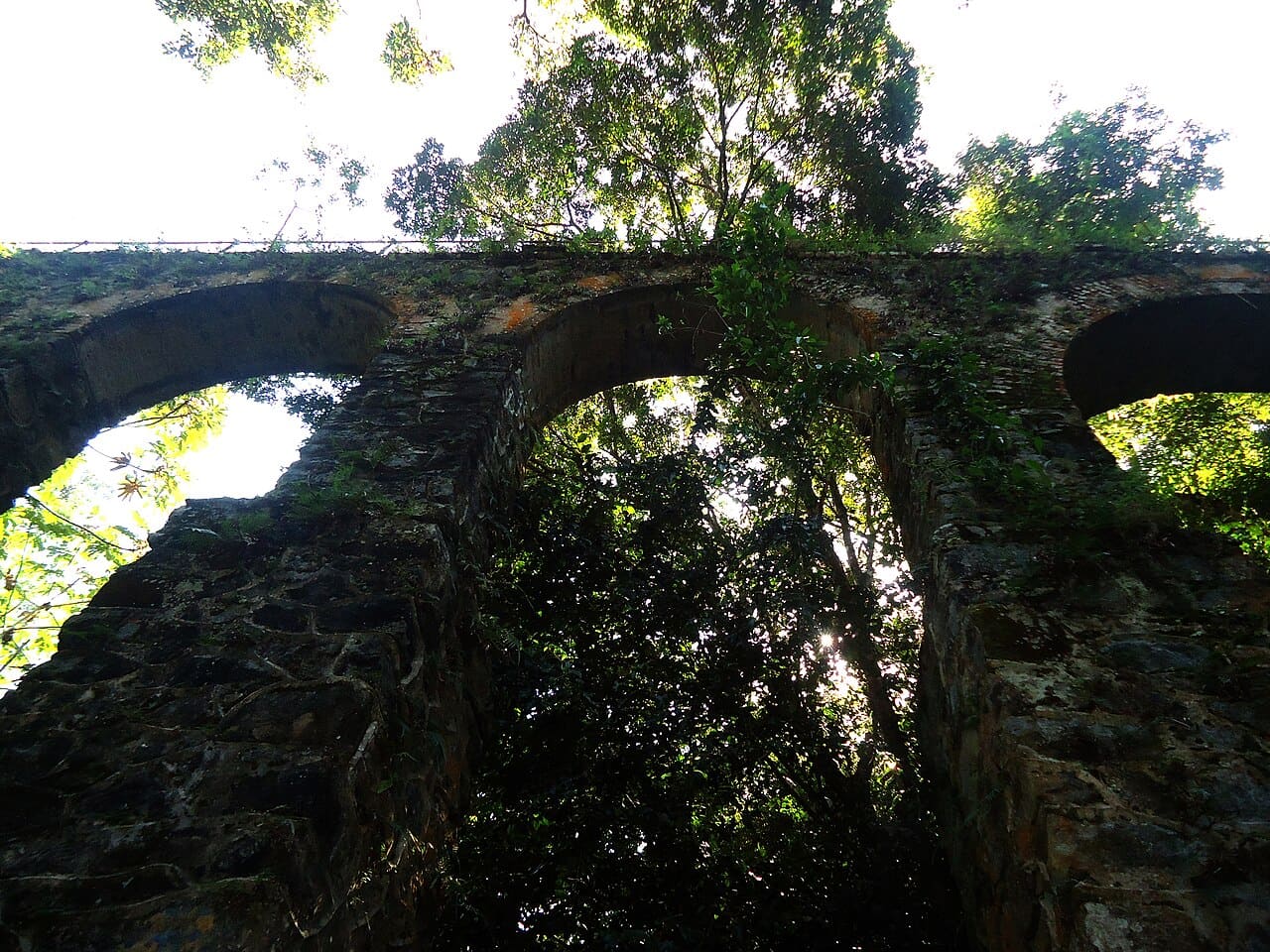
Ilha Grande has a long, pale-sand beach with a river emptying at each end, thick forest behind it and almost nobody on the sand even in January. The reason it stays that way is one of the heaviest chapters in Brazil’s history: for decades, Dois Rios was the village of the prison that earned the island the nickname “Devil’s Cauldron”. The prison came down in 1994. The beach remained, along with the ruins, a museum and a silence that leaves an impression.
Before going on, our usual honesty: we know Ilha Grande above all from the sea, because our group’s schooner sleeps at anchor on its sheltered side, and Dois Rios is precisely the place tour boats do not go. It sits on the ocean-facing side, with no regular boat line, and the real way there is on foot. This guide is for you to make that walk knowing what awaits.
Where it is and why almost nobody goes
Dois Rios lies on the other side of the mountain from Vila do Abraão, the island’s main village. The village there is tiny: a few families, many of them descendants of the old prison’s staff, and a research center run by UERJ, the state university that manages the area. There is no tourist guesthouse, the shops are minimal and not always open, and the only vehicles on the dirt road belong to the university and the residents.
The result is a rare equation: one of the island’s most beautiful beaches protected not by a gate, but by 8 km of walking. Whoever accepts the effort earns what the schooners cannot reach. It is the same sweat-for-reward spirit as the great Costa Verde hikes, with one ingredient no other has: history on a national scale at the end of the path.
The walk from Abraão
Access is by the T14, the dirt road that leaves the far end of Vila do Abraão and crosses the island’s interior: about 8 km each way, something like 2h30 to 3h of walking at a strolling pace. The first half climbs with intent, through forest that closes into a tunnel over the road; the second half descends to the village. There is no confusing fork, you can do it without a guide, and renting a bike in Abraão is a common alternative (you push it up the climbs and thank it on the way down).
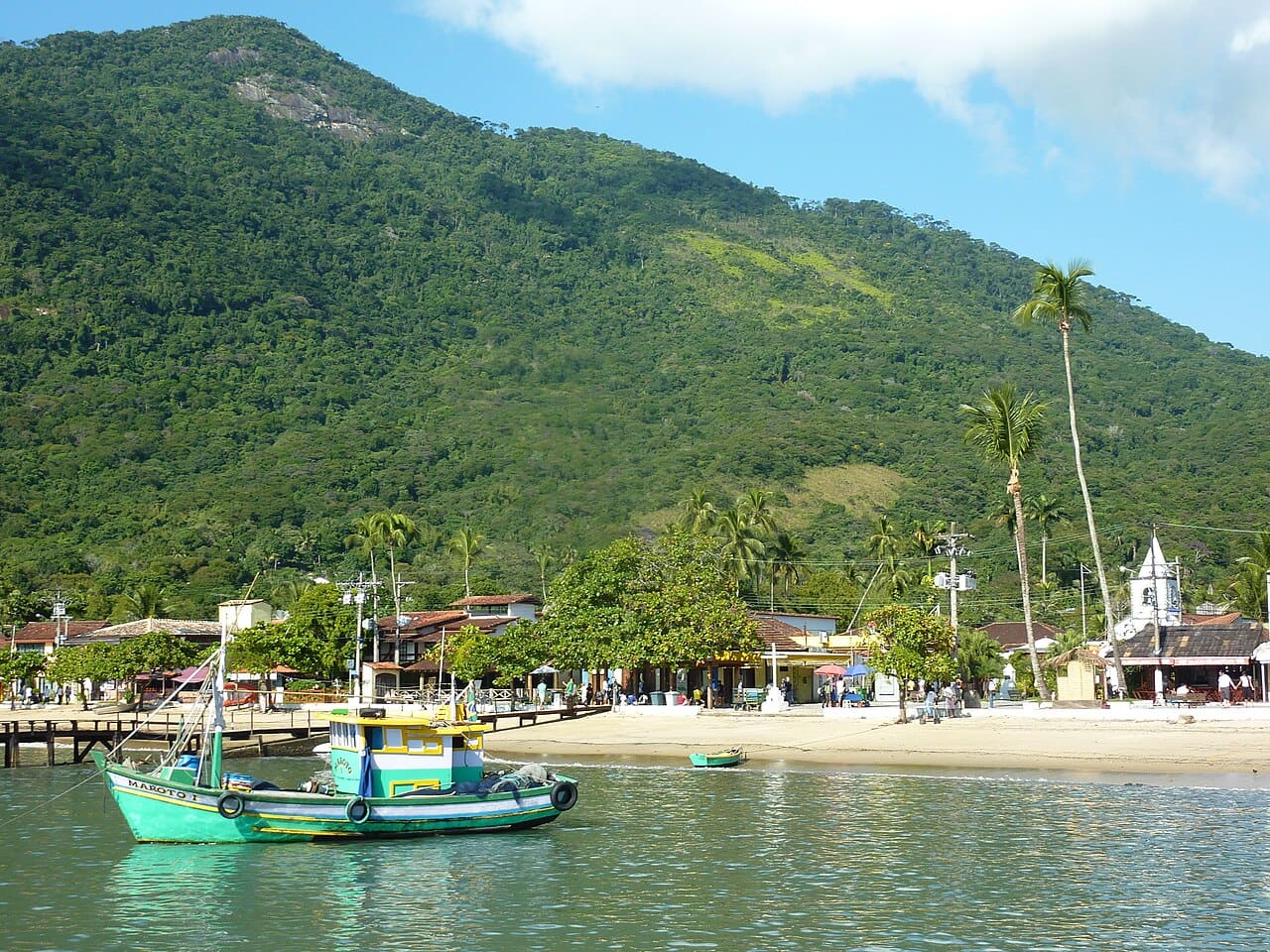 Vila do Abraão, the starting point of the walk. Photo: Dave Lonsdale, CC BY 2.0, Wikimedia Commons
The checklist is simple and non-negotiable: plenty of water (there is nowhere to buy any along the way), snacks, repellent, sunscreen and an early start, ideally before 8 am, so you do the climb in the morning shade and have the whole beach ahead of you. Along the way, the forest pays you back: troops of marmosets, blue butterflies the size of a saucer and, with luck, the song of the sabiá-una. The return can be on foot at the end of the afternoon or, if your legs beg for mercy, by asking around the village for a university vehicle, which sometimes gives rides in exchange for a contribution, with no guarantee whatsoever.
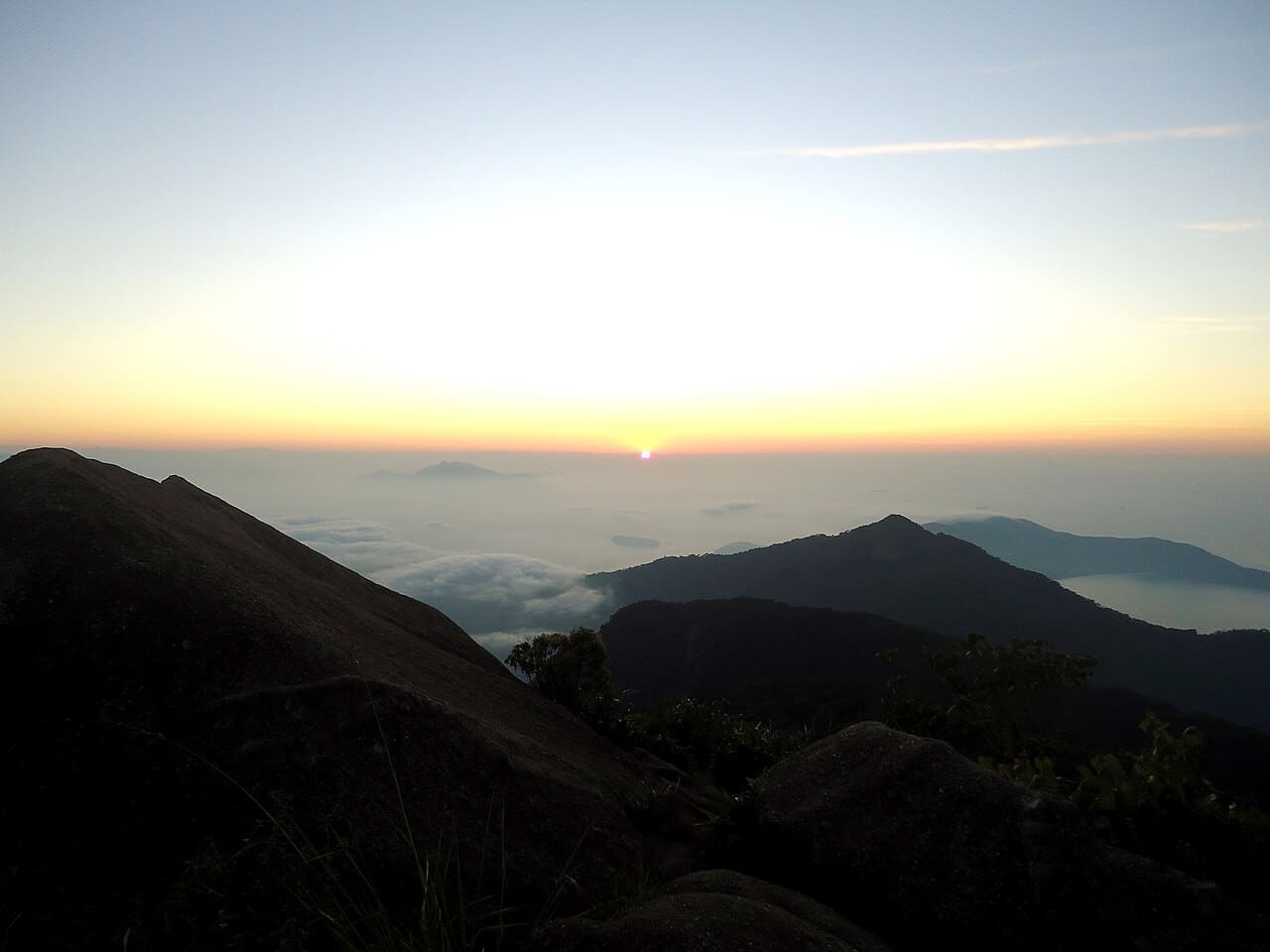 The island’s mountainous interior, with Pico do Papagaio in the background: this is the ridge the Dois Rios road crosses. Photo: MBelu, CC BY-SA 4.0, Wikimedia Commons
The prison ruins
The Cândido Mendes Penal Institute operated in Dois Rios until 1994 and held, over the course of the 20th century, common prisoners and political prisoners from both dictatorships. Graciliano Ramos passed through the village’s correctional colony in 1936 and turned the experience into “Memórias do Cárcere”. In the 1970s, the forced coexistence of political and common prisoners inside Cândido Mendes gave rise to the Comando Vermelho, a chapter the UERJ researchers document without euphemism.
In April 1994 the prison was decommissioned and, soon after, demolished with dynamite. What remained standing (walls, gateways, cells overtaken by roots) was absorbed into the university campus and can be visited. Walking among walls the forest is slowly swallowing, with the sea a few hundred meters away, produces a contrast no photo delivers: the place that was once a synonym for punishment is today one of the most serene corners of the state.
The Museu do Cárcere
The village houses the Museu do Cárcere, the core of the Ecomuseu Ilha Grande, maintained by UERJ. The collection gathers objects, documents and photographs from the island’s prison system, including pieces made by the prisoners themselves, and gives context to what the ruins only hint at. The reference hours are Tuesday to Sunday, 10 am to 4 pm, with free admission, but the museum advises booking the visit in advance through the Ecomuseu’s contact channels; confirm before you go, because opening hours in an isolated village shift with vacations and holidays.
Set aside at least an hour for the museum. The walk takes you to Dois Rios; it is the museum that makes Dois Rios reach you.
The beach between two rivers
The name is literal: the Barra Grande and Barra Pequena rivers empty one at each end of the beach, and you can close a swim in the sea with a dip in fresh water, cold and dark with tannin. The strip of sand is long, the open sea comes in strong (respect the currents, this is not a beach for swimming far out), and the frame of green hills holds not a single building in sight beyond the village rooftops.
The detail that sums up the place: on an island that receives crowds, it is common to spend an entire afternoon at Dois Rios sharing the beach with half a dozen people. It earns its place in our ranking of the most beautiful beaches on Ilha Grande, and of the big ones it may be the emptiest.
The village behind the sand deserves a slow walk: the grassy streets between the former staff houses, the little church, the football field where the university researchers play with the residents at the end of the day. It is a settlement that stopped in another time, and the feeling of wandering it after a morning of ruins and museum completes the trip: here lived jailers, prisoners, professors and fishermen, in that order and sometimes at the same time.
Where Dois Rios fits in your trip
No dancing around it: the Albatroz expedition, our group’s schooner out of Paraty, does not stop at Dois Rios. Our route allows for an afternoon in Vila do Abraão, enough time to see the Lazareto and the aqueduct nearby (the one in the photo that opens this guide, which many people mistake for the prison ruins), but not for a full-day crossing. Dois Rios asks you to sleep on the island: one night in Abraão before and, ideally, another after.
In practice, the layout we recommend for anyone who wants the ocean-facing side is to dedicate two or three days of village and trail, combining Dois Rios with Lopes Mendes and, with more stamina and a permit, Aventureiro. Our guide to things to do in Ilha Grande helps assemble that puzzle, and the one on how to get to Ilha Grande solves the crossing logistics. If you prefer still water and zero effort, your place is in the comparison between Lagoa Azul and Lagoa Verde.
When to go
Any season works for the walk, but winter (May to August) delivers a dry trail, civilized heat and better visibility. It is also when it is easiest to line up open skies with the museum operating, because an 8 km crossing in the rain discourages even the people who live on the island. In summer, leave even earlier and count on a downpour on the way back; the road turns to slippery mud on the descents. Do not attempt the crossing with heavy rain brewing and never start after 2 pm, because nightfall in the forest without a flashlight is a mistake nobody makes twice.
Dois Rios is the counterpoint your Ilha Grande was missing: a day of tired legs, heavy history and an empty beach, against the current of everything the schooners show. Lace up shoes that can take mud, leave Abraão early and go meet the side of the island that stayed out of the postcards. Afterwards, if you want the full itinerary for the island and Paraty, start with the most beautiful beaches and work down the list.