
Enseada da Cajaíba: everything you need to know
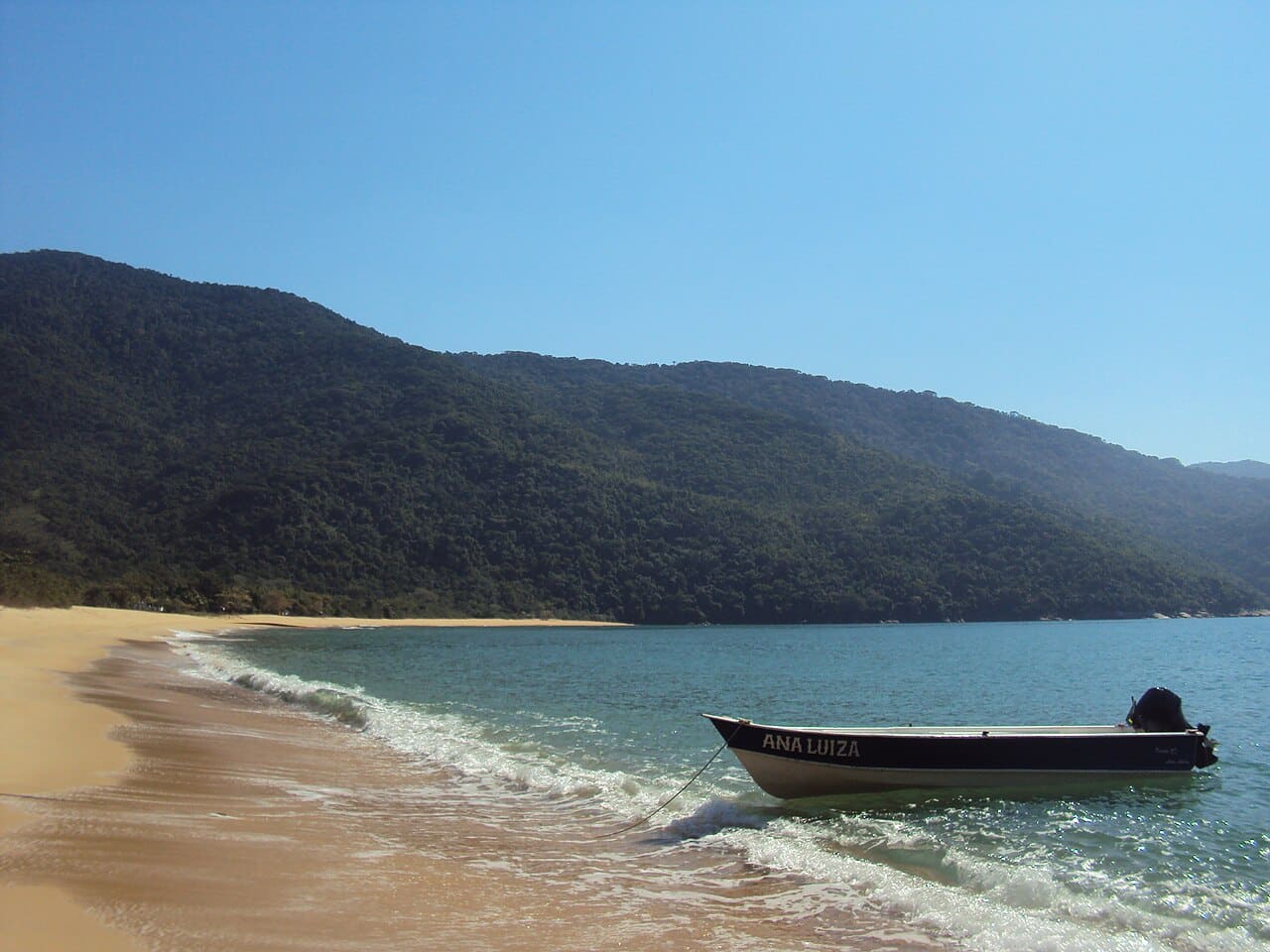
There is a stretch of the Paraty coastline where the map goes clean: no road, no power line, no hotel. It is the coast of the Juatinga peninsula, between the mouth of Paraty bay and the Saco do Mamanguá, and the Enseada da Cajaíba is its heart. We know this piece of sea from stopping in it so often: on the two night route of the Albatroz, our group’s schooner, the entire middle day happens at the Cajaíba, from breakfast and snorkeling at Ilha dos Meros to the chef’s barbecue on the sand of Praia Grande. This guide gathers what we have learned anchoring there, plus what you need to go on your own.
Where it is and why there is no road
The Enseada da Cajaíba lies south of Paraty, inside the Juatinga Ecological Reserve, within the larger Cairuçu Environmental Protection Area. The Rio-Santos highway passes far away, on the other side of the ridge, and that explains everything: the only ways in are by boat or by trail, and the people living on these beaches are caiçara communities who make their living from fishing, small crops and backyard-scale hosting.
In practice, the Cajaíba is what the coast between Rio and São Paulo was before the asphalt. Low houses behind the sand, wooden canoes overturned in the shade, generator and solar panel light, true silence after sunset. If you liked the idea of the most authentic places on the Costa Verde, this cove is the missing chapter; and when we assemble the list of the most beautiful destinations between Rio and São Paulo, the Juatinga peninsula holds its own against far more famous names.
One expectation warning that prevents frustration: do not expect infrastructure. There is no ATM, pharmacy, market or guesthouse with a front desk; there are families who host, cook and run boats. The cove is for people who understand that as the main attraction, not as a defect to work around.
Praia Grande da Cajaíba
The cove’s main beach lives up to its name, “big beach”: a long strip of pale sand, a sea that usually comes in gentle because it is sheltered, and a frame of green hills without a hotel roof in sight. It is wide enough for an entire boat’s barbecue to occupy one corner and the beach to still look empty.
At the right end as you face the sea, a short trail leaves from behind the beach and climbs along the river to the Praia Grande waterfall: two chained drops ending in a pool, the cold fresh water that completes any day of sea. The path is quick and easy to miss without directions, so ask a resident or go with someone who knows it; out there, GPS is worth less than good conversation.
Dona Dica’s stingray pastel
Every beach like this has one person who becomes the reference, and at Praia Grande da Cajaíba that person is Dona Dica. Her stingray pastel, a thin-crusted Brazilian fried pastry filled with catch from the cove itself, fried to order, is the kind of food that does not exist on a city menu: served with the simplicity of someone who cooks at home because home is right there. On our stops, going ashore to eat her pastel has become a ritual of the boat.
Beyond the flavor, there is the principle: on this coast, buying from the community is what keeps the community. Fish, pastel, handicrafts, lunch arranged the day before. The money that circulates on the sand is what allows the families to keep living off the place without selling it.
Pouso da Cajaíba and Martim de Sá
Pouso da Cajaíba is the cove’s main village, a caiçara settlement facing a clear-water beach, with no power grid and no street. From Paraty, the wooden boat takes around 2 hours; the speedboat, about 40 minutes. Leaving from Paraty-Mirim shortens it to 1h30 by boat or half an hour by speedboat. There are campsites and family lodgings in the village, all simple, all arranged directly.
From Pouso start the peninsula’s trails, and the most coveted one crosses the hill to Martim de Sá, the nearly deserted beach with a historic caiçara campsite, a classic stop on the Juatinga crossing. If you would rather not walk, you can hire a boat in the village (the reference rate is R$ 100 per person per leg, settled on the sand). It is a world of backpacks, canteens and tide tables: if that is your kind of beach, the Cajaíba will keep you busy for a week.
Ilha dos Meros: the cove’s snorkeling
At the mouth of the cove, Ilha dos Meros is the region’s mask and snorkel spot: transparent water, a rocky shore covered in life and schools of fish that circle among visitors without ceremony. It is sheltered sea, so the floating is easy even for someone who has never put a mask on. On expedition mornings, the crew’s breakfast happens with the boat stopped there, and the first swim of the day comes before the first sip. If you like that program, the equivalents across the bay are in our guide to snorkeling beaches on Ilha Grande.
The way we recommend seeing it
With no road and no regular boat line, the Cajaíba punishes the day trip: either you race the boatman’s clock, or you see the cove only in passing. Our recommendation, with the frankness of the boat’s owners, is to see it sleeping on the water. On the Albatroz two night expedition, which leaves Paraty from around R$ 990, payable in up to 10 installments, with the chef’s full board on deck, the Cajaíba day runs whole: dawn under way, snorkeling at Ilha dos Meros, the chef’s barbecue on the sand of Praia Grande, a waterfall to rinse off the salt and, at the end of the afternoon, the schooner enters the Saco do Mamanguá, the fjord next door, where the night ends in a beach bonfire and the boat sleeps at anchor.
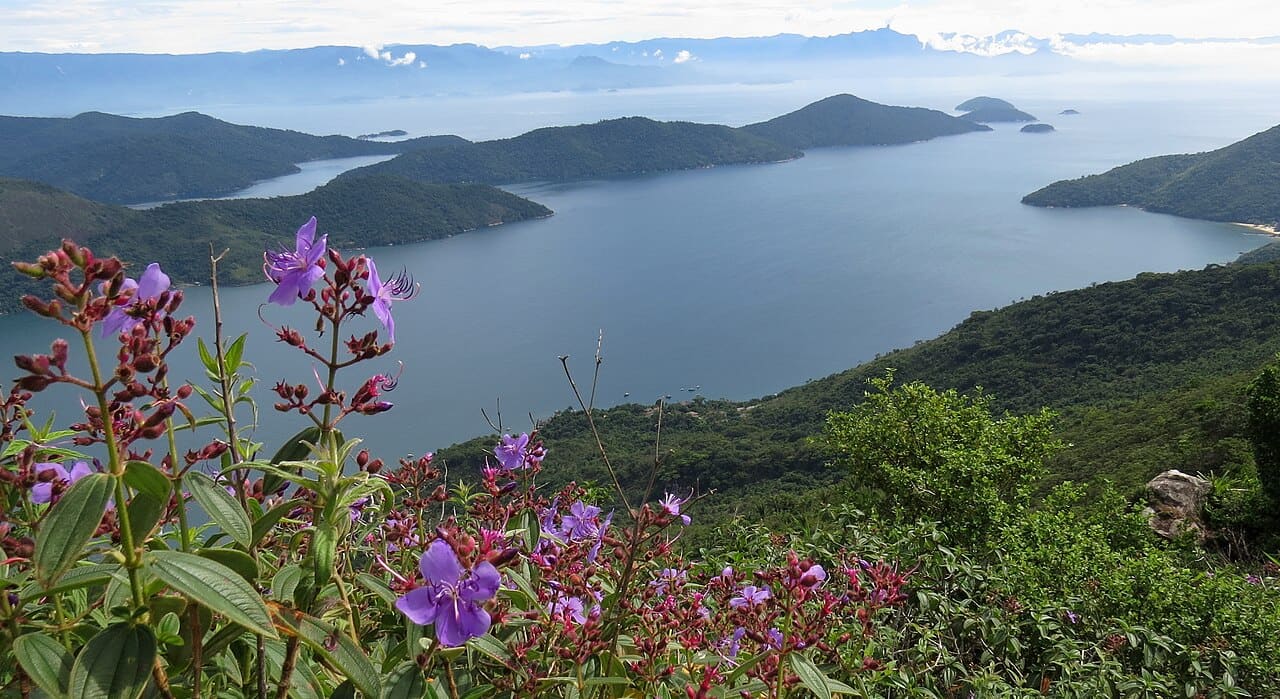 The Saco do Mamanguá, the Cajaíba’s next-door neighbor and the same route’s overnight anchorage. Photo: Pedro Gabriel Maciel, CC BY-SA 3.0, Wikimedia Commons
The contrast is easy to see: a hired speedboat gives you two hours at Praia Grande; the expedition gives you the cove at its own pace, including the hours no day trip reaches. Upcoming departures and onboard videos are on the Albatroz Instagram.
On your own: the service information
If you prefer to build the trip yourself, there are two departure ports. From the Paraty pier, in the Ilha das Cobras neighborhood, fishermen’s boats and chartered speedboats leave for the cove; ask for a vessel heading to Pouso or Praia Grande and settle price and return before boarding. From Paraty-Mirim, reachable by municipal bus, the crossing is shorter and cheaper.
The survival rules of the roadless coast: cash (there is no ATM and no reliable signal for card machines), extra water and sunscreen, all trash back with you and a return time agreed with slack, because the afternoon sea sometimes delays the way out of the cove. Book lodging at Pouso in advance on holidays; the supply is small on purpose.
When to go and how to fit it into your trip
Winter, May to August, is the high point: clear sea for snorkeling, dry trails, nights of clean sky. September and October also deliver, with the cove empty and the families with more time for conversation, which out there is worth as much as the scenery. Summer works well inside the sheltered cove, with the usual warning about late afternoon rain. In any season, the Cajaíba pairs naturally with a day or two in Paraty’s historic center before or after; our guide to how many days to stay in Paraty helps close the math, and Paraty beyond the historic center shows where it sits on the bigger map. For anyone collecting the best tours in Paraty, the cove is what we would answer first.
The Cajaíba is proof that a roadless coastline still exists a few hours from the country’s two biggest cities, alive and inhabited, with pastel coming out of the pan of the person who caught the filling. Go with time, spend on the sand with the people who live on it and choose a way in that lets you watch the whole day happen. If the choice were ours, you already know: it is sleeping on the water.