
How to island hop along the Costa Verde
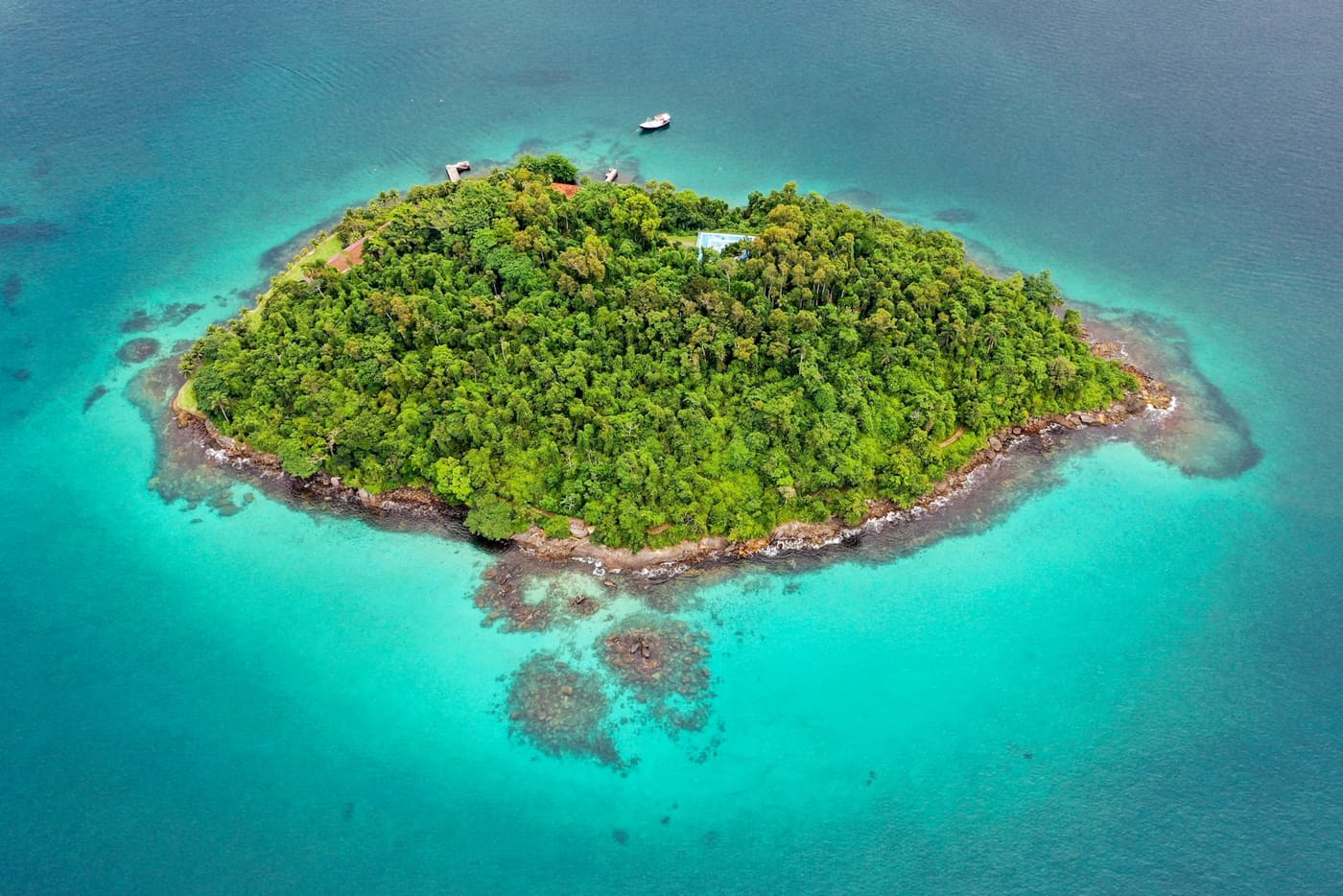
Island hopping has its consecrated addresses: the Cyclades in Greece, the Andaman Sea in Thailand, El Nido in the Philippines. Brazil almost never enters that conversation, and it is a geographic injustice, because between São Paulo and Rio de Janeiro there is a 294 km corridor of coast where the country’s largest sea island, an island state park, a snorkeling islet and Brazil’s most famous car-free island line up on the same route, with a fjord thrown in halfway. You can cross all of it in a single trip, by ferry, bus and boat.
We write with a declared side: the group behind this blog runs a hostel in Ilhabela, the first island on the route, and a schooner that leaves from Paraty, the port of the second half. It is because we live at both ends that we can tell you how this design works in practice, with the real numbers for each leg, the do-it-yourself version and the one link in the chain that is genuinely hard work. It exists, and pretending otherwise would be advertising, not a guide.
The route on the map
The design is a line with four islands hanging from it:
- Ilhabela (SP): the starting base, attached to São Sebastião by a 20 minute ferry.
- Ilha Anchieta: the forgotten stopover, a state park one boat trip from Ubatuba.
- Ilha dos Meros: the clear-water islet on Paraty’s southern coast, a coffee and snorkel stop.
- Ilha Grande (RJ): the final destination, without a single car on its entire territory.
Halfway along, Paraty plays the role of port and hinge of the trip, and the Saco do Mamanguá, which is not an island but the only tropical fjord on the Brazilian coast, enters as the detour nobody skips. The order works in both directions; we prefer starting from São Paulo and finishing in Rio’s waters, because that way the most rigid piece of logistics sits in the middle of the trip, while the itinerary still has slack, and the finale happens on board, with no clock.
Island 1: Ilhabela, the departure
The arrival sets the tone of the trip: the Pássaro Marron bus leaves São Paulo for R$ 101 to 123, reaches São Sebastião in about 4h30, and the ferry crosses the channel in 20 minutes charging nothing for foot passengers. Set aside two or three nights for the island: the beaches on the channel side sort themselves out by municipal bus, the waterfalls and viewpoints each ask for half a day, and the complete guide to Ilhabela helps you choose.
The base we recommend is our own, and the reason is geographic before it is sentimental: Hostel da Vila sits in the historic center, on the channel side, a walk from the ferry you arrive and leave by. In practice, that means starting the island route without taking a single taxi: step off on foot, sleep among the property’s 8,000 m² of forest, close the night at the Floresta Bar and walk back to the ferry on departure day the same way you came.
Stopover: Ilha Anchieta, the island almost nobody adds
From São Sebastião, intercity buses run up the coast to Ubatuba, and from there leaves the most underrated stopover on the route: the boats from Saco da Ribeira cross to Ilha Anchieta, an entire state park, with calm-water beaches, short trails and the ruins of an old prison being swallowed by the forest. It is a one-day outing, which in practice asks for a night in Ubatuba before or after. If your days are counted, this is the leg you cut first without guilt; if they are not, it is the kind of place hurried itineraries never reach.
The hard link in the chain: Paraty and Ubatuba
Honesty gets its own paragraph, because the subject deserves it: the bus connection between Ubatuba and Paraty is the most fragile leg of the whole trip. There are few departures per day, they change often and the search engines do not always keep up. The rule we repeat to every guest: confirm the times at the bus station as soon as you arrive in town, prioritize morning departures and never bet on the last bus of the day. If nothing lines up, the alternatives are an extra night or splitting a transfer. The step by step for this and every other leg is in the manual to the Costa Verde without a car.
The reward on the other side repays the effort: Paraty’s historic center, with the stone streets the big tides flood, the lanterns coming on at dusk and the dock where the second half of the trip begins.
Islands 2 and 3: Meros and Ilha Grande, stitched by an expedition
Here comes the fact that changes the whole design: by public transport, there is no direct connection between Paraty and Ilha Grande. Whoever goes on their own has to backtrack by bus to Angra or Conceição de Jacareí and take a speedboat or ferry from there, spending nearly a full day on connections. It is exactly this gap that our group’s boat exists to close, so the recommendation here is said without hedging: the way we consider definitive for the Rio stretch of the route is aboard the Albatroz, the 23 meter schooner that leaves the Paraty marina with 24 guests, 10 air-conditioned cabins and a chef cooking on board.
On the three night expedition (around R$ 1,491 in 2026, rising to R$ 1,992 on holidays, in up to 10 interest-free installments), the boat wakes up in the bay of Ilha Grande, opens the day at the Lagoa Azul or Praia do Dentista, spends the afternoon in Vila do Abraão and, the next morning, lands you at Praia do Pouso for the 20 minute trail to Lopes Mendes, hours before the day-trip schooners show up. The afternoon ends at the Lagoa Verde and the return includes breakfast at anchor off Praia do Jurumirim.
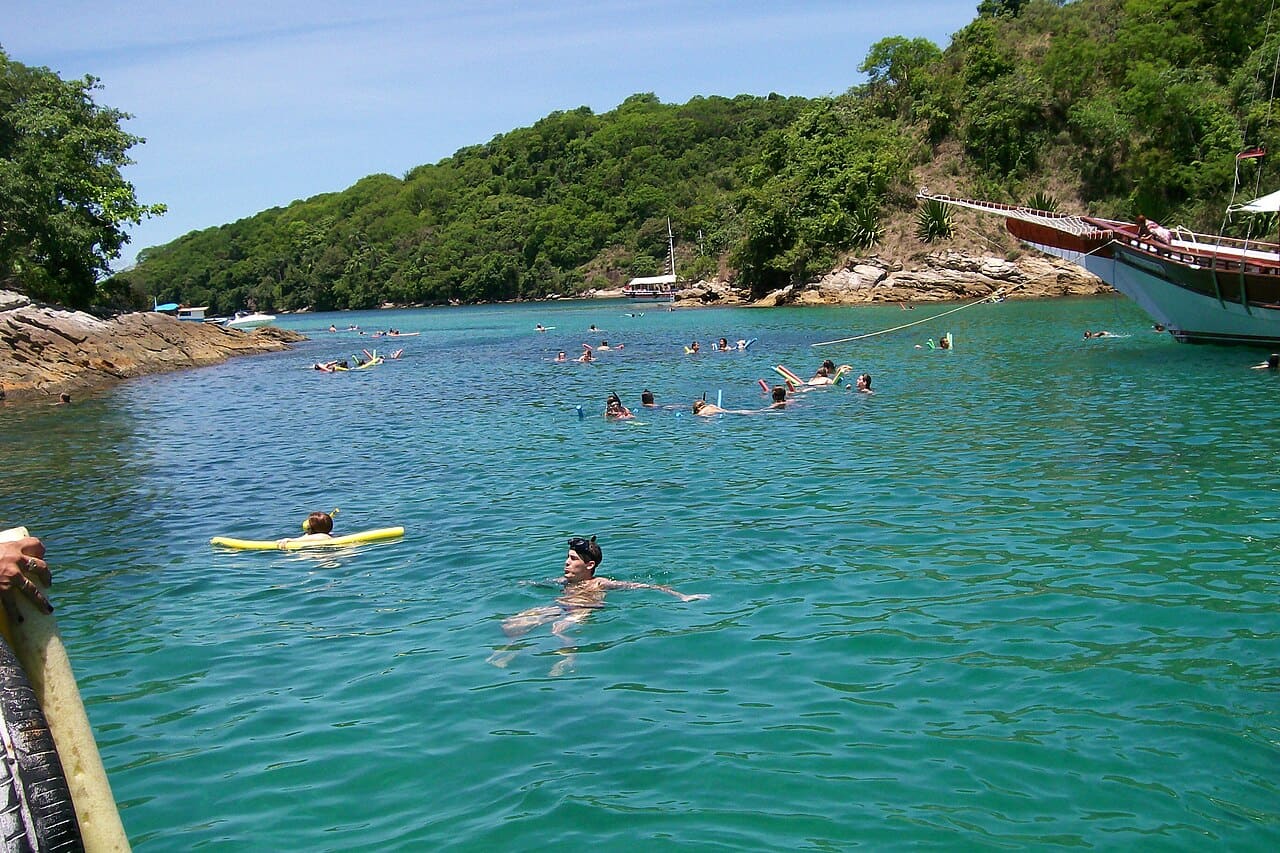 The Lagoa Azul, the boat’s first stop in the bay of Ilha Grande. Photo: Marcio Sette, CC BY-SA 3.0, Wikimedia Commons
The five night version, the combined route (between R$ 2,481 and 2,635 in 2026), is the one that completes the island collection: it adds a free day in Paraty and the southern coast route, with coffee and snorkeling at Ilha dos Meros, the chef’s barbecue at Praia Grande da Cajaíba and the night at anchor in the Saco do Mamanguá, with a bonfire gathering on the beach at the foot of the Sugarloaf peak. The fjord is not an island, technically. Nobody on board complains about the imprecision.
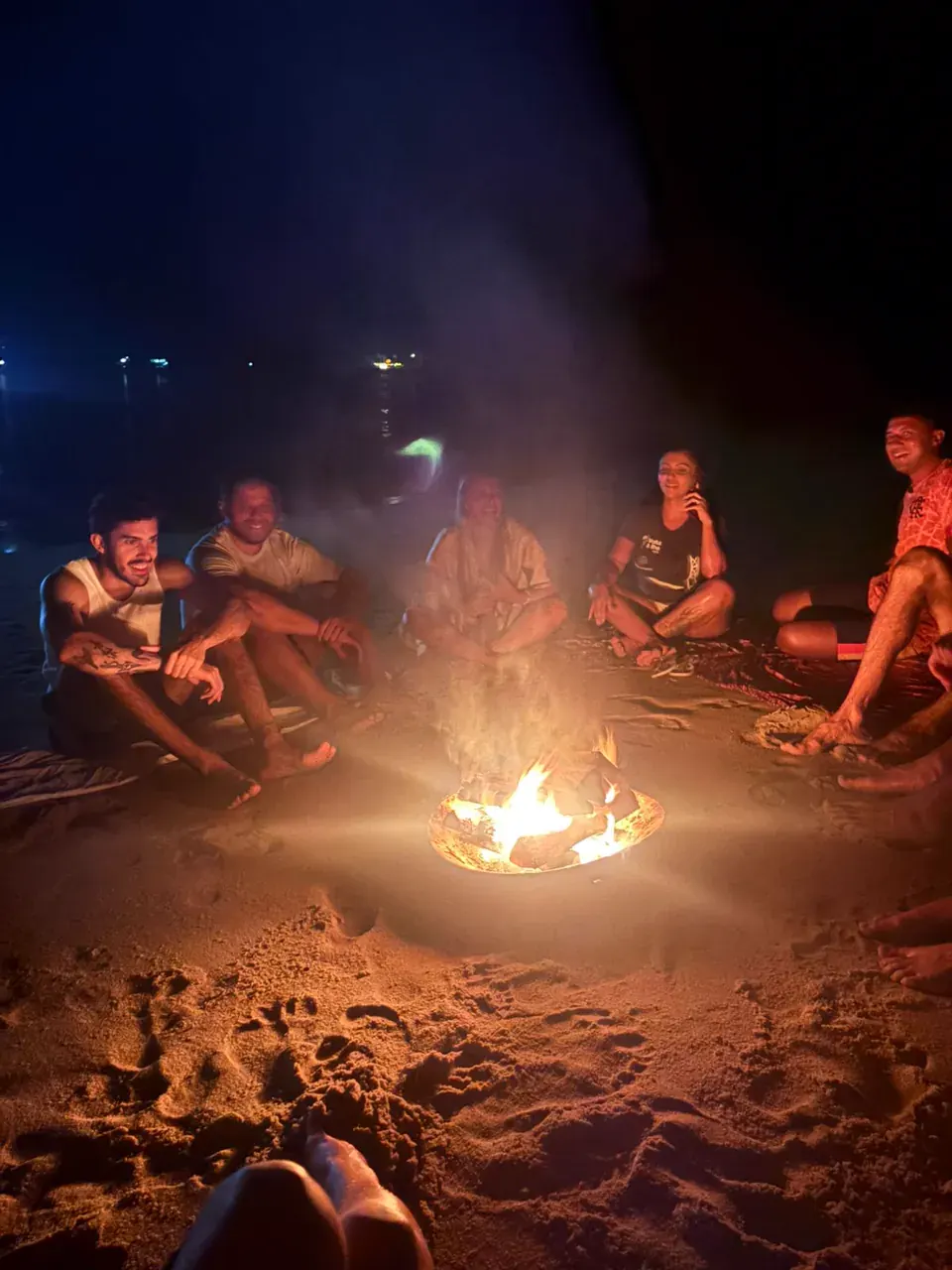 The expedition’s bonfire night on the Mamanguá beach. Photo: Hostel da Vila Group archive
Two practical warnings from the people who operate the boat: the minimum age on board is 7, and your bag needs to be soft, because a hard suitcase does not fit well in a schooner cabin.
The full do-it-yourself version: the numbers
For anyone who prefers to assemble each leg alone, the 2026 prices we have already published in our guides to the region:
| Leg | How | Approx. price | Watch out |
|---|---|---|---|
| São Paulo → São Sebastião/Ilhabela | Pássaro Marron + ferry | R$ 101 to 123, ferry free on foot | ferry every 30 min, 5:30 am to 11:30 pm |
| São Sebastião → Ubatuba | intercity bus | varies | times change through the week |
| Ubatuba ↔ Ilha Anchieta | boat from Saco da Ribeira | varies | one-day round trip |
| Ubatuba → Paraty | regional bus | varies | few departures, confirm at the station |
| Paraty → Angra or Conceição | Colitur L101 | R$ 27.50 | about 2h |
| Conceição ↔ Ilha Grande | flex boat | R$ 45 to 150 per leg | hourly departures, 8 am to 5 pm |
| Mangaratiba or Angra ↔ Ilha Grande | ferry | R$ 20.50 | return from Abraão at 10 am |
The details of reaching and getting around the final island are in the guide to how to get to Ilha Grande. And the overall shape of the trip, with minimum days per stop and two ready-made itineraries, is in how to see Ilhabela, Paraty and Ilha Grande on one trip.
When to go and how much to set aside
Island to island, the season matters more than usual, because everything depends on the sea. April, May, September and October combine low rain, good prices and empty beaches. Winter is the season we defend out loud: dry trails, clearer water for snorkeling and, from May to August, humpback whales passing along the coast. The full calendar is in the guide to the best time to visit the Costa Verde.
On budget, the honest ruler: the whole route asks for 10 to 12 days. On your own, a full backpacker day sits around R$ 150 to 250, adding a hostel bed, simple food and the crossings. The expedition concentrates the spend into one block, but look at what the price swallows: three to five nights of lodging, all meals from day two, the crossings and the outings that, bought one by one, become a long list of tickets.
The sea as the thread of the trip
Every island hopping route in the world shares the same secret, and on the Costa Verde it becomes obvious: what turns scattered destinations into a single trip is not the islands, it is the water between them. It is the early morning ferry with the mountains rising out of the mist, the deck at the hour the sun goes down, the bonfire on a beach that has no road. People who come back from this route do not count the beaches they saw: they count the crossings.
The schooner’s next departures, with dates and onboard videos, are on the Albatroz Instagram.