
Ilhabela, Paraty or Ilha Grande: which one fits you best?
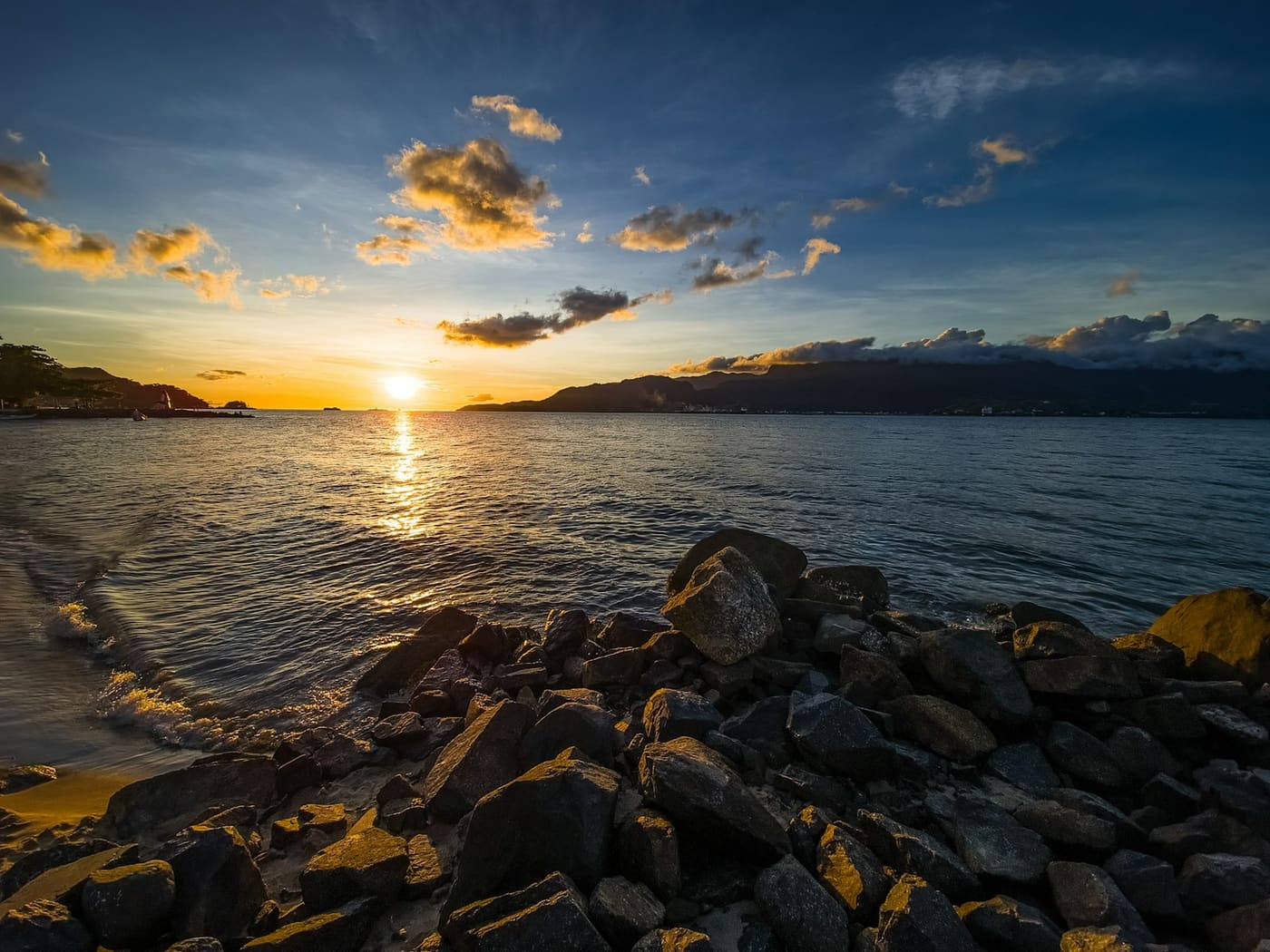
This comparison has a suspect author, and the suspicion is triple: we live in Ilhabela, where we have welcomed travelers since 2016, and we work on the sea of Paraty and Ilha Grande, where our group’s schooner sails every week. Declared interest in all three destinations, then. In practice, that becomes a rare advantage: we have no reason to tip the scales toward any side, because whichever you choose, it passes through one of our backyards. What we can offer is what big destinations rarely get: a comparison from the inside, weaknesses included.
The quick answer
You want town infrastructure with trails and waterfalls at the door: Ilhabela. You want history, food and living culture: Paraty. You want to switch off from the world, from cars and from the clock: Ilha Grande. And there is a fourth answer, the one we would give a friend with a free week: do not choose, the three fit on the same trip, hanging on the same 294 km corridor of the Rio-Santos highway.
For anyone who wants to check the reasoning before accepting the verdict, the quiz below walks through the six questions we ask at the front desk and on deck whenever someone needs help deciding.
Question 1: how do you want to wake up?
In Ilhabela, the day starts with a bakery, a view of the channel and the Serra do Mar on the other side of the water: it is an island with town infrastructure, Brazil’s largest sea island, with pharmacies, markets and a working phone signal. In Paraty, waking up is colonial: church bells, stone streets and 300 year old townhouses stirring slowly. On Ilha Grande, you open your door onto a dirt street without a single car, with the sound of the sea where traffic should be.
Winner: a deliberate tie, because this question has no wrong answer. It only reveals what you call a vacation.
Question 2: what cannot be missing from your perfect day?
If the answer is a trail and a waterfall with a decent dinner at the end, Ilhabela wins comfortably: more than 40 beaches, dozens of waterfalls inside a state park with no turnstile and trails for every knee, mapped in our guide to the best hikes in Ilhabela. If the perfect day mixes an open-air museum, a long lunch and a cachaça with the producer at the counter, Paraty is unbeatable: the historic center is a UNESCO World Heritage site and caiçara cooking is the best table on the Costa Verde. If the perfect day is an open-sea beach earned on foot, Ilha Grande answers with Lopes Mendes and the 16 numbered trails that serve as the island’s road system.
Winner by category: trail with comfort, Ilhabela; culture and food, Paraty; raw nature, Ilha Grande.
Question 3: how much logistics can you tolerate?
Here the three genuinely part ways. Ilhabela is the easiest: direct bus from São Paulo, a 20 minute ferry free for pedestrians, cars allowed on the island and the channel axis solved with a R$ 10 municipal bus. Paraty comes right behind: direct buses from Rio (from R$ 120) and São Paulo, and the whole town on foot. Ilha Grande is the one that demands the most planning: a mandatory boat crossing (R$ 20.50 on the single-departure ferry, R$ 45 to 150 on the flex boat), luggage in wheelbarrows and timetables that rule your last day.
Winner: Ilhabela, with Paraty right on its heels. Ilha Grande’s logistics are not a flaw, they are a filter: they are what keeps the island the way it is.
Question 4: what about the nightlife?
Ilhabela has the most complete nightlife of the three: bars in the historic center, live music and a scene we break down in Ilhabela nightlife. Paraty has the most beautiful night: dinner among lanterns, a bookshop open late and the townhouses glowing candle-colored. Ilha Grande has the shortest night and the best sky: in Vila do Abraão the movement dies early, and the most sought-after plan is stargazing from a dark stretch of the pier.
Winner: depends on your definition of a good night. Energy, Ilhabela. Charm, Paraty. Silence, Ilha Grande.
Question 5: what is the budget ceiling?
The 2026 numbers, per day and per person on the budget profile, straight from our full breakdowns for Ilhabela, Paraty and Ilha Grande: Ilhabela closes between R$ 130 and 240, Paraty between R$ 150 and 200, and Ilha Grande between R$ 180 and 260, because everything consumed on the island arrived by boat and charges the freight. In all three, holidays double the bill and sell out the beds.
Winner: Ilhabela on the floor price, Paraty on predictability. Ilha Grande is the most expensive of the three for daily living, and makes up for it with everything that costs nothing: trail, beach and sky.
Question 6: it rains. Now what?
Paraty wins by a mile: church, museum, studio, cachaça house and a long table all work under an umbrella. Ilhabela has a decent plan B of swollen waterfalls and coffee overlooking the channel. On Ilha Grande, rain closes trails and cancels boats, and the village gets small fast.
Question 7: when can you travel?
The calendar breaks more ties than you would think. If your vacation falls between May and August, Ilhabela earns extra points: it is the season when humpback whales cross the São Sebastião channel, the sea gets clearer and the trails dry out. If you can travel in July and enjoy a crowd with books in hand, FLIP turns Paraty into the country’s literary capital for a week (July 22 to 26 in 2026), with the warning that the town sells out and prices climb without apology. Ilha Grande is the most democratic on the calendar: outside holidays it stays empty and cheap in any month, and winter puts the 16 trails in their best condition of the year.
Winner: whoever has flexible dates. April, May, September and October are the months when all three destinations are cheaper, emptier and drier.
The summary table
| Criterion | Ilhabela | Paraty | Ilha Grande |
|---|---|---|---|
| Infrastructure and ease | wins | good | the rawest |
| Trails and waterfalls | wins on variety | Caminho do Ouro | wins on wildness |
| History and culture | small center | wins by far | almost none |
| Food | good | wins | simple |
| Nightlife | wins on energy | wins on charm | starry sky |
| Daily budget 2026 | R$ 130 to 240 | R$ 150 to 200 | R$ 180 to 260 |
| Arrival without a car | bus + free ferry | direct bus | bus + paid boat |
The verdict, profile by profile
You want infrastructure and a trail in the same day: Ilhabela. It is the honest middle ground between town and forest, and it is where we chose to live. The usual transparency: our house is Hostel da Vila, an eco lodge in the historic center, on the channel side, with 8,000 m² of Atlantic Forest climbing behind the property; coffee before the trail and the pool heated to 32°C after it are our way of closing that loop. The full picture of the island is in things to do in Ilhabela.
You want history and gastronomy: Paraty. No destination on the Brazilian coast delivers as much heritage per square meter, and the food keeps pace. Start with the 3 day itinerary.
You want to switch off from the world: Ilha Grande. No cars, no hurry, and the sea setting the agenda. The full guide is in things to do in Ilha Grande.
You do not want to choose: that is the answer we respect the most. The trio fits in a week, and the Rio stretch of the route has an insider shortcut: the 3 night Albatroz expedition links Paraty and Ilha Grande with you sleeping on board, a chef in the galley and the first night docked in the historic center. That leaves energy (and a bus) to finish in Ilhabela. If your doubt is only between the two on the Rio side, the comparison Paraty and Ilha Grande: why not both? goes deep on that pair.
One last piece of honesty from people who have answered this question a few hundred times: nobody comes back regretting any of the three. What changes is how much the trip feels designed for you. Answer the six questions honestly, choose (or do not choose) and take the next step: the itinerary for the trio on one trip organizes the connections, the minimum days and the right order of everything.