
What is the best Costa Verde destination for backpackers?
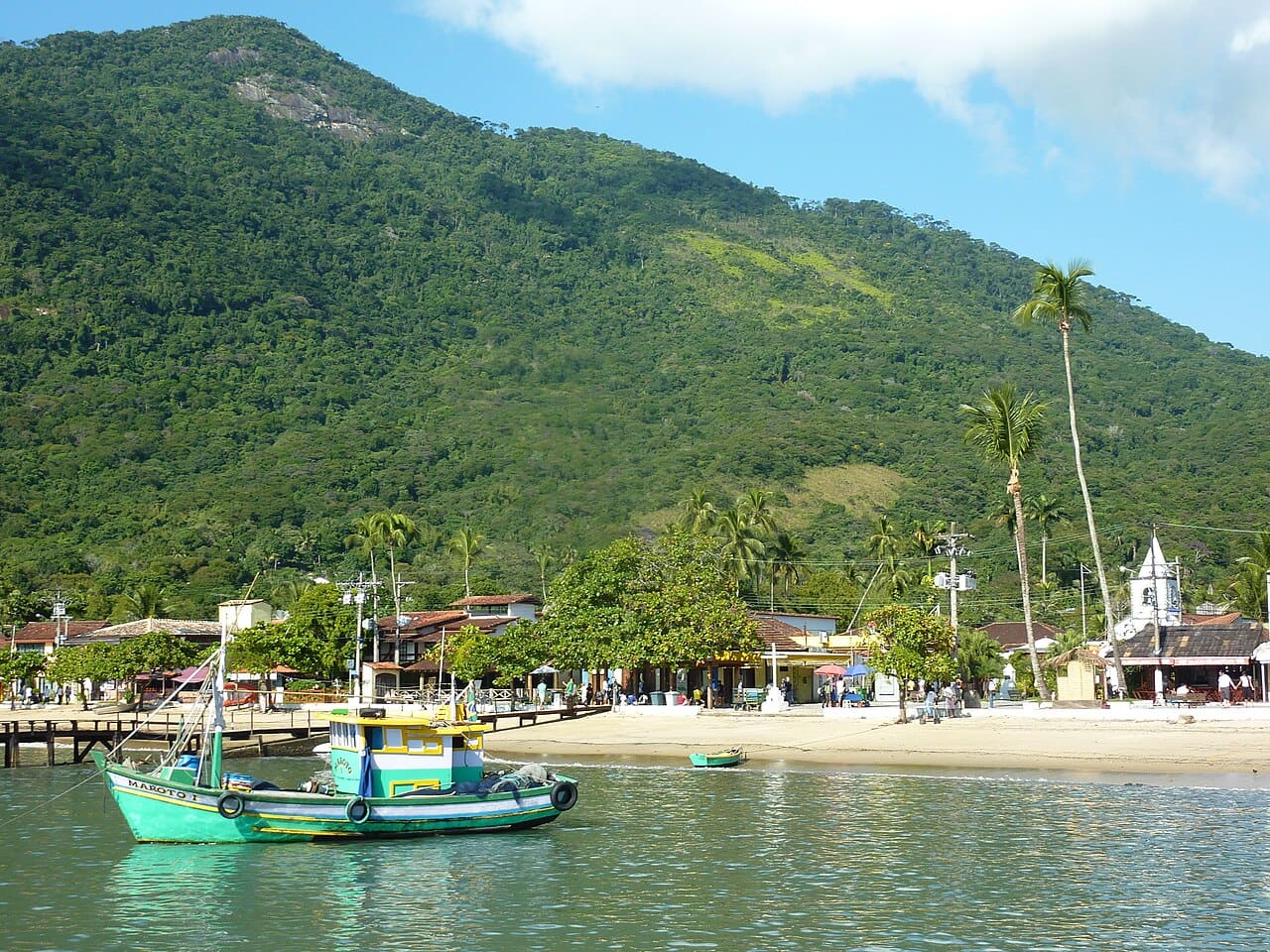
The people writing this have run a hostel in Ilhabela since 2016, which means ten years of hearing the same question in English, Spanish and Portuguese of assorted accents: “with little money and a backpack, where do I go first?”. The bias is declared: dorm beds are our business, and ours sits in one of the three destinations compared here. The trade-off is that nobody sees the backpacker’s spreadsheet from closer up than a hostel front desk: we know where the real stretches and where it evaporates. This comparison answers with 2026 numbers and an owned winner.
The quick answer
On the criterion that defines backpacking, which is what each day costs, Ilhabela wins: you can close the day between R$ 130 and 240 with bed, food and beach included, thanks to the ferry that is free if you cross on foot, the R$ 10 municipal bus and an entire state park with no turnstile. Ilha Grande is the most classic backpacker experience of the three, but it charges an island premium on everything. Paraty sits in the middle: cheap, cultural and great for linking up. The full reasoning comes below, criterion by criterion.
Criterion 1: the price of the bed
The 2026 floors, outside holidays: Ilha Grande has the cheapest bed in the region on paper, R$ 46 to 165 in an Abraão dorm. Paraty runs from R$ 45 to 120, with the well rated options between R$ 60 and 90. Ilhabela starts around R$ 57 in low season and touches R$ 120 to 150 in summer.
Winner: technical tie. In all three, a hostel bed hovers around R$ 50 to 90 for most of the year, and in all three a holiday doubles everything and sells out. The real difference lives in the other criteria.
Criterion 2: the price of getting in
Here the conversation changes. To enter Ilha Grande you pay a mandatory crossing: R$ 45 to 150 per leg on the flex boat, or R$ 20.50 on the single-departure ferry that amputates half a day from the itinerary; the details are in how to get to Ilha Grande. Paraty is reached by direct bus from Rio (from R$ 120) or São Paulo. Ilhabela charges zero at the entrance: the São Paulo bus stops a few meters from the pier and the ferry is free for pedestrians, 20 minutes of channel thrown in.
Winner: Ilhabela. It is probably the only island on the Brazilian coast a backpacker enters for free.
Criterion 3: the cost of existing, day after day
Ilhabela’s set-menu lunch costs R$ 30 to 35, with lunch specials from R$ 23 in the neighborhoods; the municipal bus covers the channel axis for R$ 10; the state park’s trails and waterfalls charge no entry. Paraty holds the backpacker with by-the-kilo buffets and set menus at R$ 40 to 55, a free historic center and the R$ 5 bus to Trindade, the best cheap day trip in the region. On Ilha Grande, everything that exists arrived by boat and the prices remember it all the time: set menus at R$ 35 to 55, minimarkets with an island premium and R$ 50 taxi boats per leg to get out of Abraão.
Winner: Ilhabela on the daily grind, Paraty right behind. The full breakdowns, with three profiles each, are in Ilhabela travel costs, Paraty travel costs and Ilha Grande travel costs.
Criterion 4: what is free (the backpack’s favorite criterion)
All three destinations are generous with anyone short on money, each in its own way. Ilhabela offers channel beaches reachable on foot or by bus, waterfalls with no fee and self-guided trails inside the park. Ilha Grande answers with the 16 numbered trails that lead to beaches without a single kiosk, and with the most beautiful cheap overnight in the region: camping in the backyards of the caiçara residents of Aventureiro, with a free permit. Paraty delivers an entire World Heritage site with no turnstile and the tide flooding the streets as a show.
Winner: Ilha Grande, by a hair. A trail that replaces transport is the backpack’s dream.
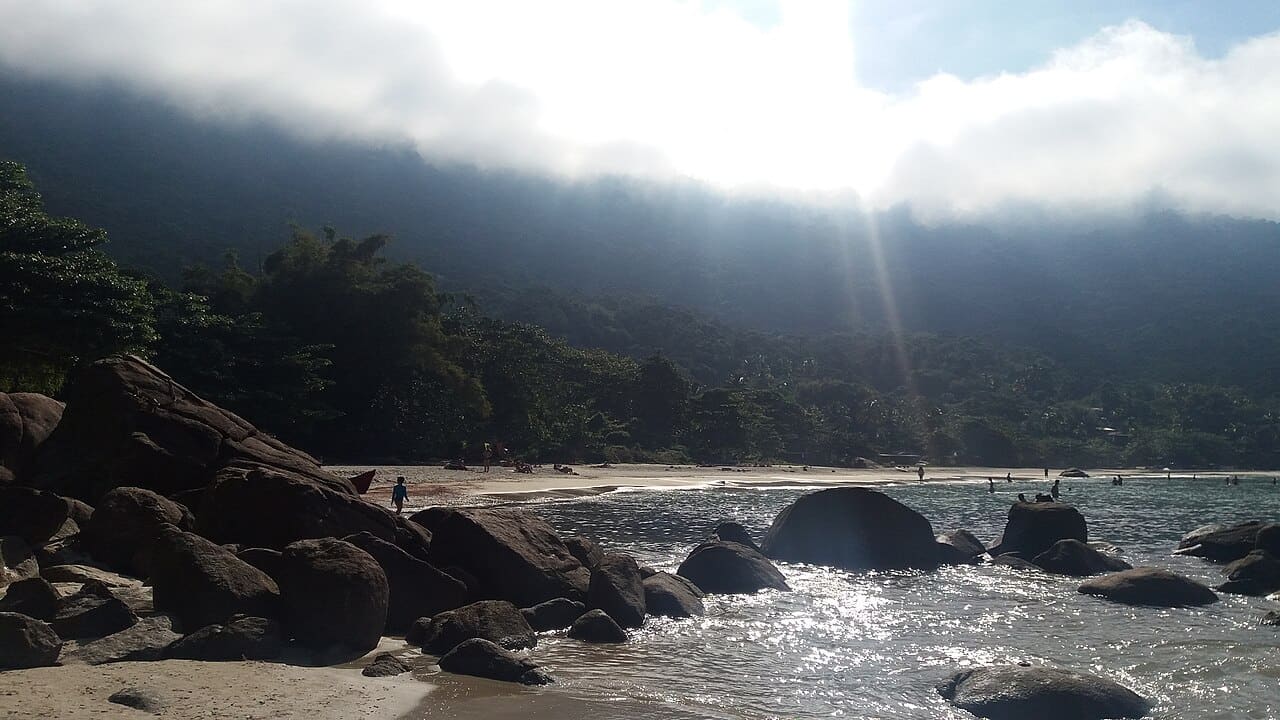 Aventureiro: camping in a caiçara backyard, the cheapest overnight on the Costa Verde. Photo: Renata Paganotto, CC BY-SA 4.0, Wikimedia Commons
Criterion 5: the social life
A good backpacking trip is measured in shared-kitchen conversation. Vila do Abraão has the feel of a classic backpacker village, with the whole world crossing the same three dirt streets; its map is in things to do in Vila do Abraão. Paraty is more spread out, with good hostels but a night scene that is pricey for a backpacker wallet. In Ilhabela, the social life depends on where you stay, and here comes our part with the usual transparency: Hostel da Vila, the house of the people writing this, exists exactly for that, with dorms on 8,000 m² of forest in the historic center, people from all over the world at the same table and a live schedule of music, yoga and parties. The week’s agenda goes out on our Instagram.
Winner: a tie between Ilha Grande’s village and a good base in Ilhabela. Social life is not geography, it is a meeting point.
If you can link them up: the order that makes the real stretch
A backpacker with time does not choose a destination, they choose an order. The one that works for anyone entering through Rio: Ilha Grande first, while the backpack is light and the itinerary has slack for the rigid boat timetables; Paraty next, two hours by bus from Angra on the R$ 27.50 line; and Ilhabela at the end, because the ferry crosses all day and the return to São Paulo does not depend on tides. The corridor’s weak link is the Paraty to Ubatuba hop, which has few buses per day and trips up anyone who does not check the timetable at the station the day before. Anyone entering through São Paulo mirrors everything and ends in Rio.
The honest time yardstick: six nights is the minimum for the trio (two in each), and at nine the trip stops feeling like an endurance test. With less than that, cut a destination instead of squeezing all three.
The decision table
| Criterion | Ilhabela | Paraty | Ilha Grande |
|---|---|---|---|
| Hostel bed 2026 | R$ 57 to 150 | R$ 45 to 120 | R$ 46 to 165 |
| Getting in | free walk-on ferry | direct bus | R$ 20.50 to 150 by boat |
| Set menu / staple food | R$ 23 to 35 | R$ 40 to 55 | R$ 35 to 55 |
| Trails and waterfalls | free | Trindade for R$ 5 | free |
| Full backpacker day | R$ 130 to 240 | R$ 150 to 200 | R$ 180 to 260 |
Verdict by profile
You want the money to last the most days: Ilhabela. Free entry, a cheap day and the island’s essentials with no turnstile. It is the best place on the Costa Verde to stop for a week and let the budget breathe.
You want the classic island backpacking trip, with trails instead of roads: Ilha Grande. Accept the island premium as part of the ticket and offset it with the 16 free trails and the Aventureiro camping.
You want culture and a living town on little money: Paraty. The historic center charges nothing and the R$ 5 bus to Trindade is the best investment per real in the region.
You have time and want it all: the whole corridor can be done by bus, ferry and boat, in the range of R$ 150 to 250 a day. The step by step of the connections is in the guide to the Costa Verde without a car and the math for the full stretch in Costa Verde travel costs.
One line the table does not capture: the cost of the unexpected. On Ilha Grande, a cold front cancels boats with no makeup date and can hold you an extra day; in Ilhabela and Paraty, the rainy day plan B is cheap or free. Anyone traveling on a tight budget with a booked flight should weigh that as heavily as the price of the bed.
Three final front-desk warnings, valid for all three destinations: cash always, because card machines depend on signal and signal fails precisely at the most beautiful beaches; holidays double prices and sell out beds, so either book early or travel the following week; and a soft backpack beats a hard suitcase, because at some point it is going onto a boat or into a wheelbarrow.
The next step is a single one: pick the destination for your profile and open the guide to the Costa Verde without a car to build the connections. The road is cheap; what costs is deciding.