
7 days in Ilhabela: the complete version, with an overnight in Bonete
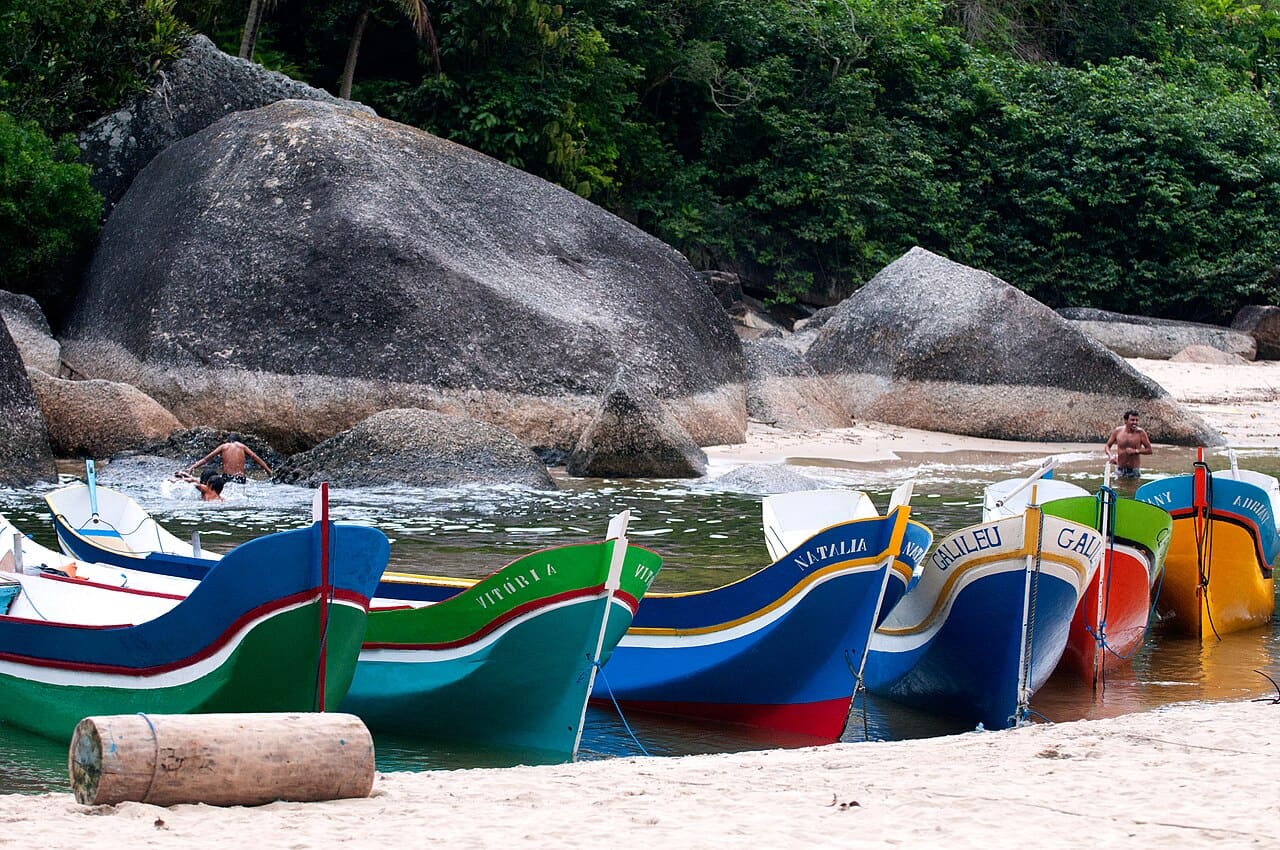
There is an Ilhabela the weekend traveler never reaches. Not for lack of will: for lack of time. It is the island of the overnight in Bonete, of the day you do nothing on purpose, of the plan B that becomes a memory when it rains. This 7 day itinerary is about that island. The people writing it are the team of a hostel in the historic center, hosting travelers for ten years, and our front desk observation is consistent: whoever stays a week goes home different from whoever stays three days. It is not more beach; it is another rhythm.
The island’s first four territories (channel, south, ocean side, north) are already drawn in our 3 day and 5 day itineraries. The full week inherits that spine and adds what only time can buy: Bonete slept in, not visited. Repellent in the backpack every day, cash for the corners without signal, and on to the plan.
Day 1: the crossing and the Vila
Arrive unhurried. The ferry from São Sebastião takes 20 minutes, is free on foot and by bicycle, costs R$ 19 per car on weekdays and R$ 28.50 on weekends, and leaves every 30 minutes from 5:30 am to 11:30 pm. The first afternoon belongs to the historic center: the mother church, the craft fair, the pier, and the sunset that happens over the channel’s water, because the island’s inhabited face looks toward the mainland. Reach the waterfront before 5:30 pm in winter and you will not regret it.
With a week ahead, the choice of base weighs more than on any short itinerary, and we own the interest naturally: the blog is ours and so is the house. Hostel da Vila sits inside the historic center, on the channel side, on an 8,000 m² property with the Atlantic Forest climbing behind the domes, the treehouses and the yurts. On a seven day trip, the pool heated to 32°C stops being a luxury and becomes recovery logistics: it is what stitches the trail days to the sea days.
Day 2: southern beaches and fresh water
The week’s warm-up: a morning at Curral, the 400 meter beach of wide sand with the island’s best structure, or at the neighboring Feiticeira and Praia Grande, smaller and quieter. In the afternoon, the Água Branca trail, at the state park gate: about 4 km round trip, five pools of cold water, bathrooms and a shower at the entrance. The island’s waterfalls earned their own guide in Ilhabela’s waterfalls.
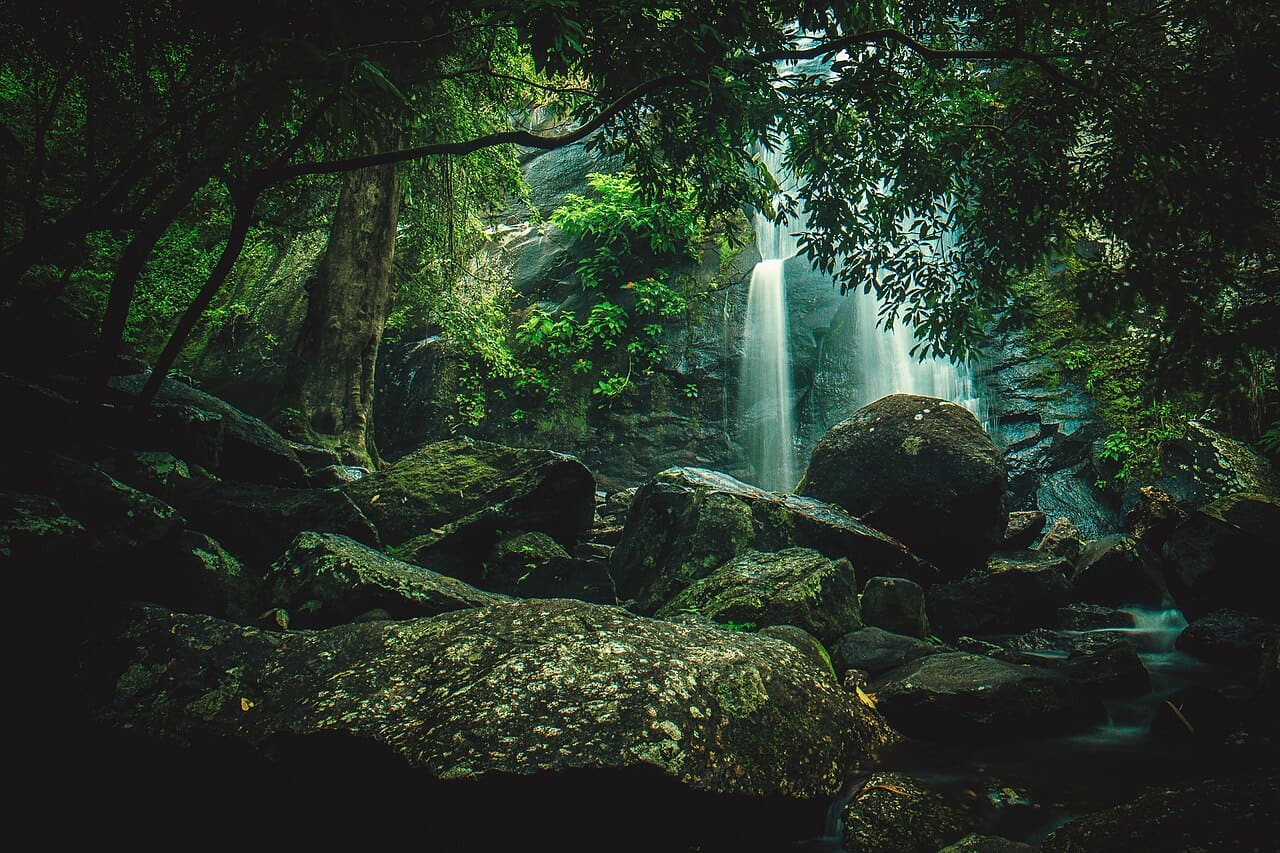 More than 80% of the island is state park, and the waterfalls are the consequence. Photo: Igorh84, CC BY-SA 4.0, Wikimedia Commons
Day 3: Castelhanos
The first big day. Castelhanos sits on the ocean side, at the end of 17 km of dirt road that only accepts vehicles with traction, so the day starts early in an agency 4x4 or on a boat. A stop at the Coração viewpoint to read the bay’s shape from above, the drop down to the sand, and a free afternoon for the 2 km trail to the Gato waterfall, the tall drop in the middle of the forest that many people elect the most beautiful on the island. The rattling ride back along the dirt road is part of the package, and nobody truly complains.
Days 4 and 5: Bonete, sleeping there
Here the 7 day itinerary parts ways with all the others. Bonete is a caiçara fishing village of some 300 residents at the island’s far southern tip, no road, no asphalt, limited power and a shore-break sea that The Guardian once ranked among the ten most beautiful beaches in Brazil. You can see it on a speedboat day trip, and that is what most people do. Our opinion, after sending hundreds of guests there: the day trip shows you the scenery and hides the place. Bonete happens when the tour boats leave, at the end of the afternoon, and the village goes back to belonging to its residents and to whoever slept over.
The classic way in is the Bonete trail: 16 km from Ponta da Sela, 4 to 6 hours of walking with the Laje and Areado waterfalls serving as swim stops along the way. Anyone who would rather not walk goes by speedboat. The arrangement we recommend most is the hybrid: trail on the way in, with rested legs, and boat on the way back. Book the village guesthouse or campsite in advance, bring cash because signal is rare, and have the fish of the day for dinner wherever the residents point you.
The night there is unlike anything else on the island. Power is limited, the village lights go out early and the sky answers in kind: with no lamppost competing, the Milky Way appears whole over the breaking sea. The soundtrack is the waves landing heavy on the sand and, in the morning, the fishermen pushing their canoes into the water. There is no pharmacy, no ATM, no hurry. That is the point.
Day five dawns in Bonete, and that is why it exists in this itinerary. Sea early, coffee with no set time, the trip back in mid afternoon. On the other side, a long shower and a light night: your body will thank you for what comes next.
Day 6: the rest day, which is also the plan B
Every honest one week itinerary needs a day with no goal, and most guides do not have the courage to print that. Ours does: day 6 is for the hammock, the stretched-out coffee, the craft fair in the Vila, choosing a restaurant calmly instead of hastily. Rest on a trip is not waste; it is what separates a week lived from a week completed.
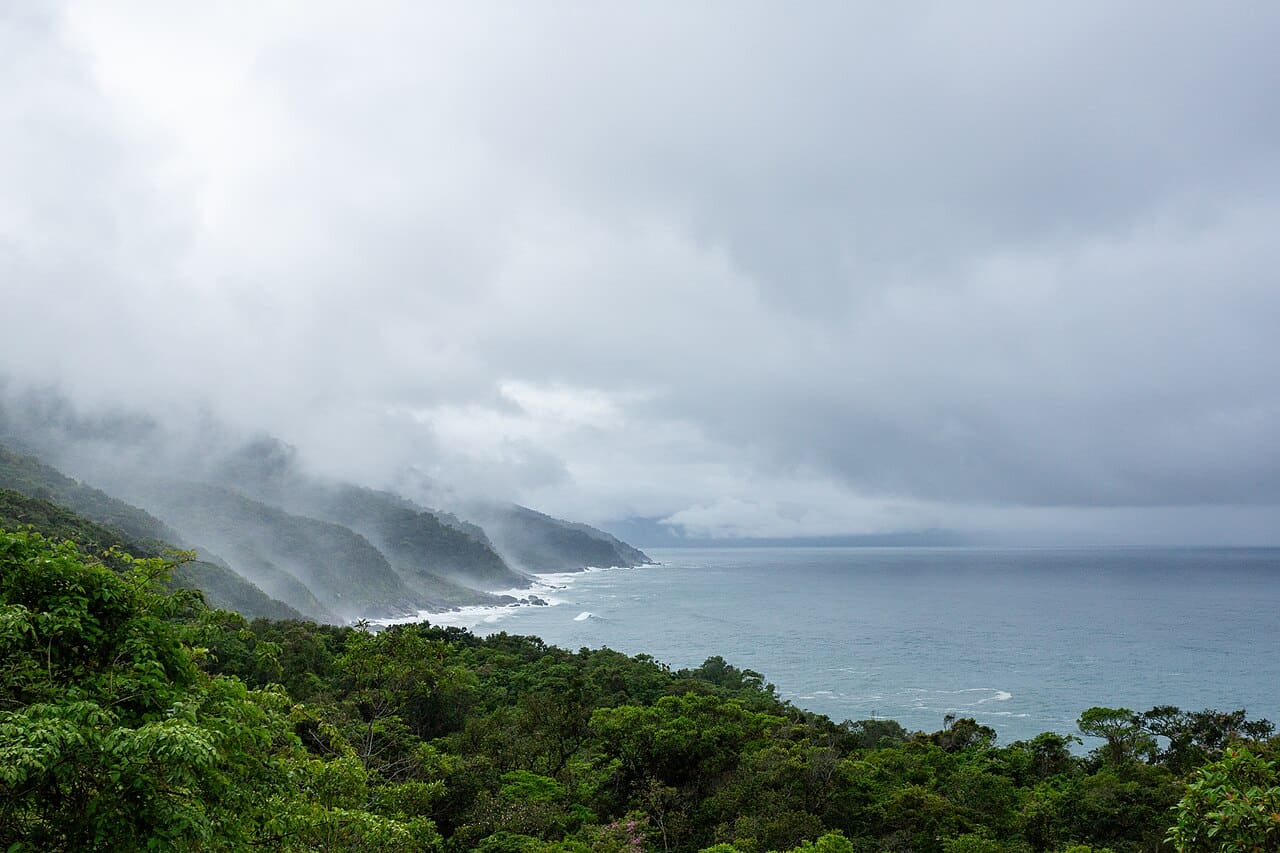 The island in mist: a different place, the same beauty. Photo: João Paulo D’Andretta, CC BY-SA 4.0, Wikimedia Commons
And it has a second job: it is the wild card day. If it rains at any point in the week, move day 6 around without guilt and slide the lost beach here. Rain on the island has its own programs, from full waterfalls to coffee facing the channel, and the article on things to do in Ilhabela when it rains lists them all. At night, the usual Vila: the map is in Ilhabela nightlife.
Day 7: the day of your island
The last day is a choice between three endings, and all three are good.
The altitude ending is Pico do Baepi: 1,048 meters, 2h30 to 4 hours of climbing with a final stretch of ropes, and the whole channel at your feet on a clear day. Start early and carry 2 liters of water per person; there is no source on the way. The alternatives are in the best hikes in Ilhabela.
The sea ending is the north: Jabaquara beach at the end of the dirt road, or the neighboring Praia da Fome by speedboat, snorkeling in transparent water with almost nobody around.
And the seasonal ending, if your week falls between May 16 and August 16: the humpbacks in the channel. The whale watching departures we operate leave from the Pier da Vila, cost R$ 320 per person and last 3h30 on a flexboat (a rigid inflatable), with encounters peaking in June and July. Sightings are not guaranteed, whales keep no schedule; when it happens, it is the trip ending no beach can compete with.
The week’s logistics, in three warnings
First: the Bonete overnight is the most contested piece of this itinerary. The village guesthouses are few and small, so book it before anything else, especially between December and February and on holidays. Second: build the week with the big days spaced out, the way it is here, and resist the temptation to chain Castelhanos and the Bonete trail on back to back days; your legs will collect. Third: cash for everything beyond the asphalt, because the phone signal disappears and the card machine goes with it.
When to schedule the week
April, May, September and October are the months when the island yields the most: less rain, fewer people, better prices. Winter adds the whales and the dry trails, and July has the International Sailing Week, July 24 to August 1 in 2026, when the Vila turns into a sailing village and the bars fill with crews from all over the world. The complete month by month X-ray is in the best time to visit Ilhabela. To close the week’s budget, the numbers are in what a trip to Ilhabela costs.
Seven days is the luxury of not choosing: the whole island fits. If you are still measuring the size of the trip, the article on how many days to stay in Ilhabela settles the question; if the week is already on the calendar, start by booking the Bonete overnight, which is the piece of this itinerary that sells out first.