
How to travel the Costa Verde on a budget
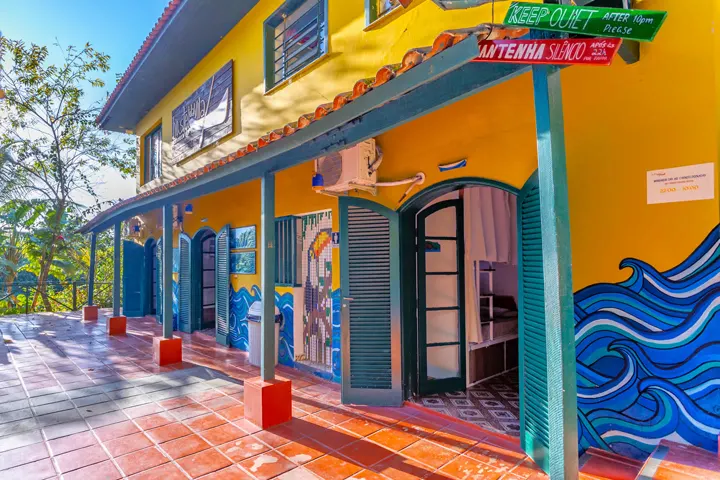
There is a category of knowledge that lives on no booking site: the tricks of the people who live in the destination. We have run a hostel in Ilhabela since 2016, and a hostel reception is a budget observatory: ten years watching backpackers stretch every real and weekend tourists burn through a week’s money in three days. From that observatory came the list below: 12 loose, specific, tested tactics for traveling the Costa Verde on little money. These are the hacks; if you want the complete method for planning the budget, it is in how to plan a budget trip.
1. Travel in April, May, September or October
The tactic worth the other eleven combined. In those months, lodging across the region drops to half its summer price, the beaches empty out and it rains less than in January. The same dorm bed that costs R$ 150 on New Year’s shows up for R$ 50 something in May, and April still keeps the sea warmed by an entire summer, which makes it the best value on the calendar. If you can only adopt one tip from this list, this is it; the month by month breakdown is in the guide to the best time to visit.
2. Cross the Ilhabela ferry on foot
The crossing from São Sebastião to Ilhabela is free for pedestrians and cyclists. By car, the same ferry charges R$ 19 on weekdays and R$ 28.50 on weekends, not counting the queue, which on holidays passes the one hour mark. The bus from São Paulo drops you a few meters from the boarding point, and on the other side the municipal bus handles the island. It is probably the only island on the Brazilian coast you can enter for free.
3. Take the R$ 20.50 ferry to Ilha Grande
The flex boat from Conceição de Jacareí costs R$ 45 to 150 per leg. The ferry from Mangaratiba and Angra costs R$ 20.50. The difference pays for two dorm nights in low season; the real price is rigidity, because the ferry has very few departures (the one out of Abraão leaves at 10am) and amputates half a day from the itinerary if badly slotted. The schedules and the step by step are in how to get to Ilha Grande.
4. Swap the taxi boat for the trail
On Ilha Grande, the taxi boat charges around R$ 50 per leg to take you where your legs go for free: there are 16 numbered trails linking Abraão to the beaches. Lopes Mendes, the island’s postcard, can be reached by a beautiful 3 hour walk over land, or by taxi boat plus 20 minutes of trail for those who want to save only half. The same reasoning applies to the whole region: the Costa Verde’s trails replace paid transport and throw in the scenery for free.
 Pico do Papagaio, Ilha Grande: the island’s most spectacular program costs zero. Photo: MBelu, CC BY-SA 4.0, Wikimedia Commons
5. Actually use the hostel kitchen
A hostel with a kitchen cuts the food bill in half, but only for those who use it. The insider’s routine: a market run on day one, a solid breakfast (at most hostels in the region it is already included in the rate), and a packed portion of your own dinner to take on the trail. Cooking as a group splits the cost again, and the shared table has a documented side effect: it is where travel friendships begin, as we tell in how to meet people traveling solo. Here goes the usual transparency: a busy guest kitchen is the heart of our house, Hostel da Vila, and a good share of this article’s tricks came out of it.
6. Set lunch at noon, waterfront dinner only once
The prato feito, Brazil’s set lunch plate, is the institution that keeps the Brazilian backpacker fed: R$ 23 to 35 in Ilhabela away from the waterfront, around R$ 20 still findable in Paraty, R$ 35 to 55 on Ilha Grande, where everything arrives by boat. Waterfront and historic center restaurants charge for the scenery along with the plate, and the hack is simple: one good meal per destination, hand-picked, and the set lunch on the other days. House rule: the closer to the sand, the more expensive the same fish.
7. Book schooners and boats at the pier, the day before
Outside high season, boat tours rarely sell out, and the pier counter negotiates better than the website. The Paraty schooner goes for about R$ 60, the Angra ones between R$ 49 and 109, and the day before, with seats left over, discounts appear that the internet does not show. On holidays the logic flips: then yes, buy ahead, because a sold-out schooner negotiates with no one.
8. Ride the municipal buses
The local lines are the most underrated transport in the region: R$ 5 from Paraty to Trindade (the best cheap day trip on the Costa Verde), R$ 10 to cross the channel axis in Ilhabela, R$ 27.50 from Angra to Paraty. The whole corridor, in fact, can be done without a car, with the connections mapped in the guide to the Costa Verde without a car: you save the rental, the fuel and the parking on island days, when the car sits still collecting a daily rate.
9. Build the days around what is free
The Costa Verde has a rare trait: the best of it charges no admission. The waterfalls of Ilhabela’s park, the trails, Paraty’s entire historic center (a World Heritage Site with no turnstile), the tide flooding the streets on full and new moons, the sunset over the channel. The budget traveler inverts the itinerary logic: first spread the free programs across the days, then choose a single paid tour per destination.
10. Carry cash, and split it
This one is not direct savings, it is insurance against the cost of a tight spot: in Trindade, in Mamanguá and on parts of Ilha Grande, the card machine depends on signal and the signal fails. Whoever runs out of cash becomes hostage to the village’s only ATM, when there is one. Carry paper money, split it between two places in your pack and avoid the “emergency withdrawal” fee every tight trip knows.
11. Share the roof: a dorm whenever possible
A dorm bed in the region runs from R$ 46 to 165 depending on season and destination, against guesthouses that start at R$ 200 for a double. If sharing a room with strangers gives you pause, the honest answer, with what is myth and what is real, is in are dorm rooms worth it. Pairs who want their own door still have the middle ground: a hostel private room, which usually costs less than a guesthouse and keeps the kitchen and the included breakfast. The full destination comparison for backpacker budgets is in the best Costa Verde destination for backpackers.
12. Cross out the dates that double everything
FLIP in Paraty (July 22 to 26 in 2026), Sailing Week in Ilhabela (July 24 to August 1), New Year’s, Carnival and any long weekend: in those windows lodging doubles, minimum stays appear and even the road charges a toll in hours of queue. The budget traveler does not fight the calendar, goes around it: the same beach, one week later, costs half.
The sum of these twelve tactics has a number: you can travel the region in the range of R$ 150 to 250 a day, with the open math in Costa Verde travel costs. But loose hacks do not hold a budget on their own: you still need the method that organizes all of this into a plan, from the spending ceiling to the booking order. That is the next step, and it is in how to plan a budget Costa Verde trip. The most beautiful coast in the southeast does not demand much money; it demands choices.