
How to meet people when you travel solo
The biggest fear of first-time solo travelers is not robbery, not getting lost, not the language. It is eating dinner alone. We know because we have been hearing that confession at the front desk for ten years: the people writing this have run a hostel in Ilhabela since 2016, and 65,000 guests have passed through these tables, a huge share of them traveling alone. We have watched thousands of friendships start three meters from reception. We have also watched the attempts that do not work. This article is the list of what works, observed rather than theorized.
Before the first tactic, the good news: you do not need a new personality. Nobody becomes an extrovert by crossing a hostel’s door, and that is not what this is about. A good hostel is a machine for reducing the effort of conversation, and the tactics below are ways of letting the machine work for you. If you have never set foot in one, it is worth a stop first at how hostels work, which explains the whole machinery; here we focus on the human part of it.
The shared kitchen is the original icebreaker
No space in the travel world generates more conversation per square meter than a hostel kitchen. The reason is physical: everyone there is doing something with busy hands and spare time, which is the perfect condition for talking without the pressure of talking. Nobody arranged to meet, and that is exactly why it works.
The moves we watch succeed every day: cook something that smells (a garlic sauce on the stove draws more conversation than any question), make a generous portion and offer what is left, or go the opposite way and ask to borrow what you are missing, a drizzle of olive oil, a pinch of salt. “There’s pasta left over, anyone want some?” is a sentence that has produced a group hike the next day more times than we can count.
Sit at the occupied table, not the empty one
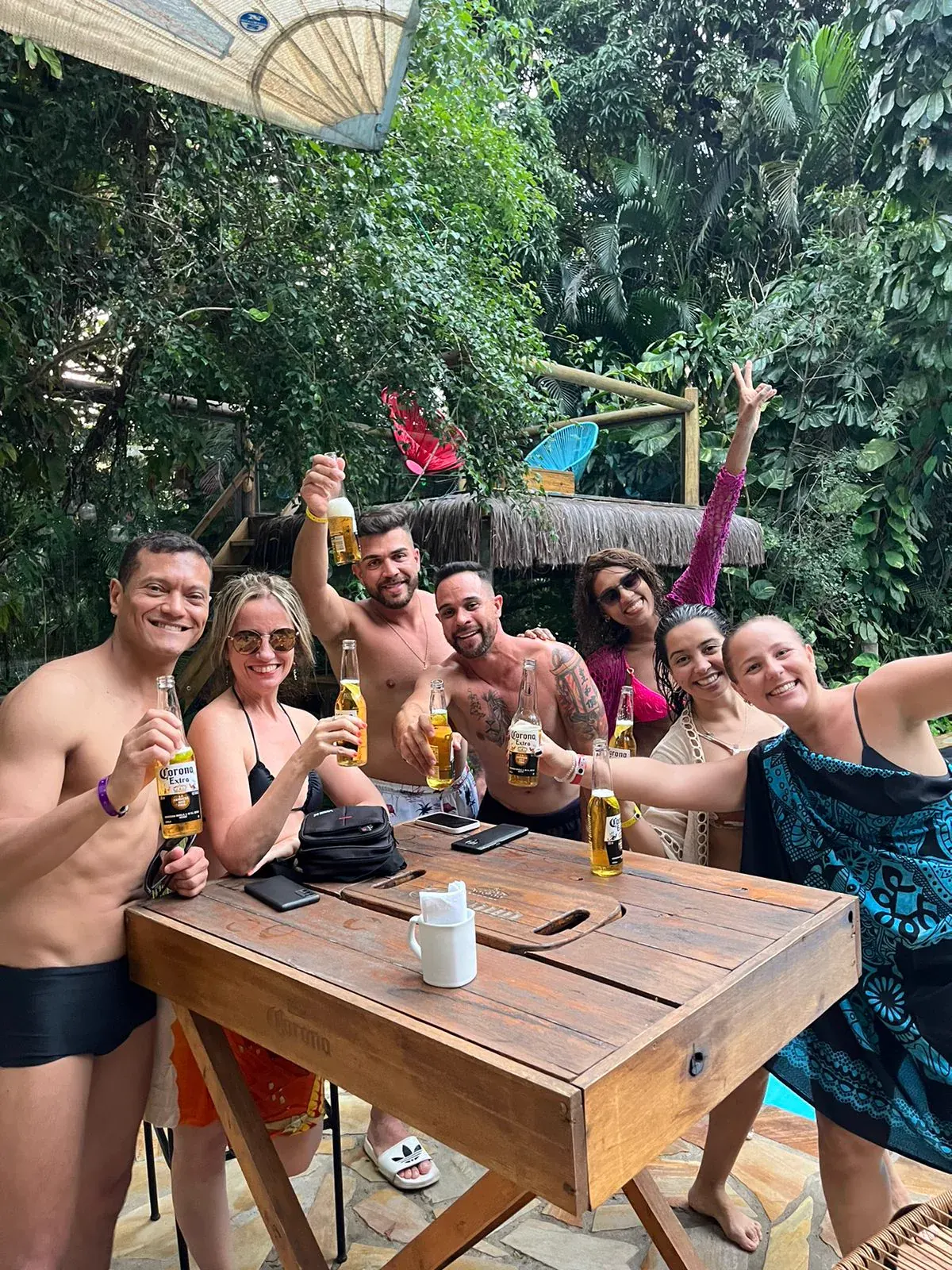
Breakfast is the second biggest friendship exchange in the house, and the classic mistake happens in the first ten seconds: the person takes their plate and looks for the empty table, out of politeness. Do the opposite. The big hostel table exists for this, and the question “can I sit here?” has a rejection rate close to zero, because everyone there went through the same awkwardness yesterday.
At breakfast you also get a shortcut: everyone is deciding their day. It is the moment when plans are still open and a ride to the trail or a beach duo forms naturally, without anyone having to invite anyone to anything more committal than “I’m going to the waterfall at 10, there’s room for one more”.
Let the house programming do the heavy lifting
Morning yoga, group hikes, a climbing class, happy hour, live music at night: a hostel’s programming does not exist just to entertain. It exists to give you a pretext. A group activity is a conversation with a ready-made topic and a set end time, the safest format there is for someone who arrived knowing no one.
At our house we see this at scale: Hostel da Vila has 8,000 m² of forest in Ilhabela’s historic center and a week that changes face every day, from yoga on the deck to the party at the Floresta Bar, when the dance floor forms next to the pool and the guest who arrived shy on Tuesday is dancing with people from three countries by Friday. The week’s schedule goes up on our Instagram, and many friendships measured in years began with two strangers checking the same notice board.
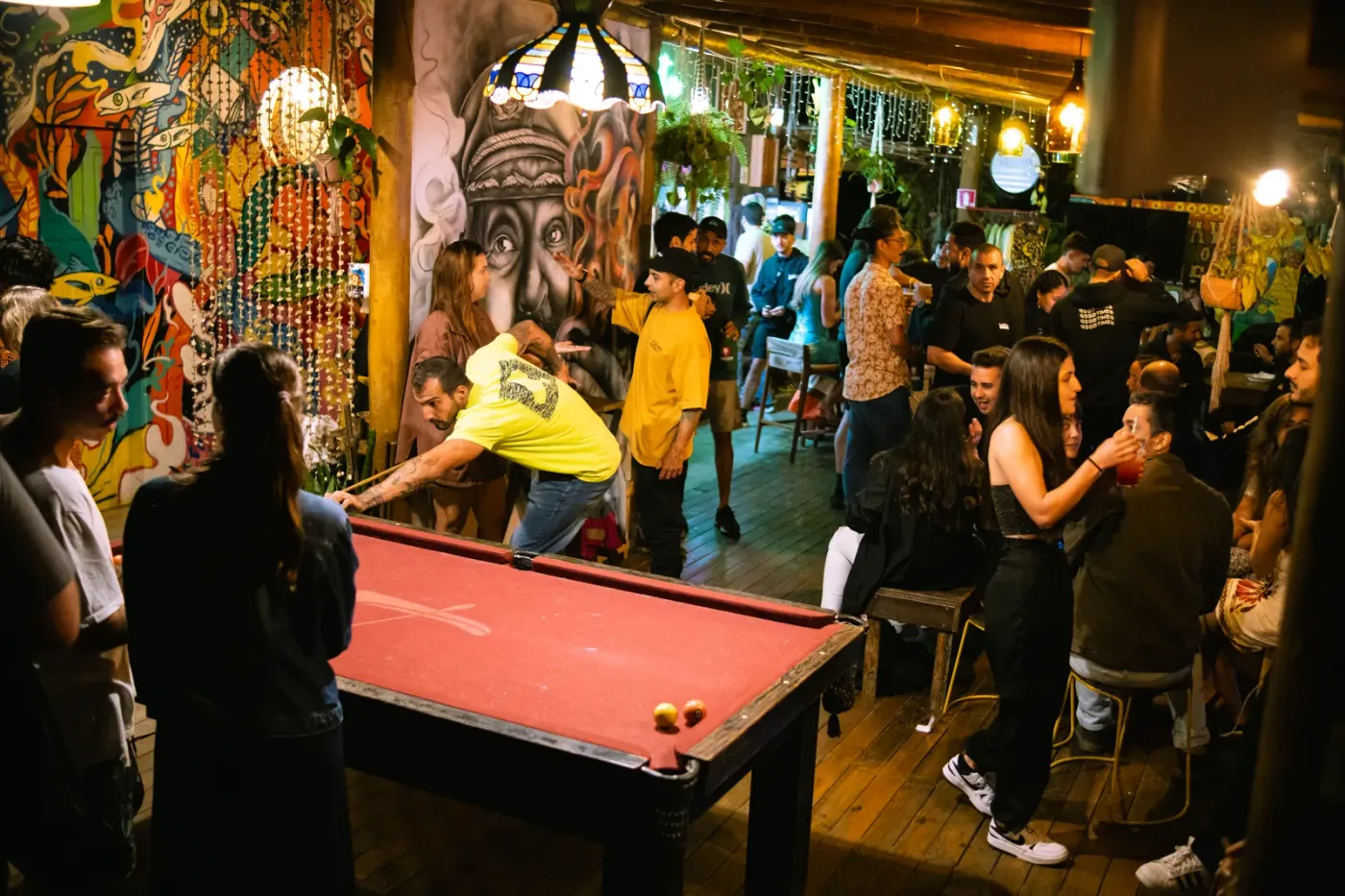 A game of pool is conversation with busy hands: nobody has to hold eye contact. Photo: Hostel da Vila Group archive
An underrated detail: the games. Pool, cards, board games in the common area. Games are the social activity with the lowest conversation requirement per minute, which is why the shy win there: you join the match, not the group, and the group comes along with it.
The magic question: “where are you headed next?”
Every traveler conversation needs a way in, and after ten years hearing thousands of them, one question wins by a mile: “where are you headed after this?”. It works because it has no short answer. “Where are you from” ends in two sentences; “where are you headed” opens a map on the table, opinions, hostel tips, a warning about ferry times, and often ends in “seriously? Me too, what day are you going?”.
That is how travel company actually forms: not by invitation, by coincidence of route. On the Costa Verde it is almost inevitable, because everyone is stitching together the same four or five destinations in different orders, as we show in the 7 day itinerary. Two backup questions that also pay off: “what did you do today?” and “is that tour worth it?”. Travelers love being consulted.
For introverts: no forced partying
A share of our best guests never appear in any party photo, and that is completely fine. If crowds drain you, the tactics change shape, not logic.
Prefer the activities with a purpose: a group hike, yoga, a class in anything. There, conversation happens side by side, eyes on the path or on the sea, without the intensity of eye contact in a bar circle. Walking together is the oldest and most comfortable conversation format there is.
Use the calm hours. The same common area that boils at 10pm is a quiet place at 8am or 4pm, with two or three people reading, and a two-person conversation is a different sport. A book in hand, by the way, is a perfect social signal: it says “I’m fine alone, but I’m approachable”, and whoever approaches someone reading is usually on the same team.
And leave early without guilt. Hostel friendship is not measured in party hours; the people you left at the bar will be at the same breakfast table tomorrow.
What we promise and what we do not
Front desk honesty: not every night delivers. Some weeks the hostel fills with closed groups who came together and are enough for each other, some dorms are silent with people exhausted from the trail, some days the conversation simply does not catch. If it happens, it is not about you, it is statistics, and a hostel’s turnover is the antidote: with every check-in the cast changes.
It is also worth saying that alcohol is not a required ingredient in any of this. The friendships born in the kitchen and on the trail are the ones that tend to outlive the trip, and most of the tactics in this article run on coffee.
And travel friendship has its own lifespan. Some last one dinner, some end up as best man at the wedding, and both were worth it. Solo travelers learn fast that goodbye is not failure, it is the format.
Where this works best
Any decent hostel in the world offers a kitchen, a table and a common area. What changes from place to place is the density of solo travelers circulating, and there the Costa Verde is generous: Vila do Abraão, on Ilha Grande, concentrates the whole world into three dirt streets, and Ilhabela pairs a night scene you can walk to with hostels that keep a lively schedule. The honest comparison between destinations, weighing budget and social life, is in the best Costa Verde destination for backpackers, and the numbers on what this life costs are in how to travel the Costa Verde on a budget.
The truth is that nobody travels alone for long. Alone is just the state you arrive in; the big table solves the rest. If the idea of trying this way of traveling is already circling, the next step is our guide to solo travel on the Costa Verde, which shows why this stretch of coast is one of the best places in Brazil for it.