
Are dorm rooms worth it?
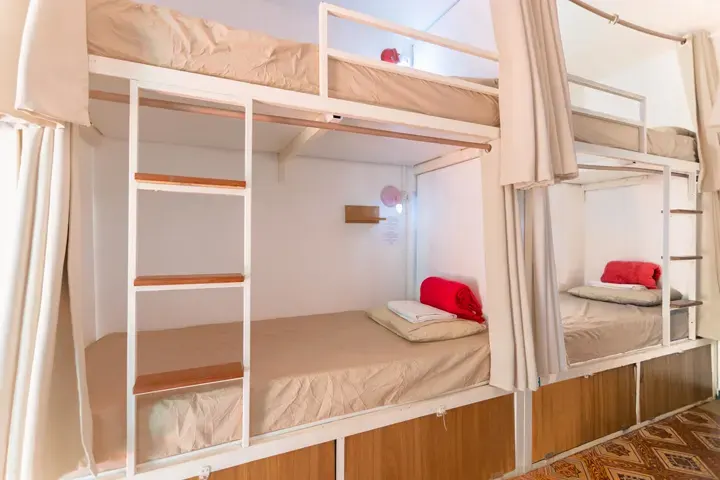
There is a classic moment in every traveler’s life: the finger hovering over the screen, comparing the price of a dorm bed with the price of a private room, running the numbers and wondering whether sharing a room with strangers is smart economics or self-inflicted suffering. We know that moment from both sides: as the travelers we once were, and as the team that has been receiving the result of that decision at the front desk of Hostel da Vila, in Ilhabela, for 10 years. 65,000 guests so far, and a good share of them slept in our dorms.
The honest answer: it is very much worth it for one traveler profile, worth nothing for another, and most people sit in the middle, where the decision depends on the trip. This article exists so you can find out which group you belong to before booking, not after.
The math, no decoration
The dorm is, by far, the cheapest way to sleep while traveling. In Brazilian tourist destinations, a dorm bed usually costs between a third and half of a simple private room in the same town, and the gap widens in high season, when private rooms shoot up and the dorm rises less. It is the only lodging format where the price follows the size of your group: solo travelers pay for one person, not for an entire double room.
The compound effect is what changes the trip. Say the difference between the bed and the private room is R$ 100 a night, a common scenario in the region where we live (the real numbers, with 2026 prices, are in our articles on Costa Verde travel costs and Ilhabela travel costs). Over seven nights, that is R$ 700. That is a boat tour, several good meals and the transport for the whole trip. Put another way: the dorm does not just give you a discount, it gives you extra days on the road or experiences that would not fit the budget otherwise. For those traveling on little, that is not a detail: it is the difference between the trip happening or not.
And there are the hidden savings: dorm sleepers use the shared kitchen and the common areas more, where information circulates for free. The guest who arrived yesterday knows which trail is closed and where the boat charges less: that kind of tip saves more than most promotions.
What money does not buy
If this conversation were only financial, the article would end at the previous paragraph. But anyone who has slept in a dorm knows the reason for coming back is rarely the price.
It is in the dorm and the common areas that travel friendships are born, and they are born fast: the “where are you from?” on the bunk ladder becomes trail company the next day. In 10 years running the house, the scene that repeats most here is the group that forms on its own: people who arrived on different days, from different cities, and by the third day are sharing the same boat and the same dinner table. We have seen a group chat created over breakfast still active years later, planning the next trip. We have seen people who met on a bunk bed reunite on the other side of the world.
 The group that formed at the house closes the day together, on the edge of the channel. Photo: Hostel da Vila Group archive
Solo travelers feel this effect twice over. The dorm is the world’s cheapest antidote to travel loneliness: you arrive knowing no one and have dinner at a full table. No private room, hostel or hotel, delivers that, and it is why many travelers who can afford a private room keep choosing the dorm. If that is your case, two guides pair well with this one: solo travel on the Costa Verde and how to meet people traveling solo, for anyone convinced they will not know how to start a conversation (spoiler: in a dorm, the conversation starts you).
Who the dorm is for
- Solo travelers who want company: it is the right format, with no real competitor.
- Short budget, long wish list: the math above speaks for itself. The comparison of backpacker destinations on the Costa Verde helps you choose where to take those savings.
- Deep sleepers: if you pass out on buses and wake only to your own alarm, the dorm has no real cost for you. It is pure discount.
- People who spend the day out: for anyone who uses the bed only to sleep, between trail, beach and the night out, paying for an entire empty room makes little sense. The itineraries in our adventure and nature pillar are the portrait of that traveler.
Who the dorm is NOT for
Honesty from people who have watched too many glum check-outs by guests who chose wrong:
- Genuinely light sleepers. A dorm has human noise: the 5:30am zipper of someone catching a boat, the snorer on the top bunk, the door that opens in the small hours. Earplugs solve it for most people (along with two veteran tricks: pick a bottom bunk away from the door, and arrive early to settle in calmly), but if any noise wakes you and you take a long time to fall back asleep, do not push it: one bad night costs more than the day’s savings.
- Honeymooners, or any trip for two with romance in the air. Not because of anyone’s judgment: it is that separate bunks and a fabric curtain are not the setting for the occasion. For that moment, our comparison of destinations for couples points to better paths.
- People working on the road with a rigid schedule. An 8am video call pairs badly with a room where people sleep until 10.
- People who need space for big luggage. A 28 kg suitcase open in the middle of the dorm is suffering for you and for the neighbors.
If you recognized yourself here, do not cross the hostel off the list yet: cross off only the dorm. The distinction matters, and it is the next point.
The middle ground few people know
The hybrid format of modern hostels exists exactly for this impasse: private rooms inside the hostel, with the social life of the house right outside the door. You have dinner at the long table, join the programming, make the dorm friendships, and at midnight you close a door that is yours alone. We explain this third way in detail in the comparison of hostel, guesthouse or hotel, and it also answers the classic doubt of anyone past 30.
At our house, this middle ground became a collection: at Hostel da Vila, besides the dorms, you can end the night in a kombi van, in a dome with the sea in the window or in a treehouse in the middle of 8,000 m² of forest, and come back to the pool heated to 32°C when the day cools down. The dome guest and the bunk guest share the same table at breakfast: that is the charm of the format.
The verdict
It is worth it for anyone who wants their lodging to be part of the trip, not just hold it up. The dorm charges in privacy and pays in money and in people, and that trade is excellent for some and terrible for others. Now you know which side you are on, and if the answer is “depends on the trip”, that answer is also right: plenty of people alternate a dorm for the trail week and a private room for the weekend as a couple.
The cheapest bed in town tends to be the one that produces the best stories, and we sign that sentence with 10 years of long tables as witnesses. If the dorm won your internal arm-wrestle, the next step is arriving prepared: our manual on how hostels work has the full etiquette so you can make your debut like a veteran.