
Hostel, guesthouse or hotel: which should you choose?

The people writing this article have run a hostel for 10 years. In that time, Hostel da Vila, our home in Ilhabela’s historic center, has welcomed 65,000 guests, and a considerable share of them arrived at the front desk saying the same sentence: “this is my first time staying in a hostel”. In other words: the question in the title is real, it walks through our door every day, and we have seen up close what happens when someone picks the right format and when they get it wrong.
That is why this comparison will not defend hostels as if they were the answer to everything. They are not. Hotels solve things hostels do not, guesthouses have a charm the other two never reach, and there are trips where we, hostel people ourselves, would choose another format. What we can promise is the honesty of someone who knows all three sides of the front desk.
What each format is, without the romance
Hotel means standardized service. Always a private room, a structured front desk, daily housekeeping, often a restaurant and room service. You pay for predictability: a chain hotel room is nearly identical in any city in the world, and that is on purpose.
Guesthouse, the pousada, is the most Brazilian format of the three: a small property, usually family-run, with private rooms, a generous breakfast and the owner close by. The experience depends heavily on who runs the house, for better and for worse. When it is good, it is very good. When the owner has grown tired, the whole place grows tired with them.
Hostel is lodging designed for meeting people. The basic unit is not the room, it is the bed: you can book a bed in a shared dorm and split the space with other travelers. In exchange, you get the areas hotels and guesthouses rarely offer at the same level: a kitchen equipped for guest use, real living rooms, a bar, an activity schedule. We explain every moving part in our manual on how hostels work.
Price: the gap is bigger than it looks
Here the hostel wins by a wide margin, but only in the dorm format. A bed in a shared room usually costs a fraction of a private room in the same town: on the Costa Verde, for example, you can sleep in a hostel for less than half the price of a mid-range guesthouse, and we broke those numbers down in our article on Costa Verde travel costs.
The real savings go beyond the nightly rate. The shared kitchen cuts restaurant spending, which in a tourist destination is usually the second biggest cost of the trip. And the information circulating in the common areas is worth money: the guest who arrived yesterday tells you which trail was closed and where the boat charges less.
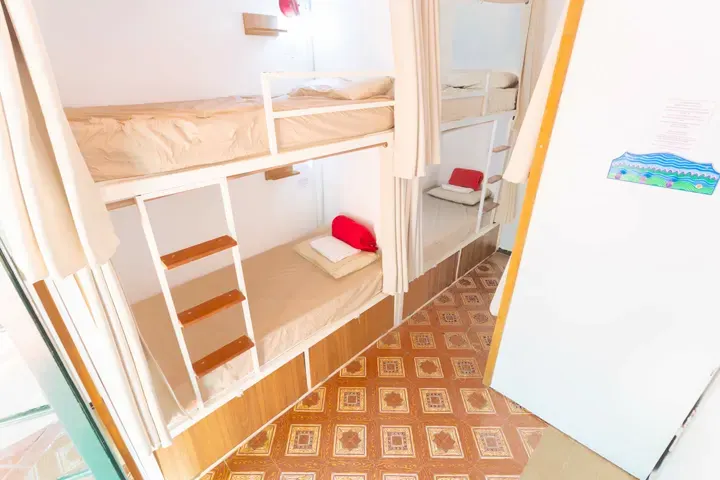 A dorm with a curtain on every bed: the format that keeps the nightly rate within reach. Photo: Hostel da Vila Group archive
If you compare private with private, the math changes: a hostel private room usually costs about the same as a simple guesthouse. The difference stops being price and becomes atmosphere, and then the choice is about what you want from the trip, not about what fits your budget. We did the full dorm math in our article on dorm rooms.
Privacy: the measure that matters most
Be honest with yourself before booking. In a hostel dorm, you give up privacy: you share the room and, almost always, the bathroom. Good hostels soften this with a curtain on every bed, individual reading lights and quiet hours, but sharing space is part of the format, not a flaw.
Guesthouses and hotels give you the door that closes. The difference between the two is what surrounds it: at a guesthouse, privacy comes with light social contact (breakfast with the other guests, an owner who asks about your day); at a hotel, it comes with anonymity. Some trips call for exactly that, and there is nothing wrong with wanting to arrive, shut the door and talk to no one.
Social life: what only the hostel delivers
No hotel solves the loneliness of traveling alone. A guesthouse helps a little. The hostel was invented for it: the common areas are designed to make you bump into people, and the question “where are you from?” opens conversations that sometimes end with a hike planned for the next morning. In 10 years running the house, the scene that repeats most often here is this one: people who arrived as strangers sharing the same dinner table on their third night.
That has nothing to do with age and everything to do with willingness. We wrote a whole article about hostels after 30 because that myth deserves to fall on its own.
Services: what you lose by leaving the hotel
Credit where the hotel deserves it: nobody makes your bed every day at a hostel, late check-in can be less flexible at a guesthouse, and room service at 11pm is a hotel luxury, full stop. If you travel for work, need guaranteed quiet for meetings or want fresh towels daily, you will probably be happier in a hotel, and it is better to know that before you book.
The answer by traveler profile
Traveling solo, on a tight budget or wanting to meet people: hostel, no question. It is the format that turns a solo trip into a trip with company, as we tell in our guide to solo travel on the Costa Verde. Our comparison of backpacker destinations in the region helps you pick a base, and anyone worried about not fitting in will find the step by step in how to meet people traveling solo.
Couples: depends on the couple. Honeymoons and special dates call for a guesthouse or a carefully chosen private room. Couples who like bars, music and new people have more fun at a hostel with a private room, and we listed the best destinations in the region for couples.
Families with kids: guesthouse or hotel in most cases, for the space and the routine. Some hostels welcome families in private rooms and work well, especially the ones with big outdoor areas where the kids burn energy while the adults breathe, but check the house rules first: minimum age and quiet hours vary from hostel to hostel.
People working while traveling: a hotel for the structure, or a hostel private room with good internet, which combines an office by day with company at night.
The detail that changes the game: the hybrid format
The choice between the three formats is no longer as binary as it used to be. A good share of modern hostels offer private rooms, which creates a hybrid: the privacy of a guesthouse with the social life of a hostel. You close your own door at night and still have dinner at a full table.
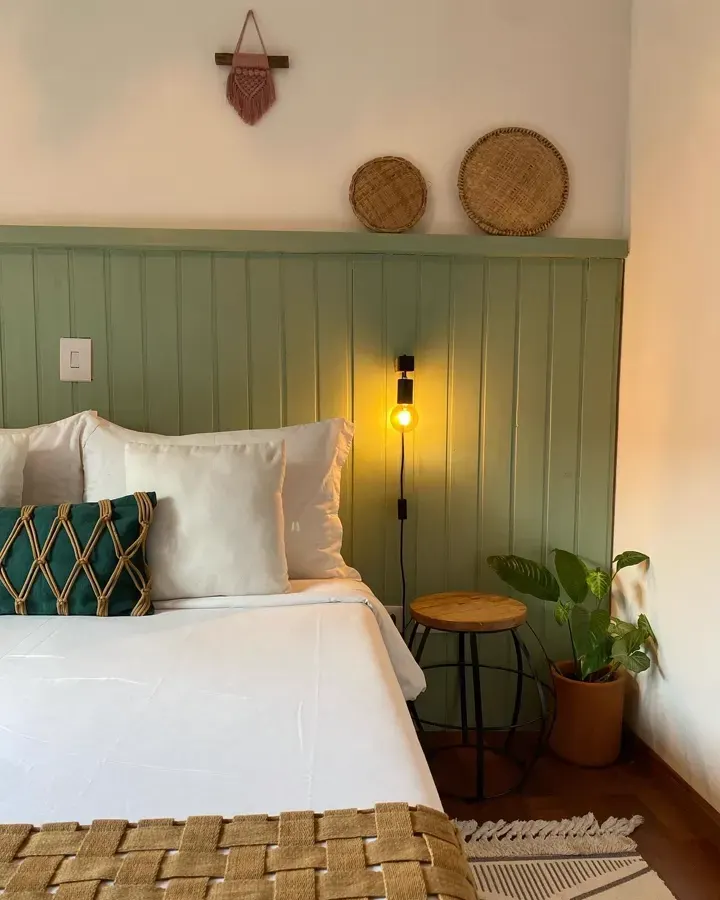 A hostel private room: the door that closes still exists. Photo: Hostel da Vila Group archive
At our house, this hybrid became something like a thesis: besides the dorms, Hostel da Vila has a geodesic dome with the sea in the window, a treehouse, a kombi van, a sailboat and a lighthouse spread across 8,000 m² of Atlantic Forest, with a pool heated to 32°C all year round and the Floresta Bar lighting up at night. Some guests sleep in a room no hotel in the world has and still live everything a hostel offers. It is the kind of choice that never shows up when people assume the decision is just “cheap or comfortable”.
The summary from people who live this
A hostel is the choice for experiencing the place with company and spending less. A guesthouse is the choice for rest with affection. A hotel is the choice for predictability and service. And the hostel private room is the shortcut for anyone who wants two things at once.
Picking the wrong format ruins a good trip, and picking the right one turns an ordinary trip into a story worth telling. If the hostel just made it onto your list of possibilities, the next step is understanding the format from the inside: start with our guide to how hostels work.