
The most unspoiled beaches on the Costa Verde
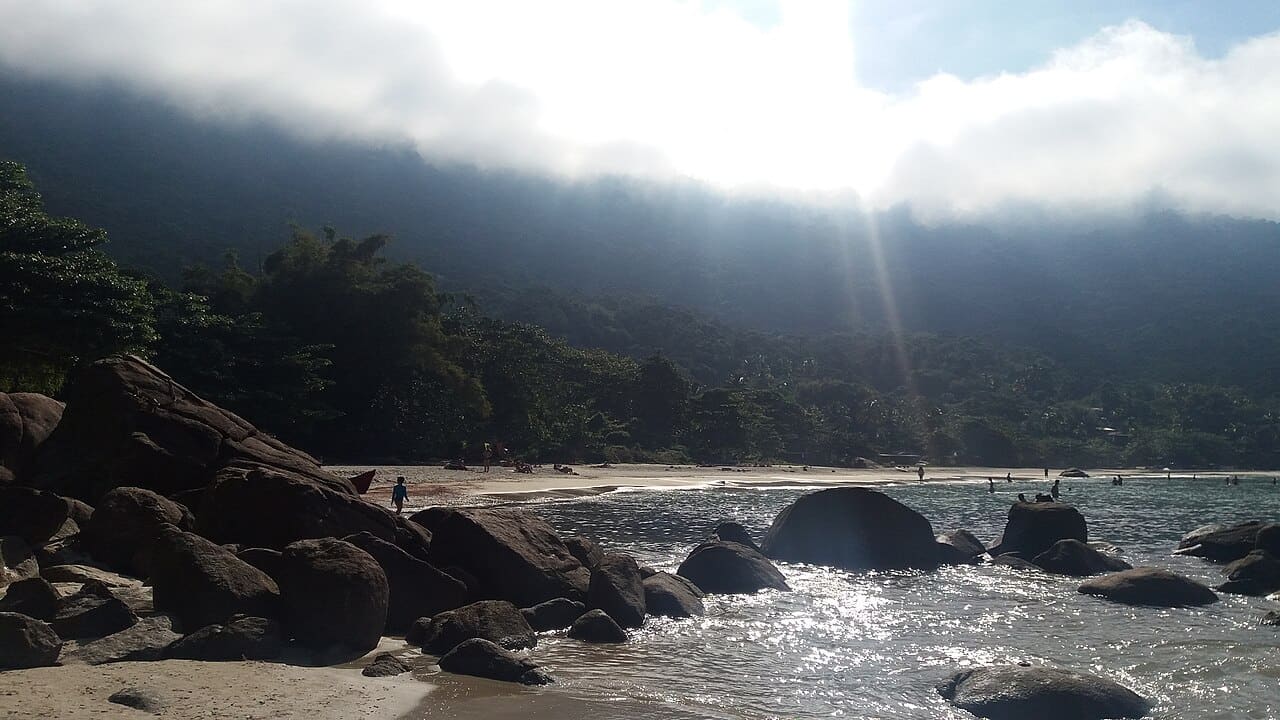
Every week someone asks us some version of “which beach around here is still untouched?”. The short answer exists and is in this guide. The long answer is more interesting, because it explains the mechanism: on the Costa Verde, an unspoiled beach is not a beach that got lucky. It is a beach protected by three forces working together, the park that forbids roads, the caiçara community that holds back growth, and the hard access that filters the volume. Remove one of the three and the kiosk with a sound system arrives within five years.
We make our living on this coast and know both ends of the phenomenon: beaches that got crowded because the asphalt reached them, and beaches that still look exactly as they did thirty years ago because getting there still costs effort. This article is about the second kind. And it hands over the thesis right away: unspoiled means hard to reach, and that is fine. The difficulty is not a flaw in the destination. It is the reason it exists.
Aventureiro, Ilha Grande: the 560 visitor cap
The village of Aventureiro, at the far southwest of Ilha Grande, is the region’s best designed case of preservation, because here the three forces became written rules. The beach sits inside a Sustainable Development Reserve, right against the Praia do Sul Biological Reserve; the people who live on it are a caiçara community of about a hundred residents; and visits have a ceiling: 560 people staying at the authorized campgrounds, with a wristband and a free permit issued in person in Angra dos Reis, first come, first served.
You feel the result in your body. There is no big guesthouse and no commercial street, the light comes from generators that shut down around 10 pm, and when they go dark a sky rises that most of urban Brazil has never seen. Lodging is camping in the families’ yards, with the day’s fish on the table. The step by step for the permit, the boats from Angra and the T9 trail from Provetá is in our guide to Aventureiro beach.
Bonete, Ilhabela: 16 km of trail or an hour by boat
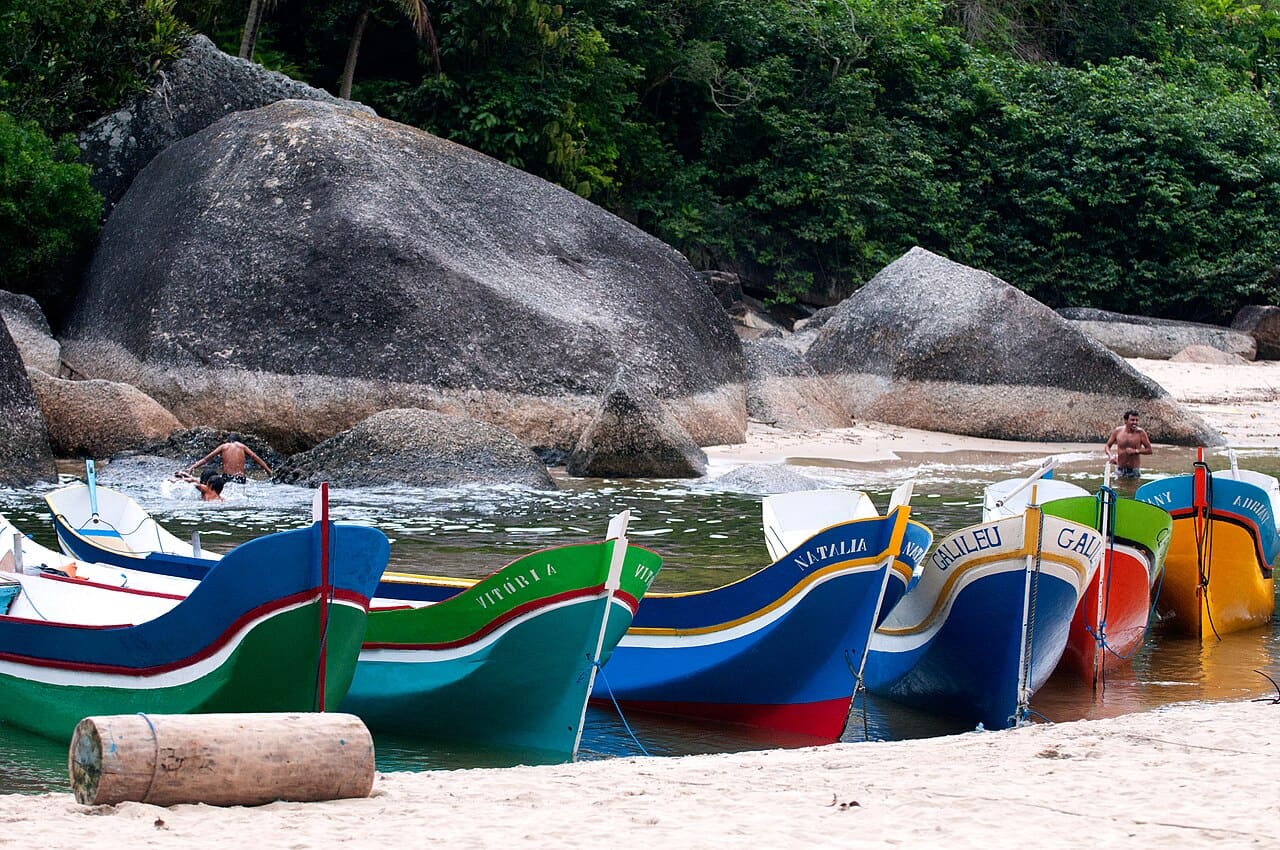 Caiçara canoes at Bonete: artisanal fishing is still alive in the village. Photo: João Lara Mesquita, CC BY-SA 4.0, Wikimedia Commons
In southern Ilhabela, where the asphalt ends at Ponta da Sela, begin the 16 km of trail that have protected Bonete for generations. The village has about 300 residents, colorful canoes on the sand, and an open-sea beach that The Guardian once ranked among the ten most beautiful in Brazil. There is no road, and the community has made clear on more than one occasion that it prefers things that way.
The toll is paid in one of two ways: walking 4 to 6 hours through the State Park, fording rivers and passing the Laje and Areado waterfalls, or hiring a boat from the Borrifos area, subject to a good sea. Either way, arrival has the same effect: your phone loses signal, your watch loses purpose and the village imposes its own rhythm, the one of fishing, tide and generator. The advice of people who have made the mistake: do not day-trip it. Sleep at least one night in the village, because Bonete at dusk, when the day’s hikers have gone, is another place. The full plan is in the guides to Bonete beach and the Bonete trail.
Sono and Antigos, Paraty: the roadless pair of the southern coast
From Laranjeiras, where the municipal bus from Paraty arrives, a 3 km trail with climbs and muddy stretches leads to Praia do Sono, a caiçara village that runs on generators and family guesthouses. Whoever crosses the river at the end of the beach and walks another half hour reaches Antigos, deserted, golden-sanded, and ten minutes later Antiguinhos. None of the three has car access, and that is exactly why they are still worth the walk.
Sono is the entry level of preservation: more visited than Aventureiro and Bonete, with camping and simple kiosks running, but still governed by the rhythm of the people who live there. Go outside holidays and the beach gives back silence. The trail, with real timings and the boat shortcut for the way back, is described in the guide to the best hikes on the Costa Verde, and the spirit of the place in the article on the most authentic places in the region.
Castelhanos, Ilhabela: protected by 17 km of dirt
Castelhanos is proof that you do not even need a long trail to hold a beach: a sufficiently bad road will do. The 17 km of dirt crossing Ilhabela State Park only admit authorized 4x4s, which in practice limits the beach to agency jeeps, boats and stubborn cyclists. On the other side wait a heart-shaped bay, a small caiçara community and the Gato waterfall, a 2 km walk from the left-hand end.
It is the most visited on this list, especially in summer, and even so it remains without asphalt, without a full power grid and without buildings, because the park will not let the island become a car corridor. If the tide of people rises too high on your day, the Coração viewpoint restores the scale: from up there, the jeeps disappear and the bay’s outline stays the same as it always was. The full guide to Castelhanos beach has 2026 prices and schedules.
Cajaíba, Paraty: the cove only the sea reaches
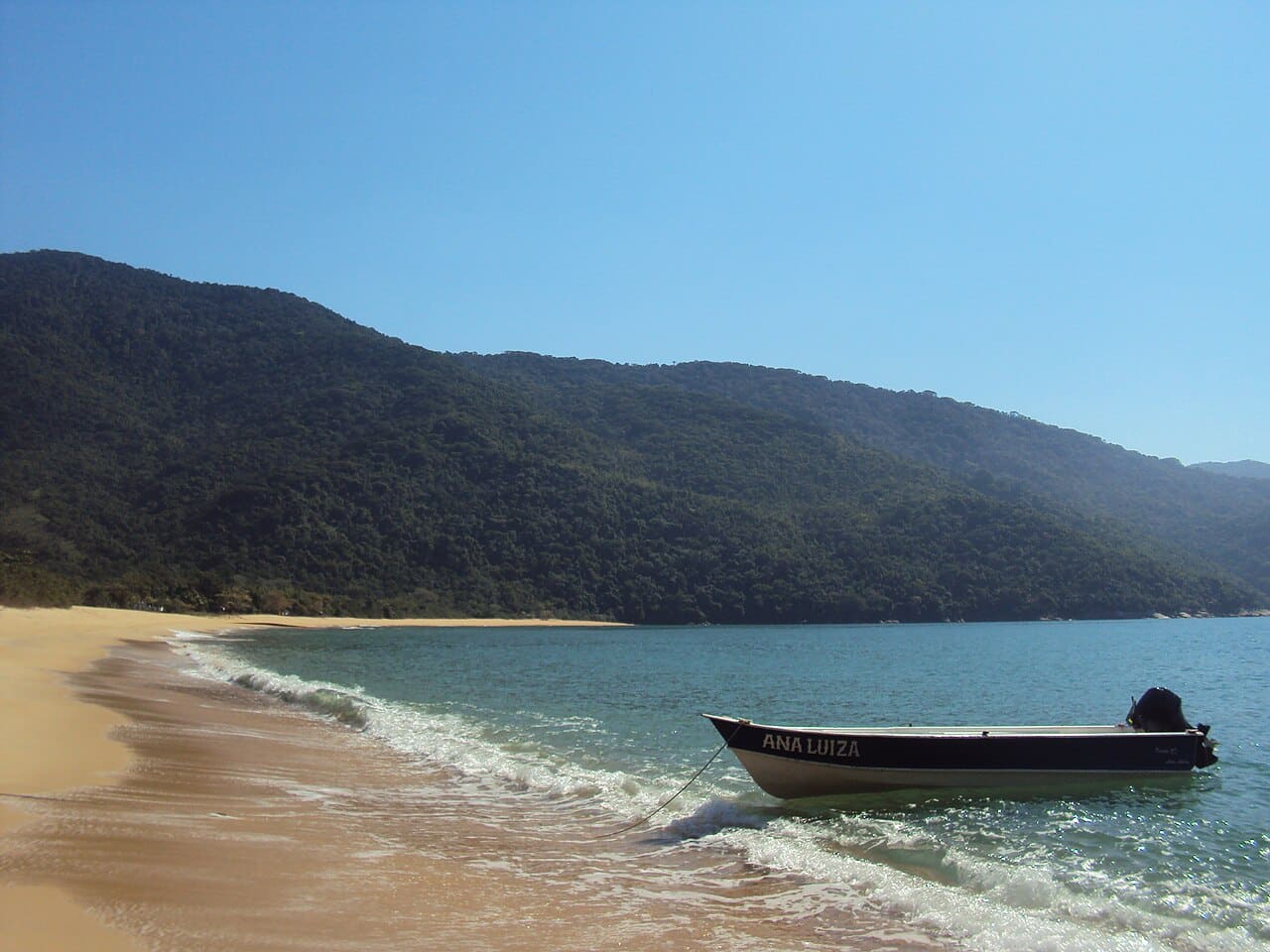 Praia Grande da Cajaíba: no road within hours of walking. Photo: Mariana Pacheco, CC BY-SA 3.0, Wikimedia Commons
The Cajaíba cove, between Paraty and Saco do Mamanguá, is the extreme of this guide’s logic: here not even a short trail exists. You arrive by boat or by long hikes from Sono and Pouso, and the shoreline unfolds into beaches like Praia Grande da Cajaíba, where the program is a fish barbecue, a waterfall behind the sand and Dona Dica’s stingray pastel, a local institution. Electricity is scarce, phone signal is legend, and the density of people per meter of sand is the lowest we know in the region.
Here the usual transparency applies: this cove is a home route. The 2 night Albatroz expedition, our group’s schooner, leaves Paraty and spends its second day in the Cajaíba before sleeping at anchor in the Mamanguá, and that is how we recommend meeting it: by sea, which is the only path the place recognizes. If you would rather put it together yourself, the step by step is in the guide to Enseada da Cajaíba.
What these beaches ask in return
Visiting an unspoiled beach means joining a deal that others made for you, decades ago. The visitor’s side is short and non-negotiable. Bring cash, because card machines depend on signal that does not exist. Take your trash back, the organic kind included, because fruit peel is not restinga fertilizer. Buy from the community: the backyard fish, the pastel, the family campground are what finance the choice not to sell the place. Ask before photographing people, and keep the speaker in your backpack, preferably at home.
And accept the access rules as part of the game, not as red tape. Aventureiro’s visitor cap, Castelhanos’ mandatory 4x4 and Bonete’s trail with no shortcut are these beaches’ real price. Cheap, considering what they buy. If you want to carry that reasoning through the whole trip, from transport to where you spend, the full manual is in how to travel sustainably on the Costa Verde: the beaches on this list are the most visual argument there is in its favor.
Difficulty is the filter, and the filter works
Notice the pattern: no beach on this list is a secret. All of them appear in newspapers, in “most beautiful in Brazil” lists, in social media photos. What keeps them whole is not anonymity, it is friction. Every hour of trail, every crossing dependent on a good sea, every form filled in Angra filters who arrives, and gives back beaches where the ambient sound is still waves and a generator, not a playlist.
Which is why our final recommendation is counterintuitive: do not try to “optimize” the visit. Pick one beach from this list per trip, give it two or three nights and leave the rest of the coast for the transfer days, using the overall ranking of Costa Verde beaches to fill out the route. Hurry is exactly what these places refuse to carry. It is the best thing about them.